
Review · FRANCE CAVE TOURS
From Sarlat-la-Canéda: Lascaux IV and Cave Art Full-Day Tour
Prehistory comes alive in the Dordogne. This nine-hour small-group tour links Lascaux IV, Rouffignac, Les Eyzies, and the cliff dwellings of La Roque Saint-Christophe, with an English-speaking driver-guide handling the roads, tickets, timing, and explanations. I especially like the mix of a high-tech Lascaux replica with an authentic cave experience, plus the chance to see more than one major prehistoric site in a single day.
I also like the personal touch of a group limited to eight people. Guides such as Anne, Lena, Marion, and Benoit have been praised for clear English, local stories, and good lunch advice. The main drawback is the price, $265 per person, and the fact that English tours inside Lascaux IV are limited, so your guide explains the cave before and after rather than translating inside it.
Key points to know before booking
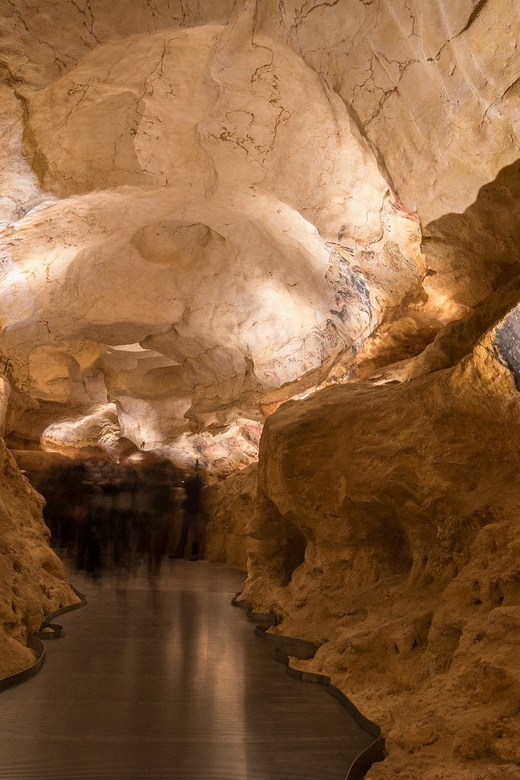
- Lascaux IV recreates a 17,000-year-old cave: Its relief, shape, and painted decoration were rebuilt with remarkable scientific and artistic care.
- You visit several major prehistoric sites: The day combines Lascaux IV, Rouffignac, the National Prehistory Museum, and La Roque Saint-Christophe.
- The small van saves you from driving: Groups are limited to eight, and the guide drives the winding Dordogne roads.
- The cave temperature is about 14°C: Bring a warm jacket even in midsummer.
- La Roque Saint-Christophe involves stairs: It is not suitable for wheelchair users or people with mobility difficulties.
- The schedule can change: Lascaux time slots control the order of the day, and the tour is not available in August.
Why this Dordogne day trip works so well
The Dordogne is one of Europe’s great places for prehistoric archaeology. Early modern humans, often called Cro-Magnons, lived here and left paintings, engravings, tools, and shelters behind. The sites are spread across the Périgord countryside, so seeing them in one day by public transport would be awkward, if not impossible.
This tour solves that problem with a driver-guide and a small group. You leave from the Place Pasteur bus stop in Sarlat-la-Canéda, ride in a comfortable van, and spend the day moving between Les Eyzies, Montignac, Rouffignac, and the cliffside site near Peyzac-le-Moustier.
The format also gives you useful context between stops. A good guide can point out the countryside, explain how the caves fit together, and help you understand why Lascaux is different from Rouffignac. That extra explanation matters. Without it, you may admire the paintings but miss the larger story about geology, shelter, survival, and prehistoric art.
The tour lasts about nine hours, usually beginning around 9 a.m. In July, departure is listed as 8:30 a.m. The order may change because Lascaux IV visits are assigned to fixed time slots. That is normal for this kind of day and should not worry you, but you should be ready for the schedule to unfold in a different order.
More Full-Day Trips around France:
- Full-day Saint-Emilion: Village, Undergrounds and Châteaux
★ 4.5 · 55 reviews - Full-day Saint-Emilion: Village, Undergrounds and Châteaux
★ 4.7 · 41 reviews - Ninh Binh Full-Day Tour from Hanoi to Hoa Lu, Tam Coc & Mua Cave Via Boat & Bike
★ 5.0 · 4,384 reviews
Les Eyzies and the National Prehistory Museum
The first major stop is Les Eyzies-de-Tayac, the village associated with the discovery of five Cro-Magnon skeletons in 1868. This is a fitting place to begin because the National Prehistory Museum gives you the basic vocabulary for the rest of the day.
The museum opened in 2004 and holds the largest collection of prehistoric artifacts in the world, according to the tour information. You can expect tools, fossils, remains, and displays that help explain how people lived in the Dordogne during the Paleolithic period.
Your guide takes you through the main exhibits rather than leaving you to wander without direction. That is useful because a large archaeology museum can quickly become a blur of stone points and bones. Guides have been praised for explaining the material at a sensible level, with enough detail to be interesting without turning the morning into a university lecture.
Allow about an hour and a half for this stop. That is enough time for a guided visit, but not enough to see every display in detail. If you are a serious archaeology fan, you may wish you had longer. One past participant specifically felt that the museum deserved more time, while another would have preferred less museum time and more time outdoors.
That is the first important choice to consider. If your main goal is cave art, the museum may feel like preparation rather than the main event. If you want to understand early human life, it gives the rest of the day a much stronger foundation.
Rouffignac and the appeal of an authentic cave
The day also includes Rouffignac, an authentic cave known for prehistoric engravings and animal images. Unlike Lascaux IV, Rouffignac is not a modern replica. Its genuine underground setting gives the visit a different mood.
Past tours have used a small electric train inside Rouffignac. That makes the experience easier than a long underground walk, though the cave visit itself can still feel cool and enclosed. You will want your jacket ready, since the caves remain around 14°C.
Rouffignac is especially useful beside Lascaux IV because the two sites offer a direct comparison. At Rouffignac, the power comes from seeing artwork in the actual cave system where it was made. At Lascaux IV, the power comes from the precision of the reconstruction and the chance to see the paintings in a setting designed for public access.
The language arrangements at Rouffignac can vary. An older visit included a German-language tour with only a brief English tablet, which left the English-speaking participant frustrated. That does not mean every departure has this issue, but it is a sensible reminder to ask your guide how the visit will be handled on your date.
The guide’s briefing helps. Several guides, including Anne, Benoit, and Marion on past departures, have been praised for explaining the cave art before entering and connecting it with the museum and the wider region.
La Roque Saint-Christophe and life on the cliff
La Roque Saint-Christophe is a sheer limestone cliff that people have used as shelter since Paleolithic times. It is one of the day’s most unusual stops because it shows prehistoric life in a physical setting rather than only through museum cases or painted walls.
The site also explains how later communities adapted to the cliff. Your guided visit covers prehistoric shelters and engineering built into the rock. You can expect stairs and some climbing, so this is not a good choice if you have mobility limitations. Wheelchair users cannot take part in the tour.
The supplied itinerary places this visit at Peyzac-le-Moustier for about two hours. Since the published route also identifies Rouffignac as a cave stop, and since the order can change, check the exact schedule when booking. The place names are close to several major prehistoric attractions, but the actual sequence depends on reserved admission times.
This is a valuable stop if you enjoy seeing how people used the natural world around them. It also breaks up the museum and cave visits with an open-air site. Bring sturdy, comfortable shoes. The tour operates in rain or shine, and the ground and steps may be less pleasant in wet weather.
A few more cave trips around France worth a look
- Paris: Catacombs Entry & Seine River Cruise with Audio Guide
★ 4.4 · 1,150 reviews - Paris: Catacombs, Audio Guide, and River Cruise Option
★ 4.6 · 966 reviews - Paris: Les Caves du Louvre Guided Tour with Wine Tastings
★ 4.7 · 932 reviews - Paris: Catacombs Ticket and Seine River Cruise
★ 4.1 · 853 reviews
Lascaux IV and the art of making a copy
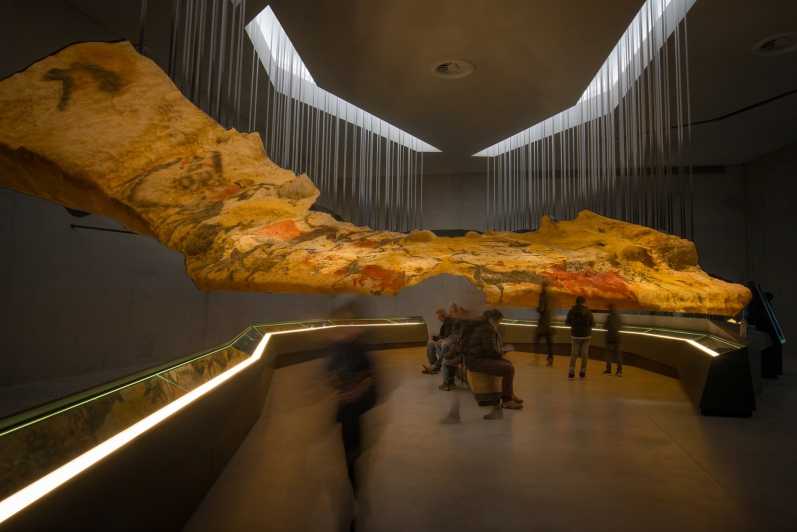
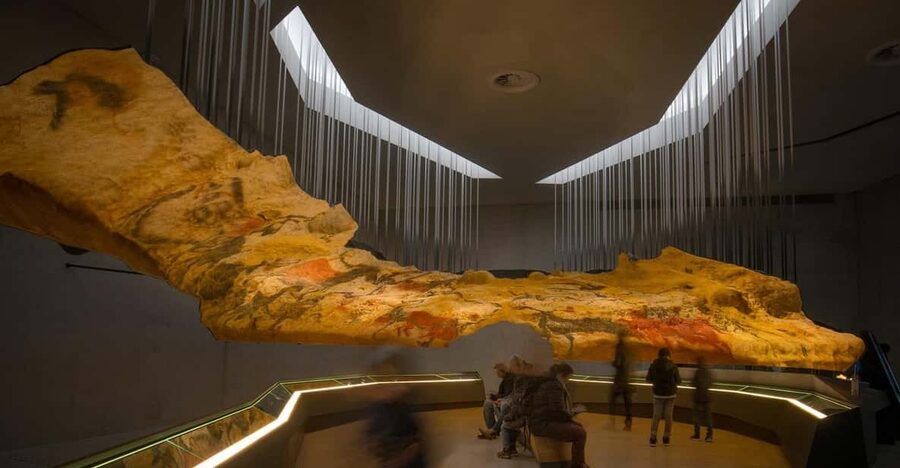
Lascaux is the star attraction. The original cave was closed to ordinary visitors to protect its paintings, so Lascaux IV provides a carefully made reconstruction of the cave and its art.
The replica opened in 2016 and was built with unusual care. A reinforced concrete shell was shaped using shipbuilding methods, and the contours of the cave were reproduced in fine detail. The paintings were recreated with natural pigments in the style of the originals, which date back around 17,000 years.
You do not simply walk into a decorated exhibition hall. The design aims to reproduce the shape, atmosphere, and visual rhythm of the original cave. That makes the visit far more meaningful than looking at isolated images in a book or museum.
Still, a replica cannot provide the same feeling as an untouched cave. Some people find Rouffignac more moving because it is authentic, while others are more impressed by the scale, color, and precision of Lascaux IV. I would treat the two experiences as partners, not competitors.
Skip-the-line access is a real benefit here. Lascaux IV operates with timed entries, and the fixed schedule is one reason the tour may rearrange the day. The guide handles the timing, which removes much of the stress from coordinating several popular sites.
English tours inside Lascaux IV are limited. Most visits are in French, and simultaneous translation is not allowed inside the cave. Your English-speaking guide explains the artwork before and after the official cave visit, so you still receive context, but you should not expect a continuous English commentary while you are inside.
The Lascaux complex itself is also part of the attraction. One past participant noted that the building was interesting in its own right, not merely a container for the replica. Give yourself time to appreciate how technology and archaeology work together here.
The van, guide, and pace of the day
The small-group setup is one of the strongest parts of the experience. With no more than eight people, the day feels more personal than a large coach excursion. You can ask questions during the drives, and the guide can adjust explanations to the group.
The van ride from Sarlat to the first stop takes about 30 minutes, with another roughly 30-minute ride back at the end. The total time in the vehicle is longer across the day, but the stops break it into manageable pieces.
Past guides have been a major reason the day works. Anne has been praised for humor, local knowledge, and the ability to adjust when museum or cave times changed. Lena was noted for easy-to-understand English, clear explanations, and a microphone loud enough for people in the back row. Benoit has been praised as both an excellent driver and an authority on the region.
You should not assume you will get a particular guide, but these examples show what the operator aims to provide. The guide is not simply a driver delivering you to the entrance. The best part of the service is the running commentary about prehistory, geology, villages, local customs, and the countryside.
There is one comfort issue worth noting. One couple spent the whole day in the last row of the van and wished seats could be changed. If you care about your seat, arrive early at the meeting point and ask politely about the arrangement. Seat rotation is not promised.
Lunch and free time in Montignac
The schedule includes about two and a half hours in Montignac, including free time around the Lascaux visit. This gives you a chance to eat lunch and take a short walk rather than rushing from one ticketed entrance to another.
Meals and drinks are not included, so budget for lunch separately. Guides have received praise for recommending good places to eat, and the break also gives you time to chat with the other people in the van.
The amount of free time depends on the day’s cave slots. You may have a relaxed meal and a little time to look around, but this is not a long independent visit to Montignac. Think of it as a useful pause in a full sightseeing day.
Is $265 a fair price?
At $265 per person, this is not a cheap day out. The value depends on how much you want to see and how difficult the area would be for you to organize independently.
The price pays for more than transportation. You get a small group, an English-speaking driver-guide, guided visits to the National Prehistory Museum, Lascaux IV, and La Roque Saint-Christophe, plus access to the region’s prehistoric sites without managing rural roads and separate schedules.
You are also buying time. A self-drive day would require arranging parking, checking opening hours, securing Lascaux’s timed entry, and fitting several distant sites together. You would still need to learn what you were looking at once you arrived.
For a couple or family already renting a car, the price may feel high. You may be able to reproduce part of the route independently, especially if you are happy to choose fewer stops. For visitors based in Sarlat without a car, or for anyone who wants expert interpretation, the cost is easier to justify.
Remember that meals and drinks are extra. The tour requires at least two adult passengers to operate, and it is not available in August. Free cancellation is allowed up to 24 hours before departure, and reserve-now-pay-later booking is available.
Who should book this experience?
I would choose this tour if prehistoric art is a major reason for your Dordogne visit. It suits curious adults, families with children aged four and older, and anyone who wants a full day of archaeology without driving.
It is also a good fit if you value explanation. The paintings are famous, but their meaning and setting are easier to grasp when someone connects the museum, the caves, and the cliff shelters.
I would think twice if you dislike full-day schedules, stairs, cool caves, or guided sightseeing. The day is long, and the route includes walking and climbing. It is also less suitable if you want a slow lunch or several hours to explore one village.
Bring your passport or ID, comfortable walking shoes, and a warm jacket. Children under four cannot join, and you should provide a child’s age when booking so an appropriate car seat can be arranged.
Should you book the Lascaux IV and cave art tour?
Book it if you want the most efficient introduction to Dordogne prehistory and prefer someone else to manage the driving and timed entries. The combination of Lascaux IV’s exact replica, Rouffignac’s authentic cave setting, the Les Eyzies museum, and La Roque Saint-Christophe gives you a broad view of the region.
The strongest reason to go is the guide. Past guides such as Anne, Lena, Marion, and Benoit have brought clear explanations, local stories, and calm handling of schedule changes. The biggest cautions are the price, limited English commentary inside Lascaux IV, stairs at La Roque Saint-Christophe, and the possibility of spending less time at each place than an independent visitor might prefer.
For most first-time visitors to the Dordogne who want to understand what they are seeing, this is a sound, well-organized day.
FAQ
Where does the tour begin?
The meeting point is the Place Pasteur bus stop in Sarlat-la-Canéda.
How long does the tour last?
The experience lasts about nine hours. The usual departure is around 9 a.m., with an 8:30 a.m. departure listed for July.
How many people are in the group?
The tour is limited to eight participants and requires at least two adult passengers to operate.
Which languages are available?
The tour is conducted in English with a live English-speaking guide.
Is Lascaux IV a real prehistoric cave?
No. Lascaux IV is a detailed reproduction of the original Lascaux cave and its artwork. The original cave is protected from ordinary public visits.
Will the Lascaux IV tour be in English?
English tours inside Lascaux IV are limited, and most visits are in French. Your guide explains the cave before and after the visit because simultaneous translation inside is not permitted.
Is the tour suitable for people with mobility issues?
No. The La Roque Saint-Christophe visit includes stairs, and the activity is not suitable for wheelchair users or people with mobility difficulties.
What should I bring?
Bring a passport or ID card, comfortable walking shoes, and a warm jacket. The caves are about 14°C, or 57°F, inside.
Just added around France
- CAVES of CERDON and Prehistoric Leisure Park – Entrance ticket★ 4.5 · 76 reviews
- Cave Museum Village Troglodyte of Rochemenier Admission Ticket★ 4.5 · 143 reviews
- Napoleon Cave – Entertainment – Discovery/drink package★ 4.5 · 15 reviews
- Full-day Saint-Emilion: Village, Undergrounds and Châteaux★ 4.5 · 55 reviews
- Dordogne Day Tour : Prehistory and The Art of the Caves from Sarlat★ 4.5 · 105 reviews
- The Napoleon Cave – complete package (Corsican meal)★ 5.0 · 68 reviews
- Porto-Vecchio : Boat Trip to Lavezzi, Caves & Bonifacio★ 4.7 · 61 reviews
- Paris: Catacombs Tour with Restricted Areas★ 4.8 · 64 reviews
France Cave Tours, compared.

Catacombs Entry & Seine River Cruise with Audio Guide
Read our review →
Catacombs, Audio Guide, and River Cruise Option
Read our review →
Les Caves du Louvre Guided Tour with Wine Tastings
Read our review →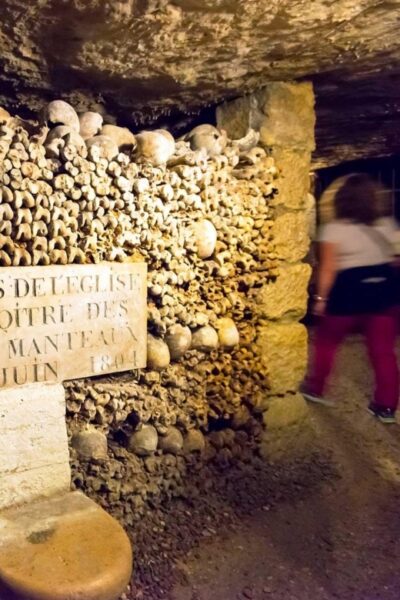
From Geneva: Chamonix, Mont Blanc & Ice Cave Guided Day Tour
Read our review →
Browse the lists this cave appears in