
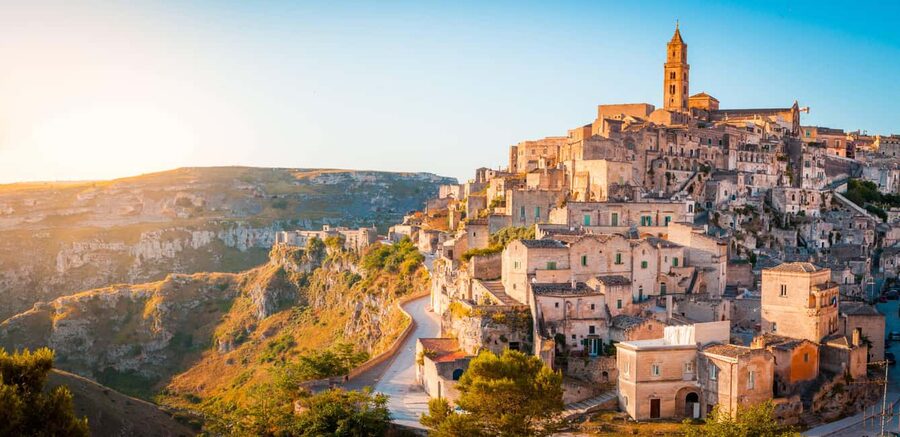
Review · ITALY CAVE TOURS
Matera: Caves and Rock Churches Walking Tour in English
Matera makes stone feel alive. This 2.5-hour English walking tour brings you through the Sassi with local guide Gaetano Campanile, who explains how families lived in cave homes, collected rainwater, and helped transform Matera from Italy’s shame into a UNESCO-listed cultural treasure. I especially like the mix of sweeping viewpoints and small, easily missed corners, along with Gaetano’s personal connection to the city.
I also like the relaxed pace and clear English, which make the tour approachable even when your group includes different ages and walking abilities. The main drawback is the terrain: Matera sits on a hill, so you will climb stairs and walk over uneven surfaces. The pace is gentle, but this is still a walking tour, not a flat city stroll.
Key Points Before You Book
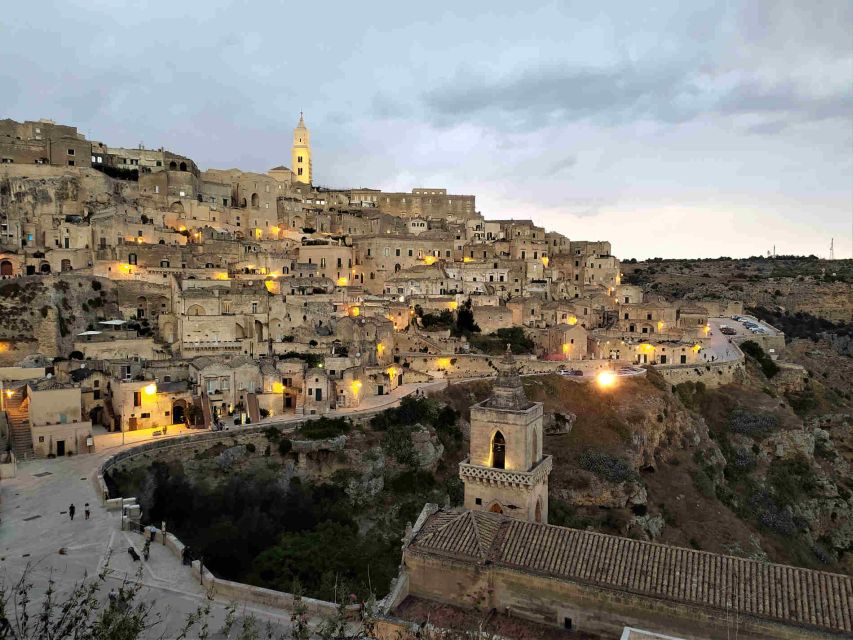
- Start at Piazza S. Pietro Caveoso: Meet your guide directly in front of the church and finish at the same place.
- Enter real cave dwellings: See how families once used rooms carved into the rock and learn how the spaces functioned.
- Visit St. Mary of Idris: This rock church is one of the tour’s main cultural highlights.
- Learn Matera’s water system: The rainwater collection system shows how practical design helped people survive in a dry, rocky setting.
- Hear local stories: Gaetano adds family stories and oral accounts passed down by former residents of the Sassi.
- Allow for stairs: Comfortable shoes are essential, and a leisurely pace does not remove the need to climb.
Why This Matera Walk Is Worth Your Time
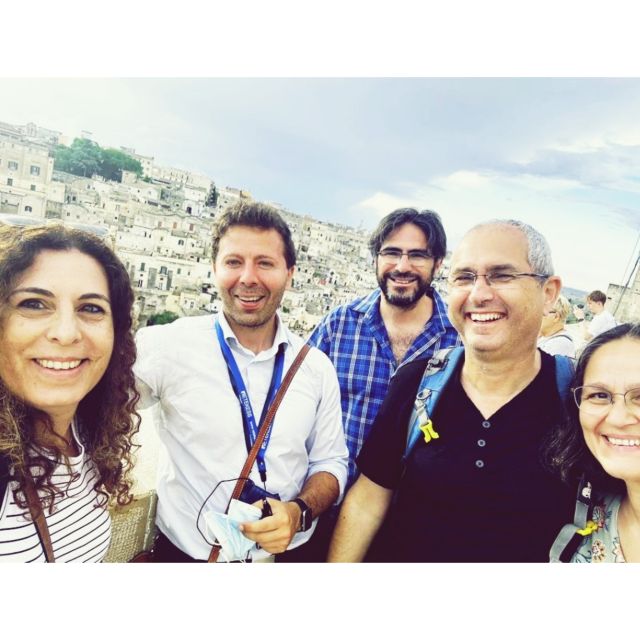
Matera can look simple at first glance: pale stone, stacked homes, church facades, and a maze of lanes. But the Sassi are not just a pretty collection of old buildings. They were working neighborhoods where people lived in caves, raised families, stored food, cared for animals, and relied on clever systems to manage scarce water.
That is why I think a guide adds real value here. On your own, you can admire the views and take excellent photographs. With Gaetano, you get the social story behind the stone. He explains how ordinary families used the caves and how Matera’s reputation changed over time.
The tour also helps you read the city correctly. A doorway cut into rock, a channel along a wall, or a dark opening beneath a home may look like a minor detail. Gaetano’s explanations show you why those details mattered. His style is described as friendly, humorous, and easy to follow, with English strong enough for detailed questions.
You should expect plenty of talking. That suits me because Matera is a place where context matters, but visitors who want a quiet photo walk may prefer to explore alone afterward.
A few more cave trips around Italy worth a look
- Naples: Naples Underground Entry Ticket and Guided Tour
★ 4.4 · 21,781 reviews - Colosseum: Underground and Ancient Rome Tour
★ 4.7 · 12,691 reviews - Naples: Catacombs of San Gennaro Entry Ticket & Guided Tour
★ 4.6 · 7,941 reviews
Meeting at Piazza S. Pietro Caveoso
The tour begins at Piazza S. Pietro Caveoso, in front of the church. This is a useful starting point because you are already at the edge of the Sassi, close to some of Matera’s most dramatic views and stone-built neighborhoods.
Look for the guide in front of the church rather than wandering into the surrounding lanes. The tour returns to this same meeting point, which makes planning easier if you have dinner, a hotel, or another activity afterward.
If you are driving, two multi-level car parks are listed nearby: one on Via Pasquale Vena and another on Via Rocco Scotellaro. Parking is not part of the tour, so allow time to leave the car and reach the square before the start.
From the first minutes, you will want comfortable footwear. Matera’s old city rises and falls in quick stages, and stairways are part of the route. The walk is described as leisurely, but the stone surfaces and slopes still require care.
Seeing Matera from Its Viewpoints
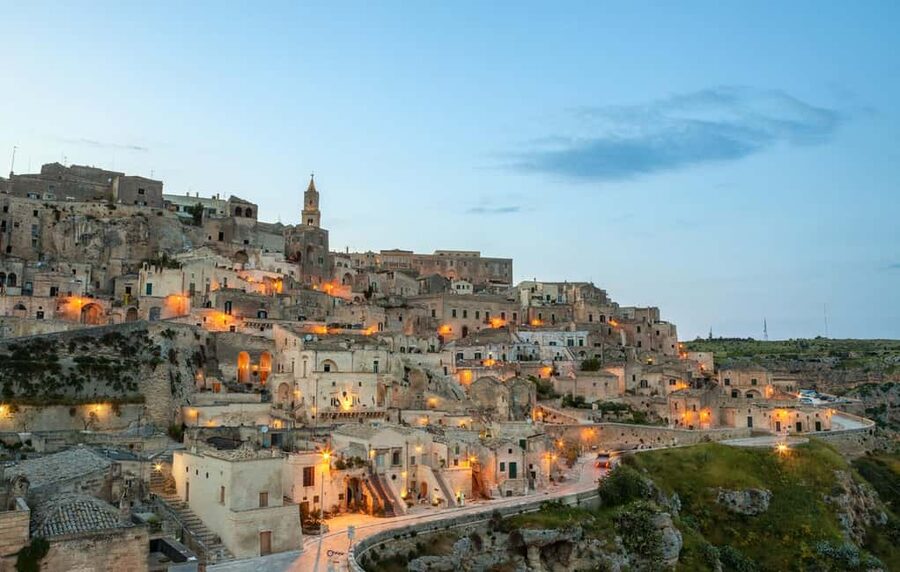
The first part of the walk gives you a sense of Matera’s shape. The Sassi spread across steep stone slopes, with homes, lanes, churches, and terraces fitted into the rock. From the viewpoints, you can see how tightly the old districts were built and why the city can feel almost theatrical from above.
These stops are more useful than a quick photo pause. Gaetano places the buildings in context, pointing out how the neighborhoods were arranged and how people moved through them. You begin to understand that the apparent jumble has a logic.
I like this part of the route because it gives you a visual map before you enter the narrower spaces. Matera is easy to admire but harder to understand. Once you know which areas were residential, which spaces served religious purposes, and how the slopes connect, the later walk makes more sense.
The views are also likely to be a strong part of the experience for anyone interested in photography. Still, the tour is not designed as a dedicated photo outing. The guide will keep the walk moving, and you may need to save some picture-taking for the time after the tour.
Entering the Cave Houses
The cave homes are the heart of the experience. Inside, you can see how families once lived in rooms carved from the rock. These spaces help correct a common misunderstanding: the caves were not simply empty holes. They were adapted for daily life and used as part of larger homes and working areas.
Gaetano explains how people organized life in these confined spaces. His stories include the experiences of former residents and details handed down through local families. That oral connection gives the visit a human scale. You are not just looking at an old room. You are considering the choices families made to live, work, and raise children there.
The cave houses also show how closely people lived alongside the natural material around them. Rock could provide shelter and thermal stability, but it also limited light, space, and comfort. A good guide helps you hold both sides of that picture at once.
I appreciate that the tour does not treat the caves as picturesque curiosities. The past was difficult, and the story of Matera includes poverty and poor living conditions. The city’s beauty today should not erase the hardship that once shaped these neighborhoods.
Same corner of the map, a different way in:
- Matera: Sassi Tour with Cave House and Rupestrian Church
★ 4.7 · 6,618 reviews - Rome: Capuchin Crypts and Catacombs Tour with Transfers
★ 4.6 · 6,456 reviews - Naples: Spanish Quarters Underground Guided Tour
★ 4.8 · 5,064 reviews - Expert Guided Tour of Colosseum Arena OR Underground, and Forum
★ 4.5 · 5,041 reviews
The Rainwater Collection System
One of the most useful parts of the tour is the explanation of Matera’s rainwater collection system. In a city built from rock, water management was vital. Rainwater had to be gathered and stored carefully for daily use.
You will learn how the system helped support the population and why it was essential to survival. This is the sort of detail you may miss if you walk through the Sassi without a guide. A cistern or channel can look like part of the stonework until someone explains its purpose.
The water system also reveals the practical intelligence of the old neighborhoods. People worked with the slope, the rock, and the limited supply available to them. The result was not modern comfort, but it was an organized response to a demanding setting.
For me, this is where the tour moves beyond architecture. You begin to see Matera as a place shaped by engineering, family life, and hard choices, not just by beautiful stone.
St. Mary of Idris and Matera’s Rock Churches
The tour includes a visit to the rock church of St. Mary of Idris. Carved into the rock, the church shows how religious life was woven into the same stone environment as homes and water systems.
The setting makes the church special. Its importance comes not only from its religious character but also from the way it belongs to the rock itself. Inside, you can better understand why Matera’s churches are considered part of the city’s cultural identity.
The tour may also include other old churches, depending on the route and timing. One account of the walk included beautiful ancient churches, an old cistern, and a workshop. The precise stops can vary, so you should treat St. Mary of Idris as the firm highlight and any additional interiors as a welcome possibility.
This is another reason to wear shoes with a good grip. Religious sites and cave spaces are reached through the same sloping lanes and stairs that shape the rest of the Sassi.
From Italy’s Shame to UNESCO Recognition
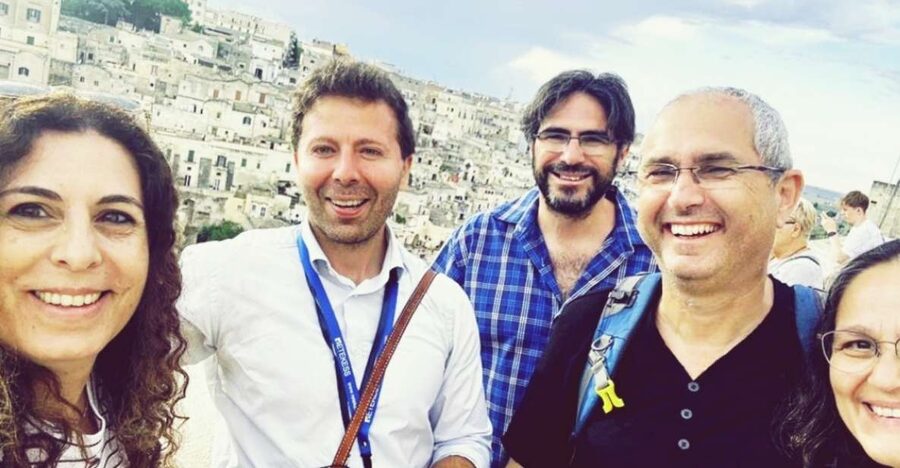
Matera’s modern story is one of the most important subjects on the walk. The city was once widely associated with poverty, overcrowding, and unhealthy living conditions. Its cave districts were seen as a national embarrassment rather than a cultural achievement.
The tour explains how that view changed. Matera eventually became a UNESCO site and a major part of Italy’s cultural heritage. That change did not happen simply because the stone buildings were attractive. It came from a new understanding of the city’s historical, architectural, and social value.
Gaetano’s explanations are especially useful here because he connects the public story with local lives. He is from Matera and has gathered information from people whose families lived in the Sassi. His approach helps you see the city’s transformation as more than a polished tourism success story.
I like that this subject adds some needed balance. It is tempting to treat Matera as a film set or a romantic old town. The social history reminds you that people lived through real hardship here, and that preserving the Sassi required difficult decisions.
Gaetano’s Guiding Style
The guide can make or break a walking tour, and Gaetano receives consistent praise for his enthusiasm, patience, humor, and ability to explain difficult subjects in plain English. He is described as a trained historian and a passionate local who enjoys telling the city’s story.
That combination matters. A guide may know a great deal but still give a dull tour. Gaetano’s style appears more conversational. He answers questions, adjusts to the group’s pace, and adds personal stories rather than reciting dates without meaning.
His flexibility is useful for mixed groups. The tour has worked well for people of different ages and mobility levels, including a group with one person who had two relatively new knee replacements. That does not mean the walk is fully accessible, but it suggests that the pace can be adjusted when needed.
The tour has also gone ahead with only two people. That is a helpful sign for anyone worried about a small booking being canceled at the last minute, though you should still confirm the current arrangements when reserving.
Gaetano also gives practical suggestions for the rest of your stay. One particularly memorable recommendation was a local bread shop, an appealing reminder that a good guide can improve your time in Matera beyond the scheduled two and a half hours.
How Much Time and Effort to Allow
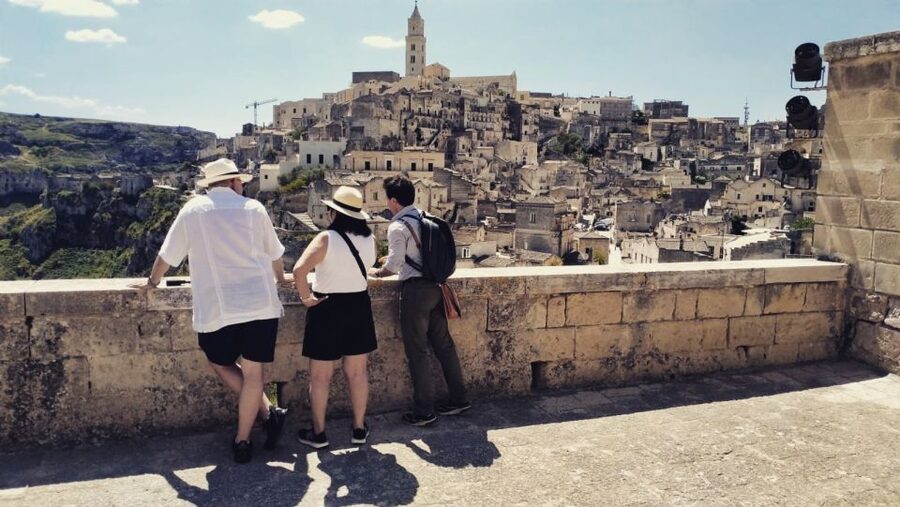
The tour lasts 2.5 hours, which is enough time to cover the main themes without turning the walk into an all-day commitment. I think it works best near the start of your stay because it gives you a useful framework for exploring the city afterward.
You will spend the time walking, listening, entering cave spaces, and stopping at viewpoints and churches. The route is not described as strenuous in pace, but the hill and stairways add physical effort.
Bring comfortable shoes and water for your own comfort. The supplied information specifically calls for comfortable footwear, and that advice should be taken seriously. Sandals or thin-soled shoes may make the stone surfaces less pleasant.
If you have limited mobility, contact the provider before booking and explain your needs. The leisurely pace helps, but stairs remain part of the old city.
Is $28 a Good Price?
At $28 per person, this tour offers good value if you want to understand Matera rather than simply photograph it. You are paying for 2.5 hours with a local English-speaking guide, access to cave spaces, explanations of the water system, and a visit to St. Mary of Idris.
The value is strongest for first-time visitors. A self-guided walk can show you the Sassi, but it may not explain how people lived in the caves or why Matera’s reputation changed so sharply. Gaetano’s local stories and historical background give the stonework meaning.
The price is less compelling if you only want a short orientation or prefer to explore silently. You may also want extra time after the tour for your own photographs, meals, and independent visits.
Free cancellation up to 24 hours before the start and the option to reserve now and pay later make the booking less rigid. Those policies are useful when your southern Italy plans are still changing.
Who Should Book This Tour?
I would choose this tour for first-time visitors to Matera, especially anyone who wants social history alongside architecture. It is also a good fit for people who enjoy asking questions, hearing local stories, and learning why ordinary details matter.
Families with older children may find the cave homes and water system more engaging than a standard museum visit. Older adults can manage the walk if they are comfortable with stairs and the pace is adjusted when needed.
History fans, architecture lovers, and curious food-and-culture visitors should also get plenty from it. The guide’s recommendations for places to eat and see can help you plan the rest of your stay.
I would skip it only if you strongly dislike guided walks, have difficulty with stairs, or have very little time in Matera. In those cases, you may prefer a shorter independent visit to the viewpoints and Sassi.
Should You Book It?
Yes, if you want Matera to make sense. The cave houses, rock church, viewpoints, and cisterns are impressive on their own, but Gaetano’s explanations connect them to the people who lived there.
Book it early in your stay so the rest of your walks through Matera have more meaning. Bring good shoes, expect stairs, and leave room for your own exploring afterward. At $28, the combination of local insight, clear English, and a relaxed two-and-a-half-hour route makes this a strong introduction to the Sassi.
FAQ
Where does the Matera walking tour start?
The tour starts in Piazza S. Pietro Caveoso, directly in front of the church.
Where does the tour finish?
The activity finishes back at the starting point in Piazza S. Pietro Caveoso.
How long does the tour last?
The walking tour lasts 2.5 hours. Starting times depend on availability.
Is the tour conducted in English?
Yes. The tour includes a live English-speaking guide.
Does the tour visit a cave house?
Yes. You will enter cave spaces and learn how families once lived in them.
Is St. Mary of Idris included?
Yes. Visiting the rock church of St. Mary of Idris is one of the tour highlights.
Are there stairs on the route?
Yes. Matera’s old city is on a hill, so you should expect stairways. The walk proceeds at a leisurely pace, but comfortable shoes are recommended.
Just added around Italy
- From Capri: Blue Grotto, Capri and Anacapri Guided Tour★ 4.8 · 91 reviews
- From Catania: trek on Mount Etna, Lava Cave & tasting Tour★ 4.8 · 563 reviews
- Explore Christian Rome and the Underground of San Clemente★ 4.4 · 16 reviews
- Etna Jeep Tour: Explore Craters and Lava Caves, Etna Wine Brunch★ 4.9 · 17 reviews
- EXCURSION VISIT TO THE SANTA MARIA DI LEUCA CAVES★ 4.8 · 192 reviews
- Santa Maria di Leuca: Caves Boat Tour★ 4.6 · 211 reviews
- East Palermo: boat tour among caves and breathtaking landscapes★ 5.0 · 28 reviews
- Taormina and Giardini Naxos: 2 Hour Dolphin Tour & Grotto★ 4.6 · 63 reviews
Italy Cave Tours, compared.
Naples Underground Entry Ticket and Guided Tour
Read our review →
Colosseum: Underground and Ancient Rome Tour
Read our review →
Catacombs of San Gennaro Entry Ticket & Guided Tour
Read our review →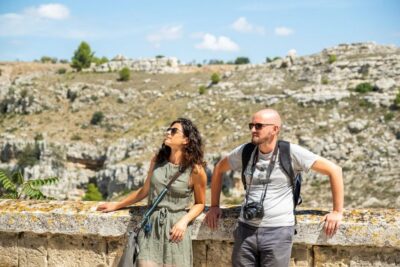
Sassi Tour with Cave House and Rupestrian Church
Read our review →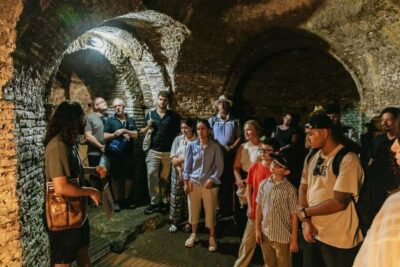
Capuchin Crypts and Catacombs Tour with Transfers
Read our review →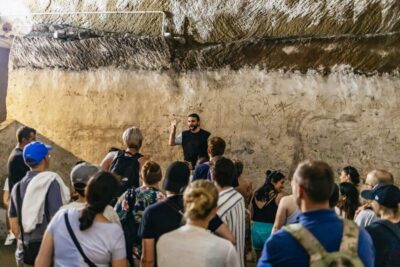
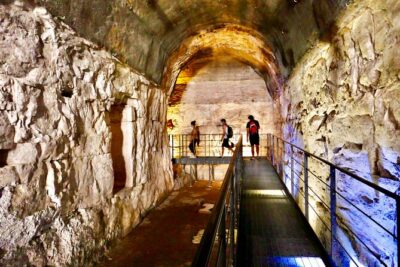
Expert Guided Tour of Colosseum Arena OR Underground, and Forum
Read our review →
Browse the lists this cave appears in