
Review · BELGRADE, SERBIA
Underground Secrets of Belgrade
Belgrade keeps part of its story below street level. This two-and-a-half-hour tour links the fortress’s eerie Roman Well, a Cold War bunker, an old Austrian gunpowder storehouse, and food caverns beneath Karađorđeva Street. I like the unusual mix of Roman, military, and wine history, and I like that the tour ends with a free glass of wine. The main concern is the physical effort: steep, narrow stairs, uneven ground, and limited handrails make this a poor fit for some older people or anyone unsteady on their feet.
The tour costs $24.06 per person, which is fair if you value access to several otherwise easy-to-miss underground sites and a guide who can connect them. Guides such as Michael, Stefan, and Milan have received praise for their historical explanations, though the quality of spoken English and the amount of commentary during outdoor walks may vary.
Key points to know before booking
- The Roman Well reaches 51 meters underground, with two spiral staircases that meet around 35 meters down in a striking DNA-like shape.
- A Cold War bunker sits inside the Belgrade Fortress, built in the mid-1950s but never used for its original purpose.
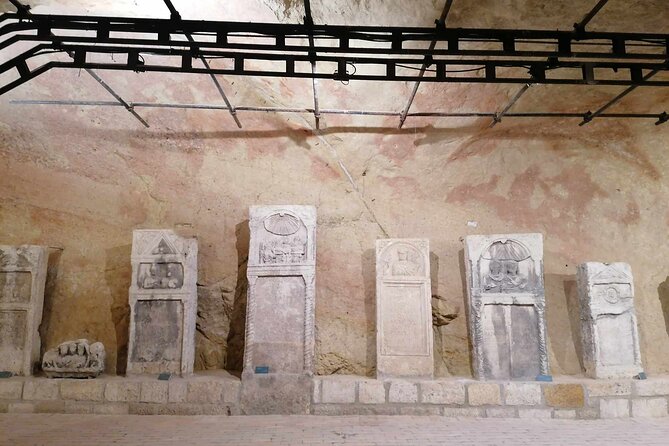
- Barutana is a 16th-century Austrian gunpowder storehouse, carved as a man-made cave and now connected with a small Lapidarium display.
- The tour ends in a 19th-century wine cellar on Karađorđeva Street, where your ticket includes a free glass of wine.
- Physical demands are easy to underestimate, with steep, narrow stairs, uneven surfaces, and some areas without handrails.
- The group can reach 20 people, so sound and guide position matter, especially in enclosed rooms.
Why Belgrade’s underground is worth your time
Belgrade is often introduced through its fortress, rivers, cafés, and busy central streets. This tour gives you a different frame. You are not simply looking at walls from the outside. You are stepping into wells, storage caves, military rooms, and old cellars that explain how people used the city beneath its visible surface.
I like the way the experience moves through several eras instead of sticking to one theme. The Roman Well belongs to the fortress’s baroque rebuilding in the early 18th century, while the bunker carries you into the Cold War of the 1950s. Barutana reaches back to the 16th century, and the final wine cellar adds a 19th-century commercial layer.
That variety is the tour’s strongest quality. You get a compact lesson in how Belgrade’s underground spaces served practical needs: water, defense, storage, burial displays, and wine production. The sites are not polished museum halls. Their rough surfaces and confined rooms are part of the appeal, but they also make clear explanations important.
The tour is offered in English and accepts mobile tickets. It begins at Republic Square, at Trg republike 3, and finishes at Vinarija, Karađorđeva 31, close to Branko’s Bridge. That point-to-point route is useful if you want to continue exploring the riverfront or Savamala area after the final tasting.
A few more cave trips around the world worth a look
- Chichen Itza, Cenote, and Valladolid Tour
★ 5.0 · 24,293 reviews - Naples: Naples Underground Entry Ticket and Guided Tour
★ 4.4 · 21,781 reviews - Chichen Itza, Cenote & Valladolid Tour with Tequila and Lunch
★ 4.5 · 15,789 reviews
Starting at Republic Square and reaching the fortress
The meeting point is Republic Square, a central and practical place to begin. You should arrive ready for a walking tour rather than expecting a vehicle-based trip. The experience includes several sites, but the appeal comes from moving between them and seeing how the underground spaces relate to Belgrade’s old core.
The exact amount of commentary during the walks can depend on the guide. Milan received praise for his explanations inside the underground sights, but one assessment found that more information about the surrounding streets would have improved the walking portions. I would treat this as a tour focused mainly on the sites themselves, not as a full introduction to every building along the route.
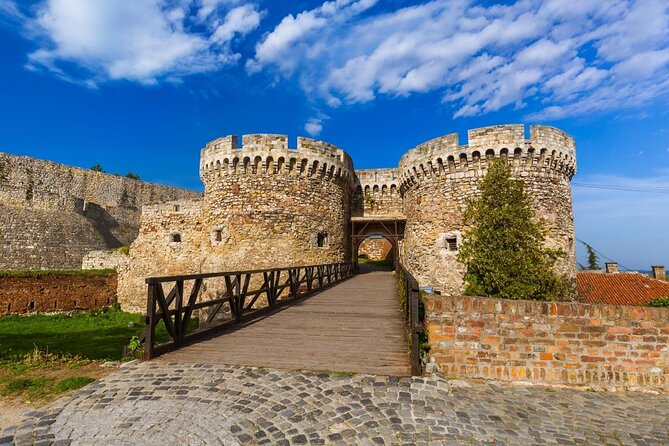
At the Belgrade Fortress, the guide sets the scene before taking you below ground. This is where the tour feels most dramatic. The fortress already carries centuries of military importance, but the Roman Well and bunker show two very different responses to the same strategic location: access to water and protection from modern warfare.
The Roman Well: 51 meters below the fortress
The Roman Well is the most memorable stop for many people. Despite its name, it was built at the beginning of the 18th century during the fortress’s baroque reconstruction. It reaches 51 meters deep and measures about three meters across, creating a narrow vertical space that feels far removed from the open fortress above.
The unusual feature is its pair of spiral staircases. They connect at roughly 35 meters below ground, making a shape often compared to a strand of DNA. That design is far more interesting than a simple shaft with one staircase, though it also creates the tour’s clearest physical challenge.
You may find the stairs steep and confined. The underground setting can make the descent feel more intense than the measurements suggest, especially if you dislike tight spaces or have trouble with uneven steps. Pay attention to your footing, keep a comfortable pace, and do not assume this is a gentle museum visit.
The well has also attracted unusual cultural attention. Alfred Hitchcock visited in 1964 and reportedly said that an environment like this was always a treat for him. You do not need to be a film fan to understand the reaction. The height, darkness, and winding stairs give the place a naturally theatrical quality.
A good guide can make the Roman Well more than a striking photo stop by explaining how it fit into the fortress’s water needs and later legends. Michael has earned especially strong praise for bringing Belgrade’s past to life and for clearly enjoying the subject. If your guide has that same energy, this part can become the high point of the tour.
The Cold War bunker and the practical side of history
The bunker changes the mood. Instead of a baroque-era well, you enter a military space linked to the mid-1950s and the Cold War. It was built for a specific purpose but never used for that original role, which gives the room an odd sense of suspended time.
I like this stop because it adds recent history to a tour that could otherwise feel focused only on ancient and medieval layers. Belgrade’s past is not limited to fortresses and Roman remains. The bunker reminds you that fear of modern conflict shaped the city long after the older defensive walls had lost their main role.
The value here depends heavily on the guide’s explanation. The space itself may be plain compared with the Roman Well, so context matters. Stefan has been praised for giving a clear general picture of Belgrade, and a guide with a strong command of the subject can explain why this bunker existed and why its unused condition matters.
The enclosed setting can also affect sound. In a group of up to 20 people, you may need to stay near the guide to hear every detail. One assessment found that the lack of audio support made it difficult to follow much of the explanation. That is worth keeping in mind if hearing in echoing rooms is difficult for you.
Same corner of the map, a different way in:
- Colosseum: Underground and Ancient Rome Tour
★ 4.7 · 12,691 reviews - Edinburgh: Underground Vaults Tour
★ 4.6 · 11,758 reviews - Portimão: Benagil Caves Speed Boat Tour with Sunset Option
★ 4.8 · 11,663 reviews - Albufeira: 2.5-Hour Benagil Caves & Dolphin Watching
★ 4.6 · 10,710 reviews
Barutana, a gunpowder storehouse turned cave
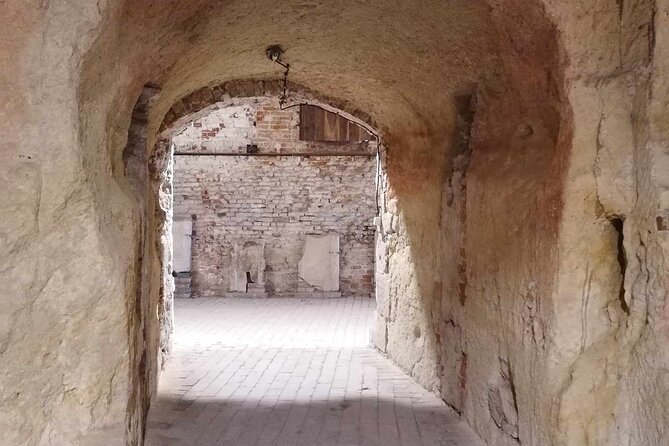
The second main stop is Barutana, an Austrian gunpowder storehouse built in the 16th century. It is not a natural cave. It is a man-made underground space designed for storage, and that practical origin gives it a different feel from the Roman Well.
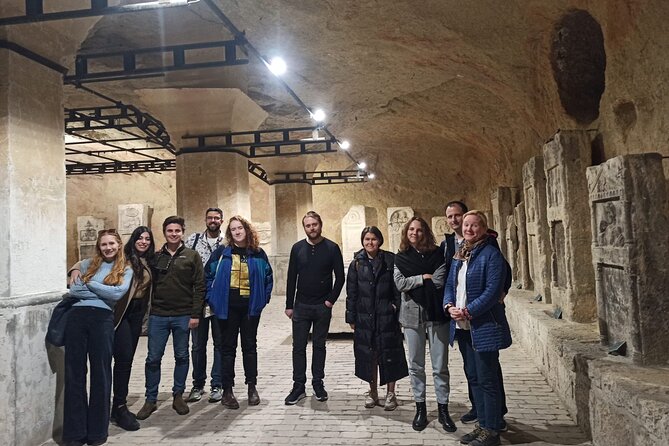
Barutana also contains a display room known as the Lapidarium. Here you can see Byzantine and Roman sarcophagi, gravestones, and statues. This makes the stop more than a military site. The objects add a visual link to older civilizations and show how archaeological remains can be gathered and displayed within a later underground structure.
You should not expect a large museum collection. The appeal is the combination of setting and objects. Seeing stone coffins and carved pieces in a former gunpowder storehouse gives the material a strong sense of place. I find that more memorable than viewing the same objects in a modern room with bright lights and polished floors.
The scheduled visit here takes about 30 minutes. That is long enough to understand the purpose of the space and examine the Lapidarium without turning the stop into a full museum visit. If you prefer grand monuments and broad views, Barutana may feel modest. If you like functional old spaces and traces of daily military life, it earns its place on the route.
Karađorđeva’s storage caverns and the final wine
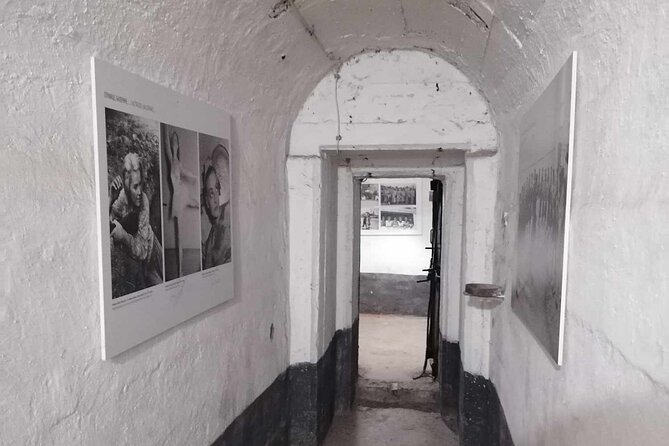
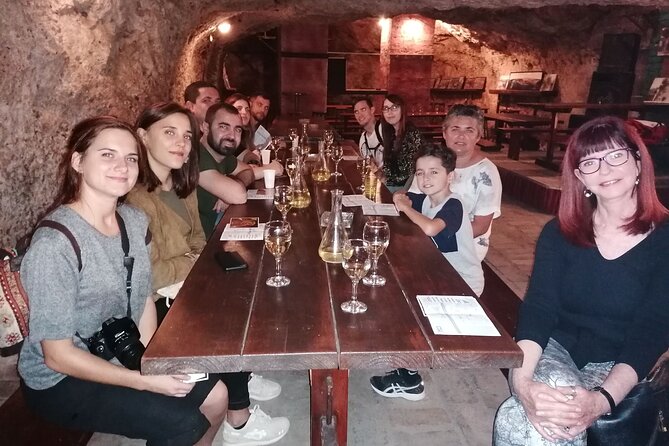
The final section takes you to caverns beneath Karađorđeva Street, where food was stored. The tour then continues into a 19th-century wine cellar and ends with a free glass of wine.
This is a smart finish. The first two stops are tied to defense and military planning, while the last one shows the underground as part of everyday trade and food storage. Wine cellars are often easier to picture than a deep well or a Cold War shelter, so the ending gives the tour a warmer, more social note.
The included wine is a genuine benefit at this price. It is not the main reason to book, but it adds a pleasant conclusion and saves you from having to arrange a separate tasting right away. The tour ends at Vinarija, at Karađorđeva 31 near Branko’s Bridge, so you can treat the last stop as both a tasting and a convenient handoff to the next part of your day.
Keep personal expenses separate from the included glass. The tour covers admission fees, the guide, and the free wine, but anything else you purchase is your responsibility.
How good is the $24.06 value?
At $24.06, I consider this a good buy for someone interested in unusual sites rather than only major landmarks. Admission to the underground locations is included, and the route covers three distinct areas in about two and a half hours. You also receive a glass of wine at the end.
The value depends on your expectations. If you want a polished attraction with extensive displays, recorded narration, and easy access throughout, you may feel disappointed. The underground spaces are the main event, and they can be plain, dark, cramped, or difficult underfoot.
If you want a guide to add meaning to places you might not find on your own, the price makes more sense. Strong guides have been praised for their command of Belgrade’s past, especially at the fortress. The difference between an ordinary outing and a memorable one may come down to how clearly your guide speaks and how much detail he provides.
The tour is often booked about 23 days ahead. That does not mean you must reserve a month in advance, but it suggests that adding it to your Belgrade plans early is sensible, particularly if your dates are fixed.
Physical effort, group size, and what to expect
The biggest practical warning is the terrain. The tour includes very steep, narrow stairs, uneven ground, and some stairs without handrails. Two people in their late 70s found the experience very difficult, despite having a capable guide. I would not recommend booking casually if you have limited mobility, poor balance, or serious discomfort with confined spaces.
The tour is not described as wheelchair accessible, and the stair conditions make it unsuitable for many mobility aids. The general note says most people can participate, but that should not override the specific warning about the underground sections. If you are unsure, contact the provider before booking.
The group limit is 20 people. That is not enormous, but underground rooms can feel crowded quickly. Stay close enough to hear, especially if the group spreads along a staircase or gathers in a room with an echo.
The English standard may vary by guide. Michael and Stefan have received strong praise for their historical explanations, while one person found a guide’s English too basic to follow comfortably. I would view guide quality as a real part of the experience, not a minor detail.
Who should book this Belgrade tour?
I would recommend it to you if you like:
- Military sites, old fortifications, and Cold War history
- Strange architectural spaces such as deep wells and storage caves
- Small archaeological displays in unusual settings
- Guided walking tours with a clear beginning and end
- A short wine tasting added to a history-focused outing
It suits a first visit to Belgrade if you want to understand more than the city’s surface. It also works well for repeat visitors who have already seen the fortress from above and want a different angle.
I would hesitate if you need smooth paths, generous handrails, strong audio support, or a slow, easy walk. I would also think twice if your interest is mainly in scenic views. The tour is underground for much of its most distinctive content, so the payoff comes from atmosphere and explanation rather than grand panoramas.
Booking and cancellation details
You receive confirmation when you book, and a mobile ticket is accepted. The tour is offered in English, begins at Republic Square, and ends at Karađorđeva 31. Public transportation is nearby.
You can cancel for a full refund up to 24 hours before the start time. Cancellations or changes made less than 24 hours before the start are not refunded or accepted, and the cut-off follows local time.
Should you book Underground Secrets of Belgrade?
Book this tour if you want unusual Belgrade history in compact form, especially the Roman Well, the Cold War bunker, and the old gunpowder storehouse. The included admissions and wine make $24.06 reasonable, and a strong guide can turn bare underground rooms into memorable places.
Skip it if steep stairs and uneven ground will make you anxious or uncomfortable. Before booking, I would also ask yourself how well you handle spoken English in echoing rooms. For the right person, this is an engaging look at the city’s less visible past. For someone seeking an easy stroll and polished exhibits, it may feel like hard work for modest sights.
FAQ
How long does Underground Secrets of Belgrade last?
The tour lasts approximately 2 hours and 30 minutes.
Where does the tour begin?
It begins at Republic Square, Trg republike 3, in Belgrade.
Where does the tour end?
It ends at Vinarija, Karađorđeva 31, near Branko’s Bridge.
Is wine included?
Yes. The tour includes a free glass of wine at the end in the 19th-century wine cellar.
What language is the tour offered in?
The tour is offered in English.
What is the maximum group size?
The tour can have a maximum of 20 people.
Just added around the world
- Lasithi Plateau Zeus Cave Guided Jeep Safari Tour★ 5.0 · 35 reviews
- Knossos, Lasithi, Zeus Cave & Olive Mill Farm Combo Tour★ 4.5 · 46 reviews
- Knossos Palace and/or Zeus Cave + Olive Mill | Local & Private★ 5.0 · 21 reviews
- Matala Beach, Caves, and Winery Full-Day Tour from Heraklion★ 5.0 · 40 reviews
- Mythical Escape: Zeus Cave & Knossos Palace with Lassithi Plateau from Heraklion★ 5.0 · 51 reviews
- Road-trip to Lasithi, Zeus Cave, Vidiani, Krasi & Olive Mill Farm★ 4.0 · 79 reviews
- Ninh Binh Private Day Tour: Mua Cave, Tam Coc, Hoa Lu All Include★ 5.0 · 40 reviews
- Ninh Binh Full Day Tour from Hanoi to Hoa Lu, Trang An & Mua Cave★ 5.0 · 31 reviews