
Review · EVENING EXPERIENCES
Meteora Sunset with Monastery & Hermit Caves Tour in Small Group
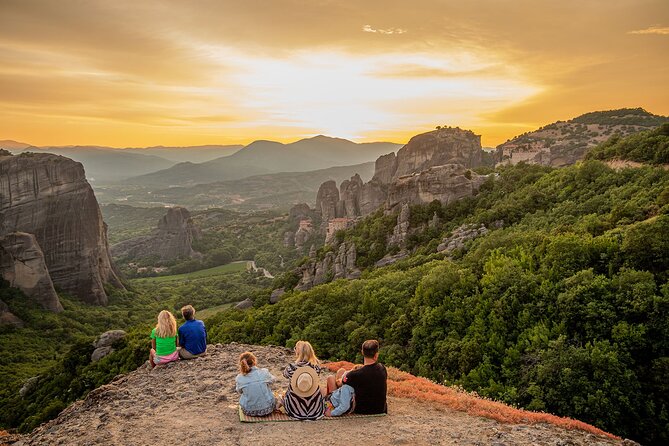
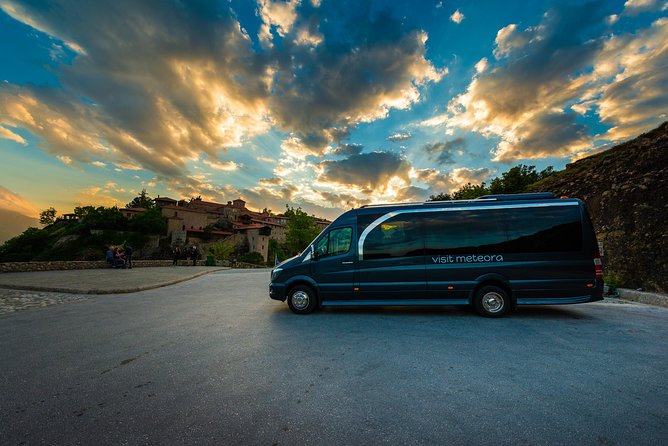
Meteora saves its best light for late day. This four-hour small-group outing combines St. Stephen’s Monastery and the hermit caves with sweeping viewpoints, a Byzantine church, and a sunset stop away from the busiest lookouts. I like the easy hotel pickup from Kalambaka or Kastraki, and I like how guides such as Lina, Jim, Dimitri, and Apostolou add stories about monastic life rather than simply reciting dates. The main catch is timing: in midsummer, sunset comes late, so this tour can run well beyond the advertised four hours.
The $36.28 price is strong value if you want context, transport, and several scenic stops without arranging a car. Just remember that only St. Stephen’s is visited inside as part of the usual plan, and the language of the live tour is English. A free audio guide covers Spanish, French, German, Italian, Portuguese, Russian, Polish, Korean, Chinese, and Japanese, but it will not match the detail of a live guide.
Key points at a glance
- St. Stephen’s is the practical monastery choice: You reach the entrance by a small bridge rather than a long flight of stairs.
- The hermit caves add a different view of Meteora: You see the rough, isolated spaces used before organized monasteries took shape.
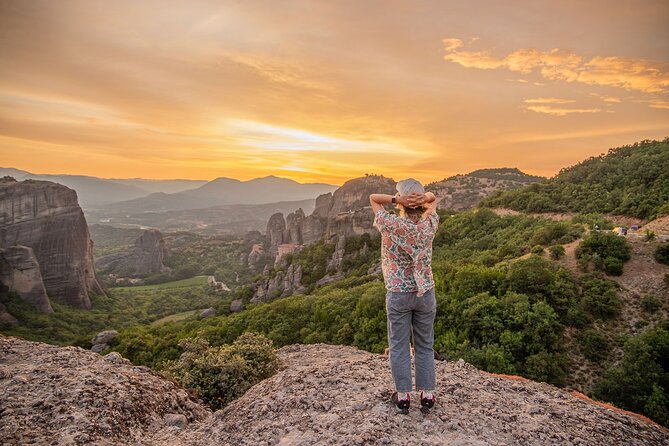
- The sunset viewpoint is less routine: The guide takes you beyond the standard monastery circuit to a quieter photo stop.
- The Byzantine church has unusual building details: Ancient temple stones and pieces of an older mosaic floor appear inside.
- Small-group transport keeps the outing simple: Hotel pickup and drop-off are offered in Kalambaka and Kastraki, with a maximum of 18 people.
- Timing changes with the season: A summer sunset may push your return close to 9:30 p.m., so do not schedule a tight dinner or train connection.
Why this Meteora tour works well
Meteora is easy to admire and surprisingly hard to understand on your own. The huge rock pillars, monasteries, caves, roads, forests, and two settlements, Kalambaka and Kastraki, spread over a compact area but do not tell their story at a glance. A guide helps connect the geology with the religious life that developed on these cliffs.
I especially like the mix of stops. You are not simply driven from one monastery gate to another. The outing includes a church in town, one accessible monastery, the old hermit dwellings, broad photo views, and a final sunset. That variety gives you a better sense of how people lived here before the famous monasteries became the main attraction.
The small minibus also matters. Driving between the viewpoints is much easier than trying to coordinate local transport late in the day, and the group size of up to 18 people is still small enough for questions and guide interaction. Past groups have praised guides including Lina, Maria, Jim, Dimitri, and Apostolou for being funny, warm, and well informed about local history and geology.
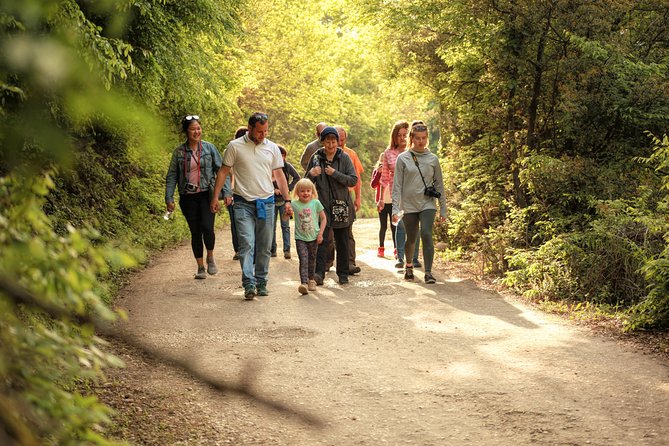
This is not a strenuous hiking tour. You walk at the stops, but the plan does not ask you to climb repeatedly to several monasteries. That makes it a good first look for many people, especially if stairs are a concern.
More Evening Trips around Greece:
- Portimão: Benagil Caves Speed Boat Tour with Sunset Option
★ 4.8 · 11,663 reviews - Edinburgh: Late-Night Underground Vaults Terror Tour
★ 4.6 · 4,162 reviews - Edinburgh: Evening Underground Ghost Tour
★ 4.4 · 3,092 reviews
Pickup in Kalambaka or Kastraki
Pickup and return are included from hotels and Airbnbs in Kalambaka and Kastraki. The central meeting point is at Patriarchou Dimitriou 2 in Kalambaka, and the activity finishes back there or at your accommodation area.
A hotel pickup can arrive a few minutes after the stated start time as the minibus gathers people from different addresses. That is normal for this setup, but allow a little patience. The payoff is not having to find a taxi or drive narrow roads while trying to catch the sunset.
The vehicle has been described as spacious, and bottled water is included. Food is not included, so eat beforehand or plan dinner afterward. Since the return time can shift with sunset, I would avoid booking a restaurant with a strict early seating.
Meteora’s rocks, monks, and viewpoints
The first part gives you the setting. Meteora is a UNESCO World Heritage Site, an archaeological site, and an officially declared holy place. Its distinctive rock pillars rise from the northwestern edge of the Thessalian plain, with Kalambaka and Kastraki at their feet.
Your guide may point out monasteries from the road and explain how the community developed across the rocks. The value here is the connection between place and practice. The cliffs were not chosen just for their beauty. They offered isolation, protection, and a difficult path away from ordinary life.
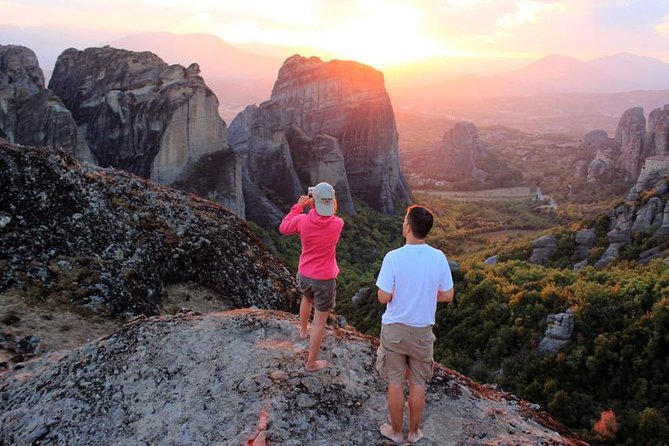
The photo stops are a major part of the outing. You get time to frame the monasteries against the pillars and plain, and the guide or driver may help with photos. The sunset portion is not just a quick pull-over. It is the reason the schedule runs late, and clouds can sometimes make the colors more dramatic, as happened on one rainy evening.
Do not expect every famous monastery to open its doors during this tour. The route passes the Great Meteoron, Roussanou, and Varlaam, but the usual interior visit is St. Stephen’s. If you want to see several monastery interiors, use this tour as a foundation and return independently another day.
The Byzantine Church of the Assumption of the Virgin Mary
The Byzantine Church of the Assumption of the Virgin Mary is an unusually worthwhile stop in Kalambaka. Allow about 30 minutes, though one past visitor felt this portion lasted too long compared with the rest of the outing.
The church is valued for its age and its 11th-century Byzantine frescoes. Look closely at the walls, where pieces from an ancient Greek temple dedicated to Apollo were reused in the construction. The building itself becomes a record of different eras placed one on top of another.
Inside, you can also spot parts of an older mosaic floor beneath the present surface. This is the sort of detail that is easy to miss without an explanation. The church remains active for local worship, so it is not simply a museum stop. Dress and behave accordingly.
Admission is not included. The listed Meteora admission charge is €7 per booking, and you should bring cash because card payment may not be accepted at the sites. It is better to have small euro notes ready than to discover this at the door.
A few more cave trips around Greece worth a look
- From Corfu: Day Cruise to Paxos, Antipaxos, & the Blue Caves
★ 4.3 · 4,800 reviews - Athens: Meteora Monasteries Day Trip with Caves and Lunch
★ 4.7 · 4,670 reviews - Zakynthos: Shipwreck Beach with Blue Caves Land & Sea Tour
★ 4.9 · 3,774 reviews - From Corfu Island: Antipaxos & Paxos Blue Caves Boat Cruise
★ 4.7 · 3,690 reviews
Entering St. Stephen’s without a staircase
St. Stephen’s is the monastery visited inside on the standard route, and its easy access is one of the tour’s strongest practical features. Instead of climbing a long stairway, you cross a small bridge to reach the entrance.
That makes it a good choice if you cannot manage many steps or simply want a monastery visit without turning the whole afternoon into a stair workout. You still get the feel of a functioning Meteora monastery, including its setting on the rock and its religious art.
Monastic life here dates back to the early 12th century. Hosios Antonios is associated with the site in the first half of the 15th century, while Hosios Philotheos rebuilt the small catholicon in 1545. A guide can make these names easier to place by explaining how solitary hermits gradually gave way to more organized communities.
The monastery has a strict dress code. Men need trousers and long sleeves. Women need a long skirt. If you arrive in shorts, trousers and skirts are supplied, but I would dress properly from the start. It is more comfortable and avoids interrupting your visit.
St. Stephen’s closes on Mondays. On that day, the route substitutes St. Nicholas or Roussanou. Confirm the exact plan if entering St. Stephen’s is your main reason for booking.
Hermit caves and the life before monasteries
The hermit caves may be the most distinctive part of the afternoon. These are not polished religious interiors. They are rough dwellings connected to the earliest solitary life on the rocks.
The stop helps you picture how monks lived before the larger monasteries were built. Guides have explained the caves, forests, and monastic communities across the Byzantine and Ottoman periods, along with the damage caused by World War II and later rebuilding.
This is where a good guide adds real value. Without context, the openings in the rock can look like small dark holes. With stories about isolation, prayer, food, and the move toward organized monastic life, they become evidence of a hard and unusual way of living.
The caves also help balance the more formal monastery visit. St. Stephen’s shows an established institution. The hermit dwellings show the solitary beginning that came before it.
Views of the Great Meteoron, Roussanou, and Varlaam
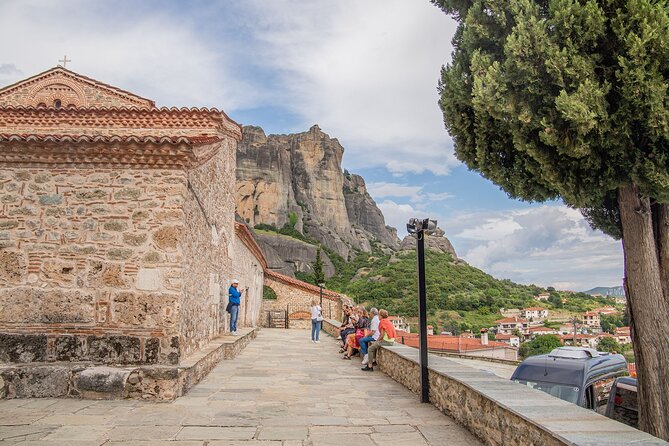
The route includes views and explanations of Meteora’s other major monasteries. The Great Meteoron is the largest and oldest. Its name refers to the rock formation and the idea of being suspended in the air. Saint Athanasios the Meteorite founded it and organized a communal monastic system, a major step in the development of Holy Meteora.
Varlaam, opposite the Great Meteoron, is the second largest monastery. It was founded in the mid-14th century by Hosios Varlaam, while the present catholicon was built in the 1540s by the brothers Theophanes and Nectarios Apsarades. Its wall paintings are linked by style to the painter Frago Catelano of Thebes.
Roussanou sits on a lower rock and is more accessible than several other monasteries. Its main church dates from the late 16th century and was decorated about 30 years later. The site suffered damage during World War II and became a convent in 1988.
You may not go inside these three on this outing. Still, seeing their positions from the road and viewpoints gives you a clearer idea of how extreme the original building sites were. If you plan to visit their interiors independently, your guide’s explanations can make the next visit much more meaningful.
Sunset timing and the four-hour promise
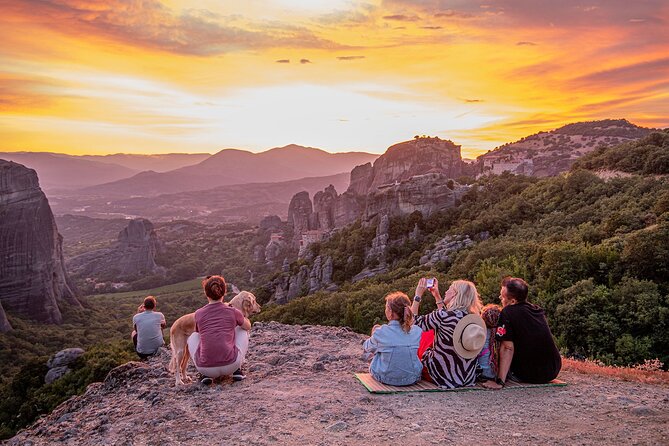
The stated duration is about four hours, but you should treat that as an estimate. Sunset changes throughout the year, and in June it can be very late. One outing returned around 9:30 p.m. on June 17, while other departures may finish closer to the advertised duration.
This is the biggest planning issue. The tour cannot offer a true sunset in midsummer and still promise an early return. If you want the final golden light, you accept the late finish.
The timing can also feel different depending on the day. One person found the outing perfectly paced, while another thought the church stop was too long and the overall day dragged. I would book it when the sunset itself is important to you, not when you need a precise end time.
Weather is another factor. The experience requires good weather. If poor conditions cancel it, you are offered another date or a full refund.
Price, language, and who gets the best value
At $36.28 per person, this is a good-value way to see Meteora if you are staying in Kalambaka or Kastraki. Transport alone saves planning time, while the guide adds local stories, geological background, monastery details, and help with viewpoints and photos.
The value is strongest for first-time visitors, people without a car, and anyone arriving later in the day. It also works well after a morning spent visiting monasteries independently. One particularly sensible plan is to see several monastery interiors in the morning, then use this outing for St. Stephen’s, the caves, church, stories, and sunset.
The live commentary is in English only. The free audio guide is available in nine additional languages, including Spanish, French, German, Italian, Portuguese, Russian, Polish, Korean, Chinese, and Japanese. If detailed spoken explanation in your own language is essential, the audio guide may feel limited compared with the English commentary.
The tour is highly rated, with 98 percent recommendation and a 4.9 rating from 706 ratings. That points to strong consistency, especially in guide quality and the balance of stops, but it does not remove the practical drawbacks: late returns, extra admission costs, English-led commentary, and only one regular monastery interior.
Should you book this Meteora sunset tour?
Book it if you want an easy, well-priced introduction to Meteora with a real sunset, one accessible monastery, the hermit caves, and enough historical explanation to understand what you are seeing. It is particularly useful if you are staying in Kalambaka or Kastraki and do not want to arrange transport.
I would choose it for a first afternoon or evening, then visit the other monasteries on your own the next morning or the following day. Bring cash, wear proper clothing, carry a light layer for changing temperatures, and leave your evening schedule open.
Skip it if you need a fixed return time, want to enter several monasteries, or require a live guide in a language other than English. For everyone else, this is a smart way to meet Meteora slowly enough to appreciate its stories, not just its spectacular rocks.
FAQ
How long does the Meteora sunset tour last?
The tour is listed as approximately four hours, but the exact length changes with the season and sunset time. In mid-June, the return may be around 9:30 p.m.
Where does the tour start?
The meeting point is Patriarchou Dimitriou 2 in Kalambaka, Greece.
Is hotel pickup available?
Yes. Pickup and drop-off are offered from hotels and Airbnbs in Kalambaka and Kastraki.
Which monastery is visited inside?
The usual interior visit is St. Stephen’s Monastery.
Are the Great Meteoron, Roussanou, and Varlaam visited inside?
The route includes views and information about these monasteries, but the standard plan does not include their interior visits.
Is St. Stephen’s Monastery accessible without stairs?
Yes. You cross a small bridge to reach the entrance instead of climbing a long staircase.
What happens if I take the tour on Monday?
St. Stephen’s is closed on Mondays. The tour visits St. Nicholas or Roussanou instead.
What should I wear to the monasteries?
Men need trousers and long sleeves. Women need a long skirt. Clothing may be provided at the monastery entrance if your outfit does not meet the dress code.
Is the tour available in Spanish?
The live tour is guided in English. A free audio guide is available in Spanish, French, German, Italian, Portuguese, Russian, Polish, Korean, Chinese, and Japanese.
Is the admission fee included?
No. A Meteora admission fee of €7 per booking is not included. Bring cash because cards may not be accepted at the sites.
Just added around Greece
- From Faliraki : Speedboat tour kalithea caves&antony kouin★ 5.0 · 25 reviews
- From Ag Anna: Rina’s Cave and Ano and Kato Koufonisi Cruise★ 4.2 · 504 reviews
- Faliraki: Boat Trip to Anthony Quinn & The Caves with Drinks★ 4.8 · 386 reviews
- FALIRAKI: BOAT TRIP TO ANTONY QUINN, LADIKO, AFANDOU CAVES★ 4.9 · 56 reviews
- From Naxos: Koufonisia Boat Cruise and Rina’s Cave w/ Lunch★ 4.3 · 101 reviews
- Faliraki: Boat Trip to Afandou Caves, Anthony Quinn & Ladiko★ 4.8 · 139 reviews
- From Lefkimmi: Paxos, Antipaxos & Blue Caves Boat Tour★ 4.2 · 62 reviews
- Zakynthos: Shipwreck & Caves Private Boat Tour with Skipper★ 4.7 · 63 reviews
Evening Experiences, compared.
Benagil Caves Speed Boat Tour with Sunset Option
Read our review →
Underground Vaults Evening Ghost Tour with Whisky
Read our review →
Catania: Sunset Jeep Tour of Mount Etna and Lava Flow Caves
Read our review →
Tuk-Tuk, Bamboo Train, Killing/Bat Caves, Sunset
Read our review →
Etna Sunset Tour: Volcano trek, Cave & tasting from Catania
Read our review →Browse the lists this cave appears in