
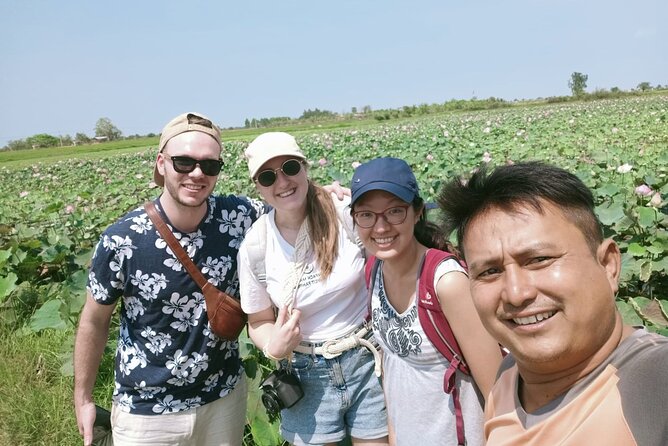
Review · TRAIN EXPERIENCES
AfternoonTour.Bamboo train.killing cave with Secret bat cave
Battambang gets interesting after lunch. This five to six hour tour links the city, rice fields, farms, caves, and the old Bamboo Train in one easy afternoon. I like the mix of famous sights and small local stops, especially the mushroom farm and sunset bat cave. I also like that you travel by tuk-tuk with a local guide, rather than spending the day inside a large coach.
The main drawback is the extra cost: the Bamboo Train is $5 per person and the bat cave costs $1, so the advertised $15 price becomes at least $21. The city tour is also brief, and the full experience depends on good weather. Still, guides such as Mr Kim have earned praise for clear English, humor, and thoughtful explanations of Cambodia’s difficult past.
Key points to know before booking
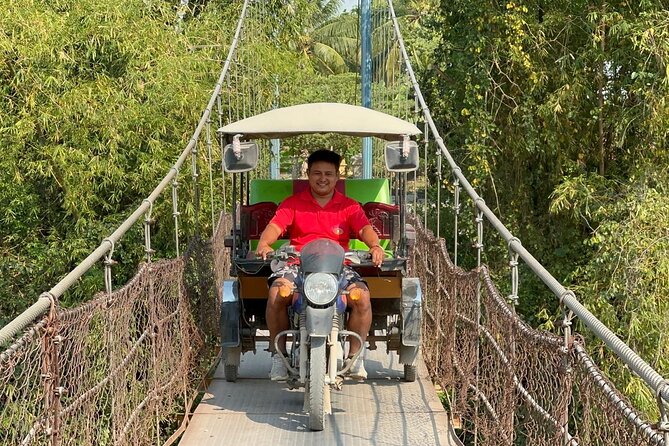
- The Bamboo Train is the afternoon’s main thrill: You ride the original local version, with the practical possibility of another train needing to pass.
- The killing cave adds serious historical context: This is not just a sightseeing stop, and your guide explains the events connected with the site.
- The sunset bat cave provides a strong finish: You follow rice-field roads and watch bats leave the cave as evening arrives.
- Small farm visits keep the tour local: You see green oranges at a fruit farm and learn how mushrooms are grown in a village.
- A tuk-tuk makes the countryside feel close: The open ride lets you see ordinary roads, fields, and villages between stops.
- Budget at least $21 per person: The tour price excludes $5 for the Bamboo Train and $1 for the bat cave.
Why this half-day tour works so well in Battambang
Battambang is easy to underestimate. Many people pass through for the Bamboo Train, but the surrounding countryside gives the town much of its appeal. This tour uses the afternoon well, beginning around 1pm and continuing until the sunset period.
I like the way the schedule moves from city sights to rural roads. You get a short introduction to Battambang, then leave town for farms, bridges, caves, and rice fields. It feels more varied than a simple point-to-point attraction visit.
The tour is limited to a maximum of 10 people. That is small enough to keep the tuk-tuk ride personal, while still allowing you to share the cost of the guide and transport. Your transportation, local guide, and cold water are included.
The tour has an average advance booking time of five days. That does not mean you must reserve exactly five days ahead, but it is a useful signal if your Battambang schedule is tight. Pickup is offered in Battambang, with the meeting period listed as 12:30pm to 1pm.
More Train Rides around Battambang:
- Battambang: Tuk-Tuk, Bamboo Train, Killing/Bat Caves, Sunset
★ 4.9 · 1,436 reviews - Afternoon tour by tuk tuk to bamboo train,bat cave,killing cave,countryside.
★ 5.0 · 344 reviews - Battambang: Bamboo Train, Bat Cave, Killing Cave by Tuk Tuk
★ 5.0 · 182 reviews
A brief tuk-tuk introduction to Battambang
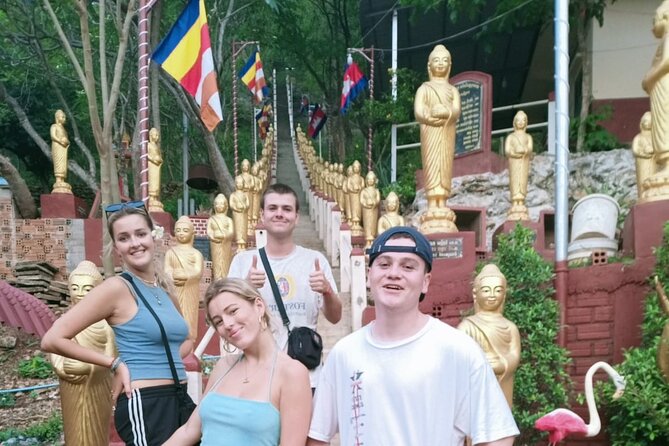
The afternoon begins with a short tuk-tuk tour through the city. You pass major historical landmarks while your guide gives you some background on Battambang and Cambodia.
I would treat this part as an orientation rather than a full city tour. It is useful for getting your bearings and understanding the town before heading into the countryside, but it is not designed for long visits at every landmark.
That short length may suit you if you are more interested in the Bamboo Train and caves. If you want a detailed exploration of Battambang’s architecture, markets, and museums, you would need extra time on another day.
The quality of this opening depends heavily on your guide. Mr Kim is specifically praised for his English, humor, and ability to explain Cambodian history. That matters here because a quick ride through town can otherwise feel like little more than transport.
Riding Battambang’s original Bamboo Train
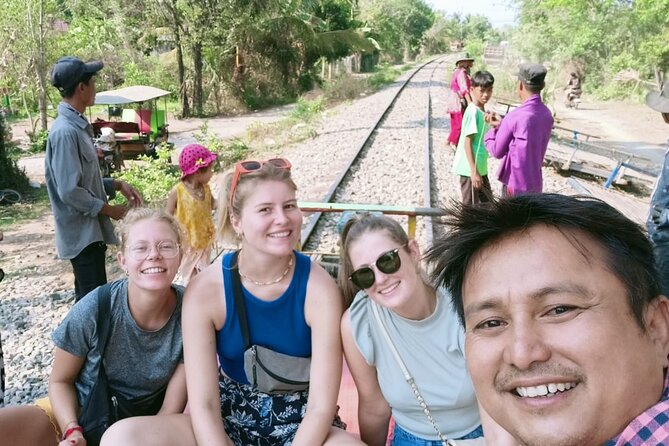
The Bamboo Train is the tour’s best-known stop, and it is easy to understand why. You ride a simple bamboo platform fitted to a rail chassis, rather than boarding a polished tourist train. The experience is basic, local, and a little unpredictable.
The old system operated with one track, so the lighter train generally had to make way when another train approached. The practical rule was simple: the train with fewer passengers was removed from the track. That can make the ride feel more like a working local tradition than a carefully staged attraction.
A ride on the old train is not about comfort or speed. It is about the oddness of the machine, the open countryside, and the chance to experience something that became closely associated with Battambang. One tour guest described the highlight as the Bamboo Train, especially when a train from Phnom Penh had to be accommodated.
You should allow for a little waiting or rearranging. The exact operation can depend on local conditions, and the tour description makes clear that the ride is organized by local people. That is part of its character, but it also means you should not expect a tightly controlled theme-park schedule.
The $5 admission fee is not included. Add that cost before comparing this tour with other Battambang options. Even with the extra charge, the ride is good value if you want the old-style experience rather than a quick photo stop.
Green oranges and the rural food economy
After the train, the tuk-tuk continues through the countryside to a fruit farm. The featured produce is green oranges, an interesting reminder that color does not always tell you how a fruit tastes or how local growers use it.
This is a short stop, but it adds a useful human scale to the afternoon. Instead of seeing only temples and viewpoints, you get a look at what people grow and sell. The farm visit also helps break up the driving between the larger attractions.
The tour does not promise a meal or a formal tasting, so I would not book it expecting a food tour. Think of this as a brief agricultural visit that gives context to the fields and villages outside Battambang.
A few more cave trips around Battambang worth a look
- Battambang Tuk Tuk tour: Bambootrain, Killing & Bat Caves,Sunset
★ 5.0 · 799 reviews - Full Day tour .City tour.Countryside.Bamboo Train.Secret Bat Cave
★ 5.0 · 178 reviews - Afternoon Tour: Bamboo Train, Killing Cave &Bat Cave
★ 5.0 · 73 reviews - Battambang: Bamboo Train, Bat Cave and Killing Cave Tour
★ 4.9 · 58 reviews
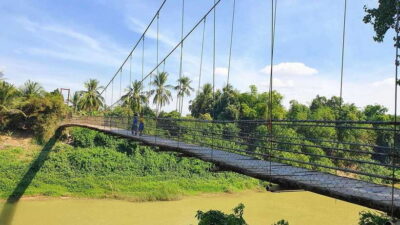
Crossing the swinging suspension bridge
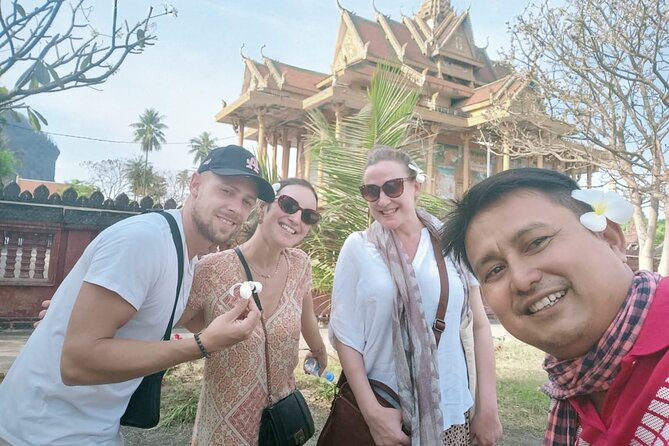
The suspension bridge is one of the tour’s best photo stops. You cross the bridge and have time to take pictures, with the countryside providing the setting.
A swinging bridge is also a good example of why a tuk-tuk tour can be more rewarding than a fixed attraction list. You are not only checking off major sights. You are stopping at places that form part of local daily life and rural movement.
The bridge may not occupy a large part of the afternoon, but it gives you a change of pace. After the train and before the mushroom farm, it offers a simple physical experience and a chance to enjoy the open surroundings.
If you dislike swaying bridges, you can still appreciate the stop without making the crossing a personal challenge. The important point is that it is included as a picture opportunity, not presented as a major adventure activity.
Learning how mushrooms are grown
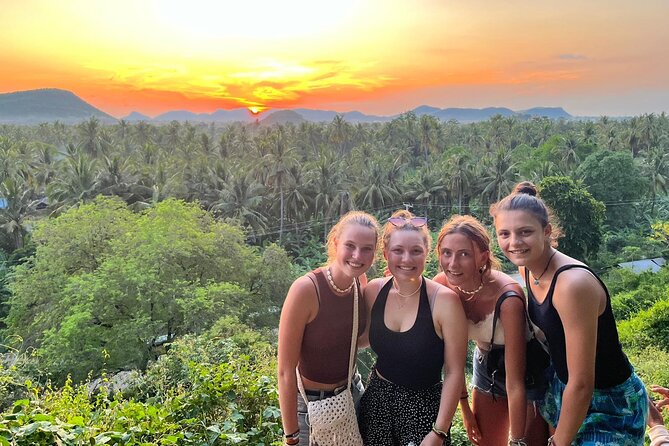
The mushroom farm is another modest stop with real value. You see how local people grow mushrooms in the village and hear an explanation of the process.
I like this part because it gives the guide something practical to explain. History can feel distant, while farming methods show how people make a living now. The stop also keeps the afternoon from becoming a string of famous names with no connection to ordinary life.
The supplied details do not specify the mushroom varieties, the growing method, or how long you stay. Your guide will explain what is available on the day. It is best to approach this as a short working-farm visit rather than a large educational center.
Taken together, the fruit farm and mushroom farm add balance. You see two small examples of local production, and you travel through the rice-growing countryside between them.
The killing cave and Cambodia’s painful past
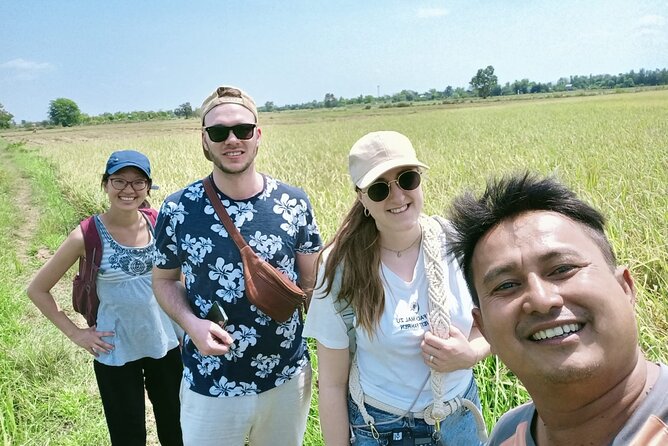
The killing cave is the most serious stop on the route. Your guide explains the Cambodian history connected with the site, including the events that make the cave such a difficult place to visit.
This is not a casual photo stop. I appreciate that the experience gives time to explain what happened rather than treating the cave as just another scenic attraction. One detailed account singled out the historical explanation at the killing cave as a strong part of the afternoon.
You should prepare yourself for an emotional visit. The subject is painful, and the setting can feel stark. If you prefer a light, purely scenic excursion, this part may be uncomfortable. If you want to understand more about Cambodia beyond its temples and countryside, it gives the day important depth.
The tour description identifies a $1 admission fee for the Battambang bat caves. Since the route includes both the killing cave area and a later secret bat cave, confirm with the guide how the admission is applied on the day. The listed cost is small, but it is still not part of the $15 tour price.
Rice-field roads and the secret bat cave
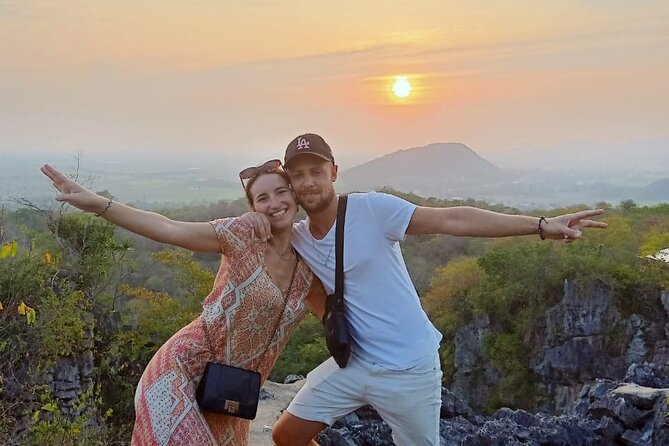
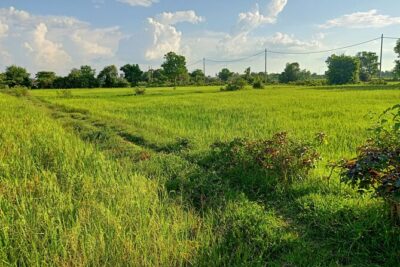
As afternoon fades, the tuk-tuk follows roads through rice fields toward the secret bat cave. This is where the schedule begins to work as a whole. The rural drive, open fields, and changing light lead naturally into the final stop.
The bat cave is best known for the sight of bats leaving the cave around sunset. You may see a long stream of bats moving into the evening sky, making this one of the tour’s most memorable photo opportunities.
Timing matters here. The guide needs to balance the earlier stops with the sunset arrival, and the exact spectacle depends on nature rather than a fixed performance. The tour is built around this timing, but no wildlife sight can be guaranteed with absolute precision.
I like this ending because it is visually strong without being overproduced. After learning about farms and Cambodian history, you finish by watching a natural event from the countryside. It gives the afternoon a clear final moment before returning to Battambang.
The bat cave is also where weather matters most. The activity requires good weather, and poor conditions can lead to a different date or a full refund. Bring a little patience if clouds or rain affect the timing.
What the tuk-tuk ride is really like
Transportation is by tuk-tuk for the full outing. That suits the route because you move through city streets, village roads, rice fields, and countryside stops without being sealed away from the surroundings.
You should expect an open-air ride, road dust, and the ordinary bumps of rural travel. Those are not defects in this setting. They are part of seeing Battambang at ground level, though anyone who wants a quiet, smooth vehicle should set expectations accordingly.
Cold water is included, which is useful during a long afternoon in the Cambodian heat. The tour lasts about five to six hours, so water and sensible clothing will make the ride easier.
Your guide is central to the experience. Mr Kim receives particularly strong praise for being funny, clear in English, and generous with explanations. Another account describes him as a very good guide for both the city and countryside. If you book, asking for him may be worthwhile, though availability is not stated.
Is the $15 price good value?
The base price is $15 per person, which is reasonable for a five to six hour guided outing with tuk-tuk transportation, cold water, and several stops outside town.
The key point is that the headline price is not the final cost. Add $5 for the Bamboo Train and $1 for the bat cave, bringing the known total to at least $21 per person. Group discounts may be available, but the details are not provided, so check the final booking price carefully.
For that total, you receive a full afternoon rather than a single attraction. You get transport, a guide, the old train, two farm visits, a bridge, a historical site, and the sunset bat cave. I consider that good value if you want variety and local contact.
The value is weaker if you only care about the Bamboo Train. In that case, a shorter and cheaper arrangement might suit you better. This tour makes sense because it combines the train with the countryside and history.
Who should book this afternoon outing?
I would recommend it to you if you have one free afternoon in Battambang and want to see several key sights without arranging separate transport. It suits curious visitors who enjoy local farms, simple rural attractions, history, and an evening nature stop.
It is also a good fit for couples, small groups, and solo visitors who prefer a guided experience. The maximum group size of 10 keeps it from feeling like a large coach excursion.
You may want another plan if you need extensive city sightseeing, dislike open-air transport, or want every stop to run to the minute. The Bamboo Train and bat cave involve local conditions, and the sunset portion depends on the weather.
Most people can participate, and service animals are allowed. The tour is near public transportation, though pickup in Battambang is offered. Confirmation is received at booking, and free cancellation is available up to 24 hours before the start time. Inside that period, refunds are not provided, and changes are not accepted.
Should you book it?
Book this tour if you want a busy, varied afternoon that shows Battambang beyond its central streets. The strongest reasons are the old Bamboo Train, the thoughtful explanation at the killing cave, and the bat flight at sunset.
I would especially choose it when you have limited time and want a guide to connect the stops. The extra $6 in admission fees is easy to overlook, but the full cost remains fair for the length and range of the outing.
Skip it if you want a slow city day or a fully private, polished sightseeing experience. For everyone else, this is a practical way to fit Battambang’s history, countryside, farming life, and evening wildlife into one well-used afternoon.
FAQ
How long does the tour last?
The tour lasts approximately five to six hours and takes place in the afternoon, beginning with pickup around 1pm.
What is included in the price?
The price includes tuk-tuk transportation, an experienced local tour guide, and cold water.
How much do the extra admission fees cost?
The Bamboo Train costs $5 per person. The listed admission fee for the Battambang bat caves is $1 per person.
Is the Bamboo Train admission included?
No. The Bamboo Train admission cost is separate from the $15 tour price.
How many people can join the tour?
The activity has a maximum of 10 travelers.
Does the tour offer pickup?
Yes. Pickup is offered in Battambang. The stated meeting period is between 12:30pm and 1pm.
What happens if bad weather cancels the tour?
If poor weather causes cancellation, you will be offered a different date or a full refund. You can also cancel at least 24 hours before the start time for a full refund.
Just added around Battambang
- Afternoon tour to Original Bamboo train. Bat cave. Killing cave★ 5.0 · 25 reviews
- Afternoon Tour BambooTrain & Bat Cave★ 5.0 · 57 reviews
- Full Day-Tour: Handicraft, Bamboo train, Killing cave. Bat cave★ 5.0 · 29 reviews
- Full/Half Day Tuk TuK: Handicrafts Bambootrain Killing&Bat Caves★ 5.0 · 14 reviews
- Full Day tour .City tour.Countryside.Bamboo Train.Secret Bat Cave★ 5.0 · 178 reviews
- Full day tour by bicycle & tuk tuk,bamboo train,bat cave,villages★ 5.0 · 27 reviews
- Half-day swing bridge, bamboo train, batcave & Killing cave★ 4.9 · 24 reviews
- Battambang: Bamboo Train, Bat Cave and Killing Cave Tour★ 4.9 · 58 reviews
Train Experiences, compared.
Tuk-Tuk, Bamboo Train, Killing/Bat Caves, Sunset
Read our review →
Afternoon tour by tuk tuk to bamboo train,bat cave,killing cave,countryside.
Read our review →
Full Day tour .City tour.Countryside.Bamboo Train.Secret Bat Cave
Read our review →
Corinth, Cave of Lakes, Odontotos Railway Private Tour with Greek Lunch Included
Read our review →
Afternoon Tour: Bamboo Train, Killing Cave &Bat Cave
Read our review →
Browse the lists this cave appears in