Review · TOURS
Day Tour To Desert Castles & Cave of the Seven Sleepers
Desert ruins tell a different Jordanian story. This private day trip from Amman combines three Umayyad desert castles with the Roman-era Cave of the Seven Sleepers, giving you a focused look at eastern Jordan without arranging transport yourself. I especially like the door-to-door pickup and the sharply different character of each castle, from Azraq’s dark basalt walls to Qusayr Amra’s remarkable frescoes. The main drawback is clear: this is primarily a private driver service, not a fully guided archaeological tour.
At about $83.57 per person, the value depends on your group size and expectations. You get a private, air-conditioned vehicle, bottled water, onboard Wi-Fi, fuel, and an English-speaking driver, but lunch and most entrance fees are extra. Drivers such as Mohammad Bardaghawi, Danny, and Ali Abu Hani have been praised for punctuality, flexibility, and useful explanations, though the quality of interpretation may vary by driver.
Key points at a glance
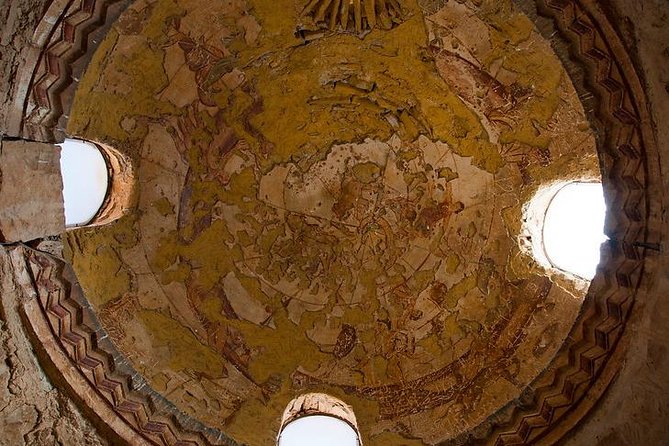
- Qusayr Amra’s frescoes are the artistic highlight, with hunting scenes, animals, birds, portraits, and an early zodiac image on the domed ceiling.
- Qasr al-Azraq connects the desert castles to Lawrence of Arabia, while its black basalt construction gives it a look unlike the other stops.
- Qasr al-Kharrana remains mysterious, with historians still debating whether it served as a fort, caravan stop, meeting place, or rest house.
- The Cave of the Seven Sleepers adds a religious legend to a day otherwise centered on early Islamic architecture.
- A private car makes the route easy, especially if you want hotel pickup, flexible conversation, and no need to navigate eastern Jordan yourself.
- Do not expect a full guided tour at every site, since no local guide or formal tour leader is included.
Why eastern Jordan makes a worthwhile day out
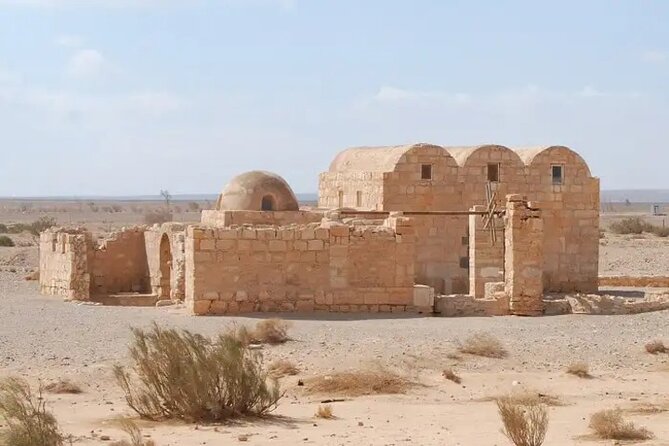
Amman gives you Roman ruins, busy streets, cafés, and hilltop views. East of the capital, the mood changes quickly. The city gives way to open desert, low hills, red earth, and scattered remains from early Islamic and Roman periods.
The so-called desert castles were built mainly during the Umayyad period in the seventh and eighth centuries. The Umayyad caliphates benefited from trade routes and cultural exchange, and their buildings show that mix of practical design, courtly life, and military control. They are not all castles in the narrow sense. Some were country retreats, baths, caravan stops, or fortified compounds.
That variety is what makes this route work. You are not looking at three copies of the same ruin. One site is famous for art, another for its strange architectural plan, and another for its connection to modern military history.
I also like the fact that this outing reaches a part of Jordan many short Amman itineraries skip. You get a sense of how power and travel worked beyond the major Roman cities. The countryside itself is part of the appeal, especially where the red desert and low hills stretch around the road.
The day lasts roughly five to eight hours. That broad range matters. Your exact timing depends on pickup, how long you explore each stop, traffic, and the pace you set with your driver.
A few more cave trips around the world worth a look
- Chichen Itza, Cenote, and Valladolid Tour
★ 5.0 · 24,293 reviews - Naples: Naples Underground Entry Ticket and Guided Tour
★ 4.4 · 21,781 reviews - Chichen Itza, Cenote & Valladolid Tour with Tequila and Lunch
★ 4.5 · 15,789 reviews
Qasr al-Azraq and its dark basalt walls
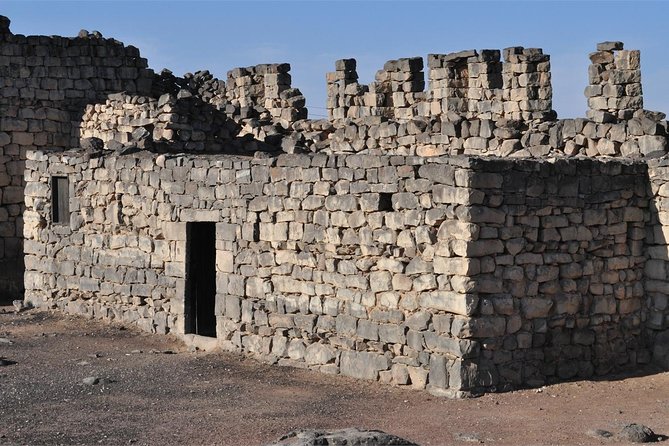
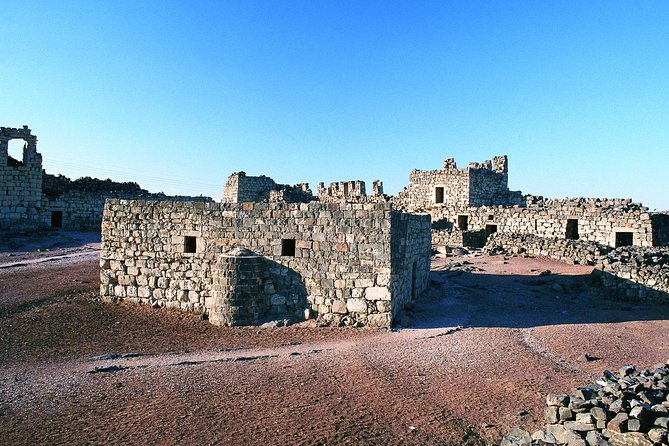
Qasr al-Azraq is usually the first castle on the route. The name is linked to the area’s basalt stone, and the building has a darker, heavier appearance than the sandy-colored ruins that follow.
Allow about 30 minutes here. That is enough for a walk through the remains and a look at the basic layout, though you may want longer if you enjoy photographing stonework or reading the site’s history at a slow pace.
The castle’s most famous modern connection is Lawrence of Arabia. It served as a headquarters for T. E. Lawrence during the Arab Revolt, which gives the site a bridge between medieval Jordan and the events of the early twentieth century.
The Umayyad connection is older. The wider group of desert buildings reflects the growth of early Islamic architecture after the seventh century. Across Jordan, these sites include forts, towers, baths, and enclosed compounds. At Azraq, the solid construction helps you picture the practical role of these places along desert routes.
The free admission here helps keep the total cost down. Still, do not expect a polished museum-style presentation. The appeal is the structure itself, the broad setting, and the layers of use over time.
Your driver may provide context, but the tour does not promise a local guide at each stop. If you want detailed architectural analysis, bring a guidebook or arrange a separate guide. If you are happy to explore with a good driver’s commentary, the format can work well.
Qusayr Amra, Jordan’s great fresco stop
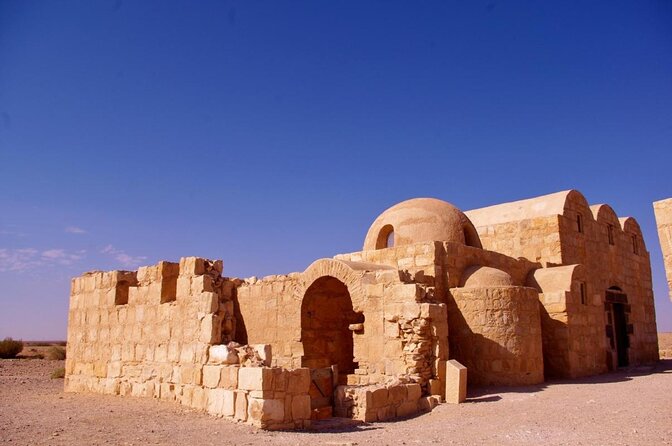
Qusayr Amra is the artistic centerpiece of the day. It is a UNESCO-listed World Heritage site and one of the most important surviving examples of early Islamic art and architecture.
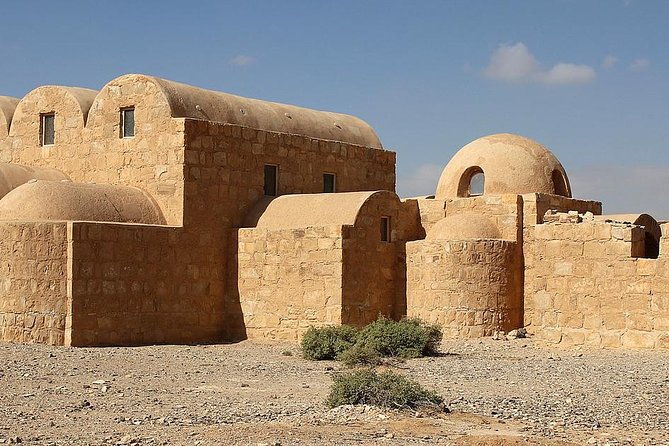
The building is smaller than many people expect. It was not a giant military fortress but a country retreat or bath complex. The surviving structure has vaulted rooms and a hot room whose domed ceiling carries an early representation of the zodiac.
The frescoes are the reason to make the trip. You can see hunting scenes, animals, birds, and human portraits across the walls and ceiling. These images give the building a more personal feel than a bare defensive ruin. Instead of seeing only thick walls and empty rooms, you get a glimpse of courtly leisure and the visual culture of the Umayyad period.
Plan on around 30 minutes, though this stop deserves your full attention. Look up. The ceiling details are easy to miss if you move too quickly, and the scale of the building makes it tempting to assume there is not much to see.
Admission is not included in the standard tour price, so budget for the entrance charge unless you select a booking option that includes entry fees. The supplied details do not give the exact fee, so check the current amount when booking.
This is also the stop where the limits of the private driver format matter most. A driver can point you toward the frescoes and explain the broad story, but a dedicated guide would add more detail about the artwork, the building’s original use, and the symbolism of the zodiac.
Qasr al-Kharrana, an elegant desert puzzle
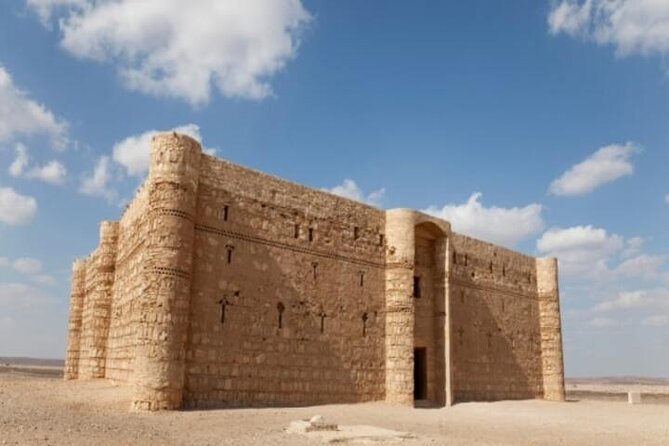
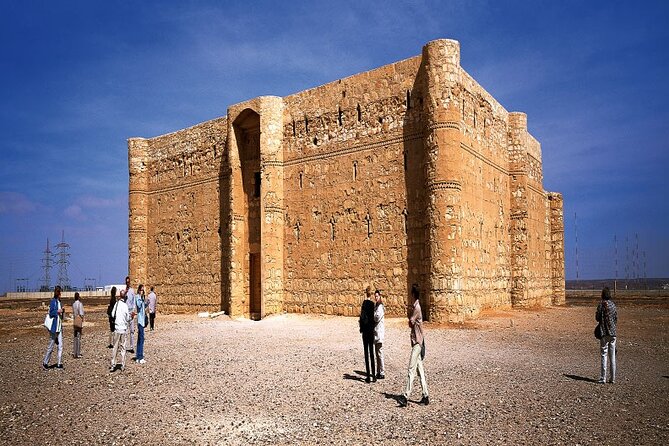
Qasr al-Kharrana is one of the most photogenic stops. Its square form, rounded corner turrets, and central courtyard create a strong, simple outline against the desert.
Inside, rooms line the courtyard. Look for ornamental niches and pilasters, which give the building a more refined appearance than its defensive exterior suggests. The structure feels both practical and formal, with thick walls and repeated architectural details.
The building’s purpose remains uncertain. It may have been a defensive fort, a caravanserai for passing merchants, a meeting place, or a rest house. That uncertainty is part of its charm. You are not simply being shown a ruin with one fixed explanation. You are looking at a building that still raises basic questions about how people used it.
A 30-minute stop is enough for the main courtyard and rooms. You may want additional time if you enjoy taking photographs or comparing the design with Qusayr Amra. The two buildings are close enough in the day’s sequence to make their contrast useful: one is celebrated for paintings, the other for its shape and unanswered purpose.
Admission is not included unless you choose the relevant option. As with Qusayr Amra, confirm the current entrance arrangements before you go.
Same corner of the map, a different way in:
- Colosseum: Underground and Ancient Rome Tour
★ 4.7 · 12,691 reviews - Edinburgh: Underground Vaults Tour
★ 4.6 · 11,758 reviews - Portimão: Benagil Caves Speed Boat Tour with Sunset Option
★ 4.8 · 11,663 reviews - Albufeira: 2.5-Hour Benagil Caves & Dolphin Watching
★ 4.6 · 10,710 reviews
The Cave of the Seven Sleepers and its old legend
The final stop is the Cave of the Seven Sleepers, also called Ashabul Kahf or Ahl al Kahf. It adds a different kind of interest to the route.
According to the long-standing story, seven Christian men and their dog hid in the cave after persecution under the Roman Emperor Trajan. They slept for 309 years and awoke when their beliefs were no longer a reason for persecution.
The cave is small, so keep your expectations realistic. This is not a vast underground system or a dramatic natural cavern. Its importance comes from the story, the religious meaning, and the visible remains connected with the men said to have slept there.
Tombs and ruins around the cave add to the sense of an old sacred site. Some remains can still be seen inside. A person at the site may explain much of the story, as happened during one visit described in the supplied information, but that service is not listed as a guaranteed part of the tour.
The cave works well at the end because it shifts your attention from Umayyad rulers and desert routes to faith, memory, and local tradition. Some people will find it the most moving stop. Others may prefer the architecture at Qusayr Amra or Qasr al-Kharrana.
What the private car adds to the day
The private format is the strongest practical feature. Pickup is offered from your hotel in Amman, and only your group rides in the vehicle. You do not have to wait for a large coach, match the pace of strangers, or work out the route through eastern Jordan on your own.
The vehicle is air-conditioned, and bottled water, fuel, and onboard Wi-Fi are included. An English-speaking driver handles the driving and return drop-off. Several drivers have received praise for being punctual and flexible, including Mohammad Bardaghawi, Danny, and Ali Abu Hani.
One particularly useful detail is the ability to discuss the day with your driver. Mohammad Bardaghawi was described as arranging the order of the stops around Friday, the Muslim day of rest. He also provided enough background at the sites that a separate guide was not considered necessary for that outing.
Another driver helped locate an inexpensive breakfast place with local character and pointed out the direction of Iraq using roadside signs. Those small touches can make a private ride feel more personal than a basic transfer.
Still, you should ask yourself what kind of service you want. If you expect a professional guide walking beside you at every castle, this may disappoint. The tour includes transportation and a driver, not a dedicated local guide. Some drivers offer strong commentary, but that should be treated as a benefit rather than a guaranteed tour feature.
Price, entry fees, and overall value
The listed price is about $83.57 per person. For a private half-day or longer outing from Amman, that can be fair value, especially if two or more people share the vehicle and you value convenience.
The price covers transportation, hotel pickup, an air-conditioned vehicle, Wi-Fi, bottled water, fuel, and an English-speaking driver. Group discounts may be available. Lunch is not included, and entrance fees are generally extra. Qasr al-Azraq is listed with free admission, while the other sites may require payment.
The value is strongest for you if you do not want to rent a car or manage the route yourself. The driver removes the main transport problem and gives you the chance to ask questions along the way. The value is weaker if you want a formal archaeological tour with detailed explanations, because a local guide is not included.
The tour’s 4.8 rating from 15 ratings and 93 percent recommendation suggest strong satisfaction, but the sample is small. One dissatisfied customer felt the service was mostly a ride to the castles and back. That criticism is fair enough to keep in mind. Read the description as a private transport tour with cultural commentary, not as a fully guided museum-style excursion.
Who should book this Amman day trip?
I would recommend it to first-time visitors who have already seen Amman’s main sights and want a manageable outing into eastern Jordan. It also suits couples, families, and small groups who prefer a private car and flexible conversation.
You will get the most from it if you enjoy ruins, early Islamic architecture, religious stories, and open desert views. Qusayr Amra is especially rewarding for anyone interested in art, while Qasr al-Azraq and Qasr al-Kharrana appeal more to people who like military buildings and unresolved historical questions.
This is less suitable if your main goal is a long, scholarly explanation at every site. It is also not the best choice if you want lunch, a guaranteed guide, or a tightly fixed schedule included in the price.
Free cancellation is available when you cancel at least 24 hours before the start time. Changes or cancellations made inside that window are not accepted for a refund.
Should you book the desert castles tour?
Book it if you want an easy private route from Amman to four unusual historical sites, and if you are comfortable exploring some places independently. The combination of Qusayr Amra’s frescoes, Qasr al-Kharrana’s strange design, Azraq’s Lawrence connection, and the Seven Sleepers legend gives the day a good range.
Before paying, confirm two things: the exact entrance-fee option and how much historical commentary your assigned driver provides. If you treat the outing as private transport with helpful interpretation, the price is reasonable. If you expect a dedicated guide, arrange one separately or choose a more guided product.
FAQ
How long does the tour take?
The tour lasts approximately five to eight hours, including transport from Amman, time at the four sites, and the return hotel drop-off.
Is hotel pickup included?
Yes. The tour offers round-trip door-to-door transportation from Amman.
Is this a private tour?
Yes. Only your group participates in the activity.
Are entrance fees included?
Entry fees are generally at your own expense, although an option with entry fees may be available when booking. Qasr al-Azraq is listed with free admission, while the other sites are not included in the standard price.
Is lunch included?
No. Lunch is not included.
Is a local guide included?
No local guide is included. The tour provides an English-speaking driver, who may offer explanations during the route and at the sites.
What happens if I need to cancel?
You can receive a full refund if you cancel at least 24 hours before the experience start time. Cancellations or changes made less than 24 hours before the start time are not accepted for a refund.
Just added around the world
- Hanoi to Ninh Binh Day Trip: Mua Cave, Trang An Boat Ride – Lunch★ 5.0 · 26 reviews
- Hoa Lu Temple, Trang An boat trip & Mua Cave Mountain day trip – best selling★ 5.0 · 36 reviews
- Ninh Binh Day Tour Hoa Lu,Bai Dinh Trang An,Tam Coc, Mua Cave★ 5.0 · 15 reviews
- Mua Caves – Trang An – Hoa Lu Day Tours★ 4.0 · 40 reviews
- Ninh Binh 2 days,1 night from Hanoi: Hoa Lu – Mua Cave – Tam Coc – Cuc Phuong★ 5.0 · 24 reviews
- Hoa Lu – Mua Cave – Tam Coc/Trang An – DELUXE Small Group Tour★ 5.0 · 39 reviews
- BEST RATE GUARANTEED 1 Day Trang An – Tam Coc – Mua Cave – Hoa Lu★ 4.5 · 17 reviews
- Mua Cave – Tam Coc – Bich Dong Day tour with transfer, local family & bike★ 5.0 · 25 reviews
Tours, compared.
Naples Underground Entry Ticket and Guided Tour
Read our review →
Chichen Itza, Cenote & Valladolid Tour with Tequila and Lunch
Read our review →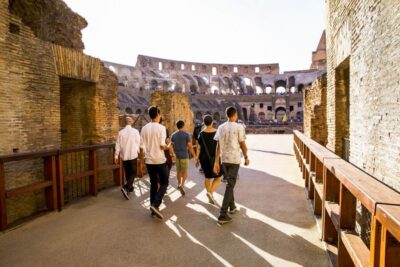
Colosseum: Underground and Ancient Rome Tour
Read our review →
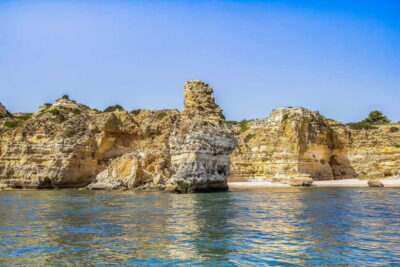
Benagil Caves Speed Boat Tour with Sunset Option
Read our review →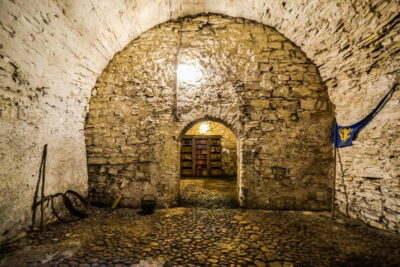
Oldtown, Medieval Underground & Dungeon History Tour
Read our review →