

Review · MUSEUMS
London: Postal Museum Entry Ticket and Underground Rail Ride
The post office has a secret underground story. London’s Postal Museum brings that story to life with interactive displays, old equipment, and a short ride through the former Mail Rail tunnels. I especially like the chance to see the Penny Black and the flintlock pistols once used to protect mail, two small objects that make postal history feel surprisingly human. The main drawback is that the train ride lasts only about 15 minutes, and the museum can feel aimed more at children than adults.
I also like the hands-on mail-sorting carriage, complete with a wobbly floor, and the way projected films and audio explain how the underground railway worked. At $24 per person, the ticket is fair if you spend two or three hours exploring, but less convincing if you arrive expecting a long train journey or a large national museum.
The visit suits families especially well, though adults who enjoy transport, communications, social history, or old London will find plenty to hold their attention. Plan extra time beyond the advertised 1.5 hours if you want to read the displays, try the activities, and stop at the café.
Key points to know before you go

- Mail Rail lasts about 15 minutes: The underground ride is the main attraction, but it is brief and includes projected films and commentary.
- The Penny Black is on display: You can see the world’s first postage stamp among objects tracing more than 500 years of postal service.
- Hands-on exhibits work well for families: Try sorting letters on a mock-up carriage with a moving floor, design a stamp, and explore educational games.
- The museum goes beyond letters: Exhibits cover postal boxes, telephone boxes, communication, mail coaches, and the people who kept the system moving.
- The tunnels can feel tight: The ride may not suit anyone uncomfortable in enclosed spaces, and taller visitors may find the small train less comfortable.
- Allow two to three hours: The listed duration is 1.5 hours, but many visitors run out of time in the main exhibition.
Why London’s Postal Museum is worth your time
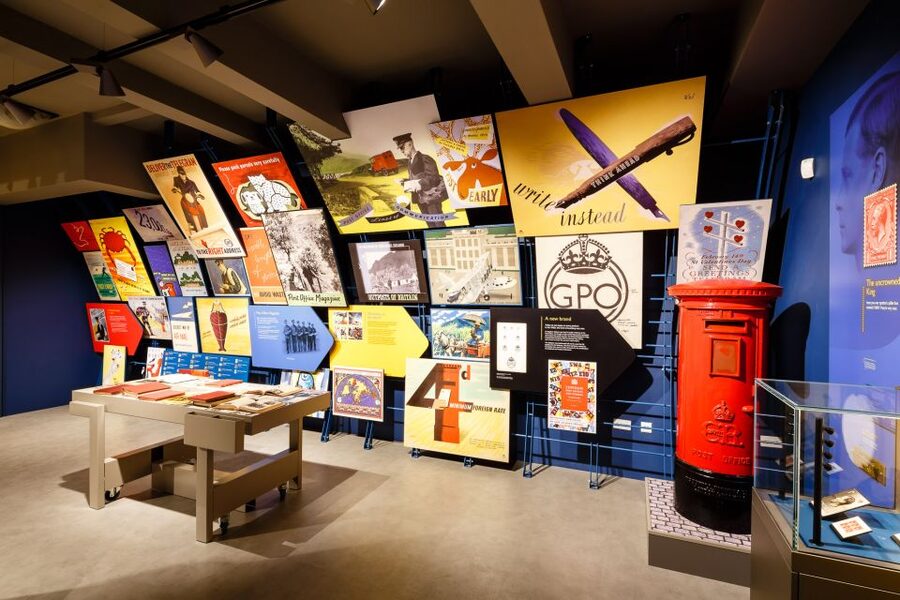
London’s Postal Museum is not simply a display of stamps and old envelopes. It tells the story of how people stayed in touch before phones, email, and instant messages took over daily life.
The museum covers more than 500 years of postal service. That long span gives you a useful sense of change: mail began as a system for moving messages between powerful people and institutions, then became part of ordinary family life, business, and national communication.
I like attractions that explain everyday systems most people take for granted. Here, you can see how letters were collected, sorted, protected, and delivered. The displays also show how postal work depended on people, horses, coaches, sorting rooms, railway workers, and later underground transport.
The museum’s best quality is its variety. You are not asked to read wall text for an hour. You can watch films, handle interactive displays, try a sorting challenge, inspect historic objects, and then board a train into the old tunnels.
That mix is why the experience works for different ages. Children have things to do, while adults can fill in the social and technological story around them.
More Museum Visits around the UK:
- Krakow: Rynek Underground Museum Guided Tour
★ 4.6 · 1,122 reviews - Coba Multun-Ha Cenote Tulum and Mayan Museum Small Group
★ 4.5 · 773 reviews - Sacromonte Caves Museum Admission Ticket
★ 4.6 · 502 reviews
The Penny Black and the beginnings of modern mail
One of the most important objects here is the Penny Black, widely recognized as the world’s first postage stamp. Its importance is easy to miss if you only see it as a small black square, so take a moment to consider what it changed.
Before prepaid stamps, postal charges could be complicated and expensive. The Penny Black helped create a simpler system in which the sender paid a standard rate. That change made regular letter writing more practical for a much wider part of society.
The museum places this object within a larger story rather than treating it as an isolated treasure. You see how postal systems developed, how addresses and collection methods changed, and how communication became more accessible over time.
There are also displays about post boxes and telephone boxes. These familiar red fixtures are part of London’s visual identity, but the museum helps explain their practical purpose and development.
I found this section particularly useful for families. Children may know that people send letters, but they often have little idea how a letter moved from a front door to another city. The exhibits turn that process into something visible and understandable.
Flintlock pistols and the danger of carrying mail
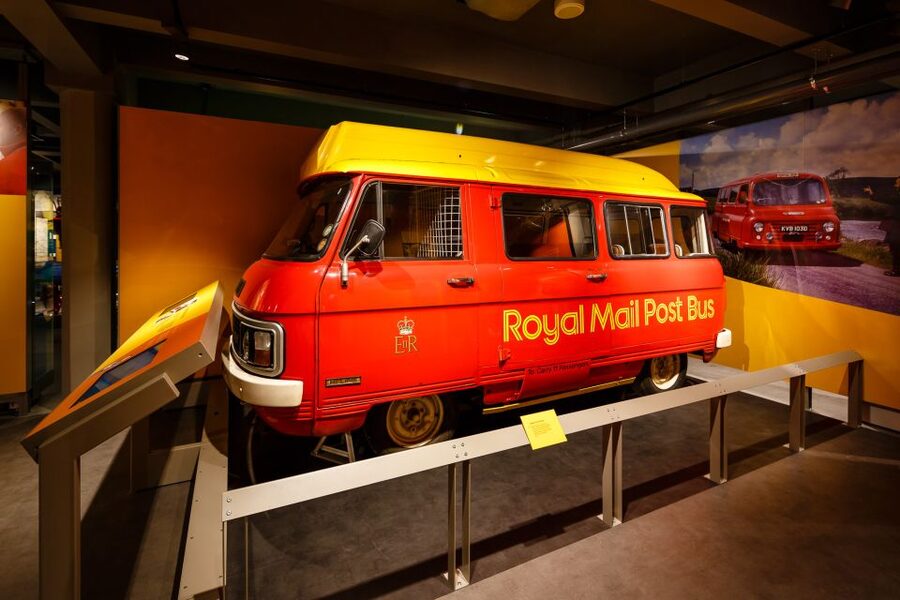
Postal service was not always safe or routine. The museum displays flintlock pistols used to defend the mail from theft, a detail that gives the subject a touch of drama without turning the visit into a theatrical show.
Mail coaches and couriers could carry valuable documents, money, or private correspondence. Protecting those deliveries mattered, and the pistols show that postal workers sometimes faced real danger.
The displays also include stories connected with mail stagecoaches and their animals. One unusual story involves a mail stagecoach horse being attacked by a lioness. Details like this make the exhibition easier to remember because they move postal history away from dates and technical terms.
You may find that the museum’s objects are not huge in number. Some visitors feel the main exhibition is modest, especially compared with London’s largest museums. Its strength is the quality of the explanations and the range of activities, not an endless line of cases.
The Mail Rail ride into London’s hidden tunnels
The Mail Rail ride is the centrepiece. You board a miniature train for a journey through part of the Post Office’s underground railway, a system dating back more than 100 years.
The ride lasts around 15 minutes. That is enough time to get a feel for the narrow tunnels and learn how the railway moved post beneath London, but it is not a full underground tour. If you are booking mainly for the train, keep your expectations in check.
The presentation adds much to the short journey. Projected images appear on the tunnel walls, and commentary explains how the railway operated. Audio and film clips, including material featuring a former employee, help connect the machinery to the people who worked there.
The ride is not just a loop in the dark. It is designed as a compact story, with pauses and visual material along the way. That makes it easier for children to follow, while adults can focus on the practical problem the railway solved: moving large volumes of mail quickly without relying on crowded streets above.
The small train is part of the charm, but it also creates the main comfort issue. The ride may not suit people who dislike enclosed spaces. One visitor noted that it is not ideal for very tall people, so consider that before booking.
The train is generally handled in an organized way. Bags are placed in separate lockers on each train, and staff lock them before the ride, reopening them when you return. That arrangement lets you ride without holding luggage and adds a reassuring layer of order.
The strongest criticism is simple: the journey is short. Some people would like more time in the tunnels and more explanation of the railway itself. Think of it as a well-produced introduction rather than an extended rail expedition.
More Entry Tickets around the UK:
- Naples: Naples Underground Entry Ticket and Guided Tour
★ 4.4 · 21,781 reviews - Naples: Catacombs of San Gennaro Entry Ticket & Guided Tour
★ 4.6 · 7,941 reviews - Porto Cristo: Caves of Hams Entry Ticket
★ 4.2 · 6,548 reviews - Rome: Catacombs of St. Callixtus Entry Ticket & Guided Tour
★ 4.6 · 3,037 reviews
Sorting letters on a moving floor

After or around the train experience, the interactive areas give you a chance to test the work of postal staff.
The mail-sorting carriage is one of the most memorable activities. It includes a wobbly floor, which recreates the difficulty of sorting letters while a train is moving. You quickly learn that balancing, reading, and placing mail accurately is harder than it sounds.
I like this kind of exhibit because it explains work through your own body. Instead of simply being told that sorting mail on a train was difficult, you feel why it required practice and concentration.
Children can also take part in educational games and other activities. Designing a stamp is another popular option, and dressing-up features add a playful element for younger visitors.
The activities are not limited to small children, though the overall design clearly gives families priority. Adults may find some parts basic, while parents will appreciate having something that keeps children occupied while they read.
On busy weekends, the interactive stations can become crowded. If you want to try a particular activity without waiting, arriving earlier may help, though no specific quiet period is guaranteed.
A museum that connects mail with daily life
The Postal Museum is at its best when it links objects to ordinary experiences. Many adults will recognize older telephones, traditional postal boxes, or methods of communication from their own childhood.
That creates a useful bridge between generations. Parents and grandparents can explain how a telephone was dialed, how letters were posted, or how long-distance communication worked before smartphones.
The displays also cover the people behind the service. Postal work was not just machinery and stamps. It involved sorting staff, drivers, railway workers, couriers, and the many people who handled messages before they reached their final address.
This human side helps explain why the museum can feel more engaging than its subject first suggests. You are not simply learning how an institution operated. You are seeing how communication shaped family life, business, government, and relationships.
The exhibition uses old films, projected timelines, audio, and interactive equipment. The formats vary enough to keep the visit moving, though you may need to choose what to read closely if you have only 90 minutes.
How long should you plan?
The official duration is 1.5 hours, but I would not build your day around such a tight schedule. The Mail Rail ride takes about 15 minutes, and the rest of the time goes quickly if you stop at the displays and try the hands-on features.
Two hours is a comfortable minimum for a focused visit. Three hours is better if you are with children, want to read the historical material, or plan to eat at the café.
One family spent about three hours and considered the ticket good value. Another visitor felt that even more time would have helped because there was so much to read. That difference comes down to your pace, but it is clear that the advertised duration can undersell the visit.
The café provides snacks and refreshments and is described as family-friendly. It is a useful place to pause, though end-of-day cleanliness can be uneven, with reports of uncleared spills and messy tables. That is a small service issue, but it matters when you are visiting with children.
Is $24 good value?
At $24 per person, the ticket offers reasonable value if you use the museum as a two or three-hour outing. You are paying for both the exhibition and the Mail Rail ride, not just entry to a room of postal objects.
The value is strongest for families because children can use the interactive areas, ride the train, and take part in sorting or stamp-design activities. Adults who already know a lot about postal history may find the displays fairly compact, but the Mail Rail adds something unusual that most London museums cannot offer.
The price feels less attractive if you expect a long train journey. The ride is only about 15 minutes, and some of that time includes projected films and stops. The museum experience needs to be part of the calculation.
The ticket can also be useful for a return visit, as one visitor noted that tickets lasted for a year. Confirm the current ticket terms when booking, since conditions can change.
Free cancellation up to 24 hours before the visit and a reserve-now, pay-later option make the booking easier to adjust. The museum is wheelchair accessible, which is useful for planning a mixed-age group.
Who will enjoy this most?
I would recommend the Postal Museum to families with school-age children, grandparents visiting with grandchildren, and anyone interested in London transport or old communication systems.
It is also a good choice when you want something different from the usual London sights. The underground railway gives the visit a genuine sense of place, while the exhibits explain a part of the city that usually stays out of sight.
Adults looking for a large, object-heavy museum may find it too small. The exhibition is informative, but it is not designed as a grand national collection. Some sections feel geared toward younger children, and busy periods can make the interactive stations harder to use.
The experience may not suit you if you dislike enclosed spaces, are very tall, or want a long rail journey. The underground sections can also include blackout moments, which may unsettle some children.
The children’s Sorted! Postal Play Space is a separate booking, so do not assume it is included with the standard museum and Mail Rail ticket. It is aimed at children aged eight, and you need to arrange it through The Postal Museum separately.
Should you book the Postal Museum?
Book it if you want an unusual London attraction with a short underground ride, practical history, and plenty for children to do. The Mail Rail is the clear highlight, but the Penny Black, flintlock pistols, old communication equipment, and moving-floor sorting activity give the rest of the visit real purpose.
I would book it as a relaxed half-day outing, not as a quick 90-minute stop. Arrive ready to read, play, and explore. If you do that, $24 is a fair price for a family-friendly museum with a genuinely distinctive feature.
Skip it if you want a long train ride, a large art collection, or a quiet adult-only museum. For everyone else, especially families and transport fans, this is an entertaining way to see how London kept its messages moving.
FAQ
Where does the experience begin?
You start at the Postal Museum.
How long is the visit?
The stated duration is 1.5 hours, but allowing two to three hours is more practical if you want time for the displays, activities, and café.
How long is the underground Mail Rail ride?
The miniature train ride lasts about 15 minutes.
What can I see at the Postal Museum?
You can see the Penny Black, flintlock pistols used to protect mail, a Victorian miniature rail car, postal displays, and interactive exhibits about communication and sorting mail.
Is the Mail Rail ride suitable for children?
Yes. Children are a major part of the museum’s audience, and the ride is paired with educational displays and hands-on activities. Some children may find the dark sections unsettling.
Is the experience wheelchair accessible?
Yes, the activity is listed as wheelchair accessible.
Is the Sorted! Postal Play Space included?
No. The Sorted! Postal Play Space is bookable separately through The Postal Museum website and is aimed at children aged eight.
Can I cancel my booking?
You can cancel up to 24 hours in advance for a full refund. A reserve-now, pay-later option is also available.
Just added around the UK
- 90min Underground Whisky Tasting in Edinburgh’s Old Town★ 5.0 · 350 reviews
- Underground City of the Dead Tour★ 4.5 · 272 reviews
- Luxury Whisky Tasting in Edinburgh’s Underground Vaults | 90min★ 5.0 · 140 reviews
- Evolution of Gin and Underground Gin Tasting in Edinburgh | 1hr★ 5.0 · 59 reviews
- Edinburgh’s Donut & Pastry Experience with Underground Donut Tour★ 5.0 · 113 reviews
- Beer Tasting Session in Edinburgh’s Underground Vaults | 1 hour★ 4.5 · 66 reviews
- Small Group Edinburgh Underground Vaults & Graveyard Ghost Tour★ 5.0 · 454 reviews
- City of the Dead Underground Vaults (Day)★ 4.5 · 113 reviews
Museums, compared.


Coba Multun-Ha Cenote Tulum and Mayan Museum Small Group
Read our review →

Rila Monastery and Optional Museum, Cave or Spa
Read our review →
Beatenberg: Beatus Caves Entry Ticket with Museum
Read our review →
Albaicín, Sacromonte & Museum of Caves Walking Tour
Read our review →
Cave Museum Village Troglodyte of Rochemenier Admission Ticket
Read our review →
Rynek Underground Museum Skip-the-line Guided Tour
Read our review →Browse the lists this cave appears in