
Review · GUIDED
Savona: Guided Tour of the Priamàr Underground
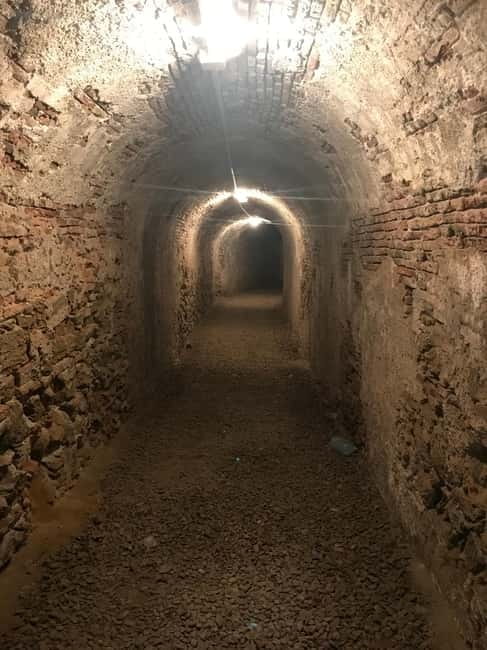
The fortress has a secret side. Savona’s one-hour guided tour beneath Priamàr Fortress takes you through old tunnels, narrow passageways, cisterns, exits toward the sea, and Second World War air-raid shelters. I like the way the visit brings together many periods of the fortress, and I like that archaeologists lead the route rather than a guide simply reciting dates. The main drawback is practical: the underground paths are not suitable for people with mobility impairments, claustrophobia, wheelchair users, pregnant women, or visual impairments.
The visit costs $17 per person, which I consider fair for a focused, expert-led experience. The strongest praise centers on the guides, especially Diego, who is described as both highly competent and warm. You should wear sturdy sports shoes and bring a flashlight, since the route includes narrow underground sections rather than broad, polished museum corridors.
Key Points
- Four named underground routes: Follow the passages of St. Bernard, St. Francis, St. Catherine, and the Holy Conception.
- Nearly 400 years of construction: The underground spaces date from 1542 through the Second World War in 1943.
- An archaeologist-led visit: The guides explain the fortress with professional knowledge and an ability to engage both adults and children.
- A varied underground layout: Expect large sixteenth-century tunnels, narrow connecting walkways, counter-mine passages, cisterns, and wartime shelters.
- A simple meeting point: Begin at the Civic Archaeological and City Museum in Piazza del Maschio, inside the fortress.
- A good short activity in Savona: The tour lasts about one hour, making it easy to fit into a day in the city or a port stop.
Why Priamàr’s Underground Is Worth Your Time
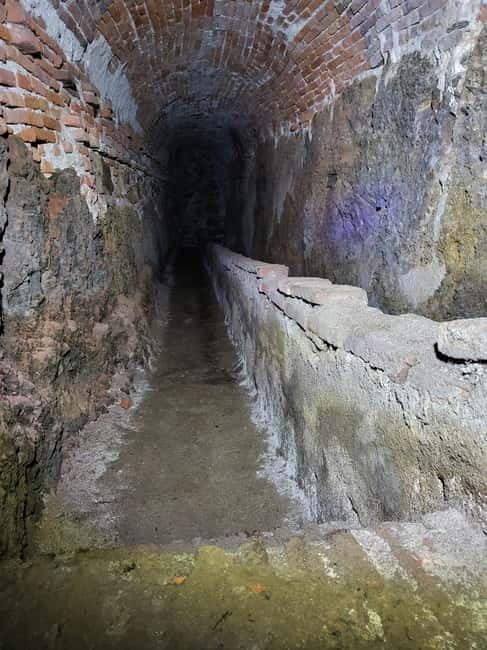
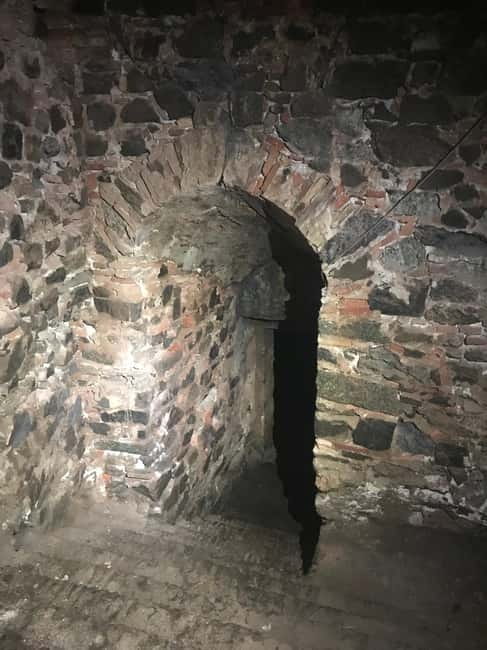
Savona’s Priamàr Fortress is easy to understand from above: walls, ramps, military buildings, and broad views over the city and coast. The underground tour gives you the less polished side of that story. Here, the fortress becomes a working military system of passages, storage spaces, water infrastructure, defenses, escape routes, and shelters.
I like the way the tour covers several periods instead of treating the fortress as one frozen moment. The first underground works began in 1542. Other routes were added in 1683, more rooms appeared beneath the late seventeenth-century ramparts, and air-raid shelters were built during the Second World War. You are not simply walking through one old cellar. You are moving through layers of changing military needs.
The one-hour length also works well. It is long enough to give the underground spaces a clear shape, but short enough that you do not need to build your whole day around it. At $17, the cost is reasonable if you value a live guide and access to areas you cannot properly understand on your own.
More Guided Tours around Italy:
- Naples: Naples Underground Entry Ticket and Guided Tour
★ 4.4 · 21,781 reviews - Naples: Catacombs of San Gennaro Entry Ticket & Guided Tour
★ 4.6 · 7,941 reviews - Naples: Spanish Quarters Underground Guided Tour
★ 4.8 · 5,064 reviews
Meeting at the Civic Archaeological and City Museum
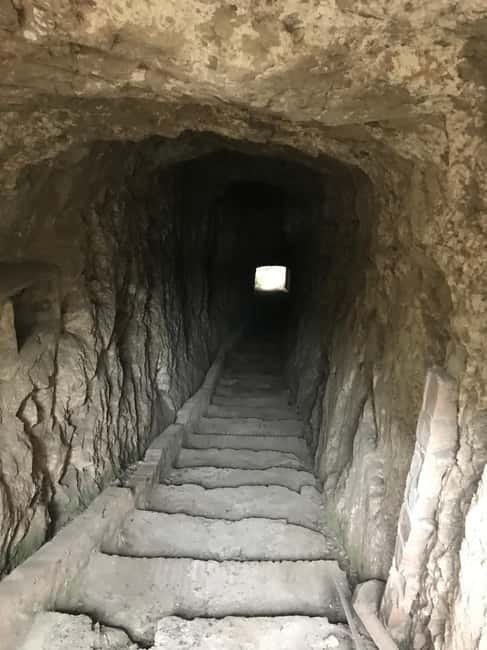
The tour begins at the Civic Archaeological and City Museum of Savona, inside Priamàr Fortress. Look for the entrance in Piazza del Maschio, under the portico. This is the most direct meeting point if you are already walking around the fortress.
You can also reach the museum by using the lifts at the foot of the fortress. The lifts arrive at the first floor, and the approach is along a flat walkway near the car park. That option may be useful if you want to avoid some of the approach from street level, although it does not change the underground route’s accessibility limits.
The meeting point is worth noting carefully because the tour does not begin at a generic city-center address. Give yourself enough time to reach the fortress, locate Piazza del Maschio, and find the museum entrance beneath the portico. The itinerary returns to the same place, so you will not need to arrange transport back from another part of Savona.
A Five-Minute Safety Briefing Before the Route
Before entering the underground passages, the guide gives a safety briefing of about five minutes. This is a small part of the visit, but it matters here. The route includes narrow connecting walkways and older passages with different shapes and sizes.
Use this moment to pay attention to the guide’s instructions and decide if the setting feels right for you. The activity is not suitable for people with claustrophobia, and the operator specifically excludes pregnant women, wheelchair users, people with mobility impairments, and people with visual impairments.
This is not a sightseeing route designed for every body or every comfort level. It is an underground fortress visit, and you should treat the footwear and equipment advice seriously. Comfortable sports shoes are required, and a flashlight is recommended. Baby strollers are not allowed.
Four Routes Through Priamàr’s Hidden Side
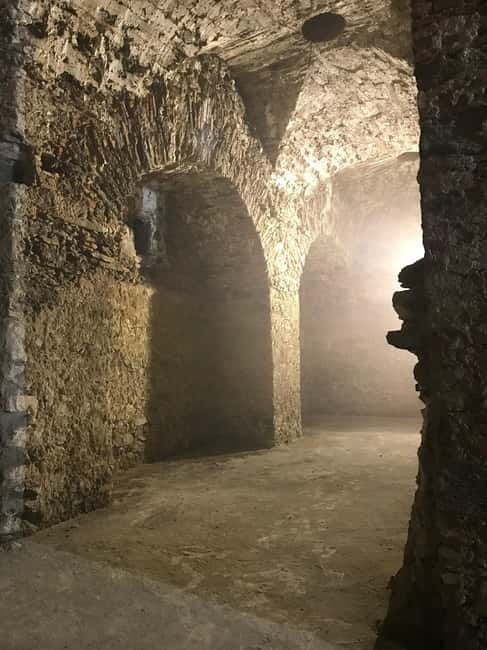
The guided visit follows four underground routes named St. Bernard, St. Francis, St. Catherine, and the Holy Conception. The available information does not assign a separate theme to each route, so I would not expect four completely different attractions. Think of them as connected sections of the fortress’s underground network.
Their value comes from the way they show different construction methods and military purposes. Some spaces are large and open. Others are narrow connecting paths. The change in scale helps you understand that Priamàr was not built with one single underground plan.
The guide’s role is especially important here. Without explanation, a passage can look like an old stone corridor. With context, you can begin to see how the tunnels linked parts of the fortress, supported defensive planning, carried people between sections, and helped the complex function over time.
The experience is suitable for adults and children who can manage the physical conditions. The guide’s ability to hold the interest of different ages is one of the strongest points of the visit. The Italian feedback gives particular praise to the guide’s ability to encourage curiosity among participants of every age.
A few more cave trips around Italy worth a look
- Colosseum: Underground and Ancient Rome Tour
★ 4.7 · 12,691 reviews - Matera: Sassi Tour with Cave House and Rupestrian Church
★ 4.7 · 6,618 reviews - Rome: Capuchin Crypts and Catacombs Tour with Transfers
★ 4.6 · 6,456 reviews - Expert Guided Tour of Colosseum Arena OR Underground, and Forum
★ 4.5 · 5,041 reviews
Sixteenth-Century Tunnels and Seventeenth-Century Changes
The oldest underground works date from the sixteenth century, when the fortress began its major construction in 1542. These large tunnels form an important part of the route, but almost all were closed and walled up during the seventeenth century.
That detail gives the old tunnels a special character. You are not only seeing spaces built for use. You are also seeing how military design changed, with earlier passages closed as the fortress was altered and strengthened. A wall in this setting may tell you as much about a later defensive decision as the tunnel itself tells you about the original plan.
The narrow connecting walkways date from 1683. Compared with the large earlier tunnels, these passages should feel more confined and functional. They help show how different parts of Priamàr were joined after the fortress had already developed.
For you, the practical lesson is simple: the route will not feel like a spacious underground gallery throughout. The variety is part of its appeal, but it also explains why sturdy shoes, a flashlight, and comfort in enclosed spaces matter.
Counter-Mines, Ramparts, and Fortress Engineering
The tour also includes small counter-mine tunnels. These were part of the defensive system, designed as narrow passages connected with the fortress’s military planning. The supplied details do not explain exactly how each passage was used, so the guide’s explanation becomes essential.
You will also see large rooms beneath the late seventeenth-century ramparts. These rooms give the underground network a larger scale again. The contrast between the counter-mine passages and the broad spaces beneath the ramparts makes the fortress easier to read as an engineered system rather than a collection of random rooms.
I particularly like this mix of small and large spaces. It keeps the hour from becoming visually repetitive, and it gives the guide several ways to explain how a fortress worked. You get architecture, military planning, and practical infrastructure in the same visit.
The experience is less about dramatic decoration and more about structure. If you want grand interiors, this is not the right activity. If you enjoy seeing how old buildings were made useful and defensible, the underground route offers much more.
Cisterns, Connecting Passages, and Routes Toward the Sea
Two cisterns are part of the underground complex, along with connecting tunnels between the Maschio and the Citadel. These features add an important everyday side to the fortress. A military site needed water, movement between key sections, and reliable ways to connect its parts.
The route also includes exits leading toward the sea or the large outer moat. These details give you a stronger sense of Priamàr’s position and defensive layout. Even without a full map in hand, the passages suggest how the fortress related to the ground around it.
I would pay close attention when the guide explains these connections. Underground architecture can be confusing, especially when several passage types meet. The live commentary helps you place each tunnel within the larger fortress instead of seeing it as an isolated room.
The route is also a reminder that fortresses were places where ordinary needs and military needs overlapped. Water storage, movement, defense, and access to the outside all had to work together. That practical story is one reason I find this tour more useful than a quick look at the fortress walls alone.
Second World War Air-Raid Shelters
The final major layer is the large air-raid shelters built during the Second World War. These spaces bring the history of Priamàr forward from early modern military construction to twentieth-century civilian danger.
The shelters also change the emotional tone of the tour. The sixteenth-century tunnels belong to a distant fortress world. The wartime shelters point to a period much closer to the present, when underground rooms were still needed for protection from attack.
This is a valuable part of the visit because it prevents Priamàr from feeling like a monument frozen in the past. The underground spaces continued to serve practical purposes long after the original fortress design had changed.
You should not expect a separate wartime museum display or a long standalone lecture on the Second World War. The shelters are one stage of the underground route. Their importance comes from how they complete the story of the fortress’s changing use.
Why the Guides Make the Difference
The guides receive the clearest praise, and that praise is specific. Diego is described as extremely competent, very kind, passionate, and full of cultural knowledge. Another recent comment credits the guide with transmitting information in a way that kept people of every age curious and interested.
That matters more than it might on a normal walking tour. Underground spaces can be difficult to interpret without help. The route’s names, dates, military terms, and changes in construction could easily blur together. A strong guide gives the hour a clear shape.
The tour is offered in English, French, Spanish, Italian, and German. Some content may be presented in its original language, so you should be prepared for occasional language variation. Still, the range of languages makes the experience accessible to a broad international audience.
The overall rating is 4.8 from 52 reviews, and the repeated praise for guide quality is more useful than the number alone. You are paying for access to the passages, but also for the explanation that makes the passages meaningful.
Who Will Enjoy This Tour Most
I would recommend this visit to people who like forts, archaeology, military architecture, and places that reveal how old structures worked behind the scenes. It is also a good choice for families with older children who enjoy tunnels and unusual spaces.
The tour’s short length helps if you are fitting Priamàr into a larger day in Savona. You can visit the fortress and museum area, take the underground route, and still have time for other parts of the city. The return to the museum keeps the logistics simple.
You should think twice if enclosed spaces make you uncomfortable. The route includes narrow passages, and claustrophobia is specifically listed as a reason not to take part. If you use a wheelchair, have significant mobility limitations, or have a visual impairment, this activity is not suitable.
The same advice applies to footwear. Sandals, dress shoes, or anything with poor grip would be a bad choice. Wear comfortable sports shoes, and bring a flashlight even if you expect the guide to provide direction.
Is $17 a Fair Price?
At $17 per person, I see this as a good-value add-on to a visit to Priamàr Fortress. The tour lasts one hour and includes a live guide in one of five languages. More importantly, it gives you a structured visit to underground sections that are easy to miss or misunderstand without an organized route.
The value depends on your interests. If you only want broad views and open-air fortress walls, you may prefer to spend your time above ground. If you want the less obvious parts of a historic site, the price is modest for an archaeologist-led visit.
There is no indication that additional attractions or transport are included, so you should think of the $17 as the cost of the guided underground experience itself. That clarity is useful. You are not paying for a long package, but for a compact, focused hour with specialist interpretation.
The option to reserve now and pay later also helps if your Savona plans are still moving. Free cancellation is available up to 24 hours before the visit for a full refund.
Should You Book the Priamàr Underground Tour?
Book it if you want to understand how Priamàr Fortress functioned below ground, not just photograph its walls from above. The combination of sixteenth-century tunnels, 1683 walkways, counter-mine passages, cisterns, sea and moat exits, and Second World War shelters gives the hour real range.
I would be especially inclined to book if Diego or another highly praised guide is leading your departure, since the quality of the explanation is central to the experience. Just arrive ready for narrow underground passages, wear sports shoes, and bring a flashlight.
Skip it if you have claustrophobia, mobility restrictions, or a visual impairment, or if your ideal fortress visit means open spaces and easy walking. For everyone else, this is a practical, affordable way to see Priamàr’s less familiar side.
FAQ
Where does the Priamàr underground tour start?
It starts at the Civic Archaeological and City Museum of Savona inside Priamàr Fortress. The entrance is in Piazza del Maschio, under the portico.
How long does the tour last?
The guided visit lasts one hour. There is also a safety briefing of about five minutes before the tour begins.
What languages are available?
The live guide may conduct the tour in English, French, Spanish, Italian, or German. Some content may be presented in its original language.
What should I bring?
Bring comfortable sports shoes and a flashlight. Sturdy footwear is important for the underground route.
Are baby strollers allowed?
No. Baby strollers are not allowed on this activity.
Is the tour suitable for wheelchair users?
No. The activity is not suitable for wheelchair users or people with mobility impairments.
Is the tour suitable for people with claustrophobia?
No. People with claustrophobia are specifically advised not to take part because the route includes underground passages, including narrow walkways.
Can I cancel for a full refund?
Yes. You can cancel up to 24 hours in advance for a full refund.
Just added around Italy
- Capri & Blue Grotto: Full-Day Tour with Guided Island Exploration★ 5.0 · 74 reviews
- Private Capri, Anacapri and Blue Grotto Tour from Capri★ 4.5 · 29 reviews
- Private Tour of the Island of Capri by Boat and Visit to the Caves★ 4.5 · 31 reviews
- CAPRI – DIY Day Trip Package – BoatTour, BlueGrotto,Bus&Lunch★ 4.5 · 49 reviews
- Paddleboard in Capri between caves and beaches. Photos included!★ 5.0 · 39 reviews
- Small Group Tour to Blue Grotto, Anacapri and Capri★ 5.0 · 115 reviews
- Blue Grotto and Capri Boat Tour with Aperitivo Swim and Snorkel★ 4.5 · 47 reviews
- Boat Tour of the Caves on the Island of Capri★ 4.5 · 463 reviews
Guided, compared.
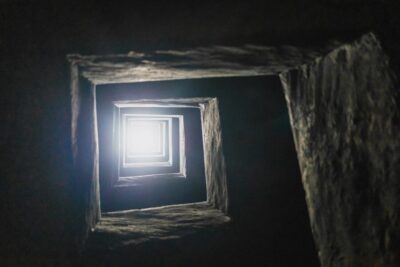
Naples Underground Entry Ticket and Guided Tour
Read our review →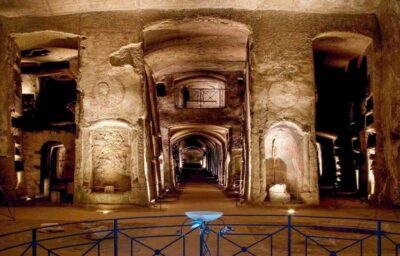
Catacombs of San Gennaro Entry Ticket & Guided Tour
Read our review →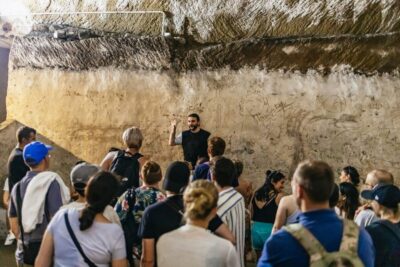
Expert Guided Tour of Colosseum Arena OR Underground, and Forum
Read our review →
Colosseum Underground Small Group Guided Tour
Read our review →
Catacombs of St. Callixtus Entry Ticket & Guided Tour
Read our review →
Caves, Beaches, and Secret Spots Guided Kayak Tour
Read our review →Browse the lists this cave appears in