

Review · AUDIO TOURS
Self-Guided Boston’s Beacon Hill Underground Railroad Audio Tour Walking Tour
History speaks from Beacon Hill’s doorways. This self-guided walk uses your phone to connect African-American history with the actual homes, schools, churches, and alleys where Boston’s Underground Railroad story unfolded. I especially like the location-aware narration and the freedom to begin, pause, or finish on your own schedule. The main drawback is practical: app setup and walking directions can occasionally be confusing.
You’ll pay $9.75 per person for a private experience shared only with your own group, which is a strong price for nearly an hour of guided material. I also like the range of voices and the option to access extra background on the people you meet along the way. Bring comfortable shoes, water, and a little patience with your phone, since Beacon Hill has hills and the route depends on staying oriented.
Key points to know before you go
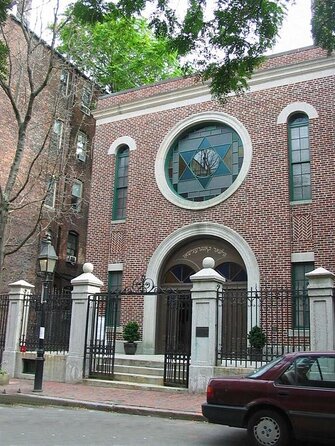
- Follow the Underground Railroad through real homes: Visit former stations connected with John J. Smith, Lewis Hayden, Leonard Grimes, and John Coburn.
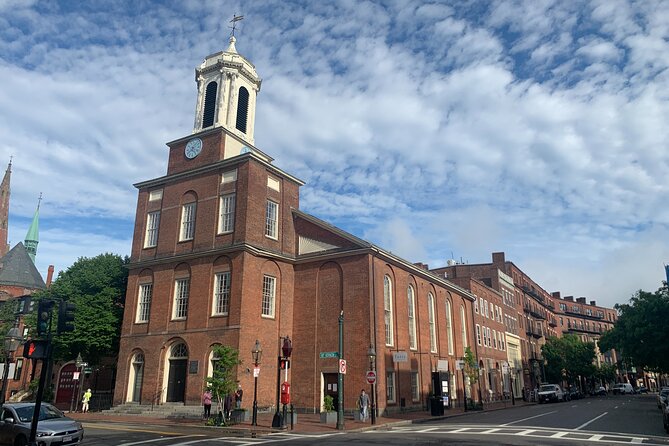
- Hear stories where they happened: The GPS-based audio begins at the Charles Street Meeting House and ends at the African Meeting House.
- Learn about more than escape routes: The walk also covers Harriet Tubman, John Sweat Rock, the Phillips School, Charles Sumner, and Boston’s Jewish abolitionist community.
- Move at your own pace: You can pause, rewind, stop for a break, or continue whenever your schedule allows.
- Plan for Beacon Hill hills: The route is manageable for most people, but good shoes, water, and weather-appropriate clothing matter.
- Allow time for app setup: Your ticket includes instructions for downloading the WalknTours app and entering the experience code.
Why this short Beacon Hill walk matters
The Underground Railroad was not a literal railroad and did not run underground. It was a loose network of people, homes, churches, businesses, and safe places that helped enslaved people seek freedom. This tour gives that network a physical shape.
Instead of hearing only a broad account of abolition in Boston, you stop outside the homes of people who risked their safety and fortunes. The streets make the story more immediate. A house becomes a station. A school becomes evidence of a long fight for equal education. A meeting house becomes both a place of worship and a center of Black community life.
The experience lasts about 45 to 55 minutes, but you should not feel pressured to finish within that window. The app lets you pause and return to sections, and the self-guided format gives you room to stop and consider what you have heard. If you are the sort of person who likes a guide to keep moving, that flexibility may be less useful. For most people, though, it makes the tour easier to fit into a day of sightseeing.
The narration is theatrically produced and uses several voices. That helps separate the experience from a dry list of dates. The subject is serious, but the presentation has enough movement to hold attention, especially for families and groups with mixed interest in history.
More Self-Guided Tours around the USA:
- Nerja: Caves of Nerja Entry Ticket with Audio Guide
★ 4.6 · 1,616 reviews - Paris: Catacombs Entry & Seine River Cruise with Audio Guide
★ 4.4 · 1,150 reviews - Paris: Catacombs, Audio Guide, and River Cruise Option
★ 4.6 · 966 reviews
Starting at the Charles Street Meeting House

The tour begins at the Charles Street Meeting House, at 70 Charles Street. This is a sensible starting point in Beacon Hill, close to public transportation and within an area that is easy to reach from central Boston.
Before setting off, open the ticket instructions and get the WalknTours app working. The access details are found through the View Ticket button, where you can locate the app instructions and use the experience code. Do this before standing on the street corner. One of the few serious complaints about the experience involved trouble with downloading the app, entering codes, and getting the narration to start.
Once the tour is active, the phone guides you from stop to stop with narration and an arrow showing the next location. That arrow is important. If you lose the route, use it to get back on track rather than trying to rewind the audio and guess where you went wrong.
The Charles Street Meeting House also sets the tone. You are not beginning in a visitor center with a large exhibit. You are starting on the street, in a neighborhood where the people and addresses are central to the story.
John J. Smith and the network behind the name
One early stop explains how the Underground Railroad worked and introduces John J. Smith, whose home served as a station. The point is not simply that Smith helped people. You learn how individual homes fit into a larger network of conductors, station masters, and supporters.
That distinction matters. The Underground Railroad had no single office, timetable, or central command. Its success depended on people making quick decisions, sharing information, and accepting personal danger. A stop outside a private home helps you picture the uncertainty involved.
The audio also explains the people Smith helped. That focus keeps the story from becoming only a roll call of famous abolitionists. You are reminded that the people seeking freedom were central to the effort, not just background figures in someone else’s biography.
Harriet Tubman and John Sweat Rock on Phillips Street
The route then brings Harriet Tubman into the story before taking you to 83 Phillips Street, once the home of John Sweat Rock. Tubman is widely known, but the tour uses her life to connect Boston’s local network to the larger fight against slavery.
At Phillips Street, the attention turns to Rock and his many firsts in American history. This is one of the tour’s most useful shifts. You are not hearing only about escape and rescue. You are also learning about Black achievement, education, professional life, and civic leadership in a period when legal and social barriers were severe.
The ability to request more information on certain people is especially useful here. The main narration keeps you moving, while the extra material lets you spend more time with a figure who catches your interest. Families can use this feature to let younger listeners choose which stories deserve more attention.
More Audio Tours around the USA:
- Palma: Caves of Genova Ticket & Digital Audio Guide
★ 3.9 · 820 reviews - Rome: Navona Square Underground Ticket with Audio Guide
★ 4.0 · 518 reviews - Rome: Guided Catacombs Tour & Capuchin Crypt (Audio Guide)
★ 4.3 · 191 reviews - Margaret River: Self-Guided Audio Tour of Mammoth Cave
★ 4.7 · 48 reviews
Lewis Hayden’s home and the risks of rescue
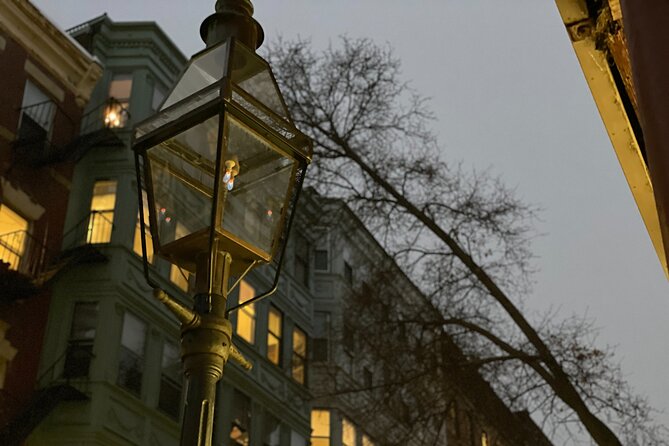
The stop at Lewis Hayden’s former home may be one of the most powerful sections of the walk. Hayden was a station master, and the narration describes how he helped save countless people seeking freedom.
A home like this makes the danger easier to grasp. You can imagine the tension of sheltering someone while federal law and pro-slavery forces treated escape as a crime. The tour gives you a sense of the courage involved without turning the story into a simple tale of heroes and villains.
This is also where the physical setting does important work. Beacon Hill can look polished and peaceful today. The audio asks you to see the same streets as places of surveillance, secrecy, hurried movement, and difficult choices.
Leonard Grimes and the Old Temperance Boarding House
The former home of Leonard Grimes adds another conductor to the route. Grimes was part of the Underground Railroad, and his address gives you another example of how the network relied on ordinary-looking residences.
The Old Temperance Boarding House follows with a different kind of setting. A boarding house could offer movement, privacy, and a steady flow of people, all useful qualities for an escape network. The tour makes clear that safe places did not always look dramatic. Sometimes the most important locations were simply buildings where someone could stay long enough to move onward.
These stops work well together because they show that assistance took many forms. One person might offer a home. Another might arrange transport or information. Another might provide food, money, or a temporary room. The audio connects those roles without asking you to memorize a long list of names.
The Phillips School and the struggle for equal education
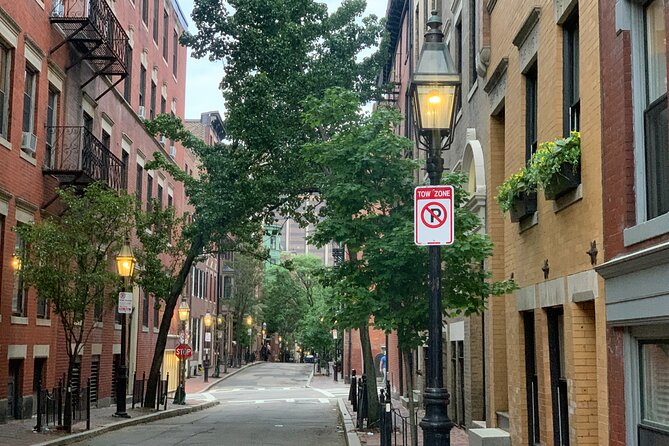
The route passes the former site of the Phillips School, described as the first integrated school in Boston and the first integrated school in Boston to employ an African-American teacher.
This stop broadens the tour beyond the Underground Railroad itself. Freedom was not only about reaching a northern city. It was also about access to education, employment, public institutions, and a place in civic life.
The school story is particularly useful for families. Children may understand the idea of a safe house, but the school helps explain what happened after arrival. Boston could offer refuge while still holding deep racial divisions. Integration in education was a major step, not a settled fact.
Because the building is no longer there in its original role, the audio is essential. You are standing at a place where the past is easy to miss without guidance. That is one reason the location-based format works well.
Vilna Shul and Boston’s Jewish abolitionists
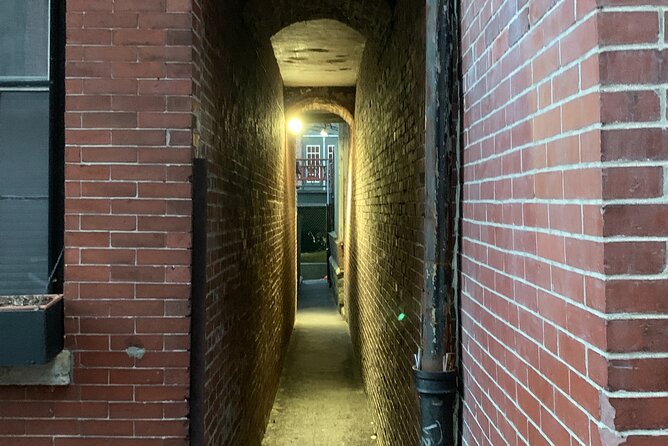
The tour passes Vilna Shul, the oldest immigrant synagogue in Boston, and tells the story of the Jewish community that helped with the Underground Railroad.
This is a valuable part of the route because it widens the story beyond a single community. Opposition to slavery involved people from different religious and ethnic backgrounds, and cooperation could cross lines that were otherwise strong in nineteenth-century Boston.
Vilna Shul also adds a different layer to the neighborhood. The building is connected to Boston’s immigrant Jewish community, while the narration links it to the broader struggle over slavery and freedom. You get a more complete picture of Beacon Hill as a place shaped by several communities, not a neighborhood with just one historical identity.
The tour does not require you to enter every building. Much of the experience takes place outdoors, so the condition of the street, the weather, and your ability to hear your phone matter. Headphones may help, though the supplied information does not require them.
John Coburn’s home and gaming house
Another stop marks the former home and gaming house of John Coburn, a station master on the Underground Railroad. The gaming house detail gives this section a little more personality than a standard memorial plaque.
It also shows how a public business could serve a private purpose. A place with regular activity might offer cover, contacts, and a reason for people to come and go. The audio explains Coburn’s role while placing him within the wider network of station masters.
This stop is a good reminder that the Underground Railroad was not made up only of solemn meetings in churches. It depended on practical spaces and people who knew how to move through city life without drawing the wrong kind of attention.
Charles Sumner’s birthplace
The route also stops by the birthplace of abolitionist Charles Sumner. Sumner was a major anti-slavery voice, and his inclusion gives the tour a political dimension.
Earlier stops focus mainly on people who offered direct aid. Sumner represents the public fight against slavery through politics and abolitionist argument. Putting his birthplace alongside the homes of station masters helps you see how private action and public pressure worked together.
The stop also keeps Boston’s abolition story from becoming too narrow. Some people sheltered those escaping slavery. Others fought in newspapers, churches, meetings, and government. The tour gives you both sides of that work.
Ending at the African Meeting House
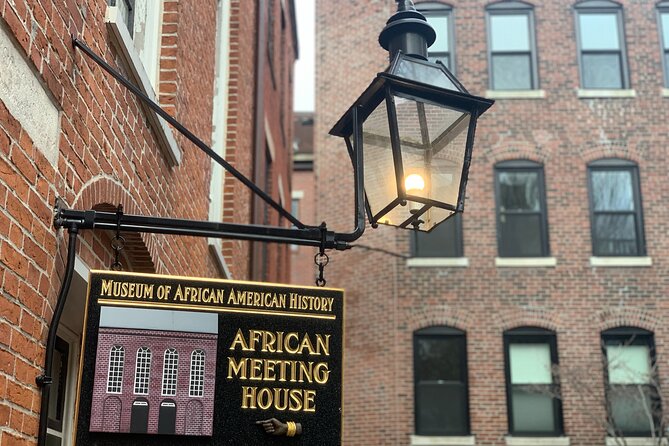
The walk ends at 46 Joy Street, home to the African Meeting House, described as the oldest extant Black church building in America. Ending here gives the tour a strong final point.
The building represents worship, community, education, and organized Black leadership. It also offers a fitting destination after a route centered on homes and streets. The story finishes not simply at another safe place, but at a building tied to the long public life of Boston’s African-American community.
The route is not a museum visit, and the supplied details do not include admission to the African Meeting House. Think of the endpoint as the conclusion of the outdoor audio walk. If you want to explore interiors or exhibits, you should check separately before planning your day.
How well does the self-guided format work?
At its best, this is self-guiding at its most practical. You are not tied to a group departure, and only your own party participates. Start whenever you want during the listed operating hours, pause for photographs or a meal, and continue when ready.
The app includes narration, directions, and extra material. You can go back to a section, which is useful when a name or event goes by too quickly. The ability to pause was praised as especially helpful, and the range of voices makes the audio more engaging than a single uninterrupted lecture.
The weak point is navigation. Some people find the directions clear and easy to follow, while others lose the route or have trouble moving from extra material back to the main story. The app’s arrow points toward the next stop, so use that as your main guide. Avoid switching between sections repeatedly while walking.
Download and activate the app before you arrive. Keep your phone charged, and make sure you know how to access the ticket instructions. These are small steps, but they can prevent a frustrating start.
Price, walking effort, and who gets the best value
At $9.75 per person, the tour offers good value if you want a focused account of Black history in Boston without paying for a private live guide. The private format is especially appealing to couples, families, and friends who prefer not to join a larger group.
The price is less attractive if you only want a quick overview of the Freedom Trail or a general introduction to Beacon Hill. This is a specific tour about the Underground Railroad, abolition, Black community life, and connected stories. Its value comes from the addresses and narration, not from a broad survey of Boston.
The walk takes 45 to 55 minutes, with several hills in Beacon Hill. Comfortable shoes are essential. Bring water and snacks, and consider the weather before you start. The tour can be taken at night, but daytime may make it easier to read addresses, follow the route, and orient yourself.
Most people can participate, and service animals are allowed. The experience is near public transportation. Still, the hills and the need to follow directions on foot mean you should consider your group’s walking comfort before booking.
The tour is available in English only. If you need French or another language, this is not the right choice.
Should you book the Beacon Hill Underground Railroad tour?
Book it if you want a low-cost, flexible way to connect Boston’s streets with the lives of people who fought slavery and built Black community institutions. I would especially recommend it to families, history-minded couples, and repeat Boston visitors who want something more focused than the usual downtown route.
Think twice if you dislike phone-based tours, have poor mobile access, or want a live guide to handle every turn. The app is central to the experience, and the directions require attention.
Before you set out, activate the ticket, wear walking shoes, bring water, and keep the app’s arrow in view. With those preparations, this is a thoughtful and affordable way to spend an hour in Beacon Hill, with stories that continue well beyond the sidewalks where you hear them.
FAQ
How much does the tour cost?
The tour costs $9.75 per person.
How long does the walking tour take?
It takes approximately 45 to 55 minutes.
Where does the tour begin?
It begins at the Charles Street Meeting House, located at 70 Charles Street in Boston.
Where does the tour end?
It ends at 46 Joy Street at the African Meeting House.
Is the tour guided by a person?
It is a self-guided audio tour accessed through your phone. The narration is delivered through the WalknTours app.
What language is available?
The tour is offered in English.
Can I start the tour whenever I want?
Yes. The self-guided format lets you begin and end according to your own schedule during the listed operating hours.
Is this a private tour?
Yes. Only your own group participates.
Are service animals allowed?
Yes, service animals are allowed.
What happens if I need to cancel?
You can receive a full refund if you cancel at least 24 hours before the experience start time. Cancellations within 24 hours are not refunded.
Is the tour suitable for most people?
Most people can participate, but the route includes walking and hills in Beacon Hill. Comfortable shoes, water, and weather planning are recommended.
Just added around the USA
- Peninsula Park Caves Scenic Boat Tour★ 4.5 · 88 reviews
- Cave Point Fat Tire E-Bike Tour★ 4.5 · 15 reviews
- Cave Point Kayak Tour★ 4.5 · 92 reviews
- Cave Point Kayak Tour★ 5.0 · 281 reviews
- Cave Point Kayak Tour★ 5.0 · 24 reviews
- Flagstaff Underground★ 5.0 · 39 reviews
- Castner Glacier Ice Cave Adventure from Fairbanks★ 5.0 · 40 reviews
- Snowshoe Hike to Castner Glacier Ice Cave★ 5.0 · 35 reviews
Audio Tours, compared.

Nerja: Caves of Nerja Entry Ticket with Audio Guide
Read our review →
Catacombs Entry & Seine River Cruise with Audio Guide
Read our review →
Catacombs, Audio Guide, and River Cruise Option
Read our review →

Navona Square Underground Ticket with Audio Guide
Read our review →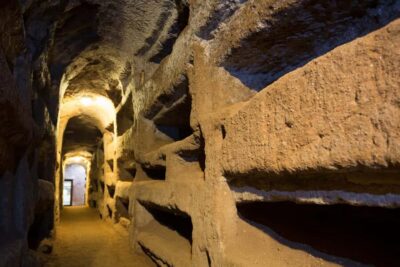
Guided Catacombs Tour & Capuchin Crypt (Audio Guide)
Read our review →
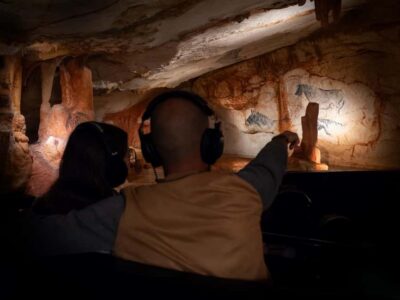
Marseille: Cosquer Cave Ticket & Panier District Audio Tour
Read our review →Browse the lists this cave appears in