
Review · SELF-GUIDED TOURS
Nerja: Caves of Nerja Entry Ticket with Audio Guide
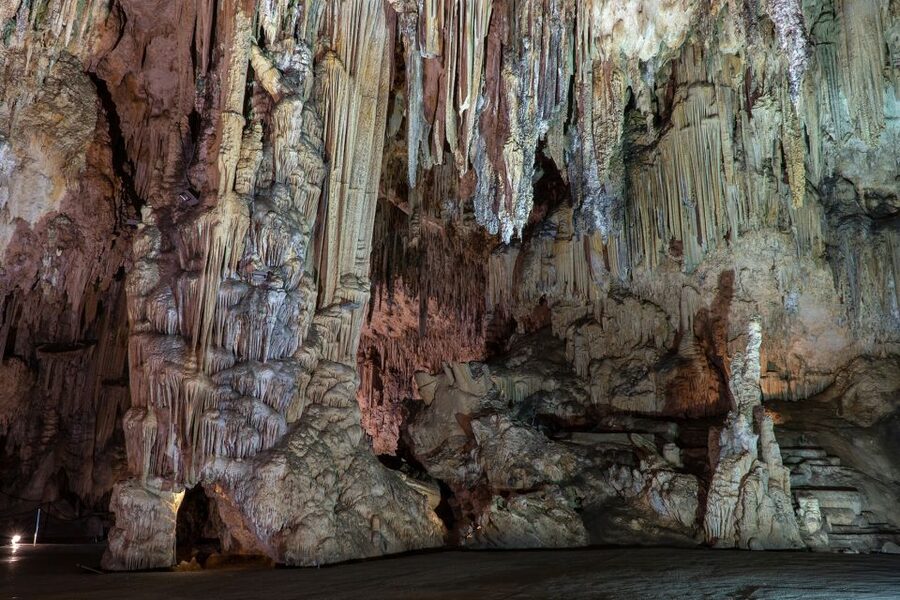
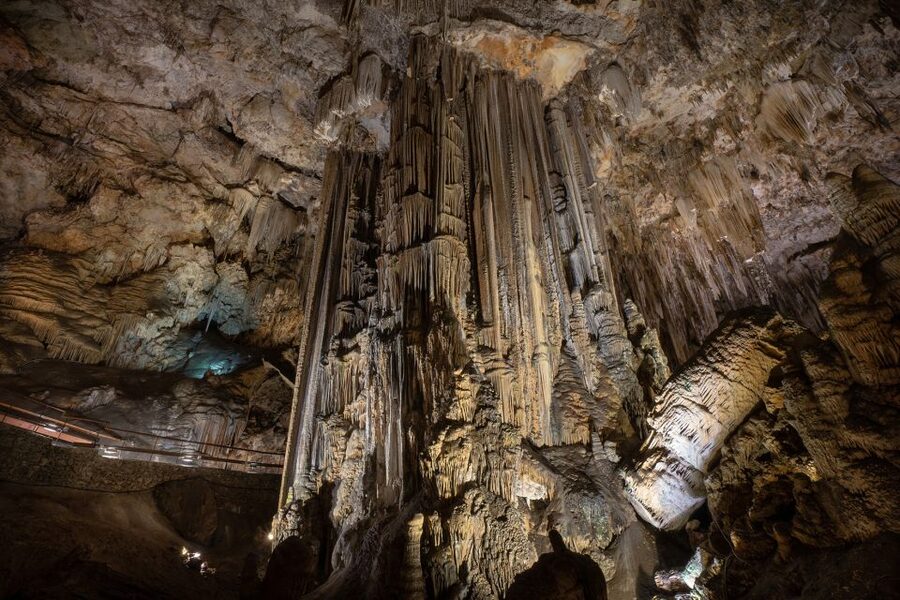
The earth opens up beneath Nerja. This $18 ticket gives you a self-guided walk through enormous chambers, a mobile audio guide, entry to the Museum of Nerja, and a 360º virtual reality show about life 35,000 years ago. I especially like the freedom to move at your own pace and the way the audio explains what you are seeing without forcing you into a noisy group. The Cataclysm room and its huge central column are the clear stars.
The main caution is practical: you need to download the audio app before entering, and the cave route includes many stairs. I also like the calm, carefully managed entry times, but the darkness means you may not see the prehistoric paintings described in the commentary. The museum helps fill that gap.
Five Things to Know Before You Go
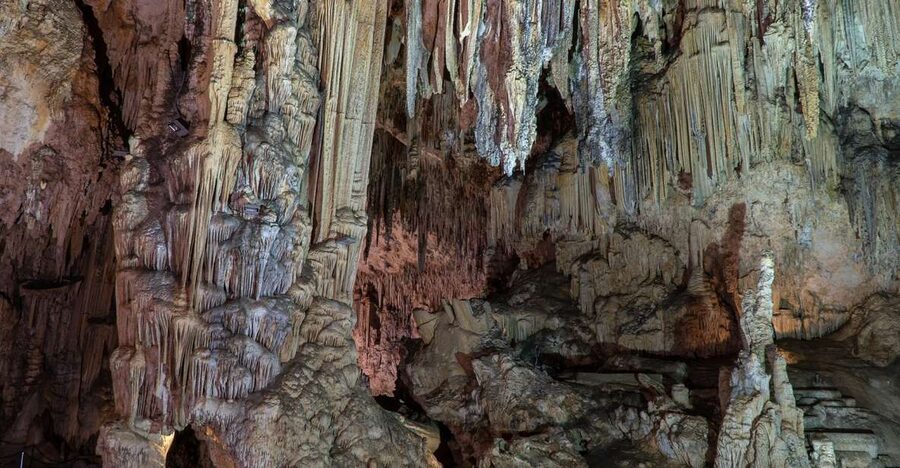
- The Cataclysm room is the dramatic high point: This is the largest and highest chamber open to the public, with the world’s largest column, formed where a stalactite and stalagmite met.
- The audio guide runs through your phone: Download the cave app while you have Wi-Fi, bring earbuds, and follow the numbered stations inside.
- The visit includes more than the cave: Your ticket also covers the Museum of Nerja and a 360º virtual reality room.
- Expect stairs and uneven walking: The route is manageable for people who can walk comfortably, but it is not suitable for wheelchair users or people with limited mobility.
- Early entry makes a real difference: Quieter conditions let you stop, listen, and look upward without feeling hurried.
Why the Nerja Caves Are Worth Your Time
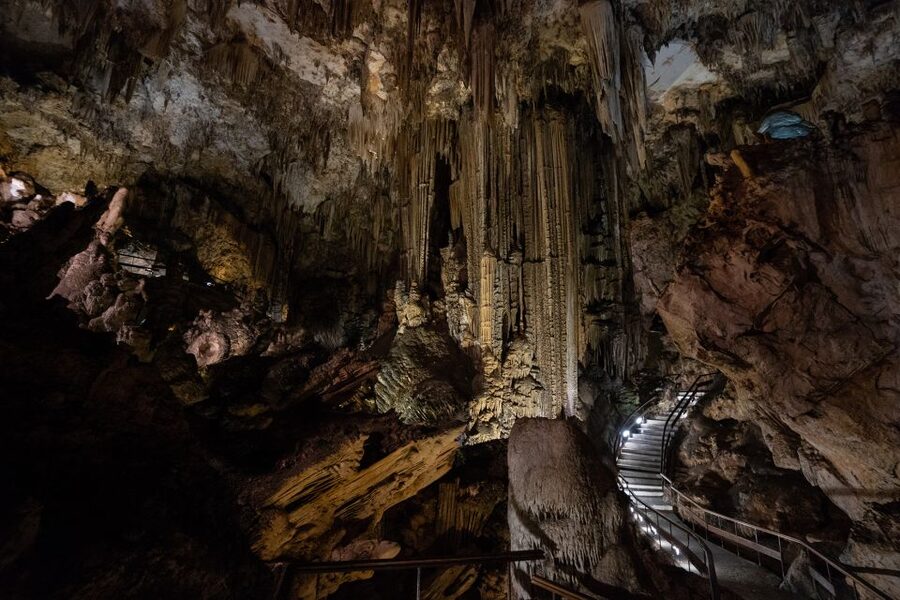
The Caves of Nerja are not a quick novelty stop. They are a large natural complex filled with columns, curtains, stalactites, stalagmites, and high chambers that make you feel very small.
The scale is the first surprise. You do not simply walk through a narrow tunnel with a few dripping rocks. The public route leads through broad rooms with high ceilings, dramatic walls, and formations built slowly over vast stretches of time. One chamber has ceilings around 20 metres high, according to the information provided during the visit.
I find the sense of scale more impressive than any single formation. You may arrive expecting a standard cave tour, then look up and realize that the roof is far above you and the route continues through a space large enough to feel almost architectural.
The ticket costs about $18 per person. That is strong value when you count the cave, audio guide, museum, and virtual reality room together. You can spend only 30 minutes inside if you move quickly, but you can also take about an hour or two if you pause at the numbered points and study the formations.
This is especially useful on a hot or rainy day. The cave provides a sheltered change from the coast, though the temperature and humidity can feel different from outside. Some people find it warm inside, while others prefer having a light jacket. I would bring one because it takes little space and the interior can feel cool after time outdoors.
More Self-Guided Tours around Spain:
- Palma: Caves of Genova Ticket & Digital Audio Guide
★ 3.9 · 820 reviews - Paris: Catacombs Entry & Seine River Cruise with Audio Guide
★ 4.4 · 1,150 reviews - Paris: Catacombs, Audio Guide, and River Cruise Option
★ 4.6 · 966 reviews
Entering the Cave and Finding Your Pace
Your pre-booked ticket gives you a scheduled entry time. That matters because the number of people entering is controlled, helping prevent the chambers from feeling packed.
Once inside, you follow the marked route through a series of cave rooms. The walkways are maintained and include handrails in many places, though the lighting is intentionally subdued. One practical complaint is that some parts could use brighter walkway lighting, so comfortable shoes matter.
This is a self-guided visit rather than a traditional tour led by a person. That arrangement has a real advantage. You can stop when a formation catches your eye, let a group move ahead, or walk at a quicker pace if the audio is not your priority.
You should not expect complete silence, however. The audio comes through your own phone, and some people forget their earbuds or play the guide from the speaker. Bring headphones if you want the quietest and most focused visit. The audio is available in English, Spanish, German, Arabic, Chinese, French, Dutch, Italian, Japanese, Korean, Norwegian, Polish, Portuguese, Russian, and Swedish. A children’s audio guide is available in Spanish and English.
The app is the one weak link in an otherwise simple visit. Download it before you arrive, ideally while connected to reliable Wi-Fi, and test it before you enter. The signal may not be dependable once you are underground. The instructions can also be easy to miss, and the audio station numbers are not always obvious, so watch for them as you walk.
If the audio gives you trouble, the caves remain worth seeing on their own. Still, you will get more from the ticket if you solve the app issue before reaching the entrance.
Stalactites, Stalagmites, and the Cataclysm Room
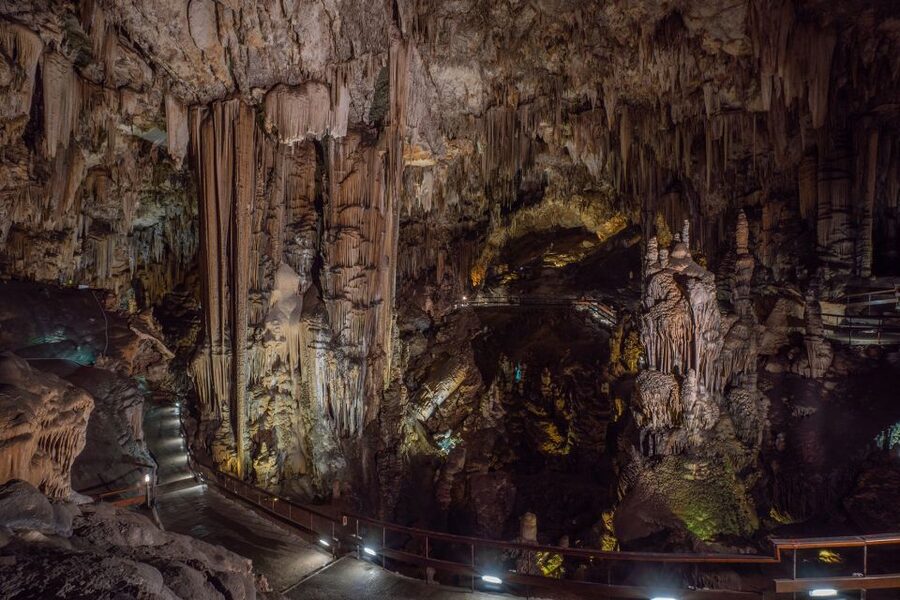
The route gradually builds toward the Cataclysm room, the largest and highest chamber available to the public. This is where the cave’s scale becomes most convincing.
The famous column is the centerpiece. It was created when a stalactite growing down from the ceiling met a stalagmite rising from the floor. The result is a single immense formation, and the site identifies it as the largest column in the world.
The audio guide helps explain how cave formations develop, so you are not just looking at attractive rock. Numbered stops describe the stages of cave formation and point out features that are easy to miss when you walk through quickly.
Take your time here. Look at the walls, ceilings, and floors rather than focusing only on the biggest column. Small ripples, mineral colors, hanging shapes, and layered surfaces make the cave more interesting when you slow down.
Photography is possible, but the lighting is low and the scale can be hard to capture with a phone. Your camera may produce a dark or blurry image, especially if you are moving. I would treat photographs as a bonus and give your eyes the main job.
The cave is not presented as a fully open archaeological site. Some areas remain closed to protect their geological, biological, and archaeological contents. That may frustrate anyone hoping to explore every passage, but the limits are part of responsible preservation.
Prehistoric Paintings and What You Can Actually See
The caves have archaeological importance as well as geological drama. Explorations and excavations have found evidence connected with ancient human life, and some sources date the cave paintings to the time of Neanderthals.
Do not expect to walk through the public route and clearly see a gallery of painted figures. The interior is dark, and the paintings are not lit in a way that would make them easy to view. Lighting them could contribute to their deterioration.
This is an important expectation to set before you go. The audio may describe paintings that you cannot identify from the walkway. That does not reduce the value of the cave, but it does mean the archaeological story is easier to understand in the museum than underground.
I like this arrangement because preservation wins over spectacle. The cave is not being brightly lit simply to create better photographs. If ancient art interests you, plan to give the museum proper attention rather than treating it as a quick extra.
Same corner of the map, a different way in:
- Porto Cristo: Caves of Hams Entry Ticket
★ 4.2 · 6,548 reviews - Mallorca: Caves of Drach Day Trip & Optional Caves of Hams
★ 4.3 · 2,720 reviews - From Málaga: Caves of Nerja, Nerja and Frigiliana Day Tour
★ 4.7 · 2,187 reviews - From Valencia: Caves of San José Guided Excursion and Ticket
★ 4.6 · 1,717 reviews
The Museum of Nerja Adds the Human Story
The Museum of Nerja gives context to what you see below ground. It helps explain the site’s archaeological discoveries, geological development, and place in the history of the surrounding area.
You can move through the cave and admire the formations without the museum, but the two parts work better together. The cave shows you the physical setting. The museum helps you understand how people used it, what researchers found, and why parts of the complex remain closed.
Allow more time here than you might first expect. One visit could take around two hours in the museum if you read the displays carefully. The cave itself may take 30 minutes for a fast walk-through or closer to two hours for a slow visit, so the full stop can easily become a substantial half-day outing.
The museum is also the better place to look for information about the cave art. Since the paintings are difficult to see in the cave, displays and explanations here provide a more useful way to connect the underground setting with its prehistoric past.
The 360º Virtual Reality Room
After the cave and museum, the virtual reality room adds a modern layer to an ancient site. The 360º presentation recreates life on Earth 35,000 years ago and lets you view the scene in a first-person style.
This is not a replacement for the real cave. It serves a different purpose. Underground, you see rock and darkness. In the virtual reality room, you get a more visual sense of the people and environment connected with the period.
The show is included in the ticket, which makes the $18 price feel even more reasonable. Many people consider it one of the best additions to the visit, and it works particularly well for children or anyone who wants a clearer picture of prehistoric life.
Check the schedule when you arrive and avoid leaving this until the last possible moment. The site closes in stages, and arriving late can mean missing the virtual presentation. The same applies to the museum if you are visiting near closing time.
Gardens, Views, and a Useful Break Afterward
The cave complex is more than an underground attraction. After your visit, you can spend time in the gardens and enjoy the open areas around the site.
There is also a café and terraced restaurant with broad views toward Nerja and the Mediterranean Sea. This is a pleasant place to recover after the stairs, especially if you have taken the slower route through the caves.
Families may appreciate the play structure, which has been described as suitable for children of different ages. That gives younger children something to do after the serious business of looking at rocks for an hour.
Parking is available, but it may not be free. If you drive, pay attention to the instructions for leaving the car park, since the payment process may not be obvious. If you are staying in Nerja and walking, the route can take about 45 minutes and includes a steep hill near the roundabout for Maro. A red tourist train can take you from Nerja toward the caves for a small additional charge.
Follow road signs rather than relying only on a map pin if directions seem confusing near the final approach.
Who Will Enjoy This Visit Most?
I would recommend the Caves of Nerja to anyone interested in geology, prehistoric people, or unusual natural sights. You do not need specialist knowledge. The scale and shapes are impressive even if you ignore every technical explanation.
It works well for families, couples, and independent sightseers who dislike being pushed along in a large guided group. The children’s audio guide and virtual reality presentation give younger visitors more to engage with, while the gardens and play area help extend the outing.
The visit is less suitable for anyone with limited mobility. There are many steps, including roughly 100 steps on the way out according to practical visitor information. Wheelchair users and people who find stairs difficult should choose another activity.
You should also consider your interest in audio technology. If you want a live guide standing beside you, this is not that kind of visit. If you prefer to explore quietly and choose your own pace, the phone-based system is a good fit once it is set up.
My Verdict on the $18 Ticket
The best parts are the enormous chambers, the world-famous column, the freedom to set your own pace, and the extra museum and virtual reality presentation. The biggest drawbacks are the stairs, low lighting, and audio app that requires preparation.
At $18, I see this as one of the better-value paid attractions around Nerja. You are not paying only to walk through a cave for 30 minutes. You are getting a full site visit with geological sights, archaeology, a museum, a virtual reality show, gardens, and sea views.
Book it if you can walk comfortably, enjoy natural formations, and are willing to download the app before arrival. Go early if possible, wear sturdy shoes, bring earbuds and water, and allow several hours if you want to include the museum and virtual reality room properly. Skip it only if stairs are a serious problem or if you want a fully led tour with no phone setup.
FAQ
How much does the Nerja Caves ticket cost?
The ticket costs about $18 per person.
How long is the Nerja Caves experience?
The ticket is valid for one day. The cave walk can take less than 30 minutes if you move quickly, or around one to two hours if you stop at the audio stations and examine the formations.
Is an audio guide included?
Yes. A mobile audio guide for the cave is included, with options in English, Spanish, German, Arabic, Chinese, French, Dutch, Italian, Japanese, Korean, Norwegian, Polish, Portuguese, Russian, and Swedish.
Do I need to download an app for the audio guide?
Yes. The audio guide uses a phone app. Download it before arriving and test it while you have Wi-Fi.
Should I bring headphones?
Yes. Earbuds or headphones make the audio easier to hear and prevent you from needing to use your phone speaker.
Is there a children’s audio guide?
Yes. A children’s audio guide is available in Spanish and English.
Does the ticket include the Museum of Nerja?
Yes. Museum entry is included.
Is the virtual reality experience included?
Yes. The ticket includes entry to the 360º virtual reality room, which presents life on Earth 35,000 years ago.
Can I see the cave paintings inside the caves?
The paintings are difficult to see in the dark cave, and they are not brightly lit because lighting could damage them. The museum provides a better way to learn about them.
Is the cave suitable for wheelchair users?
No. The site is not suitable for wheelchair users or people with mobility impairments because the route includes many stairs.
Just added around Spain
- From Denia: Boat Trip to Tallada Cave with Optional Swim★ 3.6 · 376 reviews
- Jalon Valley and The Cave of Skulls Tour★ 4.3 · 35 reviews
- Explore Málaga and the Treasure Caves by Electric Car★ 4.9 · 26 reviews
- Moraig: Kayak Excursion to Moraig & Cave peces-testos★ 4.9 · 148 reviews
- Estany d’en Mas: Coastal Hike, Abseil & Sea Cave Exploration★ 4.9 · 162 reviews
- E-Bike Mountain Tour in Natural Park +Option Tapas in a Cave★ 4.7 · 63 reviews
- Lanzarote: Volcanos of Timanfaya and Caves Tour with Lunch★ 4.5 · 473 reviews
- From Alcúdia: Dinosaurland and Hams’ Caves Half-Day Trip★ 4.1 · 27 reviews
Self-Guided Tours, compared.

Catacombs Entry & Seine River Cruise with Audio Guide
Read our review →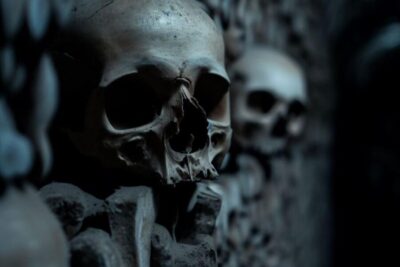
Catacombs, Audio Guide, and River Cruise Option
Read our review →
YungangGrottoe HangingTemple Private Self-guided Tour by Car
Read our review →Browse the lists this cave appears in