
Review · TRAIN EXPERIENCES
From Athens: Meteora Caves & Monasteries Day Trip by Train
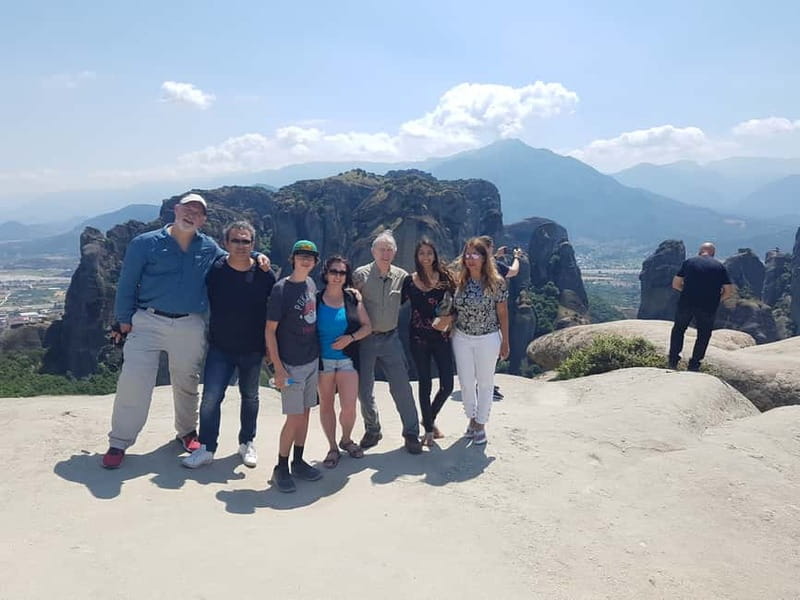
Meteora makes a long day worthwhile. This trip pairs a scenic train ride with three monastery interiors, views of all six active monasteries, and a visit to the Hermit Caves of St. Nicholas Badovas. I like the small minibus format and the way guides such as Panos, Maria, and Joanna add local stories, history, and plenty of help with photos. The catch is the timetable: you leave Athens at 6:58 AM and return around 10:00 PM, with much of the day spent on trains and a replacement bus.
I also like that the tour covers the main Meteora sights without forcing you onto a large coach. You get air-conditioning, Wi-Fi, USB chargers on the minibus, bottled water, and several carefully chosen photo stops. Still, this is not a relaxed outing. Stairs, monastery rules, extra entrance fees, and the long ride make it a better choice for energetic visitors than for anyone with mobility limits.
Key points to know before booking
- The day begins at 6:58 AM at Larissa Station: You must reach Athens Central Railway Station on your own.
- The train currently changes to a Hellenic Train bus: The section from Paleofarsalos to Kalambaka is temporarily by air-conditioned bus because of flood damage.
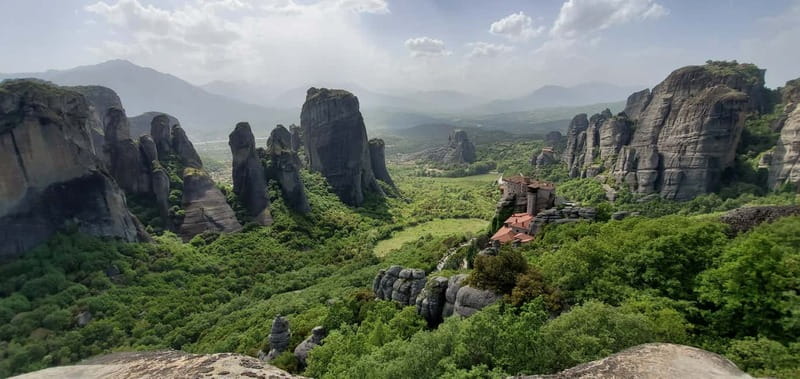
- You see all six monasteries but enter three: This gives you a strong overview, though not enough time for every interior.
- The Hermit Caves add something different: St. Nicholas Badovas shows the earlier, more solitary side of Meteora’s religious life.
- Budget €15 in cash for monastery entry: The fee is €5 at each of the three monasteries visited inside.
- Expect a true 14-hour day: The scenery is superb, but the transport time is a major part of the experience.
Why Meteora is worth the effort from Athens
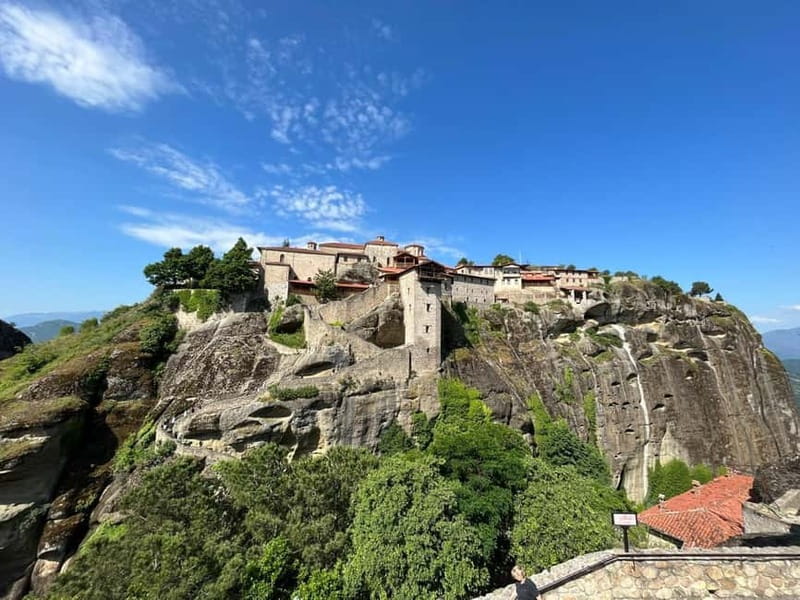
Meteora is one of Greece’s most striking combinations of nature and human effort. Huge rock pillars rise above the Thessalian plain, with monasteries perched on ledges and summits that once seemed reachable only by rope ladders and great nerve.
You do not need to be deeply religious to appreciate the place. The appeal is visual, historical, and human. The rocks are dramatic from every angle, while the monasteries show how Orthodox monks created small spiritual communities in places that look almost impossible to reach.
This tour is useful if Athens is your base and your schedule does not allow an overnight stay. You get the main sights in one day, with a local guide and driver handling the complicated part around Kalambaka. At $123 per person, the price is fair for round-trip transport, the minibus, a guide, bottled water, Wi-Fi, and planned viewpoints. It becomes less of a bargain if you dislike long journeys or prefer slow sightseeing.
An overnight stay in Kalambaka or nearby Kastraki would give you more breathing room. Several people who enjoyed this day trip still wished they had stayed overnight. That is not a criticism of the tour so much as an honest warning about the distance from Athens.
More Train Rides around Greece:
- Battambang: Tuk-Tuk, Bamboo Train, Killing/Bat Caves, Sunset
★ 4.9 · 1,436 reviews - Afternoon tour by tuk tuk to bamboo train,bat cave,killing cave,countryside.
★ 5.0 · 344 reviews - Battambang: Bamboo Train, Bat Cave, Killing Cave by Tuk Tuk
★ 5.0 · 182 reviews
Getting to Larissa Station before sunrise
The day starts at Stathmos Larisis, Athens Central Railway Station. Your train leaves at 6:58 AM, and you are responsible for getting to the station and boarding the correct train.
Your train and bus tickets are sent by email about 24 hours before departure. Save them on your phone, and contact the operator if they do not arrive. One useful practical point is that the train portion has assigned seating, so check the ticket carefully rather than simply boarding and hoping for the best.
The first train ride takes about 2 hours and 45 minutes to Paleofarsalos. This is a pleasant way to watch Athens give way to farmland and open countryside. Bring breakfast, water, and something to read. The day is long, and the food break does not come until later.
At Paleofarsalos, you get off the train and transfer to an elevated, air-conditioned Hellenic Train bus. Look for the bus with HELLENIC TRAIN displayed in the front window. This change exists because the rail service through part of Thessaly has not resumed after severe flooding.
The replacement bus ride takes about 75 minutes. It is not as charming as staying on a train, but the arrangement is organized and the air-conditioning helps in warmer months. Allow extra patience here. Several parts of the day depend on public transport, and delays are possible.
Meeting your guide in Kalambaka
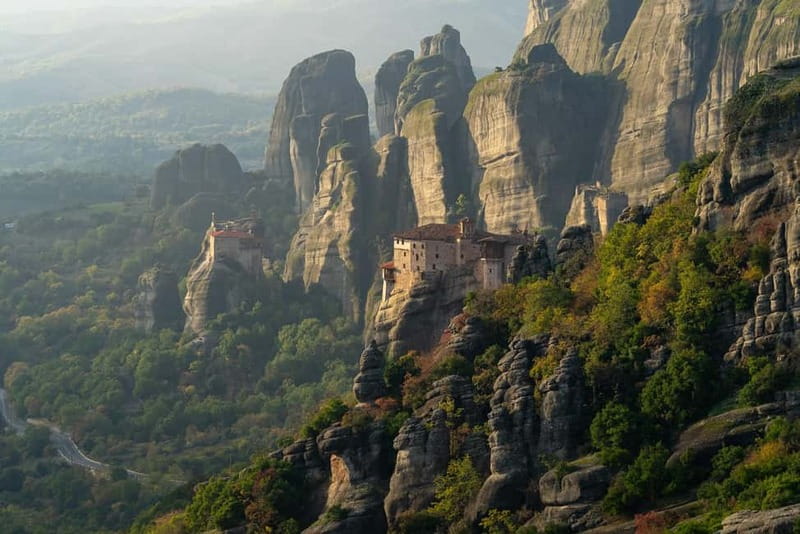
At Kalambaka station, your local guide meets you at the main entrance with a sign showing your name. From there, you transfer to a Mercedes minibus for the Meteora portion of the day.
This is one of the tour’s best features. A minibus can use smaller roads and pull into viewpoints more easily than a full-size coach. Groups can also be quite small. Some departures have had only a handful of people, which makes it easier to ask questions, hear the guide, and avoid the slow shuffle of a large group.
Guides including Panos, Maria, Joanna, and Ioanna have received especially warm praise for their energy, clear English, local background, and ability to keep the group moving without making the day feel rushed. Panos, who grew up in Kalambaka, has shared local stories alongside the standard facts. Several guides have also taken photographs for solo visitors and couples.
That personal touch matters here. Meteora can look like a collection of beautiful rocks and old buildings if you only see it through a bus window. A good guide explains how the monasteries functioned, why the caves mattered, and how the Christian communities adapted to such difficult surroundings.
Kastraki brings the first food break
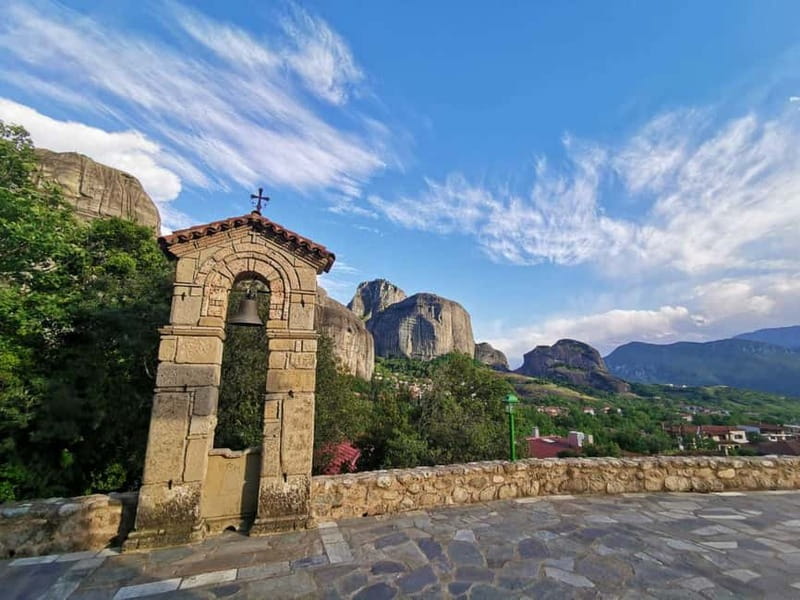
The group usually pauses in Kastraki for about 30 minutes. This is the planned chance for coffee, lunch, a food market visit, or a quick look around before heading higher into Meteora.
Food is not included, so carry snacks for the morning and budget separately for lunch. The optional meal stop has been a strong part of the day for many people, particularly when the guide chooses a family-run restaurant or a buffet-style café serving Greek dishes. You may find traditional food such as local meats, vegetables, salads, and other familiar Greek fare, but the exact menu and restaurant can vary.
Thirty minutes is enough for a practical meal, not a long Greek lunch. If you want to sit over several courses, this schedule will feel tight. If you are hungry after the early start, though, the stop is welcome.
More Day Trips around Greece:
- Athens: Meteora Monasteries Day Trip with Caves and Lunch
★ 4.7 · 4,670 reviews - Zakynthos : One day small group tour to Navagio beach Blue Caves & top view
★ 4.5 · 1,172 reviews - Meteora Monasteries Private Full Day Trip From Athens
★ 5.0 · 360 reviews - Athens: Delphi, Corycian Cave, and 300 Battlefield Day Trip
★ 4.8 · 344 reviews
Seeing all six monasteries from the minibus
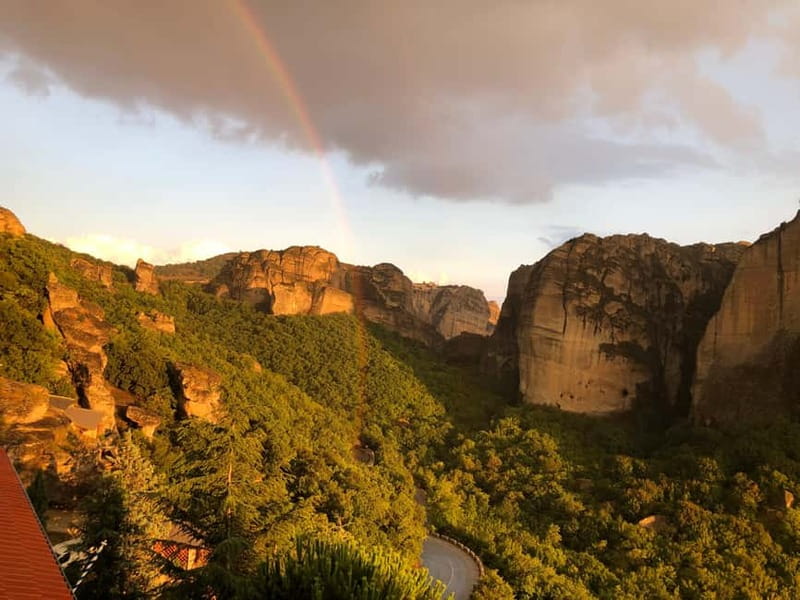
The main Meteora visit lasts about 4 hours and 15 minutes. During this time, you see all six active and accessible monasteries, but you enter only three.
That arrangement is sensible for a day trip from Athens. Visiting every monastery inside would require far more time, and the day already includes roughly five hours of travel in each direction when the train and bus legs are counted. Seeing all six from outside gives you a sense of how the buildings sit among the rocks, while three interiors provide enough time to appreciate frescoes, chapels, and Orthodox Christian architecture.
The exact monasteries visited can vary. Opening schedules, religious services, crowds, and local conditions affect the plan. The guide explains each site before you go inside, then gives you time to look around independently. That balance works well if you want context but also want a few quiet minutes without a running commentary.
The monastery entry fee is not included. Bring €5 in cash for each monastery you enter, or €15 total for three. The information about this extra cost is easy to miss when planning, so treat it as part of the basic budget.
Inside the monasteries: rules, stairs, and rewards
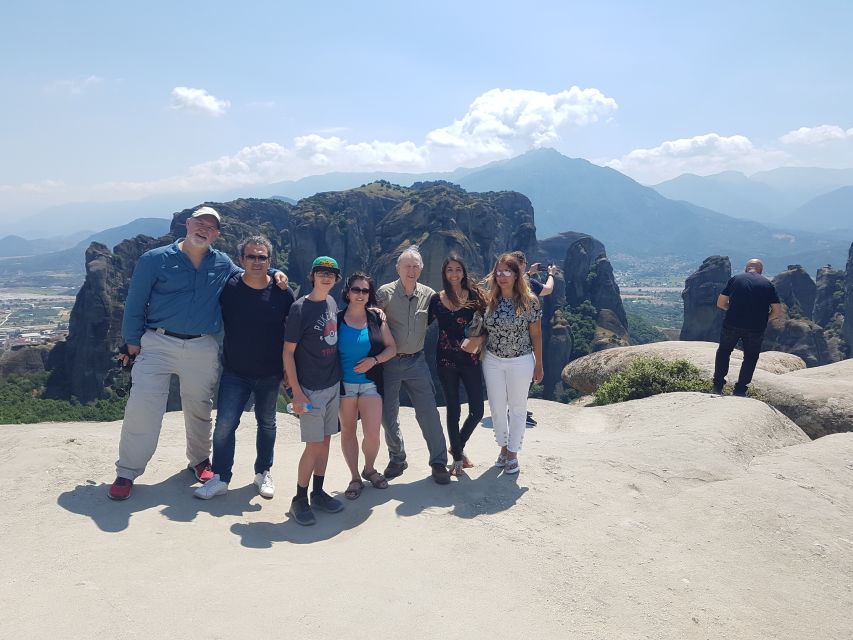
The interiors are more modest than the spectacular rock settings might suggest, but that is part of their appeal. You see old frescoes, religious objects, stone buildings, and small spaces shaped by centuries of worship and monastic life.
Expect stairs and uneven walking. The tour is not suitable for wheelchair users or people with mobility impairments, and even fit visitors should wear closed-toe shoes with good grip. The climb is not just a small stroll from the parking area to a doorway.
Dress rules are enforced. Shorts, short skirts, sleeveless shirts, and ripped clothing are not allowed. Long pants are the simplest choice for everyone. Women who arrive in clothing that does not meet the rules can generally use a skirt or wrap provided at the site, but it is easier and more respectful to dress appropriately before you arrive.
There is no guided tour inside the monasteries as a separate service. Your local guide provides information on the minibus and before entry, but you should expect to explore the interiors on your own. This suits people who want a clear introduction without being led through every room.
The Hermit Caves of St. Nicholas Badovas
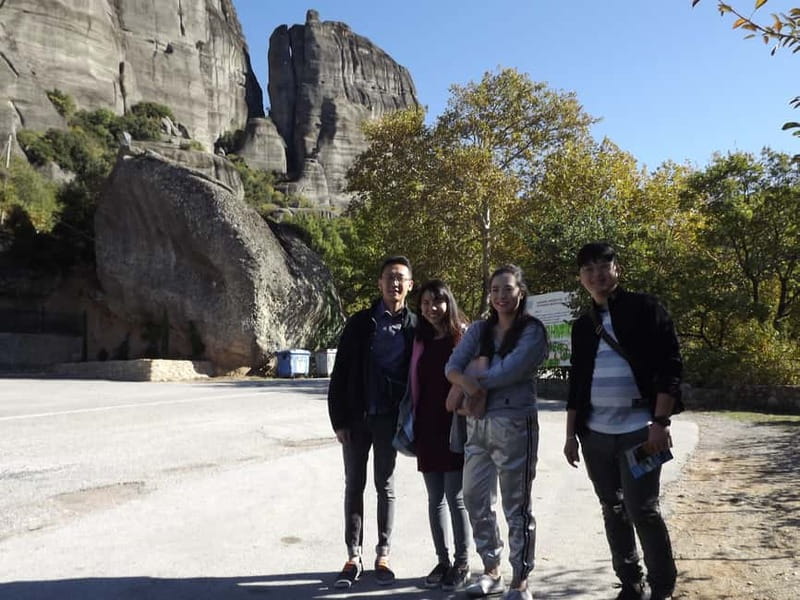
The Hermit Caves provide a useful contrast to the grand monasteries. These small cave dwellings show how religious life in Meteora began with individuals seeking isolation among the rocks.
The caves are not polished museum spaces. Their value lies in seeing the physical setting and understanding the purpose they served in the past. They help explain why Meteora became a religious center long before the larger monasteries gained their present fame.
This stop also breaks up the monastery visits. You get a different view of the rock formations and a reminder that the region’s story is not only about impressive buildings. It is also about people choosing a hard, solitary way of life.
Photo stops that make the day memorable
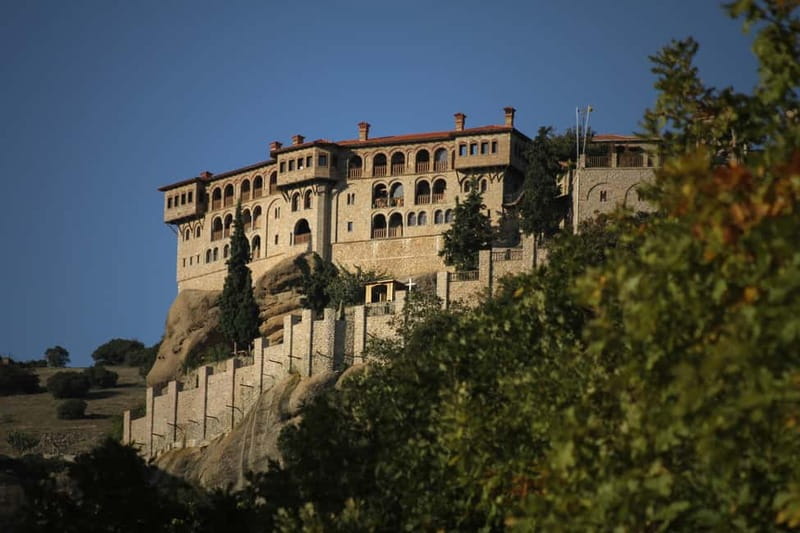
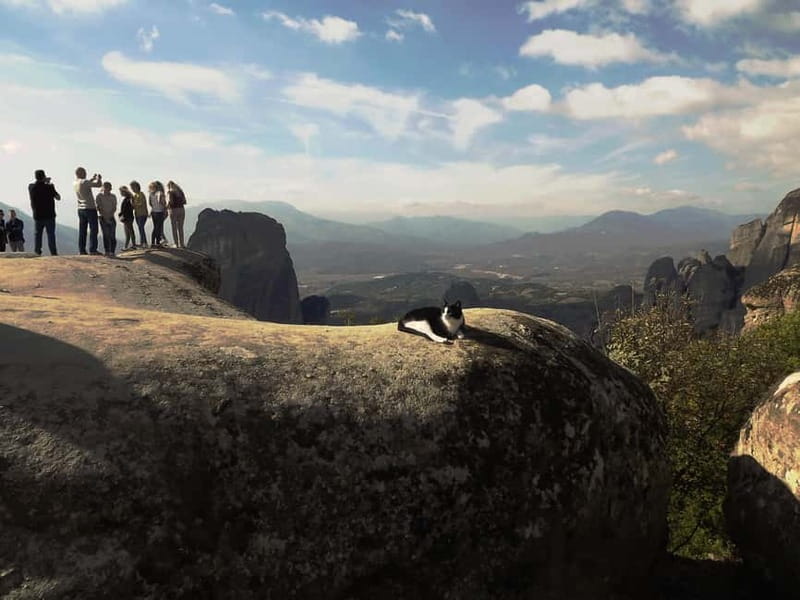
The best views often come from the planned stops between monasteries. From these points, you can see the stone pillars, the plain below, and several monasteries at once.
Bring a camera, but also leave room to look up from the screen. The guides know where the broad views are strongest and often help with photographs, which is particularly useful if you are traveling alone. Several guides have been praised for acting as unofficial photographers, taking pictures at viewpoints rather than leaving solo visitors to rely on strangers.
The scenery changes with the light and season. Spring and autumn can bring cooler walking conditions, while summer offers longer daylight but more heat and crowds. One visitor found the area busy by mid-May, so do not assume that shoulder season means empty paths.
Meteora has also appeared in films and television productions, including Game of Thrones and James Bond-related filming in the region. Guides may point out these connections, but the main attraction remains the setting itself.
The return journey to Athens
After the Meteora visit, the minibus returns you to Kalambaka station. There is usually a short break of about 10 minutes before the bus connection, then you repeat the route by Hellenic Train bus and train.
The return trip can feel longer than the outbound journey. You are tired, your phone may be full of photos, and delays become more noticeable after a full day on your feet. Trains have run late, sometimes by 30 to 45 minutes, so avoid scheduling a dinner reservation, airport transfer, or other fixed plan immediately after the expected 10:00 PM arrival.
The train has power outlets, though not necessarily USB ports. Bring the correct charging cable and adapter. The minibus has USB chargers and Wi-Fi, but the train is where your battery may take the biggest hit if you photograph every viewpoint.
Who will enjoy this tour most
I would choose this trip if you have only one free day from Athens and Meteora is high on your Greece list. It suits people who value scenery, history, small groups, and a guide who can add local detail to a complicated transport day.
It is also a good fit for solo visitors. A small group, a guide willing to take photographs, and planned transfers make the day easier than arranging every piece independently.
I would think twice if you dislike early starts, long train rides, stairs, or fixed schedules. Families with babies can join if children up to age three share a parent’s seat, but the length of the day may still be demanding for very young children.
Free cancellation up to 24 hours before departure and the reserve-now, pay-later option make planning less risky. Still, the real decision is not the booking flexibility. It is whether you are willing to trade a full day of transport for several powerful hours in one of Greece’s most unusual places.
Should you book this Meteora day trip?
Book it if you want Meteora and Athens must remain your base. The $123 price covers the difficult transport arrangement, a local minibus, guide, water, Wi-Fi, and a well-planned visit to the major sights. The three monastery interiors, Hermit Caves, and photo stops give you far more than a quick roadside view.
If you can spare a night away from Athens, an overnight option would be calmer and allow more time. But for a single-day visit, this is a strong choice. Pack snacks, €15 in cash, long pants, comfortable shoes, a charger, and patience. The day is long, but the rocks and monasteries can make every tired hour feel worthwhile.
FAQ
What time does the tour begin?
You must board the train at Athens Central Railway Station, Stathmos Larisis, at 6:58 AM.
Where do I meet the guide?
Your guide meets you at the main entrance of Kalambaka Train Station and holds a sign with your name.
Is the entire journey by train?
No. The route from Athens to Paleofarsalos is by train, but the section from Paleofarsalos to Kalambaka is temporarily by an air-conditioned Hellenic Train bus.
How many monasteries do I visit?
You see all six active and accessible monasteries, but you visit the interiors of three.
How much are the monastery entrance fees?
Entry costs €5 per monastery, paid in cash. Visiting three monasteries requires €15 per person.
Is lunch included?
No. The tour includes an optional food break of about 30 minutes, but food and drinks are not included in the price.
What clothing should I wear?
Wear long pants and closed-toe, comfortable shoes. Shorts, short skirts, sleeveless shirts, and ripped clothing are not allowed at the monasteries.
Just added around Greece
- From Faliraki : Speedboat tour kalithea caves&antony kouin★ 5.0 · 25 reviews
- From Ag Anna: Rina’s Cave and Ano and Kato Koufonisi Cruise★ 4.2 · 504 reviews
- Faliraki: Boat Trip to Anthony Quinn & The Caves with Drinks★ 4.8 · 386 reviews
- FALIRAKI: BOAT TRIP TO ANTONY QUINN, LADIKO, AFANDOU CAVES★ 4.9 · 56 reviews
- From Naxos: Koufonisia Boat Cruise and Rina’s Cave w/ Lunch★ 4.3 · 101 reviews
- Faliraki: Boat Trip to Afandou Caves, Anthony Quinn & Ladiko★ 4.8 · 139 reviews
- From Lefkimmi: Paxos, Antipaxos & Blue Caves Boat Tour★ 4.2 · 62 reviews
- Zakynthos: Shipwreck & Caves Private Boat Tour with Skipper★ 4.7 · 63 reviews
Train Experiences, compared.
Tuk-Tuk, Bamboo Train, Killing/Bat Caves, Sunset
Read our review →
Afternoon tour by tuk tuk to bamboo train,bat cave,killing cave,countryside.
Read our review →
Afternoon Tour: Bamboo Train, Killing Cave &Bat Cave
Read our review →
Beijing:Bullet Train Tour to Hanging Temple&Yungang Grottoes
Read our review →Browse the lists this cave appears in