
Review · MUSEUMS
Krakow: Rynek Underground Museum Guided Tour
Kraków has a second city under its feet. The Rynek Underground Museum turns the Main Market Square into an archaeological journey through old streets, trading stalls, and the daily life of medieval Kraków. I like the way a guide gives meaning to displays that could otherwise seem like scattered stones, and I like the strong mix of original remains with projections, sounds, and holograms. The main drawback is that the underground rooms can get noisy, making it harder to hear your guide at busy moments.
This 90-minute tour costs $34 per person and includes skip-the-line museum entry. That is fair value if you want the story explained rather than simply walking past cases of objects. Guides such as Dominika, Olga, Anya, Adrian, and Magda have been praised for clear explanations and lively storytelling, but arrive 10 minutes early. Once the group leaves, late arrivals cannot join and the ticket cannot be refunded.
Key points to know before going
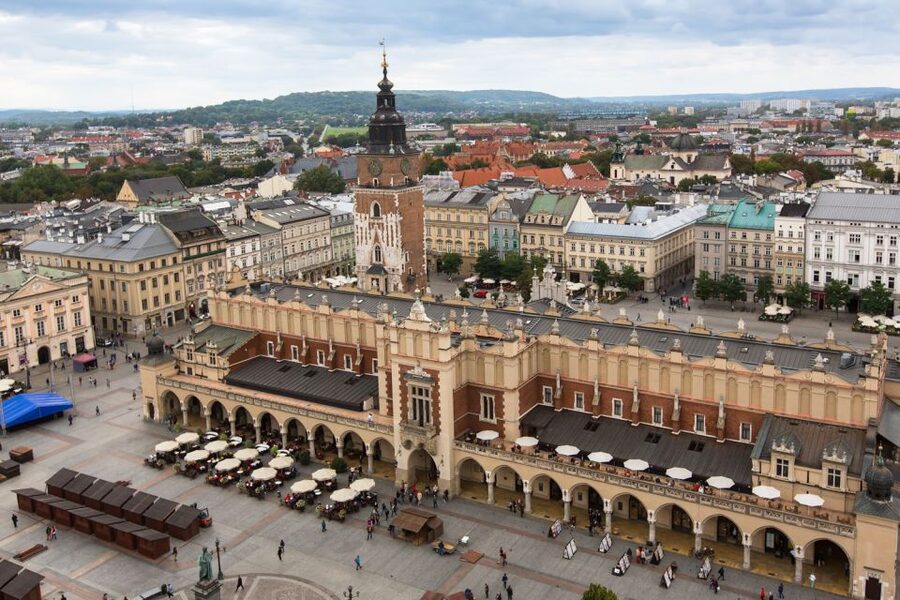
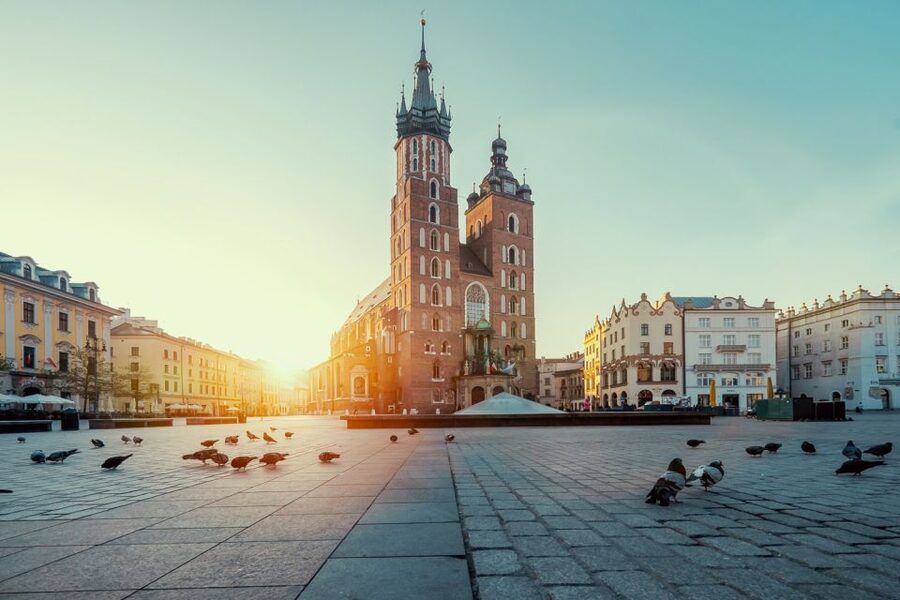
- The museum sits directly beneath the Main Market Square, with St. Mary’s Basilica and the Cloth Hall above you.
- Original medieval streets, stalls, and trade objects show how Kraków grew into an important European commercial centre.
- A guide adds real value, explaining legends, objects, and historical context that are easy to miss alone.
- Multimedia displays bring the past to life, using sound, projections, and holograms rather than relying only on labels.
- Tours last 90 minutes, though some visits run longer when the guide allows extra time.
- Groups can reach 29 people, and headsets are provided for groups of 15 or more.
Entering Kraków’s city beneath the square
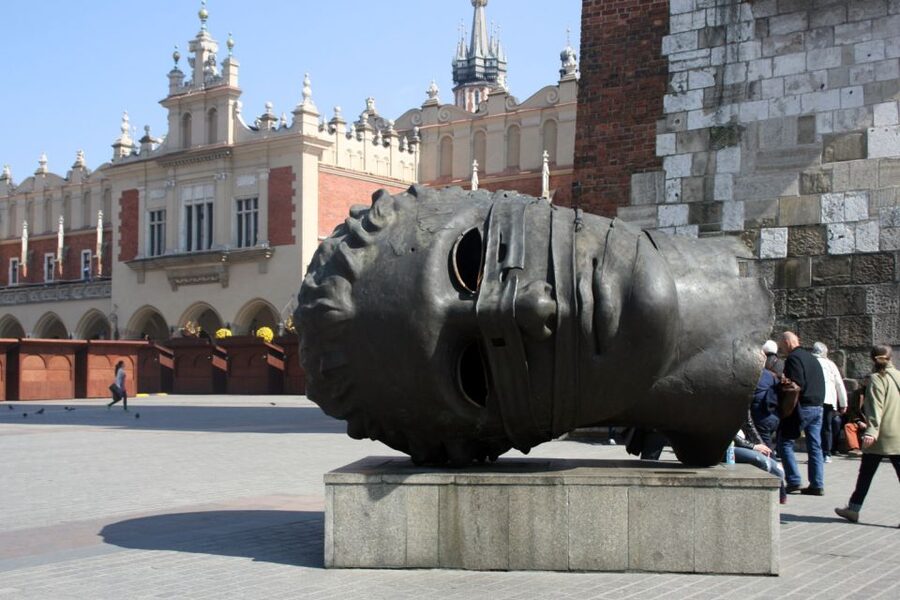
The experience begins below the Main Market Square, one of Europe’s great urban spaces. That setting matters. You are not visiting an isolated archaeological site outside town. You are walking below the same square where Kraków’s public life continues today.
The contrast is immediate. Above ground, horse carriages, cafés, St. Mary’s Basilica, and the Cloth Hall fill the view. Below ground, you find layers of an older city that were gradually covered as the square was rebuilt and raised. Archaeological work revealed the remains, including material found during excavations in 2006, and the museum was designed around them.
I enjoy this change in scale. The tour connects a familiar Kraków postcard with the less polished city beneath it. Afterward, the basilica and Cloth Hall are not just beautiful landmarks. You can picture the streets, merchants, carts, and customers that occupied this place centuries ago.
The meeting point can vary by booking option, so check your confirmation carefully. One useful practical warning comes from a visitor who found that map directions pointed toward the middle of the building. The correct entrance was on the side facing the basilica. Give yourself time to locate it instead of arriving at the last minute.
More Museum Visits around the world:
- Coba Multun-Ha Cenote Tulum and Mayan Museum Small Group
★ 4.5 · 773 reviews - From Sofia: Rila Monastery and Optional Museum, Cave or Spa
★ 4.6 · 270 reviews - Beatenberg: Beatus Caves Entry Ticket with Museum
★ 4.6 · 253 reviews
The first 30 minutes: old streets and market life
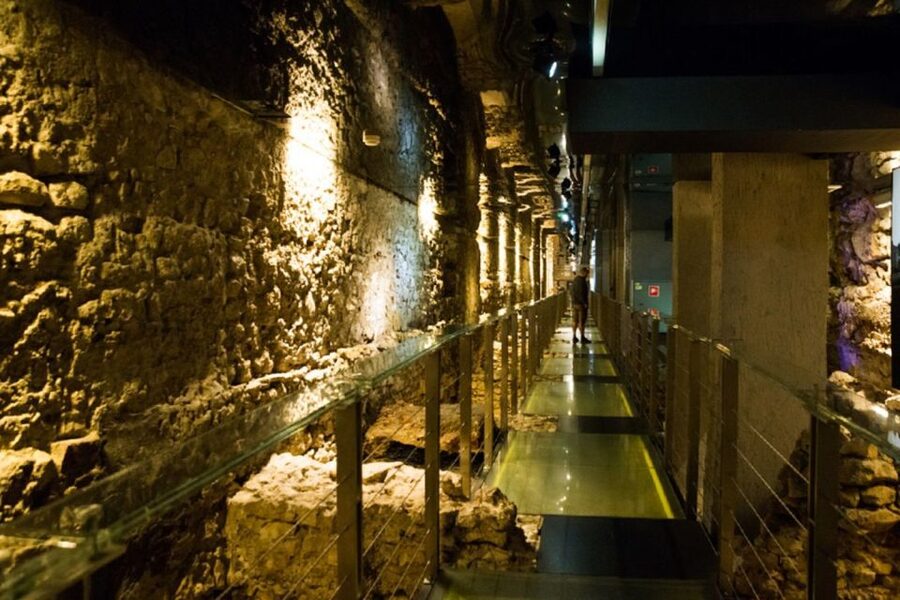
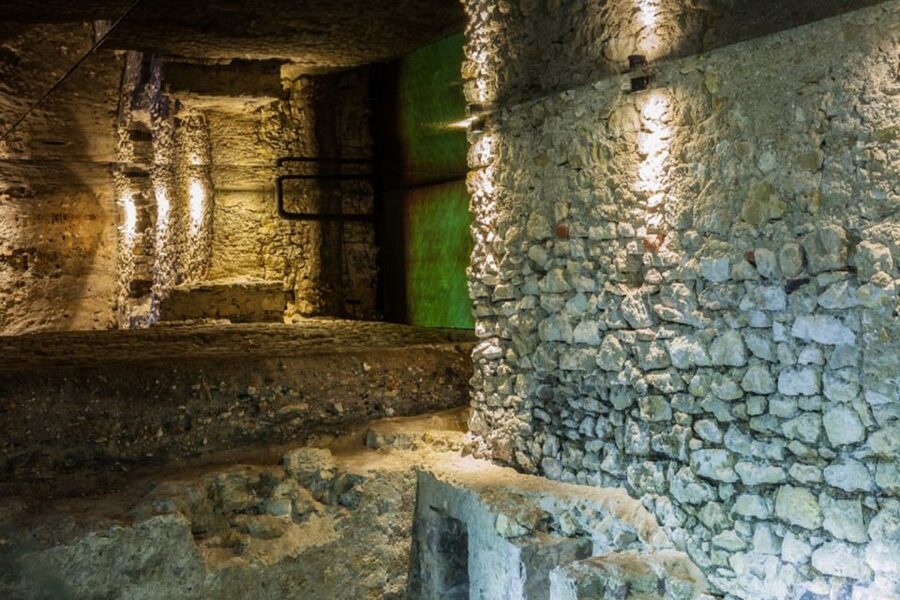
Your guide leads you through an atmospheric network of underground passages and archaeological remains. The first part usually establishes how the square changed over time and why so much of the earlier market is now below the modern street level.
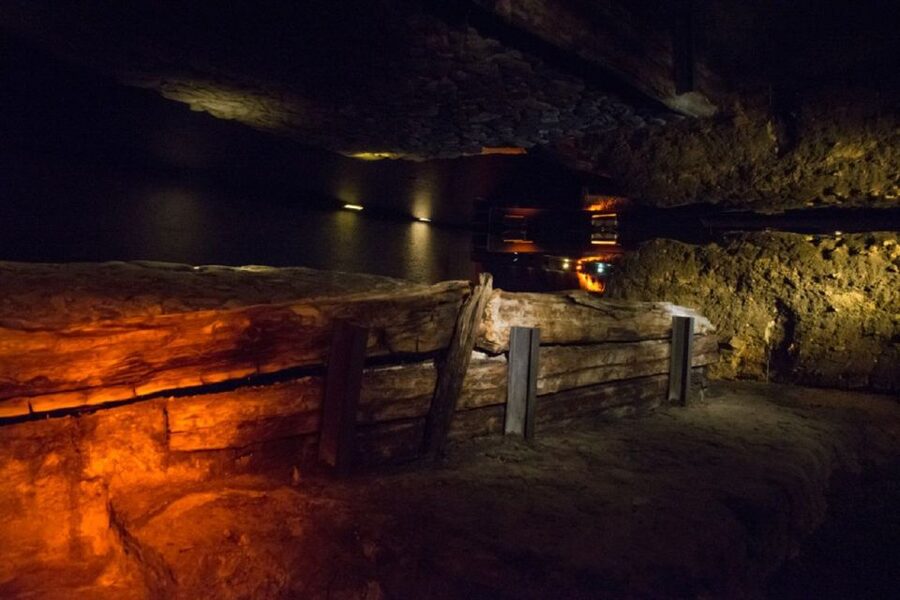
The most interesting feature is the original street plan. You are not looking at a reconstructed medieval village built for show. You are seeing remnants of routes, surfaces, stalls, and objects connected with real urban activity. The setting helps you understand that Kraków was not simply a royal city with grand churches. It was also a working town filled with sellers, craftsmen, porters, and people passing through.
This is where a guide earns the admission price. A label can identify an artifact, but it cannot always explain how that object fitted into the life of the square. Several visitors specifically valued hearing about legends and small details that they would have walked past without noticing.
The strongest guides make the past feel inhabited without turning the tour into a lecture. Olga was praised for linking the ruins with everyday life, while Dominika was singled out for explaining objects in a way that made the museum easier to follow. Names and schedules can change, but the important point is that the quality of the tour depends heavily on the individual guide.
You should expect a steady pace rather than a free-form museum visit. The group pauses at selected points while the guide explains what you are seeing. One visit moved slowly, which may frustrate you if you prefer to browse quickly. On the other hand, that slower rhythm gives you time to look closely and ask questions.
Trade, craft, and Kraków’s rise
The museum’s central story is Kraków as a European trading centre. The market was a place where goods changed hands, crafts were practiced, and visitors arrived from other parts of the region. The remains and artifacts give you a sense of the practical systems behind the city’s growth.
You will hear about merchants, craftsmen, and travellers who used the square. The museum does not present medieval life as a romantic pageant. Its displays point toward work, movement, commerce, and the physical mess of a large market. Streets needed maintenance. Goods had to be stored and moved. Customers and sellers needed places to meet.
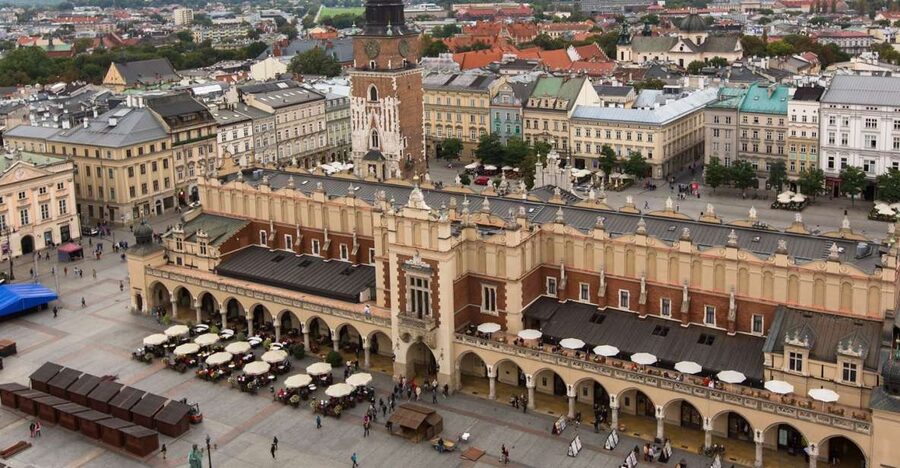
That context makes the Cloth Hall above ground more meaningful. Its elegant form can hide the basic fact that Kraków’s commercial success depended on ordinary buying and selling. The underground museum gives you the less decorative side of that story.
I would pay close attention to the objects rather than rushing toward the most dramatic ruins. The small artifacts may not look impressive at first, but the guide explains what they reveal about work and daily routines. This is also where the tour is especially useful for families and first-time visitors, since the guide can turn unfamiliar remains into a connected story.
Adrian was praised for speaking throughout the tour and explaining the city’s past in detail. That kind of continuous commentary helps in a museum where the exhibits are spread across several rooms. It also means you are less likely to miss the connection between one display and the next.
Multimedia displays that make the ruins easier to picture
The Rynek Underground Museum does not leave you alone with stone foundations and glass cases. Holograms, projections, sound effects, and other multimedia elements recreate the movement of the medieval square.
You might hear the clatter of carts or the sounds associated with trade while projected scenes show how the market could have looked. These features are not a replacement for the archaeological remains. They act as visual and audible prompts, helping you imagine a city that would otherwise be difficult to picture from fragments.
I find this approach useful because underground archaeology can become visually repetitive. A sequence of walls and foundations may be fascinating for specialists but harder for a general audience to read. The multimedia displays provide scale and atmosphere, especially for children and visitors who are not already familiar with medieval urban history.
The trade-off is that the museum can become loud. One family group found that sound in the space sometimes made it difficult to hear the guide. If you have hearing concerns, position yourself close to the guide and take advantage of the headsets when the group reaches 15 or more participants.
The group limit is 29 people. That is not a private tour, and you should not expect constant one-to-one attention. Still, it is small enough for a guide to manage if everyone stays together. Some visits have been very small, including tours with only two people, but you should treat that as good luck rather than a promise.
More Guided Tours around the world:
- Naples: Naples Underground Entry Ticket and Guided Tour
★ 4.4 · 21,781 reviews - Naples: Catacombs of San Gennaro Entry Ticket & Guided Tour
★ 4.6 · 7,941 reviews - Naples: Spanish Quarters Underground Guided Tour
★ 4.8 · 5,064 reviews - Expert Guided Tour of Colosseum Arena OR Underground, and Forum
★ 4.5 · 5,041 reviews
The final stretch: connect the underground city with modern Kraków
Near the end, your guide draws the main ideas together. You have seen the market’s physical remains, learned about commerce and city growth, and used the museum’s technology to picture daily life. The final effect comes from looking upward in your mind, toward the modern square above.
Some visits include time to remain in the museum after the guided portion and watch historical films or look at additional displays at your own pace. That extra time is valuable because the guided route gives you the framework, while the remaining exhibits let you follow your own interests.
The scheduled tour lasts 90 minutes, which is a good length for most people. It is long enough to build a story but short enough to fit around other Old Town plans. One visit lasted about two hours because the guide continued beyond the scheduled time, while another finished close to the advertised 90 minutes. Plan on 90 minutes and treat anything longer as a bonus.
You may want to visit St. Mary’s Basilica or the Cloth Hall before the museum so you can recognize the landmarks from above. You can also visit the underground museum first and then walk across the square afterward. Either order works, but the second option can make the surface seem newly familiar.
Why the guide matters so much
I would not choose the self-guided option if your main aim is to understand Kraków’s past. The museum has plenty to see, but the meaning is not always obvious from the objects alone.
This is not a criticism of the exhibition. Archaeological museums often require explanation because the evidence is incomplete. A guide tells you what a foundation may have been used for, why a particular object matters, and how the market fitted into the wider development of Kraków.
Several guides have earned especially strong praise. Dominika was described as clear and passionate. Olga was appreciated for her enthusiasm and ability to make the past feel real. Anya was praised for covering more of the museum in 90 minutes than a visitor could manage alone. Magda was noted for explaining Kraków’s history with unusual clarity.
Those comments point to the tour’s most important strength: interpretation. You are paying not only to enter the museum, but also to have someone select the important details and connect them into a story. That is the difference between seeing an old street and understanding why it mattered.
The tours are offered in English, Italian, French, Polish, German, and Spanish. Your group tour is conducted in one selected language, so choose carefully when booking. This is not a multilingual tour where commentary switches between languages.
Is $34 a fair price?
At $34 per person, the tour is not the cheapest museum visit in Kraków. The price includes the licensed local guide, skip-the-line entry, and the 90-minute tour. Food and drinks are not included, though you do not need them for such a short activity.
The value depends on how you use museums. If you like to read every label and move at your own speed, you may prefer independent entry. If you want a clear explanation of the ruins and objects, the guide makes the extra cost worthwhile.
Skip-the-line entry also matters. The museum is popular, and prebooking is sensible, particularly if your Kraków schedule is tight. The tour gives you a fixed time and reduces the risk of spending part of your day waiting to enter.
The strongest value comes from the combination of a time-limited visit and complicated material. You get a focused introduction, then in some cases a chance to stay and see more of the exhibition on your own. For a first visit to Kraków, I consider that a sensible use of both time and money.
Who should book this 90-minute tour?
I would recommend it most strongly to:
- First-time visitors who want a clear introduction to Kraków’s medieval development
- History fans interested in archaeology, trade, and city life
- Families who may find projections and sound easier to follow than long written labels
- Visitors with limited time who want a focused Old Town activity
- Anyone who has already visited Kraków and wants to see the Main Square from another angle
It is less suitable if you dislike guided pacing, crowded indoor spaces, or multimedia displays. You may also find the tour less satisfying if you want to examine every object in silence. The underground rooms can be busy, and the guide may need to keep the group moving.
Arrive 10 minutes early. That advice is important because latecomers cannot join after departure, and tickets are not refunded. Wear something comfortable for standing and walking through the museum, though no special equipment is listed as necessary.
The cancellation policy is forgiving: you can cancel up to 24 hours in advance for a full refund. You can also reserve now and pay later, which helps if your Kraków plans are still shifting.
Should you book the Rynek Underground Museum tour?
Book it if you want the Main Market Square explained rather than simply photographed. The original streets, market remains, artifacts, and multimedia displays create a strong sense of how Kraków developed below the surface.
The guide is the deciding factor. A good one turns the museum from a series of ruins into a readable story, and the consistently strong comments about guides such as Dominika, Olga, Anya, and Adrian make the guided format the sensible choice.
At $34, it is a worthwhile half-morning or afternoon stop, especially when skip-the-line entry saves time. Just arrive early, check the exact meeting point, stay close enough to hear the guide, and remember that the underground museum is best understood as a historical walk through Kraków, not simply a room full of old objects.
FAQ
Where is the Rynek Underground Museum?
It is beneath Kraków’s Main Market Square in Lesser Poland, close to St. Mary’s Basilica and the Cloth Hall.
How long does the guided tour last?
The scheduled guided tour lasts 90 minutes. Some visits may run longer if the guide continues explaining the exhibits.
What does the $34 price include?
The price includes a licensed local guide, skip-the-line entry to the Rynek Underground Museum, and the 1.5-hour guided tour.
Is food or drink included?
No. Food and drinks are not included in the tour.
Which languages are available?
Tours are offered in English, Italian, French, Polish, German, and Spanish. Each group tour uses one selected language.
How large can the group be?
Museum regulations limit each tour to a maximum of 29 participants.
Are headsets provided?
Headsets are provided for groups of 15 or more participants.
How early should I arrive?
You should arrive 10 minutes before the tour begins. Late arrivals cannot join after the group has left, and their tickets cannot be refunded.
Can I cancel the booking?
Yes. You can cancel up to 24 hours in advance for a full refund. Reserve now and pay later is also available.
Just added around the world
- From Geysir: Snowmobiling & Ice Cave on Langjökull Glacier★ 4.4 · 100 reviews
- From Faro: Boat trip to Benagil Cave & Praia da Marinha★ 4.7 · 256 reviews
- From Faro: Benagil Cave and Seven Hanging Valleys Trail Tour★ 5.0 · 584 reviews
- From Geneva: Chamonix, Mont Blanc & Ice Cave Guided Day Tour★ 4.8 · 572 reviews
- From Durres: Speed Boat to Sazan Island, Cave & Karaburun★ 4.9 · 147 reviews
- From Durrës/Golem: Sazan & Ali Cave & Karaburun Boat Tour★ 4.6 · 35 reviews
- From Faliraki : Speedboat tour kalithea caves&antony kouin★ 5.0 · 25 reviews
- From Denia: Boat Trip to Tallada Cave with Optional Swim★ 3.6 · 376 reviews
Museums, compared.
Coba Multun-Ha Cenote Tulum and Mayan Museum Small Group
Read our review →
Rila Monastery and Optional Museum, Cave or Spa
Read our review →
Beatenberg: Beatus Caves Entry Ticket with Museum
Read our review →
Albaicín, Sacromonte & Museum of Caves Walking Tour
Read our review →Browse the lists this cave appears in