
Review · HISTORICAL TOURS
Boston: Underground Railroad History Tour of Beacon Hill
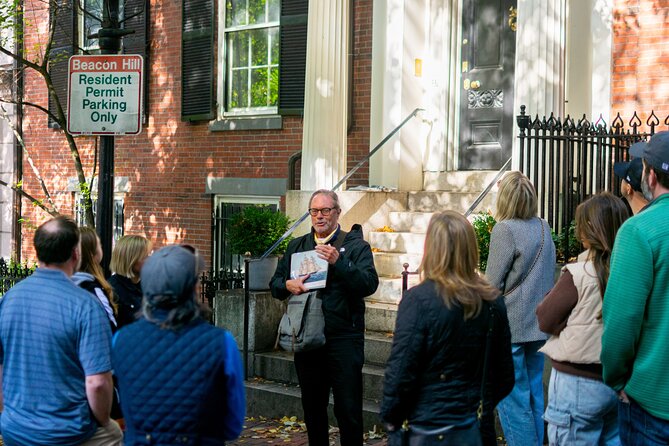
History changes when you walk it. This 2.5-hour Beacon Hill tour connects Boston Common, abolitionist homes, a former safe house, and the African Meeting House into one clear story about Black Bostonians, slavery, freedom, and the Civil War. I like the small groups, limited to 16 people, and I like that the tour gives real attention to people often left off the usual Boston itinerary. The main drawback is physical: Beacon Hill means hills, cobblestones, standing, and a fair amount of walking.
I also appreciate the guides’ strong personal command of the subject. Dana, Will, Lin, Meghan, Joe, Drew, and others are praised for making difficult history understandable and lively. The tour is especially useful if you want more than pretty brick houses and Revolutionary-era landmarks.
Expect to pay $35 per person for roughly two and a half hours. That is fair value for a small-group walking tour with admission to the African Meeting House included, though you should bring comfortable shoes, water, and patience for a long stretch on foot.
Key points before you book

- Beacon Hill’s Black Heritage Trail: Follow all 10 featured landmarks through one of Boston’s most historic neighborhoods.
- 66 Phillips Street safe house: See the former home of the Hayden family, abolitionists who had once been enslaved.
- African Meeting House: Spend about 25 minutes at the oldest surviving Black church building in the United States.
- Small groups of 16 or fewer: The size gives you a better chance to hear the guide and ask questions.
- A serious walking commitment: The route includes hills, uneven surfaces, cobblestones, and extended standing.
- A strong Civil War connection: Learn why Boston and Beacon Hill mattered to abolition and the conflict that followed.
Start at Boston Common with the Soldiers and Sailors Monument
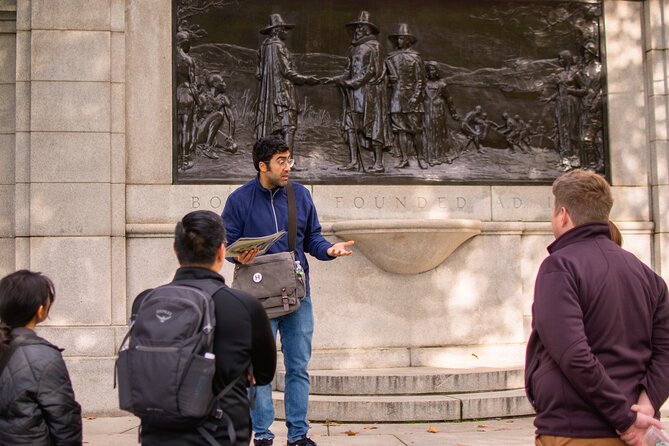
The tour begins at the Soldiers and Sailors Monument in the center of Boston Common, close to the Boston Common Visitors Center at 139 Tremont Street. Look for the white granite column topped by a female figure holding a flag, with four bronze figures around its base.
This is a sensible meeting point. Boston Common is easy to reach by public transportation, and the nearby visitors center can help you get oriented before the tour starts. The monument itself provides a useful opening: this walk is not only about Beacon Hill’s architecture, but also about Boston’s role in the Civil War era.
Your guide may begin by placing the Common in its older setting. It was established as public land in 1634 and served as Boston’s communal grazing pasture. That small detail helps you see the city as a changing place rather than a collection of polished landmarks.
The first stop lasts about 10 minutes and is free. Do not arrive at the last second. The meeting point is in a broad public space, and finding the exact monument can take a few minutes if you are unfamiliar with Boston Common.
More History Tours around the USA:
- Beneath The Streets Underground History Tour
★ 4.5 · 8,006 reviews - Emerald Cave Express Kayak Tour with Scenic & Historic Stops
★ 5.0 · 1,522 reviews - NYC: History of Slavery & Underground Railroad Walking Tour
★ 4.7 · 87 reviews
Acorn Street shows Beacon Hill’s polished side
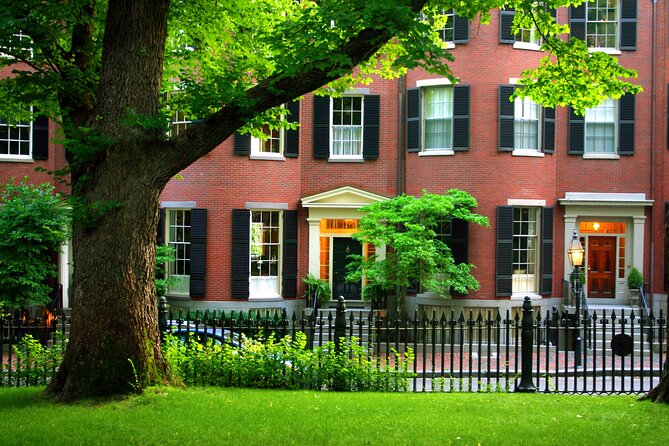
From the Common, the route moves into Beacon Hill and to Acorn Street, one of the neighborhood’s narrow cobblestone lanes. The street is associated with Beacon Hill’s elegant residential character and the world of the 19th-century Boston Brahmins, the city’s old elite.
This is a useful contrast early in the walk. You see the graceful houses and intimate streets that draw people to Beacon Hill, then begin to consider who had power in that world and who had to fight to be heard. The guide’s job here is not simply to point out attractive buildings. It is to connect the neighborhood’s social structure with the abolitionist movement unfolding nearby.
Acorn Street takes about 10 minutes, and admission is free. The cobbles are uneven, so flat shoes with a firm sole are a better choice than dress shoes. This is one of the tour’s most photographed locations, but the history gives it more weight than a quick picture stop.
Phillips School reveals Boston’s struggle over education
The next stop is Phillips School, built in 1824 as a whites-only school and among the first schools in Boston to integrate, by 1855. This is one of the tour’s most important reminders that Boston’s reputation as a center of reform did not mean equality came easily.
A stop like this adds needed balance. It is easy to tell a flattering story about Boston abolitionists and antislavery politics. The school forces you to consider the resistance and exclusion that Black families faced within the city itself.
The visit lasts around 10 minutes. You will spend most of the time outside, listening to the guide explain the building’s role. The strongest guides make this part clear without turning it into a dry list of dates. Dana and Meghan receive especially strong praise for explaining complicated subjects in a direct, engaging way.
John J. Smith’s house puts a face to abolition
At the John J. Smith House, the tour focuses on a leading abolitionist, state legislator, and former barber. This is where the walk becomes more personal. Instead of treating abolition as an abstract political cause, the guide introduces someone who worked, organized, and held public office.
I like the way this stop broadens your picture of Black leadership in Boston. The story is not limited to famous national figures. It includes local residents who built careers, challenged discrimination, and helped shape Massachusetts politics.
The house visit takes about 10 minutes. The tour then follows Beacon Hill’s primary thoroughfare, lined with shops and restaurants. That stretch gives you a practical sense of the neighborhood as it is today, while the guide continues to explain how its streets connected different communities.
A few more cave trips around the USA worth a look
- Best Niagara Falls US Tour W/Boat Ride, Cave & More Wonders!
★ 5.0 · 8,372 reviews - Half-Day Emerald Cave Kayak Tour with Optional Hotel Pickup
★ 5.0 · 4,978 reviews - Niagara Falls USA: Maid of the Mist & Cave Adventure
★ 5.0 · 3,924 reviews - New York Catacombs by Candlelight
★ 4.5 · 2,863 reviews
The Charles Street Meeting House links faith and protest
The Charles Street Meeting House dates to 1807 and became a place of heated debate over racial integration. The stop lasts about 15 minutes and shows how religious spaces could also become political spaces.
This is a good point to listen closely. The tour deals with slavery and abolition, but it also examines the local arguments, alliances, and conflicts that shaped daily life. A guide such as Will, praised for his energy and command of Massachusetts history, can make these debates feel connected to the buildings around you rather than sealed away in a textbook.
The meeting house is also a useful architectural pause. Beacon Hill’s attractive streets can distract you from the people who lived and worked there. Stops like this keep the focus on action and disagreement.
At 66 Phillips Street, the Underground Railroad becomes concrete
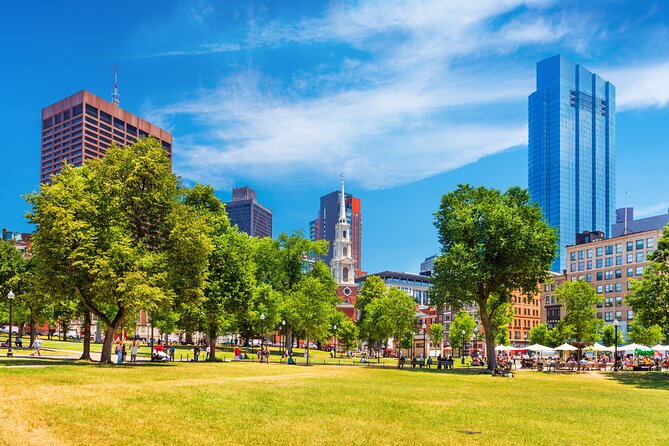
The visit to 66 Phillips Street is one of the tour’s central moments. The house was owned by the Haydens, staunch abolitionists who had formerly been enslaved, and it served as an Underground Railroad safe house.
The phrase Underground Railroad can become vague when it is presented only as a network of secret routes and brave escapes. Here, you connect that larger story to an actual Beacon Hill address and to a family whose own experience shaped its commitment to freedom.
This stop lasts about 15 minutes. The tour may also discuss secret passages and lesser-known figures, including women whose work is not always recorded on plaques. That attention to overlooked people is one of the experience’s best qualities.
Do not expect a theatrical presentation with guides in period costume. Costumed interpretation is not included. Instead, the value comes from the guide’s storytelling, historical context, and ability to make the streets around you meaningful.
Otis House adds the Boston elite to the story
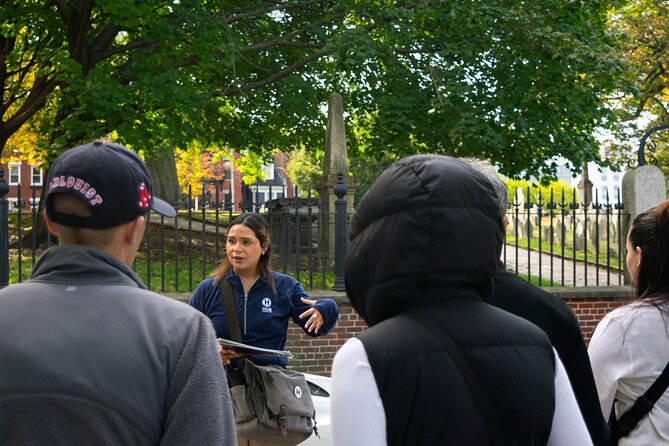
Otis House, built in 1796, was the residence of Harrison Gray Otis, a Boston mayor and nephew of Revolutionary figure James Otis Jr. It offers another look at the city’s established white elite.
This stop matters because the tour does not isolate Black history from the rest of Beacon Hill. It places the homes of wealthy and politically connected residents beside the homes of Black abolitionists. You see how different social worlds occupied the same neighborhood and how their interests sometimes collided.
The stop lasts about 10 minutes. Along the way, the route also touches on an 1806 church designed by architect Asher Benjamin, the home of an outspoken abolitionist and U.S. senator who was beaten unconscious in the Capitol in 1856, and homes associated with several Black abolitionists, including historian William Cooper Nell.
Those brief stops create a larger network of people and places. Some receive only a short explanation, so you should pay attention and ask questions if a particular figure interests you.
The African Meeting House is the tour’s centerpiece
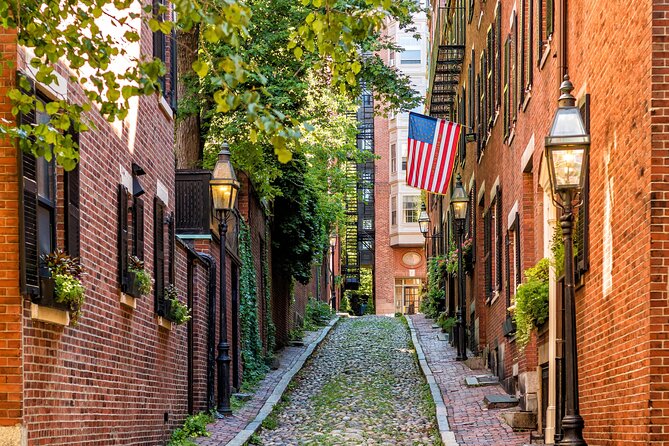
The African Meeting House receives about 25 minutes, the longest scheduled stop. Built in 1806, it served as a cultural center for Boston’s Black community and is described as the oldest surviving Black church building in the United States.
This is the point where the tour’s themes come together. The building was not only a religious site. It was a place where community life, education, activism, and abolition could meet. The tour also connects it to the school founded in 1835 for Boston’s African-American children, giving you a fuller view of the institutions Black residents built and supported.
Admission inside the African Meeting House is included. Admission to other museums is not included, so this portion gives the tour a useful indoor element without adding another ticket to the price.
If you have children or teenagers, this stop may help hold their attention. One family found that children aged 12 and 15 learned a great deal, especially from the stories of people and secret routes. Younger children may find the full walk and long explanations tiring, particularly since the entire tour can run longer than two hours and thirty minutes.
5 Pinckney Street and the final walk
At 5 Pinckney Street, you see Beacon Hill’s oldest surviving house, dating to 1787. It was home to an African-American Revolutionary War veteran, another reminder that Black participation in the nation’s founding is not confined to one city or one kind of service.
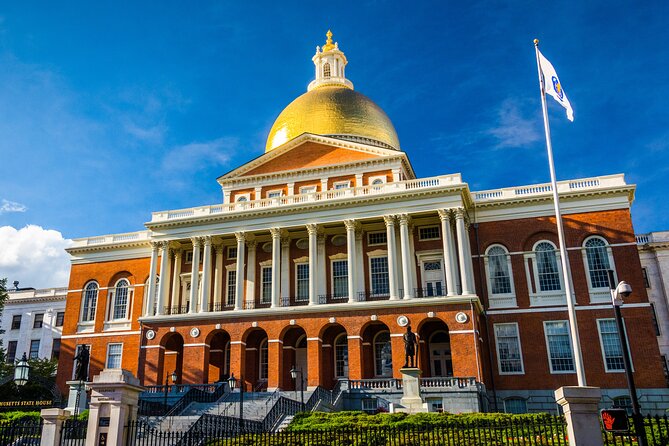
The stop lasts about 10 minutes. From there, the route passes the Massachusetts State House, dating to 1798 and sometimes called the Hub of the Solar System. The grand capitol provides a fitting backdrop for discussing the relationship between state politics, national conflict, and the fight over slavery.
The tour ends at the Robert Gould Shaw and the 54th Regiment Memorial, opposite 24 Beacon Street and across from the State House. The memorial honors Robert Gould Shaw and the 54th Massachusetts Regiment, a Black regiment whose service is closely tied to Boston’s Civil War story.
You finish within roughly 0.2 miles of the starting area, near Prescott House. That makes the tour easy to combine with more sightseeing in central Boston. You can continue to the State House, return toward Boston Common, or stop for food and a rest without arranging another ride.
What the $35 price includes
At $35, the tour offers good value if you want interpretation rather than a quick stroll past famous addresses. You get a small group, a guide focused on Black history and abolition, the full Black Heritage Trail route, and admission to the African Meeting House.
The price does not include gratuity, though tipping your guide is optional. Museum admission beyond the included site is also not covered. There are no period costumes, which may disappoint if you prefer theatrical historical tours, but many people will prefer the straightforward presentation.
The small-group limit matters. Sixteen people is still enough for a lively group, but it is far more manageable than a large street crowd. You can usually hear the guide better and ask questions without turning the walk into a private tour.
Guides make or break a history walk
This tour depends heavily on the person leading it. Dana is praised for his warmth, enthusiasm, and ability to make the subject approachable, including for children. Will is known for his love of Civil War history and strong storytelling. Lin is described as clear and engaging, with a measured pace, while Meghan is praised for explaining the Underground Railroad in a way that remains easy to follow.
The range of guides means the exact tone may vary. That is normal for a walking tour, but the repeated strengths are clear: strong preparation, enthusiasm, and an ability to answer questions. One guide occasionally ran beyond the scheduled time, so keep your later plans flexible.
The content is serious. You will discuss enslavement, escape, discrimination, violence, and the political conflict that led to the Civil War. The tour handles those subjects as history, not as a light sightseeing diversion. That is precisely why it works best for adults, older teenagers, and anyone with a real interest in American history.
Walking, weather, and practical comfort
This is a walking tour, not a gentle neighborhood loop. You should expect hills, cobblestones, uneven surfaces, and extended periods of standing. Comfortable shoes are essential, and water is a smart addition.
The route is not recommended for people who have difficulty standing for long periods. A moderate level of physical fitness is advised. Service animals are allowed, and the tour is near public transportation.
Weather matters. The experience requires good weather and may be canceled if conditions are poor. You can receive a different date or a full refund in that case. You can also cancel for a full refund up to 24 hours before the start time, but cancellations or changes inside that window are not refunded or accepted.
Who should book the Beacon Hill tour?
I would choose this tour if you want to understand Boston beyond the better-known Revolutionary landmarks. It is especially well suited to adults, older teenagers, Civil War fans, local residents, and anyone interested in Black American history.
Families can enjoy it, but I would use some judgment. Children aged 12 and 15 have found the stories compelling, while an eight-year-old may find two and a half hours of walking and standing too much. If your group is young, plan for the pace to feel demanding.
You should skip it if you want a short, casual introduction to Beacon Hill or if uneven streets and hills will make the day uncomfortable. You should also avoid scheduling an important timed activity immediately afterward.
Should you book it?
Book this tour if you want substance, local places, and a guide-led story rather than another pass by Boston’s famous facades. The combination of the Phillips School, John J. Smith House, the Hayden safe house, African Meeting House, and 54th Regiment Memorial gives you a strong sense of how Black Bostonians shaped Boston and the national fight over slavery.
At $35, the tour is a solid buy for anyone prepared to walk. Wear good shoes, bring water, allow extra time, and arrive ready to listen. If you do, Beacon Hill becomes more than a pretty neighborhood. It becomes a place where the arguments over freedom were lived out street by street.
FAQ
How long is the Underground Railroad History Tour of Beacon Hill?
The tour lasts approximately 2 hours and 30 minutes. It includes walking, standing, and several stops throughout Beacon Hill.
Where does the tour begin?
The tour begins at the Soldiers and Sailors Monument in the center of Boston Common, near the Boston Common Visitors Center at 139 Tremont Street.
Where does the tour end?
It ends at the Robert Gould Shaw and the 54th Regiment Memorial across from the Massachusetts State House, at approximately 26 Beacon Street.
How large is the tour group?
The maximum group size is 16 people.
Is admission to the African Meeting House included?
Yes. Admission to the African Meeting House is included. Admission to other museums is not included.
Is the tour suitable for people with limited mobility?
The tour requires a moderate level of physical fitness and is not recommended for people who have difficulty standing for extended periods. The route includes hills and uneven surfaces.
Can I cancel for a refund?
Yes. You can cancel at least 24 hours before the start time for a full refund. Cancellations or changes made less than 24 hours before the tour are not refunded or accepted.
Just added around the USA
- Peninsula Park Caves Scenic Boat Tour★ 4.5 · 88 reviews
- Cave Point Fat Tire E-Bike Tour★ 4.5 · 15 reviews
- Cave Point Kayak Tour★ 4.5 · 92 reviews
- Cave Point Kayak Tour★ 5.0 · 281 reviews
- Cave Point Kayak Tour★ 5.0 · 24 reviews
- Flagstaff Underground★ 5.0 · 39 reviews
- Castner Glacier Ice Cave Adventure from Fairbanks★ 5.0 · 40 reviews
- Snowshoe Hike to Castner Glacier Ice Cave★ 5.0 · 35 reviews
Historical Tours, compared.
Oldtown, Medieval Underground & Dungeon History Tour
Read our review →
Prague Old Town, Medieval Underground and Dungeon Historical Tour
Read our review →

Emerald Cave Express Kayak Tour with Scenic & Historic Stops
Read our review →
Ancient History and Colosseum Underground Tour
Read our review →
Pilsen: Historic Underground Tour with a Glass of Beer
Read our review →Browse the lists this cave appears in