

Review · HISTORICAL TOURS
Boston: Underground Railroad History Tour of Beacon Hill
Boston’s past is more complicated than its cobblestones suggest. This 150-minute walking tour follows the Black Heritage Trail through Beacon Hill, linking homes, churches, schools, and meeting places to the long struggle against slavery and racial inequality.
I like the small-group format, which makes it easier to hear the guide and move through Beacon Hill’s narrow streets. I also like the focus on people and places often missed in a standard Boston tour, especially the African Meeting House and the homes connected with the Underground Railroad. The main drawback is physical: you walk about 2 miles over steep hills and uneven, non-ADA-compliant sidewalks.
Key points to know before booking

- A serious history lesson in a short walk: The tour explains the three decades before the U.S. Civil War, with attention to abolition, education, integration, and resistance.
- The African Meeting House is the centerpiece: You get a 20-minute stop at one of Boston’s most important Black historic sites.
- Beacon Hill tells two stories at once: Wealthy white residents lived close to a free African-American community, creating a powerful setting for this subject.
- Guides bring strong personal energy: William, also called Will, receives repeated praise for vivid storytelling and thoughtful answers. Dana and Joe have also led highly praised tours.
- Expect outdoor conditions: The tour runs in rain or shine, and there is no promise of easy footing or indoor shelter.
- The finish has a clear connection to the Civil War: The Robert Gould Shaw and 54th Massachusetts Regiment Memorial ties Boston’s abolitionist movement to Black military service.
Why Beacon Hill is the right place for this story
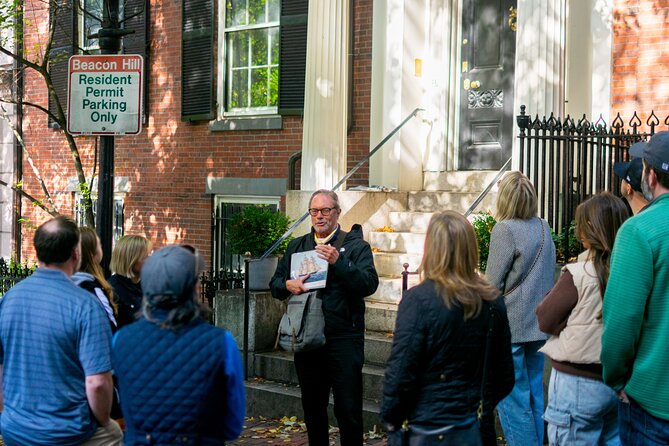
You begin at the Soldiers and Sailors Monument in Boston Common, a convenient landmark near the Boston Common Visitors Center at 139 Tremont Street. Look for the white granite column topped by a woman holding a flag, with four bronze figures around its base.
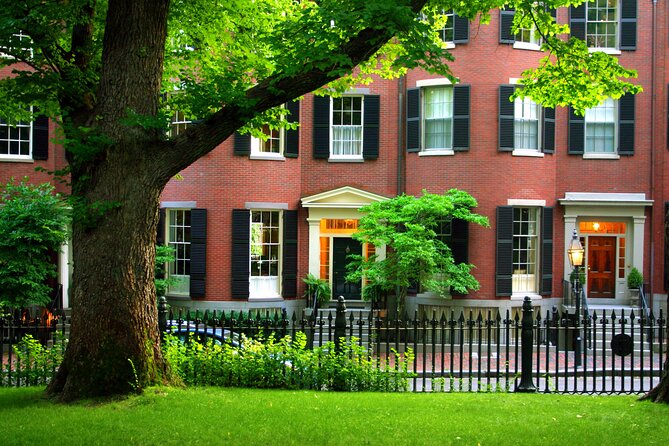
From there, the route enters Beacon Hill. At first, the setting can feel almost too polished: brick sidewalks, handsome townhouses, narrow lanes, and some of Boston’s most expensive addresses. That contrast is part of the lesson.
A free African-American community lived here only a few blocks from Boston’s wealthiest residents. The tour uses that physical closeness to explain a larger conflict. Black Bostonians built schools, churches, homes, businesses, and political networks while confronting discrimination in a city that liked to think of itself as more progressive than the slaveholding South.
I appreciate that the tour does not reduce the Underground Railroad to a string of secret rooms and dramatic escapes. It places those stories inside a wider fight over education, civil rights, abolition, and the meaning of freedom. That gives you a more accurate picture of the period.
More History Tours around the USA:
- Beneath The Streets Underground History Tour
★ 4.5 · 8,006 reviews - Emerald Cave Express Kayak Tour with Scenic & Historic Stops
★ 5.0 · 1,522 reviews - Flagstaff Underground: Historical Walking Tour
★ 5.0 · 15 reviews
Boston Common and the first steps into Beacon Hill
The opening section on Boston Common lasts about 10 minutes. It sets the stage for the tour and introduces the Black Heritage Trail before you leave the park.
The route then reaches Mount Vernon Street, Acorn Street, and Louisburg Square. These stops are brief, ranging from about five to ten minutes, but they help you see Beacon Hill as a living neighborhood rather than a museum display.
Acorn Street is especially picturesque, with its tight scale and old paving. It is also a reminder that Boston’s beauty can distract from the people who lived and worked here. Louisburg Square brings you near some of Beacon Hill’s grandest residences, making the social divide under discussion visible without needing a lecture first.
Bring your attention back to the guide at these stops. The streets themselves are not the full story. Their value comes from learning who lived nearby, who had power, and who had to fight for basic rights.
Schools, homes, and the fight for equality
The Phillips School receives about 15 minutes. This is one of the strongest parts of the walk because it brings the debate over education into focus.
The tour explains how Black Bostonians challenged unequal schooling and argued over racial integration. These were not abstract political questions. They affected where children could study, how they were treated, and what kind of future they could expect.
You then visit the John J. Smith House, associated with a prominent Black Bostonian, before reaching the Charles Street Meeting House. The meeting house stop lasts about 15 minutes and helps explain the role of churches and religious communities in organizing reform movements.
The route continues along Charles Street to the John Coburn House and the Lewis and Harriet Hayden House. The Hayden home receives another 15-minute stop and is among the most important Underground Railroad locations on the route.
These houses help you understand that escape from slavery was not a single act carried out by one heroic person. It depended on people who offered shelter, information, money, transportation, legal help, and public resistance. The tour also shows that Boston’s anti-slavery movement had internal debates and risks, rather than being a simple story of universal agreement.
One useful point to keep in mind: the tour is about the Underground Railroad, but it is not a railroad-focused tour. If your main interest is routes, trains, or technical details, you may want more. One person specifically hoped for additional information about the Underground Railroad itself. The strength here is the broader political and human setting.
The churches and reformers of Beacon Hill
The route passes the Otis House Museum and Old West Church rather than entering them. That keeps the walk moving, but it also means you should not expect a museum visit at every stop.
You do stop at the Charles Sumner House for about 15 minutes. Sumner’s name connects Beacon Hill to the anti-slavery political movement and to the national arguments that pushed the United States toward war.
This section works best when your guide links local addresses to events beyond Boston. The conflict over slavery was not confined to plantations or Washington speeches. It shaped elections, schools, churches, newspapers, public meetings, and neighborhood life in Boston.
William, known as Will, has received especially strong praise for explaining these connections clearly and answering a large number of questions. His presentation can include acted-out scenes, which some people find memorable. Dana has also been praised for her passion and command of lesser-known Black history, while Joe has used visual aids during the tour.
Guide quality matters here. The route includes many names and institutions, and a flat list of dates would become tiring. A lively guide turns those facts into a series of choices, arguments, and personal risks.
A few more cave trips around the USA worth a look
- Best Niagara Falls US Tour W/Boat Ride, Cave & More Wonders!
★ 5.0 · 8,372 reviews - Half-Day Emerald Cave Kayak Tour with Optional Hotel Pickup
★ 5.0 · 4,978 reviews - Niagara Falls USA: Maid of the Mist & Cave Adventure
★ 5.0 · 3,924 reviews - New York Catacombs by Candlelight
★ 4.5 · 2,863 reviews
Smith Court and the African Meeting House
The Smith Court Residences, Abiel Smith School, and African Meeting House form the heart of the Black Heritage Trail portion.
The Abiel Smith School helps explain the struggle over public education and racial equality. It is a particularly useful stop for understanding how Black Bostonians organized around schooling, not simply as a local concern but as part of a larger claim to equal citizenship.
The African Meeting House includes a break and about 20 minutes of guided attention. It is the longest stop on the route, and rightly so. This building represents religious life, education, community organization, abolitionist activity, and the strength of Boston’s free Black community.
The tour does not include admission inside museums. The supplied information also says the experience is entirely outdoors, so you should clarify what access is available on the day if you are hoping to enter an interior space. At minimum, expect to learn about the landmark from outside and from the guide’s presentation.
I would give this section your full attention. It is where the tour’s themes come together: a community asserting its rights, building its own institutions, supporting people escaping slavery, and arguing over the future of the country.
George Middleton, Park Street, and the road to war
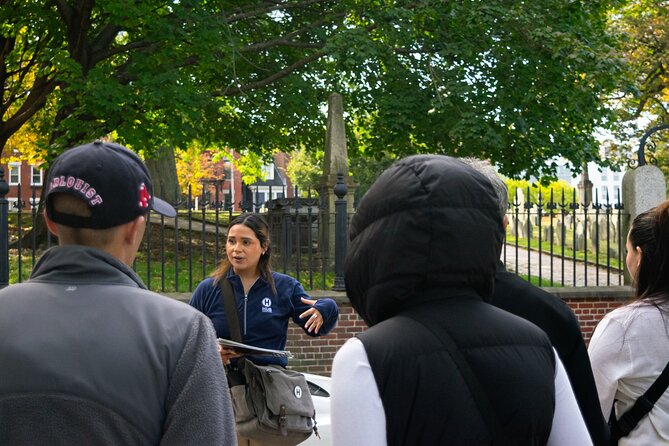
The George Middleton House receives about 15 minutes. Middleton is another example of how the tour shifts attention away from famous white reformers and toward Black residents who shaped Boston’s civic life.
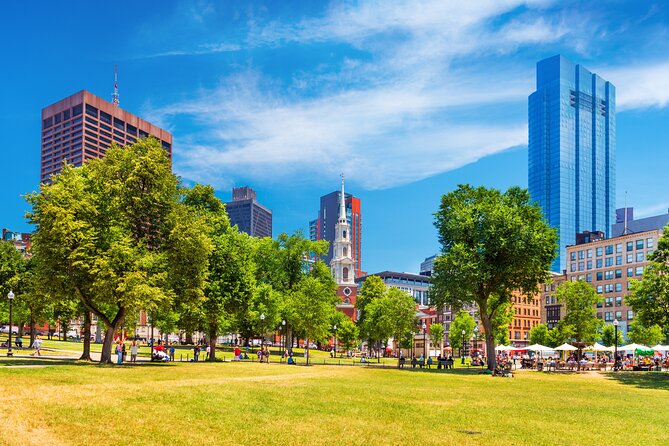
After that, you pass Park Street Church, with scenic views along the way, and the Massachusetts State House. The State House is a pass-by stop, listed at about 15 minutes, rather than an interior visit.
This part of the route brings the story back into public politics. You can see how private homes, churches, schools, and government institutions all belonged to the same debate. The subject is slavery, but the deeper question is who gets to define freedom and citizenship.
The walk then returns toward Boston Common. By this point, you have moved through roughly three decades of conflict leading up to the Civil War. The tour does not treat the war as an unexpected break from ordinary life. It shows the steady pressure created by slavery, abolition, racial injustice, and political refusal.
The 54th Massachusetts Regiment Memorial
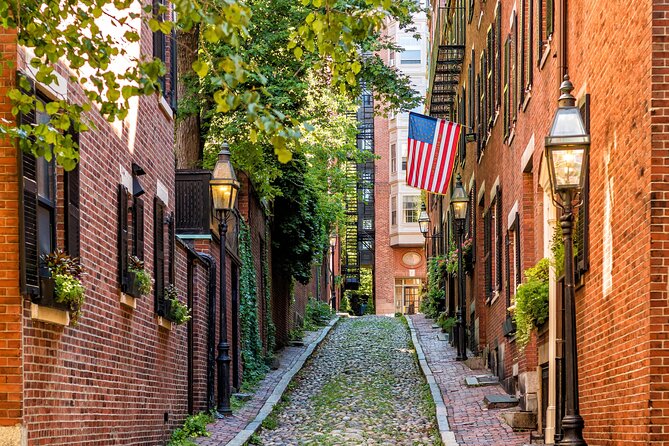
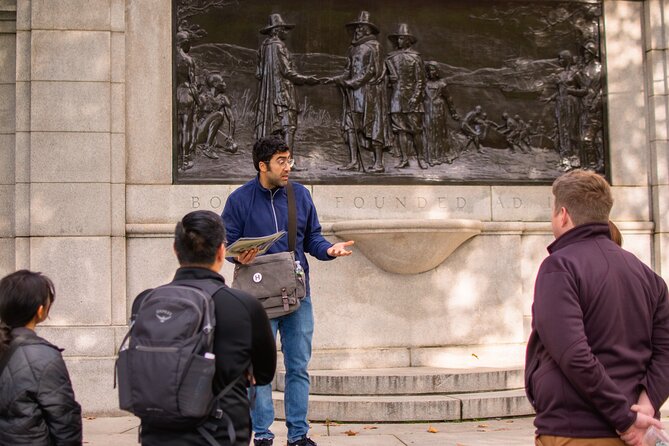
The final stop is the Robert Gould Shaw and 54th Massachusetts Regiment Memorial, located on Boston Common near Beacon Street. The guided stop lasts about 20 minutes.
This is a fitting ending because the memorial connects the earlier abolitionist story to Black military service during the Civil War. The 54th Massachusetts was an African-American regiment, and the memorial gives the tour a visual, public conclusion after so many stops at private homes and community buildings.
The location also makes the tour easy to continue from. You finish near the place where you began, so you can return to Boston Common, walk toward Beacon Street, or continue exploring downtown without arranging transport.
The memorial works best after the earlier stops. Seen alone, it is a striking monument. Seen after learning about the schools, churches, homes, and political campaigns of Black Boston, it becomes part of a much longer struggle.
How much time and effort the walk requires
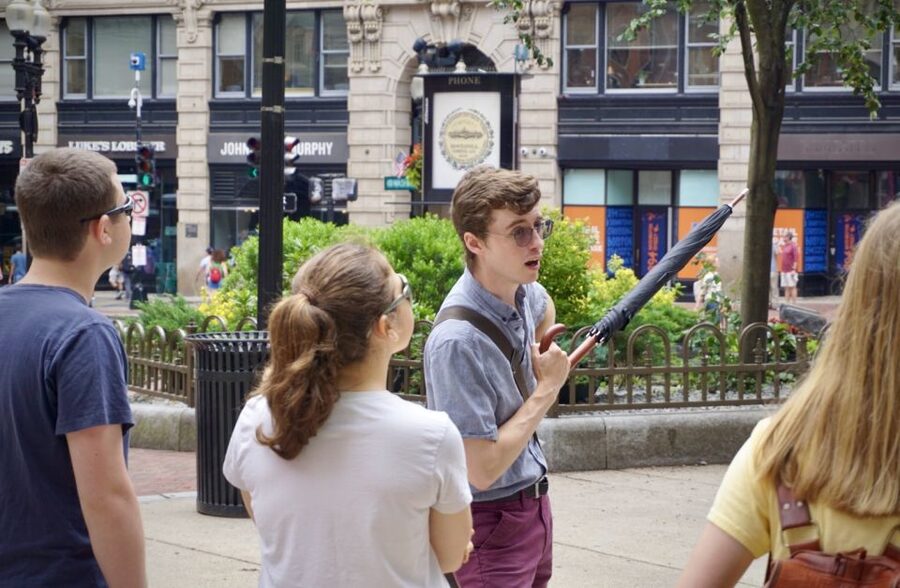
The advertised duration is 150 minutes, though the tour can last as long as three hours. The route covers approximately 2 miles, or 3.2 kilometers.
That distance is manageable for many people, but the hills and sidewalks matter more than the mileage. Beacon Hill has steep sections, and the tour is not suitable for wheelchair users or people with mobility impairments. It is also not a good choice if you have a low level of fitness or need frequent indoor seating.
Wear comfortable shoes and weather-appropriate clothing. This is an outdoor tour in all conditions, so rain can change your comfort even if it does not cancel the activity. Large bags and luggage are not allowed, and video recording is not permitted.
Children under six should not join. For older children, the subject matter is serious and the walking pace may still be a consideration. I would choose this for older children who can engage with difficult history rather than for a very young family outing.
The small-group format helps on narrow sidewalks and congested streets. It also gives you a better chance to ask questions. The guides have been praised for responding thoughtfully, so come prepared with one or two questions if you want a more personal discussion.
Is $35 a fair price?
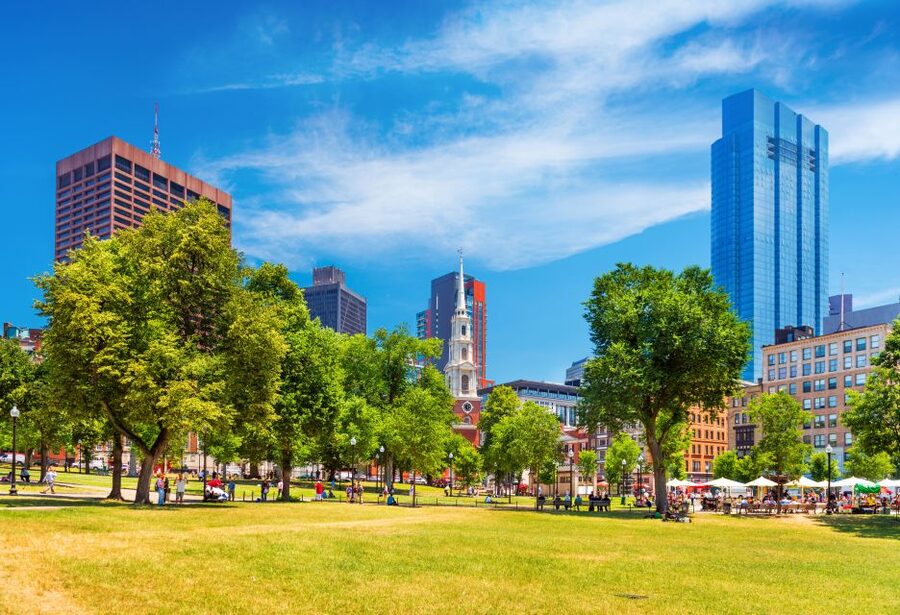
At $35 per person, this is a good value if you want context rather than a quick photo stop.
You are paying for two and a half hours with a local historian or expert guide, a structured route through Beacon Hill, and explanations at major Black Heritage Trail landmarks. The tour includes ten Black Heritage Trail landmarks and covers subjects that can be hard to piece together on your own.
The price does not include gratuity or museum admission. That is worth noting if you want to add indoor visits later. Still, the cost is modest compared with many city walking tours, especially given the duration and the number of stops.
The value depends on your interests. If you want only architecture, famous Revolutionary sites, or a fast overview of Boston, this may feel too focused and serious. If you want to understand Boston’s role in abolition and the lives of free Black residents, the price is reasonable.
Who will get the most from this tour?
I recommend it to first-time Boston visitors who want more than the standard Freedom Trail story. It is also useful for people who already know the city but have not explored Black Boston in a structured way.
History students, teachers, and visitors interested in the Civil War should find plenty to work with. So should anyone who wants to understand how local institutions shaped national politics.
The tour is less suitable for visitors who dislike walking, want a mostly indoor activity, or expect a detailed account of Underground Railroad routes alone. It also requires patience. The history includes discrimination, political conflict, and the slow pace of reform. This is not a light sightseeing stroll, though the guides’ energy can make the material accessible.
The rating is very strong, at 4.9 from 38 reviews. The most consistent praise centers on guide enthusiasm, clear explanations, thoughtful answers, and the ability to bring individuals and events to life. I would treat that as a sign that the guide is central to the experience. William, Dana, and Joe have all been praised, but the exact guide can vary.
Should you book the Beacon Hill Underground Railroad tour?
Book this tour if you want a focused, serious look at Black history in Boston and can comfortably walk two miles over Beacon Hill’s hills. The African Meeting House, Lewis and Harriet Hayden House, Abiel Smith School, and 54th Massachusetts Memorial give the route real substance, while the small group keeps the experience personal.
Skip it if you need step-free access, dislike outdoor tours in poor weather, or want a narrow focus on Underground Railroad escape routes. For everyone else, $35 buys a useful three hours and a much fuller understanding of Boston’s role in the struggle over slavery, equality, and freedom.
FAQ
Where does the tour begin?
Meet at the Soldiers and Sailors Monument in the center of Boston Common, close to the Boston Common Visitors Center at 139 Tremont Street, Boston, Massachusetts 02108.
How do I identify the meeting point?
Look for a white granite column topped by a female figure holding a flag. Four bronze statues surround the base of the column.
How long does the tour last?
The scheduled duration is 150 minutes. The actual tour can vary, but it will not last more than three hours.
How far do you walk?
The route covers approximately 2 miles, or 3.2 kilometers.
Is the tour conducted in English?
Yes. The live guide conducts the tour in English.
Does the tour operate in bad weather?
Yes. The tour operates rain or shine and is entirely outdoors.
Is the tour wheelchair accessible?
No. The route includes steep hills and non-ADA-compliant sidewalks. It is not suitable for wheelchair users or people with mobility impairments.
Are museum admissions included?
No. Admission inside museums is not included in the tour price.
What should I bring?
Bring comfortable shoes and clothing suitable for the weather. Luggage and large bags are not allowed, and video recording is prohibited.
Just added around the USA
- Flagstaff Underground: Historical Walking Tour★ 5.0 · 15 reviews
- Door County: Peninsula Park Caves & Ephraim North Cruise★ 4.7 · 35 reviews
- Chicago: Underground Pedway & Downtown Secrets Walking Tour★ 4.7 · 268 reviews
- From Las Vegas: Emerald Cave Guided Kayaking Tour★ 4.9 · 456 reviews
- Ultimate Na Pali Coast Zodiac Boat Snorkeling and Sea Cave Tour★ 4.5 · 101 reviews
- Dolphin, Sea Cave & Captain Cook Snorkel Combo in Kealakekua Bay★ 4.5 · 220 reviews
- Kauai: Nā Pali Coast Zodiac Raft Sea Caves + Snorkel★ 4.9 · 166 reviews
- Self‑Drive Emerald Cave Kayak Tour in Black Canyon★ 5.0 · 619 reviews
Historical Tours, compared.
Oldtown, Medieval Underground & Dungeon History Tour
Read our review →
Prague Old Town, Medieval Underground and Dungeon Historical Tour
Read our review →


Emerald Cave Express Kayak Tour with Scenic & Historic Stops
Read our review →
Ancient History and Colosseum Underground Tour
Read our review →
Guided Tour, Historic Center Sassi Rock Churches and Cave House
Read our review →Browse the lists this cave appears in