
Review · BATU CAVES TOURS
Kuala Lumpur: Batu Caves & Historic Buildings Tour
Kuala Lumpur packs many cultures into a short drive. This four-hour tour links Hindu shrines, a Chinese temple, an Islamic mosque, Chinatown, and Little India, giving you a useful first look at the city’s many communities. I especially like the air-conditioned hotel pickup and the way guides such as Ayyanar, Nesh, Jennifer, and Yuvanesh explain what you are seeing rather than simply pointing it out. The main consideration is pace: five or more stops in four hours means sightseeing is brisk.
I also like the flexible guiding. Several guides have adjusted the route, added a requested stop, or allowed more time at a favorite sight. Starting at Batu Caves can help you beat some of the heat, but the 272 steps require decent fitness, and the mosque is closed on Fridays.
Key points to know before booking

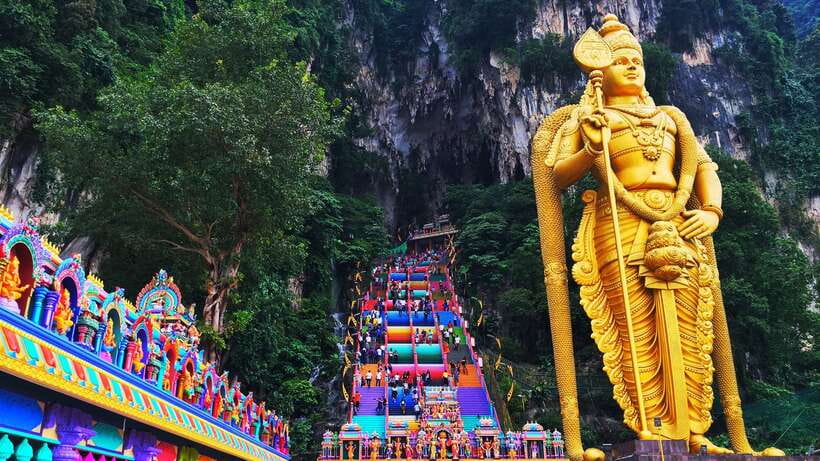
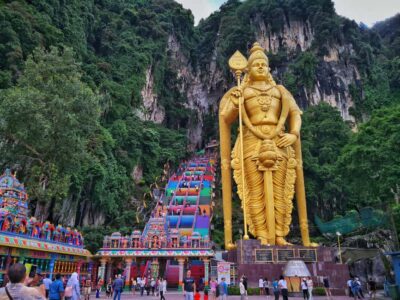
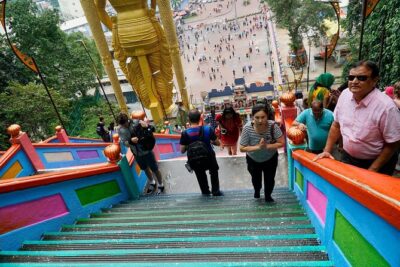
- Batu Caves comes first: Climb 272 steps to the golden Lord Murugan statue and Cathedral Cave, the largest cavern in the complex.
- Five cultural settings in one morning: The route connects Hindu, Chinese, Islamic, Indian, and Malay influences around Kuala Lumpur.
- Guides make the difference: Ayyanar, Nesh, Jennifer, Yuvanesh, Jag, and other English-speaking guides are praised for clear explanations, friendly service, and good local tips.
- Comfortable city transport: Hotel pickup, an air-conditioned vehicle, and drop-off are included. Bottled water has also been provided on many outings.
- Flexible, but not always leisurely: You may have a private car or small private group, yet the general schedule includes several pickup locations and tight stop times.
- Dress for temples and stairs: Cover your shoulders and legs at religious sites, and wear proper shoes for the climb.
Why this four-hour Kuala Lumpur tour works
At $34 per person, this is priced as an easy introduction to Kuala Lumpur rather than a full cultural study. You are paying for transport, a driver-guide, hotel pickup and drop-off, and a route that would be awkward to cover efficiently on foot or by public transport in half a day.
That value is strongest if you have only one day in Kuala Lumpur, are stopping during a short visit, or want someone else to handle the traffic. Kuala Lumpur’s roads can be slow, and the sights are spread across different parts of the city. A good guide can explain the city while driving, point out buildings along the way, and keep you from losing time between stops.
The tradeoff is depth. The listed visits are generally around 30 minutes, with about an hour at Batu Caves. You will see the main features, hear useful background, and get ideas for returning later, but you will not have time for a long museum visit, extended shopping, or a slow meal at every neighborhood.
The experience is described as a group tour with three or four pickup locations, but it operates as a private group and many bookings have ended up with a private car. Do not assume that every departure will feel identical. Your pickup may be slightly early or delayed while the driver coordinates the route, so keep WhatsApp active around the agreed time.
More Batu Caves Tours in Kuala Lumpur:
- Kuala Lumpur: Batu Caves Half-Day Tour with Pick-Up Option
★ 4.5 · 4,288 reviews - Private Half-Day Batu Caves and Cutural Tour in Kuala Lumpur
★ 5.0 · 3,107 reviews - Genting Highland & Batu Cave Guided Day Tour (SIC/Shared Tour)
★ 5.0 · 1,289 reviews
Batu Caves and the 272-step climb
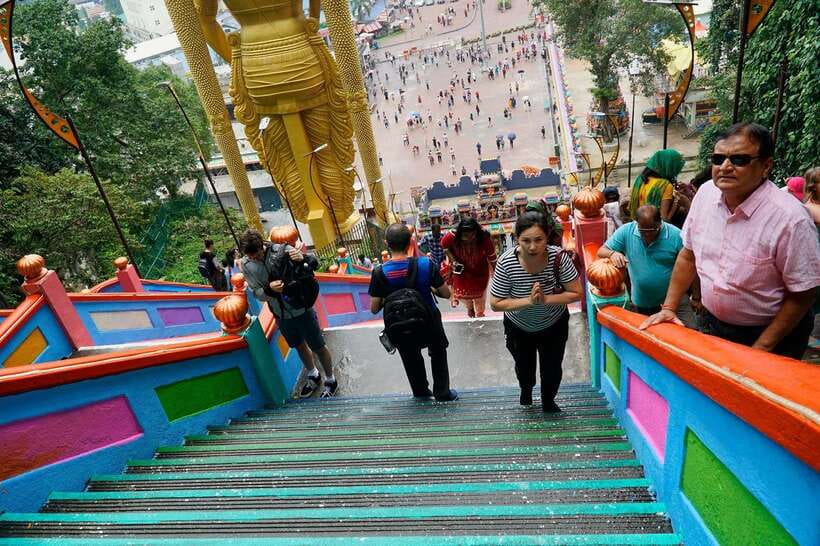
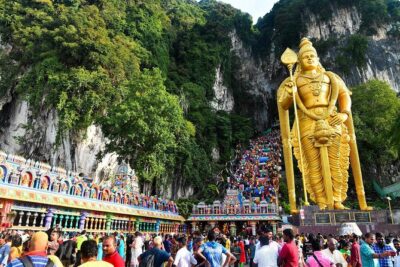
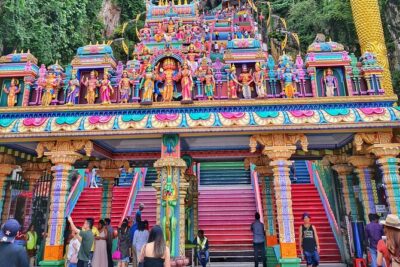
Batu Caves is the tour’s major sight and the place where you need the most energy. The Hindu shrine sits in a limestone cave complex outside central Kuala Lumpur, with a huge golden statue of Lord Murugan at the foot of the stairs.
Your guide introduces the Hindu background of the site before you begin the climb. The staircase has 272 steps, so you should take your time, especially in Kuala Lumpur’s heat. Comfortable sneakers are a smart choice. This is not a difficult mountain walk, but it is a real climb, and the combination of stairs, sun, and humidity can catch you off guard.
At the top, Cathedral Cave is the largest cave in the complex. The scale changes once you reach the upper level. Instead of seeing only the colorful stairs and statue, you get a better sense of the limestone setting and the religious importance of the shrine. Your guide can add the stories and symbols that are easy to miss if you arrive alone, though the exact amount of commentary will depend on your guide and the time available.
The monkeys around Batu Caves are part of the setting, but the practical focus here should be the steps and religious site. Keep your belongings secure and pay attention to the instructions from your guide. The climb is the one part of the tour that may not suit everyone, so anyone with limited mobility should consider this carefully before booking.
Starting here is sensible. The morning is generally cooler than later in the day, and several guides have adjusted the start time to reach Batu Caves before larger crowds. If you have a choice of departure times, an earlier start is worth considering.
Thean Hou Temple on Robson Heights
Thean Hou Temple offers a sharp change of mood and design. This six-tiered temple sits on Robson Heights and was built by Kuala Lumpur’s Hainanese community. It was completed in 1987 and officially opened in 1989, and it is dedicated to Tian Hou, a Chinese sea goddess.
You will have about 30 minutes here. That is enough to look at the pagoda-style structure, religious details, and elevated city views, but not enough for a slow architectural study. The temple is also a useful stop because it gives the tour a clear Chinese cultural perspective after the Hindu setting at Batu Caves.
The visit is partly about contrast. Kuala Lumpur is not a city with one single religious or cultural identity. A Hindu shrine, a Chinese temple, an Islamic mosque, Indian commercial streets, and Chinese food stalls all fit into the same half-day route. A good guide will connect those places to the people who built and use them rather than treating them as unrelated photo stops.
The temple is sometimes called the Chinese temple in the tour’s descriptions. If you are hoping for a long spiritual visit, the 30-minute schedule may feel short. If you want a strong introduction to the building and a few photographs before moving on, it works well.
The National Mosque and the meaning of modern Malaysia
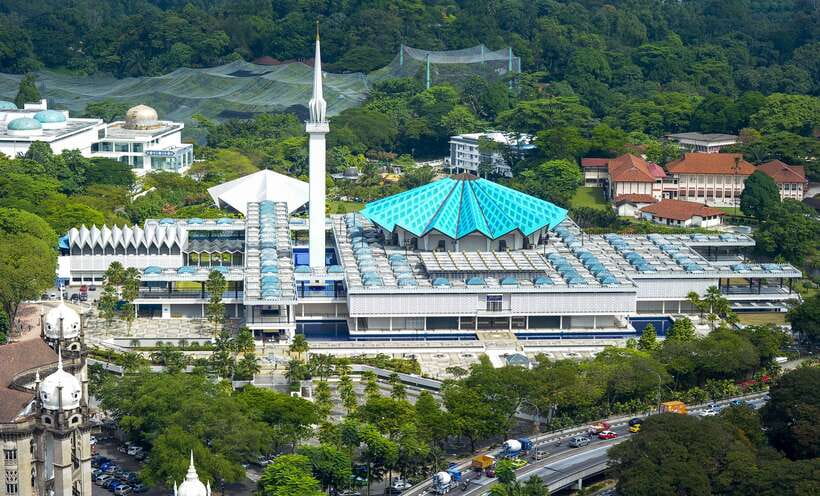
The National Mosque of Malaysia occupies 13 acres of gardens and was designed in the late 1950s, after the country gained independence. Its setting and modern design make it a different kind of religious stop from Batu Caves and Thean Hou Temple.
You will usually have around 30 minutes here. The guide can explain why the mosque was planned as a symbol of the newly independent nation, and the route may also include views or a photo stop near nearby historic buildings, such as the old railway station. One useful detail from the experience is the mosque’s distinctive roof, which gives the building a modern national character rather than the look of an old traditional mosque.
The National Mosque is closed on Fridays. This is the most important scheduling restriction on the tour. If your visit falls on Friday, check how the operator will handle that stop before booking, since the advertised route may need to change.
Dress modestly. Women need long dresses or pants with shoulders covered. Men can wear a simple T-shirt with knee-length shorts or pants, although longer trousers are the safer choice for a religious site. The tour information advises suitable clothing, but you should still arrive prepared rather than rely on last-minute arrangements.
More History Tours around Kuala Lumpur:
- From Kuala Lumpur: Private Batu Caves Cultural Tour
★ 4.4 · 410 reviews - Prague: Oldtown, Medieval Underground & Dungeon History Tour
★ 4.3 · 10,277 reviews - Beneath The Streets Underground History Tour
★ 4.5 · 8,006 reviews - Prague Old Town, Medieval Underground and Dungeon Historical Tour
★ 4.5 · 3,227 reviews
Petaling Street, Chinatown, and the food scene
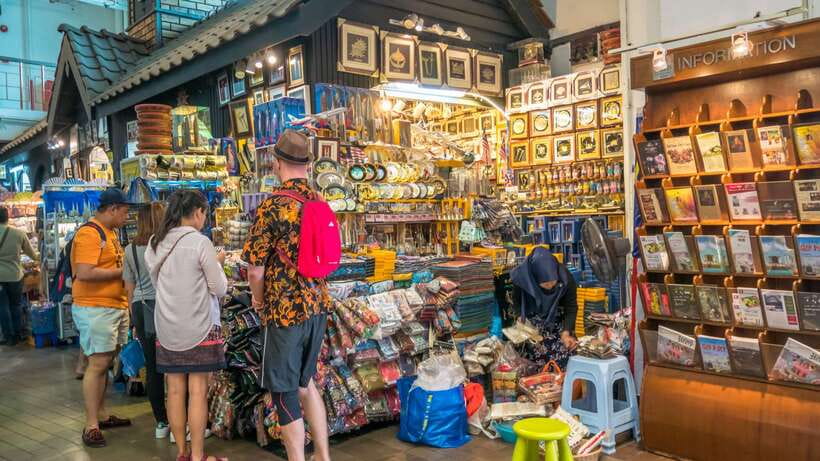
The Chinatown portion centers on Petaling Street Market, where Chinese, Indian, Malay, and Bangladeshi traders sell food and goods. This is a good place to see Kuala Lumpur’s shared street culture in action.
The food examples connected with this stop include curry noodles, Hokkien mee, ikan bakar, and asam laksa. These dishes reflect different traditions: Hokkien mee comes from the Fujian noodle tradition, ikan bakar is barbecued fish, and asam laksa is a sour soup made with fish and tamarind. Food and drinks are not included, so budget extra if you want to sample something.
You may have about 30 minutes to walk through the market. That is enough to look around and get a feel for the area, but it is not a proper food tour. If you see something appealing, ask your guide for help choosing or identifying it. The guide can also suggest where to eat later, which is one of the practical benefits of having local help early in your visit.
Petaling Street is also a shopping stop. Expect sellers, bargaining, and plenty of opportunities to say no. The experience can be fun if you treat it as a lively market rather than a carefully arranged shopping street. Keep your schedule in mind, since spending too long browsing can shorten your time at the final stop.
Little India and Kuala Lumpur’s Indian community
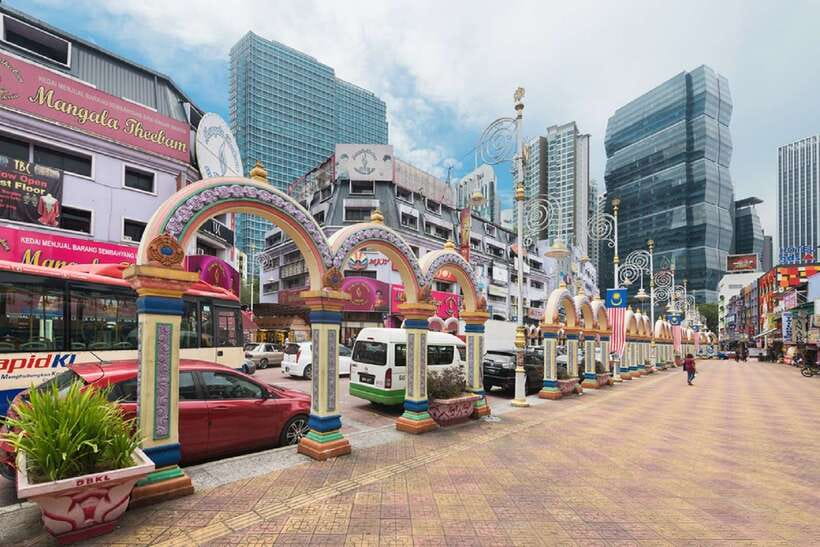
Little India adds another layer to the city’s cultural mix. The stop is listed at around 30 minutes, giving you time to walk through the area and see the shops, food, and street life.
The value of this stop is less about one landmark and more about context. After Batu Caves, you have already seen Hindu worship in a major shrine. Little India shows how Indian culture also appears in everyday city life, through food, shopping, and neighborhood activity.
Some departures include Central Market in the broader shopping portion, while the timed route specifically lists Petaling Street Market and Little India. If Central Market matters to you, ask the guide about it early in the tour. The route can be flexible, and several guides have adjusted stops to match personal interests, but four hours does not allow every location to receive equal time.
This is also where the tour’s pace becomes clear. You are getting a sample of several districts, not settling into one neighborhood for an afternoon. I would use this stop to gather ideas for a later independent visit rather than trying to see every shop.
The guides are the strongest part
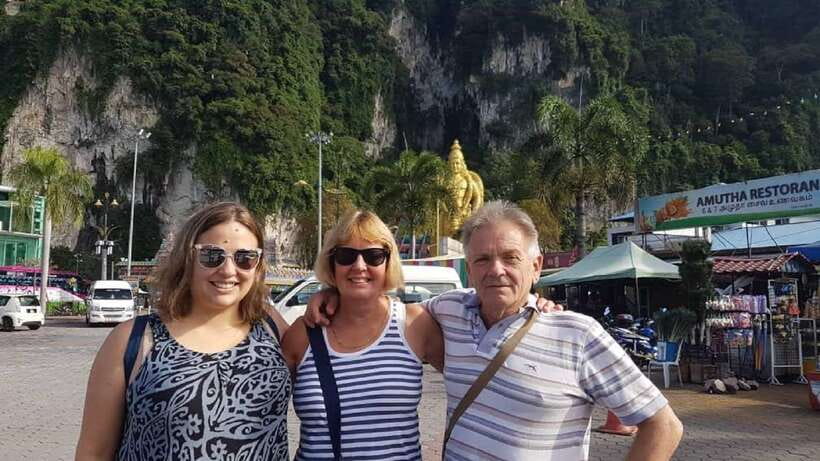
The driver-guide can make this tour feel either useful or rushed, and the feedback about the guides is unusually consistent. Ayyanar is repeatedly praised for his patience, clear English, punctuality, helpful manner, and ability to take photographs. Nesh and Yuvanesh are also noted for smooth driving, strong city explanations, flexibility, and thoughtful communication before pickup.
Jennifer has been especially appreciated for her warmth, humor, local explanations, photographs, and ability to give people space to explore on their own. Jag is praised for stories, patience, and a friendly approach. Other guides named in the experience include Ayyanar, Aru, Prabaz, Taufiq, Raj, Tina, Kumaran, Louis, Alim, Kimber, and Yuvanesh.
You cannot always request a particular person, so book the tour for the structure and transport rather than a guaranteed personality match. Still, the guide’s role matters here because the tour crosses several faiths and communities in a short time. Clear explanations help you understand how the stops connect.
The best guides also point out landmarks between stops, explain where to go, tell you where they will meet you, and suggest places to eat or visit later. That practical help can be more valuable than a long speech at one monument.
Comfort, timing, and what to bring
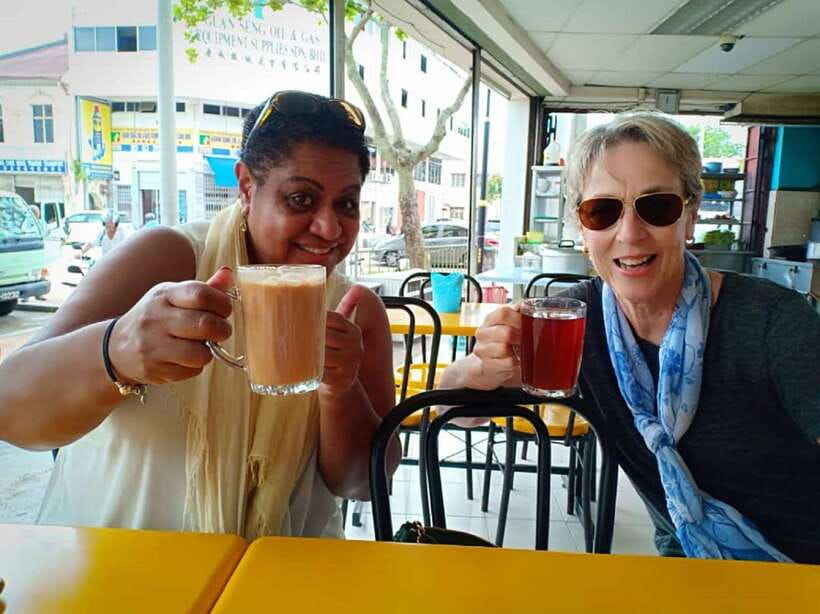
The vehicle is air-conditioned, which matters in Kuala Lumpur. You may be outside at Batu Caves and the temples, then return to a cool car before the next stop. Bottled water has been supplied on many outings, though you should still bring your own water if you need regular drinks.
Plan on pickup from your Kuala Lumpur city hotel lobby. The service includes hotel drop-off at the end, but the pickup area is limited to city hotels. Because several pickup locations may be combined, your exact departure time can shift slightly. Keep your phone and WhatsApp active so the guide can confirm the arrival time.
Wear light, modest clothing that works for religious sites. Pack comfortable sneakers, sun protection, and clothing that covers shoulders and legs. An umbrella can be useful, and one guide has provided one during a tour, but it is not listed as an included item.
Food, beverages, and gratuities are not included. The entrance information says tickets are not included, although the main stops described are primarily sightseeing visits rather than a list of paid admissions. Bring some Malaysian ringgit for food, shopping, or any ticket the guide identifies on the day.
Who will get the most from this tour
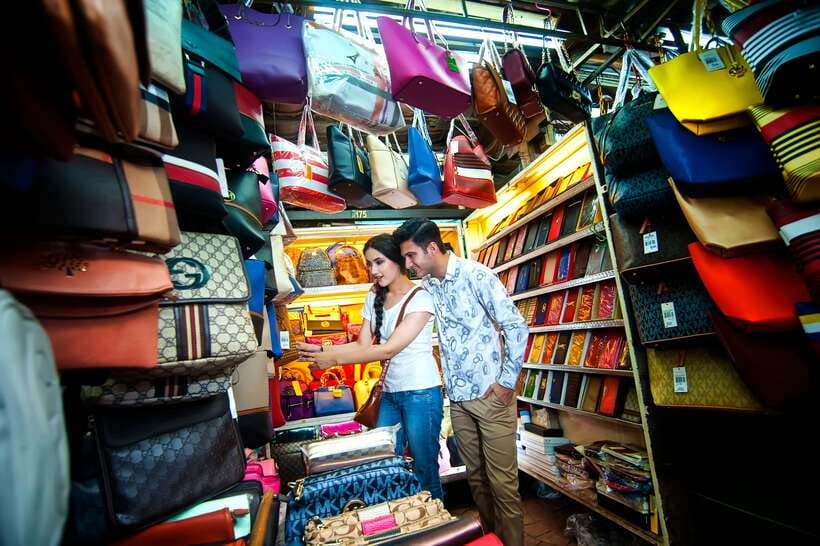
I would recommend this tour most strongly to first-time visitors, short-stay visitors, solo travelers who want local support, and anyone who wants a quick cultural orientation before exploring alone. It is also useful for couples and families who prefer a car to negotiating Kuala Lumpur’s traffic and distances.
It suits people who like variety. In four hours you can move from a Hindu cave shrine to a Chinese temple, an Islamic national monument, Chinatown, and Little India. That range is the central reason to book it.
I would be more cautious if you want long visits, serious shopping time, or a slow food experience. The route is full, and each 30-minute stop can feel compressed. The Batu Caves staircase is another concern for anyone who dislikes heat or has limited fitness.
At $34 per person, the tour offers solid value if your priority is seeing many important places with transport and commentary. It is less compelling if you are staying in Kuala Lumpur for several days and are happy to visit the central neighborhoods independently.
Should you book the Batu Caves and Historic Buildings Tour?
Book it if you want a comfortable, efficient first look at Kuala Lumpur and you value a friendly guide who can explain the city as you go. The strongest combination is the Batu Caves climb, the contrast among the three religious sites, and the chance to ask for practical food and sightseeing advice.
Before paying, check the day of the week, prepare for modest dress, and accept that this is a fast-moving introduction. If Friday is your only option, confirm the National Mosque arrangement. If you can start early, do so for a more comfortable Batu Caves visit.
I would choose this tour for a short stay, a first morning in the city, or a stopover. I would skip it only if you prefer to linger at one or two places rather than sample Kuala Lumpur’s many cultures in one compact outing.
FAQ
How long does the tour last?
The tour lasts four hours, including hotel pickup, sightseeing, and return to Kuala Lumpur.
What is the price?
The listed price is $34 per person.
Is hotel pickup included?
Yes. Pickup and drop-off are included from Kuala Lumpur city hotels, with collection from the hotel lobby.
Is the tour private or shared?
The experience is described as a private group tour, while the pickup information notes a group tour with three or four different pickup locations. The exact vehicle arrangement can vary.
What language does the guide speak?
The live guide speaks English, and the activity information lists English as the available language.
How many steps are at Batu Caves?
You need to climb 272 steps to reach the golden statue of Lord Murugan and Cathedral Cave.
Do I need to be physically fit?
A basic level of physical fitness is required for the Batu Caves stair climb. Comfortable sneakers are advised.
What should women wear?
Women should wear long dresses or pants with their shoulders covered when visiting the religious sites.
What should men wear?
Men can wear a simple T-shirt with knee-length shorts or pants. More modest clothing is the safer choice for mosque and temple visits.
Is the National Mosque open every day?
No. The National Mosque is closed on Fridays.
Are food and drinks included?
No. Food and beverages are not included, so bring money if you want to eat at Chinatown or elsewhere.
Are entrance tickets included?
No. Entrance tickets are not included in the tour price.
Can I cancel the booking?
You can cancel up to 24 hours in advance for a full refund.
Do I have to pay when booking?
The reserve-now, pay-later option allows you to keep your plans flexible and pay nothing at the time of booking.
Just added around Kuala Lumpur
- Kuala Lumpur: Private Batu Cave, National Mosque Tour, Lunch★ 4.7 · 236 reviews
- Kuala Lumpur, Putrajaya & Batu Caves Tour★ 4.7 · 214 reviews
- Kuala Lumpur Full-Day Sightseeing Tour with Batu Caves★ 3.9 · 20 reviews
- Kuala Lumpur Day Tour: Batu Caves & Elephant Sanctuary★ 4.8 · 23 reviews
- Kuala Lumpur: Batu Caves, Thean Hou Temple & National Mosque★ 4.3 · 30 reviews
- Kuala Lumpur: City Sights, Batu Caves and Fireflies Day Trip★ 4.7 · 107 reviews
- Kuala Lumpur: Private Tour to Genting Highland & Batu Caves★ 4.0 · 25 reviews
- From Kuala Lumpur: Colmar Tropicale and Batu Caves Day Trip★ 4.2 · 40 reviews
Batu Caves Tours, compared.
Private Half-Day Batu Caves and Cutural Tour in Kuala Lumpur
Read our review →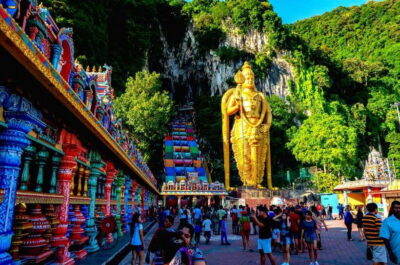
Private Tour Kuala Lumpur with Petronas Twin Towers Observation Deck & Batu Cave
Read our review →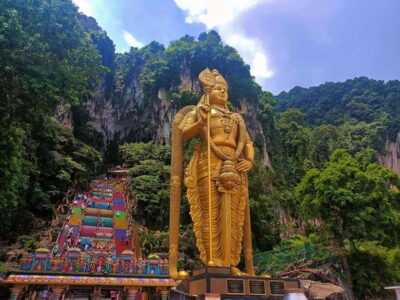
Kuala Lumpur Suburbs Batu Caves Half-Day Tour (SIC/Shared Tour)
Read our review →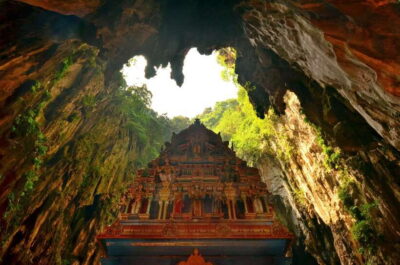
Browse the lists this cave appears in