

Review · NAPLES CAVE TOURS
Naples: Historic Center Guided Tour with Underground Ruins
Naples reveals its secrets in layers. This four-hour walking tour links the city’s grand public spaces with its rough-edged old center, then takes you below San Lorenzo Maggiore to ancient Greek and Roman remains. I like the way it combines major sights such as Piazza del Plebiscito and the Royal Palace with smaller local details, including Via San Gregorio Armeno’s handmade nativity figures. I also like the guide-led visit below the church, which gives the busy streets above a clear historical context.
The main drawback is the pace. You cover a lot of ground on foot, and the underground section is not suitable if you are claustrophobic. At $99 per person, this is not a cheap orientation walk, so it makes the most sense if you want a guide to explain Naples rather than simply point out its landmarks.
Five useful things to know before booking
- The tour starts at Piazza Municipio: Meet near the Neptune Fountain, then walk toward Via Toledo and the city’s grand central sights.
- You see both modern Naples and ancient Naples: The route moves from shopping streets and football murals to Greek and Roman remains below San Lorenzo Maggiore.
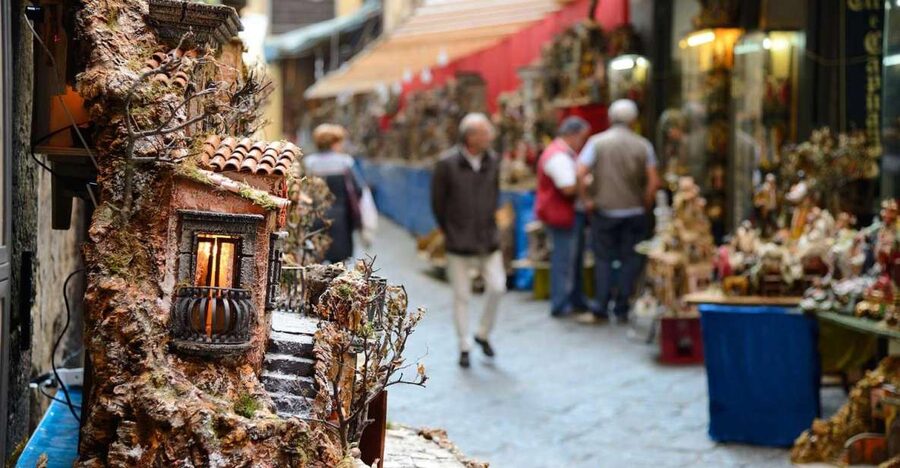
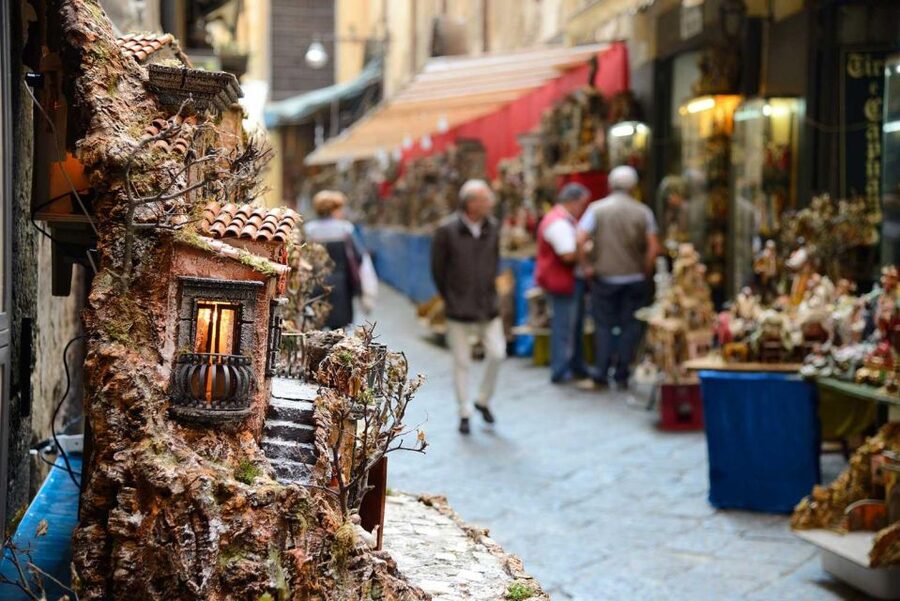
- San Gregorio Armeno is a highlight: Its workshops and displays focus on handcrafted Neapolitan nativity figures.
- The underground visit is included: The €10 entrance to Neapolis Sotterrata is part of the tour price.
- The guide adds the most value: Past guides have included Giorgia, Gianluca, and Alex, with particular praise for clear English, local traditions, and an easygoing style.
- Bring cash and good walking shoes: Cash is specifically advised, and the four-hour route includes old streets, squares, and stairs underground.
Starting at the Neptune Fountain in Piazza Municipio
The meeting point is near the Neptune Fountain in Piazza Municipio. This is a practical place to begin because the tour quickly places you in the middle of Naples’ monumental center, rather than spending time on transport from a distant neighborhood.
Your guide leads the group toward Via Toledo, one of the city’s best-known shopping streets. It runs close to the Spanish Quarters, where the urban mood shifts quickly from formal avenues to narrow lanes and crowded residential streets. That contrast is one of Naples’ great pleasures. The city does not smooth over its differences. Grand architecture and ordinary daily life sit close together.
A live guide matters here. Naples can be hard to read at first glance, with layers of churches, palaces, public squares, football devotion, and local customs packed into a small area. The strongest guides on this route have been praised for explaining both formal dates and the details that give the city its character. Giorgia received special praise for explaining history, customs, and traditions, while Gianluca was noted for his affection for Naples and his relaxed delivery.
The language options are Italian, English, and Spanish. If you need English, the available feedback points to clear communication, but guide assignments can change. The experience depends partly on who leads your group and how much you enjoy listening while walking.
More History Tours around Naples:
- Prague: Oldtown, Medieval Underground & Dungeon History Tour
★ 4.3 · 10,277 reviews - Beneath The Streets Underground History Tour
★ 4.5 · 8,006 reviews - Prague Old Town, Medieval Underground and Dungeon Historical Tour
★ 4.5 · 3,227 reviews
Via Toledo, the Maradona mural, and Naples’ public face
Via Toledo gives you a useful introduction to present-day Naples. It is a commercial street, so you see shops and ordinary city traffic rather than a preserved museum setting. That is useful. Naples is not a stage set built only for sightseeing. It is a working city where daily life continues around historic monuments.
One stop is the Maradona mural and its sacred altar, a tribute to the football legend who remains deeply tied to Neapolitan identity. This adds a local angle that a standard architecture tour might miss. Football here is not just a sport reference. It is part of the city’s public memory and neighborhood culture.
You then see the exterior of Galleria Umberto I, an elegant covered arcade, followed by the outside of Castel Nuovo, also called the Maschio Angioino. The castle’s position near the center of Naples makes it an important visual marker, even though this tour does not take you inside.
The route also passes the San Carlo Theatre and the Royal Palace. These stops help explain Naples as a former seat of royal and cultural power. The tour focuses on exterior views, so you should not book it expecting interior visits to the theatre, palace, or castle. Instead, you get the setting, the architecture, and the guide’s explanation while continuing on foot.
Piazza del Plebiscito and the city’s grandest square
Piazza del Plebiscito is one of the tour’s broadest and most impressive spaces. After narrow streets and busy commercial areas, the square gives you room to take in the scale of central Naples.
The square serves as a meeting place and a venue for major public events and concerts. Its importance is not only architectural. It is part of how Neapolitans gather and mark the city’s public life.
The tour lists about four hours in total, not four hours at Piazza del Plebiscito. The schedule needs to cover the square, the central monuments, the historic center, San Gregorio Armeno, Spaccanapoli, several churches and squares, and the underground archaeological site. Expect an active walking session with stops for explanation rather than long periods at one monument.
I would wear comfortable shoes and avoid carrying anything awkward. The route is best for someone who enjoys seeing a lot in one half-day. If you prefer slow photography, long interior visits, or frequent café breaks, the pace may feel tight.
Via dei Tribunali and the old center
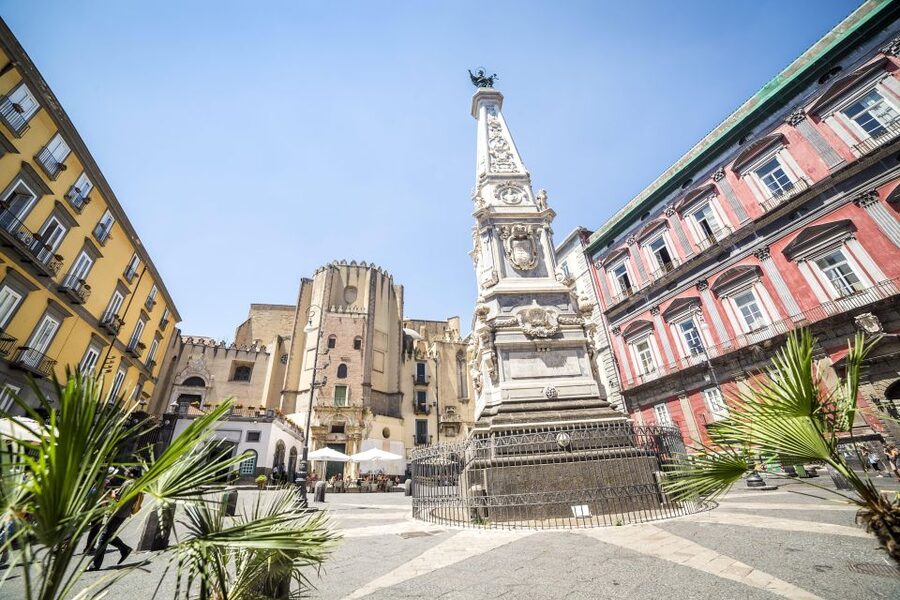
From the monumental center, the tour heads toward Naples’ historic core. Via dei Tribunali is one of the key streets on this section. It is lined with historic pizzerias and cuts through the older part of the city, where the atmosphere is more immediate and less formal than around the Royal Palace.
This is where the tour starts to feel less like a checklist of famous buildings. You walk through a living part of Naples, with narrow streets, churches, workshops, food businesses, and layers of urban life close together. I like this change of mood because it explains why Naples cannot be understood from its grand squares alone.
The guide’s commentary is especially useful in this area. A good explanation can connect what you see above ground with the Greek and Roman city below it. Without that context, the streets may look like a maze of attractive facades and crowded lanes. With it, the old center becomes part of a much longer story.
The route also brings you near historic pizzerias. The tour does not promise a meal or a tasting, so plan your food separately. The reference to pizzerias is part of the setting, not an included culinary stop.
More Guided Tours around Naples:
- Naples: Catacombs of San Gennaro Entry Ticket & Guided Tour
★ 4.6 · 7,941 reviews - Naples: Spanish Quarters Underground Guided Tour
★ 4.8 · 5,064 reviews - Naples Underground Spanish Quarters with Guide
★ 5.0 · 1,886 reviews - Naples: San Gaudioso Catacombs Guided Tour
★ 4.7 · 1,105 reviews
Via San Gregorio Armeno and its handmade nativity figures
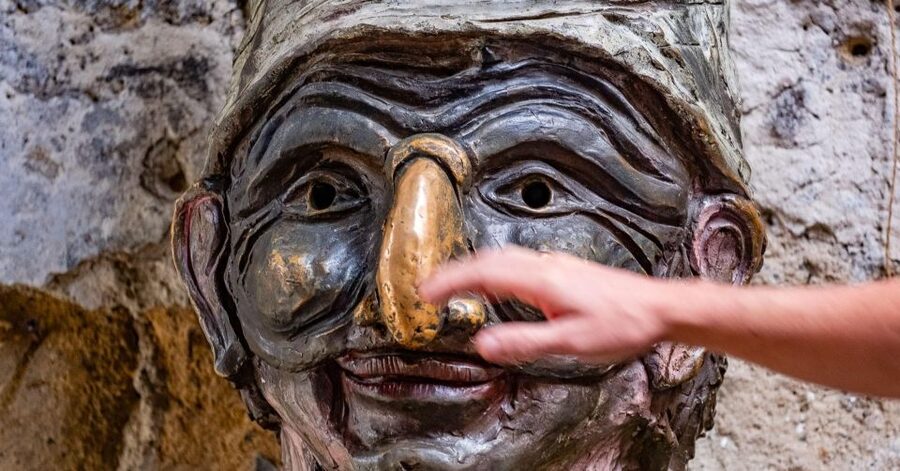
Via San Gregorio Armeno is one of the most distinctive stops. The street is known for handcrafted nativity scenes and figurines made by Neapolitan artisans. These displays are not limited to a simple Christmas theme. They reflect a local craft tradition with figures, scenes, and characters that make the street feel closely tied to Naples’ identity.
I would give this stop your full attention even if you are visiting outside the Christmas season. The appeal is the workmanship and the street’s connection to local tradition, not only the holiday calendar.
This is also a place where the guide can help you understand what you are seeing. The route describes the street as a center of Neapolitan handicrafts, so you have a chance to connect the shops and displays with the wider folklore of the historic center.
The street can be busy and visually crowded. Keep your belongings secure and leave room for other people moving through the narrow area. Cash is listed among the items to bring, which is useful if you decide to buy a small handmade item, though purchases are not included in the tour.
Spaccanapoli, San Domenico Maggiore, and Santa Chiara

The route continues along Spaccanapoli, the long, straight street whose name means Naples splitter. It cuts across the old city and offers one of the clearest ways to understand the historic center’s layout.
The walk includes the artistic and religious complex around San Domenico Maggiore, an 18th-century church, and medieval Santa Chiara. These stops show the range of Naples’ religious architecture, from later Baroque work to older medieval foundations.
The tour does not promise a detailed interior visit to every church. Much of the value comes from seeing the buildings in sequence and hearing how they fit into the city’s development. If you are especially interested in church interiors, art, or cloisters, you may want separate time after the tour.
Spaccanapoli is also a good place to notice how the city’s local and monumental sides overlap. Churches, residential buildings, small businesses, and street activity share the same tight spaces. That mixture is a central part of the Naples experience, and this walking route gives you a direct look at it.
Ten meters below San Lorenzo Maggiore
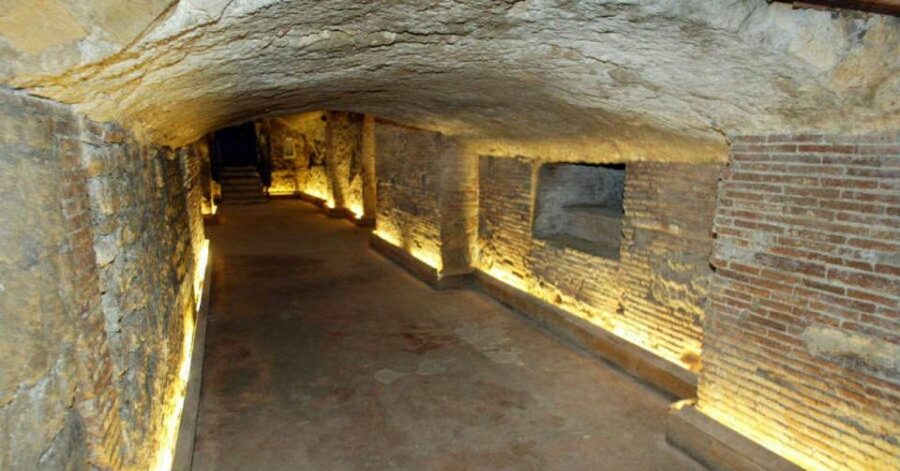
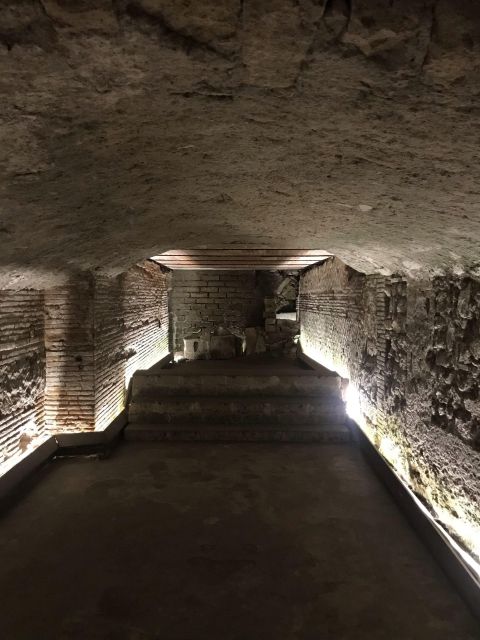
The final major section takes you beneath the San Lorenzo Maggiore complex. You descend about 10 meters below the church floors to see Neapolis Sotterrata, an archaeological area connected with ancient Naples.
Below, the remains include the Greek agora and the civic and religious Roman Forum. This is the point where the tour’s different sections come together. The streets above are not simply old. They sit over earlier urban layers, and the underground visit lets you see part of the city that normal sightseeing misses.
The entrance fee, listed as €10 per person, is included. You also receive a certified multilingual guide, and the underground visit is arranged with a guide rather than as a self-directed walk. The tour advertises skip-the-ticket-line access, which can help keep the four-hour schedule on track.
You should take the claustrophobia warning seriously. The underground area is not suitable for people who are uncomfortable in enclosed spaces. Even if you are generally fine below ground, the change from open squares to an archaeological site beneath a church may feel close and enclosed.
This is not a vast underground network, and you should not expect an all-day archaeology visit. Its value is the clear connection between the ancient Greek and Roman city and the modern streets you have just walked. For many people, it will be the most memorable part of the tour.
What $99 buys you

At $99 per person, the price is on the high side for a walking tour, but the package covers a lot. You receive four hours with a certified guide, a route through both the monumental center and historic center, and the €10 underground admission.
The value depends on how you use the tour. If you want a quick orientation and plan to return later to selected sights, it gives you a useful framework. You see Via Toledo, Galleria Umberto I, Castel Nuovo, San Carlo, the Royal Palace, Piazza del Plebiscito, Via dei Tribunali, San Gregorio Armeno, Spaccanapoli, San Domenico Maggiore, Santa Chiara, and San Lorenzo Maggiore in one organized route.
If you already know central Naples well, or prefer independent wandering, $99 may feel steep. The tour does not include meals, hotel pickup, or interior admission to every landmark mentioned. You are paying mainly for the guide’s interpretation, the organized route, and the underground entrance.
The rating is 4.7 from 18 ratings, and the strongest praise focuses on the guides. Giorgia was described as helpful and strong on history, customs, and traditions. Gianluca was praised for making the city feel lively through details beyond official facts. Another guide was described as presenting information in a thoughtful, relaxed way. That repeated pattern matters more than a list of monuments because a route like this depends on explanation.
Who should book this four-hour walk?

I would recommend it if you are visiting Naples for the first time and want a guided introduction to the city’s central districts. It suits you especially well if you enjoy walking, want historical context, and like seeing both famous landmarks and local traditions.
It is also a good fit if you have limited time. The route connects the waterfront-side monumental area with the historic center and an archaeological site in one half-day. You can then decide which places deserve a longer return visit.
I would be more cautious if you dislike enclosed spaces, walk with difficulty, or want a relaxed schedule. The route is busy with sights, and the underground section includes a descent. The tour also suits people who can listen while walking, since many stops are viewed from the street rather than visited inside.
You can cancel up to 24 hours before the start for a full refund, and you can reserve now while paying later. Those options are useful if your Naples schedule is still changing, but the main practical issue remains the same: bring cash, wear sensible shoes, and arrive near the Neptune Fountain with enough energy for four active hours.
Should you book this Naples tour?
Book it if you want Naples explained, not just photographed. The best reason to choose this tour is its range: royal squares, football culture, artisan nativity figures, old churches, famous streets, and ancient ruins below San Lorenzo Maggiore.
Skip it if you want long visits inside each monument or a slow food-focused walk. For everyone else, the combination of a strong guide and the underground Neapolis Sotterrata visit makes the $99 price easier to justify. I would choose it early in a Naples stay, then use what you learn to plan your independent walks afterward.
FAQ
Where does the tour meet?
The meeting point is near the Neptune Fountain in Piazza Municipio.
How long does the tour last?
The tour lasts four hours.
What languages are available?
The live guide is available in Italian, English, and Spanish.
Is the underground entrance included?
Yes. The entrance to Underground Naples of Neapolis Sotterrata, listed at €10 per person, is included.
Is the tour suitable for people with claustrophobia?
No. The underground section is not suitable for people with claustrophobia.
What should I bring?
Bring cash. Comfortable walking shoes are also a practical choice because the tour lasts four hours and includes city streets and an underground descent.
Just added around Naples
- Naples: City Walking Tour w/ Underground Roman Ruins Ticket★ 4.6 · 284 reviews
- Naples Top Sights & Underground small group tour★ 4.7 · 59 reviews
- From Naples: Full-Day Capri Island and Blue Grotto Tour★ 3.8 · 224 reviews
- From Naples: Blue Grotto, Capri, and Anacapri Group Tour★ 4.8 · 102 reviews
- Exclusive Capri, Anacapri & Blue Grotto Private Tour from Naples★ 5.0 · 121 reviews
- Private Capri Island and Blue Grotto Day Tour from Naples or Sorrento★ 5.0 · 311 reviews
- From Naples: Capri and Blue Grotto Day Tour★ 4.7 · 966 reviews
- Day Trip to Capri and Blue Grotto From Naples & Sorrento★ 5.0 · 1,023 reviews
Naples Cave Tours, compared.
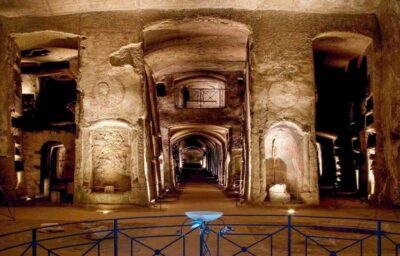
Catacombs of San Gennaro Entry Ticket & Guided Tour
Read our review →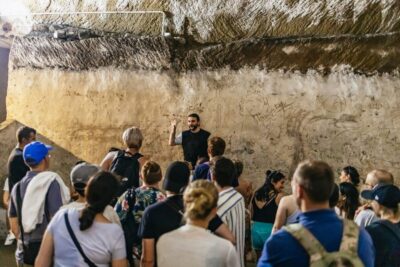
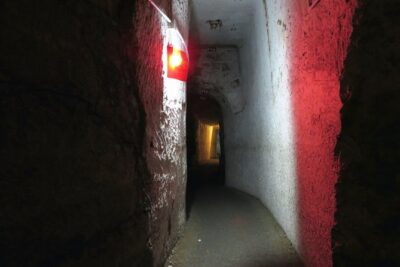
Naples Underground Spanish Quarters with Guide
Read our review →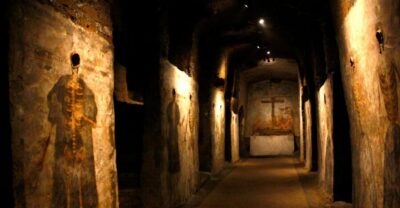

Day Trip to Capri and Blue Grotto From Naples & Sorrento
Read our review →

Private Capri Island and Blue Grotto Day Tour from Naples or Sorrento
Read our review →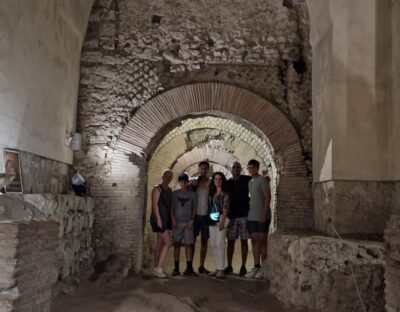
City Walking Tour w/ Underground Roman Ruins Ticket
Read our review →Browse the lists this cave appears in