
Review · ROME CAVE TOURS
Rome: Trevi Fountain Underground Small Group Tour
Ancient Rome is hiding under your feet. This short tour takes you below Trevi Fountain to Vicus Caprarius, where an ancient aqueduct, Imperial-era home, medieval houses, and a Roman water tank reveal a side of the city most people miss. I like the focused underground archaeology and the chance to see how Rome was rebuilt layer by layer. The main drawback is that the tour does not actually lead beneath the fountain basin, despite how the experience may sound.
I also like that entry, an English-speaking guide, and headsets are included, with a separate entrance to help you avoid the main queue. Guide quality appears to matter a great deal here. Some visitors praised guides such as Virginia and Sylvia, while one serious complaint described a rushed meeting and a guide who was difficult to understand.
Key points to know before booking
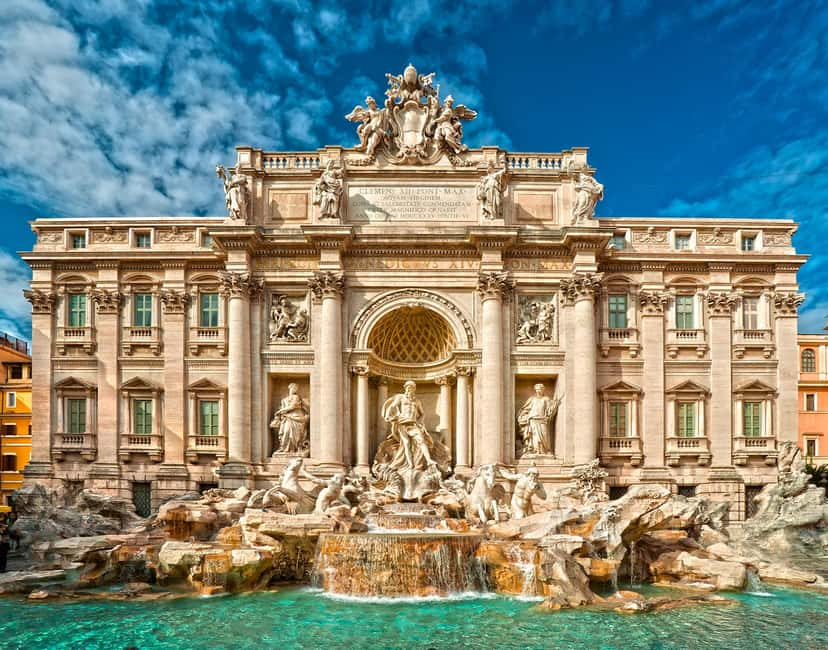
- The site is Vicus Caprarius, not the inside of Trevi Fountain: You explore archaeological rooms near the fountain and the remains of the Aqua Virgo system, but you do not walk directly below the fountain basin.
- Aqua Virgo still shapes the story: This Roman aqueduct supplied water to the city and gives the underground visit its strongest historical thread.
- The archaeology spans several periods: Expect traces of an Imperial-era domus, medieval homes, and the water tank known as the castellum aquae.
- The visit is short and tightly focused: The advertised duration is 45 minutes, with the schedule also showing a 15-minute Trevi Fountain stop.
- The meeting point matters: Meet your guide in tiny Piazza dei Crociferi, not at the archaeological site entrance.
- The guide can make or break the experience: Headsets are supplied, but clear explanations and good timing are especially important in a short tour.
Why Trevi Fountain has an underground story

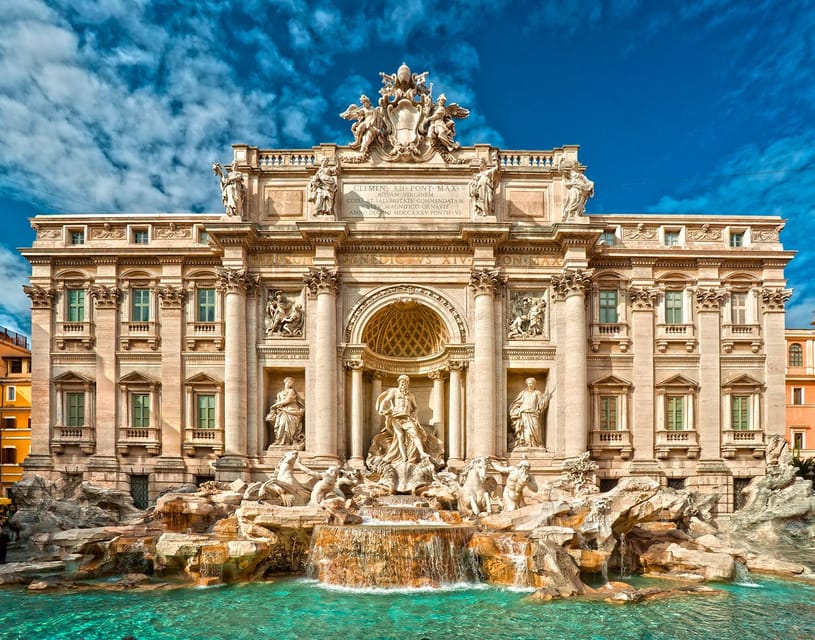
Trevi Fountain is one of Rome’s great public spectacles. Above ground, you have the marble figures, rushing water, crowds, coin tosses, and movie fame. Federico Fellini’s La Dolce Vita helped turn the fountain into a screen icon, with Anita Ekberg’s famous nighttime scene adding to its allure.
That familiar picture is only one chapter. Beneath the streets, the area preserves evidence of Rome’s long relationship with water. The archaeological site called Vicus Caprarius, or the City of Water, came to light during renovation work at the former Cinema Trevi in 1999. It opened to the public in 2004.
I find this origin especially interesting because it shows how easily Rome’s past can sit below ordinary modern buildings. A cinema once occupied the space above these remains. Under it were earlier homes, water structures, and layers of Roman life. You are not simply looking at old stones. You are seeing the result of a city repeatedly built, altered, and reused.
The price is about $71 per person. That is not a bargain for a 45-minute activity, so the value depends on what you want from your time near Trevi Fountain. If you already plan to visit the fountain, this adds a ticketed archaeological site and a guide who can explain the water system. If your schedule is packed or your main goal is simply a good fountain photograph, the cost may feel high.
A few more cave trips around Rome worth a look
- Colosseum: Underground and Ancient Rome Tour
★ 4.7 · 12,691 reviews - Rome: Capuchin Crypts and Catacombs Tour with Transfers
★ 4.6 · 6,456 reviews - Expert Guided Tour of Colosseum Arena OR Underground, and Forum
★ 4.5 · 5,041 reviews
Meeting in Piazza dei Crociferi
The tour begins at Piazza dei Crociferi, a tiny square close to Trevi Fountain. Your guide is supposed to carry a sign with the Rome with Silvia logo. This sounds simple, but the small meeting area and busy surroundings make it worth arriving early.
Do not wait at the entrance to the archaeological site. That is the most important meeting instruction. You need to find the guide first in the square, then enter together.
One complaint described arriving at 3:27 for a 3:30 start after receiving urgent calls saying the party was late. The published information does not clearly state how early you must arrive, so I would allow extra time. Rome’s lanes around Trevi are easy to confuse, and a few minutes spent finding Piazza dei Crociferi is better than starting the visit under pressure.
Bring comfortable shoes, weather-appropriate clothing, and your passport or identity card. The tour runs rain or shine. Since the approach and meeting point are outdoors, bad weather can affect the start even though the archaeological rooms are underground.
Entering Vicus Caprarius beneath the Trevi area
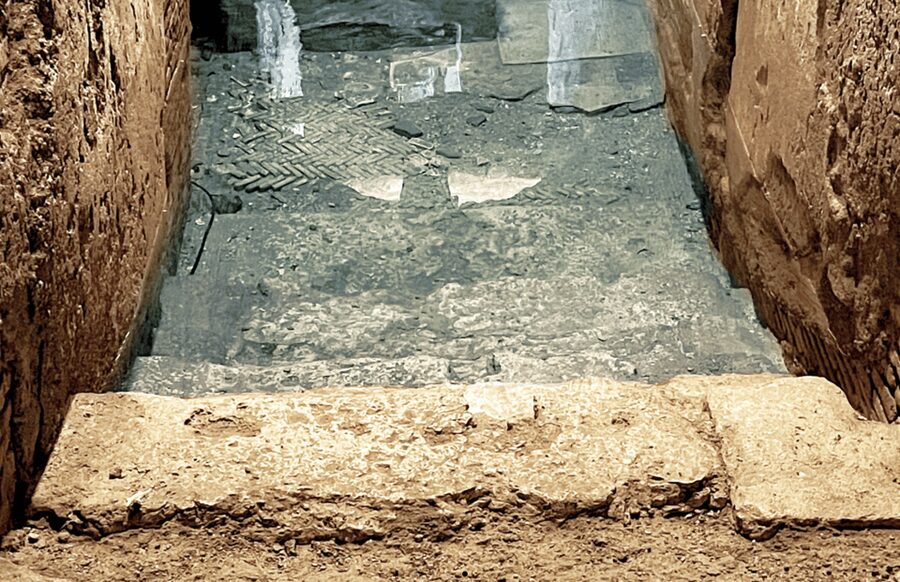
The main part of the visit takes place at Vicus Caprarius. Your guide leads you through the underground archaeological area, explaining the remains and the way water shaped this part of Rome.
The site presents a useful lesson in Roman construction. Instead of seeing one isolated monument, you encounter several periods in one compact area. The Imperial-era domus shows domestic life from Rome’s powerful early period. Medieval houses show how later residents adapted and built over earlier structures. The water installations connect both the physical site and the larger story of Roman engineering.
This layering is the best reason to book. At the fountain, you see the finished public monument. Below it, you see the city’s working parts: housing, water storage, walls, and the traces of people who lived there long before the present fountain existed.
The underground passages are the heart of the visit. They are not described as a long tunnel walk beneath the fountain itself, and you should adjust your expectations accordingly. One person found the aqueduct explanation informative but felt the experience was misleading because the tour did not go directly under Trevi Fountain.
That distinction matters. The attraction is near the fountain and connected to its water story, but it is an archaeological site in its own right. I would book it for the remains and historical explanation, not for the thrill of walking underneath the fountain basin.
Understanding the Aqua Virgo aqueduct
The Aqua Virgo is the central character of the tour. It was one of 11 aqueducts built by the Romans, and its name means pure water, a reference to the clarity of its supply.
There is also a more romantic explanation for the name. A young woman, or virgo in Latin, is said to have led thirsty Roman soldiers to a spring. The aqueduct was then named after her. You get both the engineering story and the legend, a typically Roman mix of practical infrastructure and poetic storytelling.
The site includes the castellum aquae, a large water tank linked to the Aqua Virgo. It was built during the reign of Emperor Hadrian to improve water distribution in the Campo Marzio area. For you, this is more than an old tank. It shows how Roman authorities managed supply after water arrived in the city.
I especially like this part of the experience because it gives Trevi Fountain a working history. The modern fountain is decorative and theatrical, but its location is tied to an older water network. The underground remains help explain why water has mattered here for so long.
The tour’s English guide should make these connections clear, and headsets are included so you can hear the explanation in the enclosed rooms. In a short visit, that audio support is useful. Without it, you could easily mistake the site for a collection of disconnected walls.
Same corner of the map, a different way in:
- The Original Roman Crypts and Catacombs Tour with Transfers
★ 4.5 · 4,896 reviews - Rome: Colosseum Underground Small Group Guided Tour
★ 4.7 · 4,844 reviews - Rome: St. Peter’s Basilica, Dome Climb, and Underground Tour
★ 4.8 · 3,404 reviews - Rome: Colosseum Underground, Arena & Forum Tour
★ 4.7 · 3,272 reviews
Seeing the Imperial domus and medieval houses
The underground rooms also include a domus from the Imperial era. In Roman terms, a domus was a private urban residence. Even without a full reconstruction, the remains help you picture the area as a lived-in neighborhood rather than a ceremonial space.
Then the story moves forward to medieval homes. This change is one of the site’s strongest features. Rome did not freeze when the Empire weakened. Buildings were reused, modified, and covered by new construction. The medieval layers show how practical housing could grow around older Roman foundations.
I would pay close attention to the guide’s explanation of what belongs to which period. A short underground tour can otherwise become confusing, especially when several walls and surfaces sit close together. The value of the guide is not just naming each feature. It is helping you understand the sequence.
The experience is best for people who enjoy archaeology, ancient infrastructure, and Rome’s less obvious remains. It may be less satisfying for children who need a highly visual or interactive attraction. One family reported that their two children could not follow the guide easily, and the visit felt repetitive to them. That complaint may reflect the individual guide and the language level on that day, but it is worth considering if you are bringing young children.
The Trevi Fountain stop and the misleading expectation
After the underground visit, the planned route returns to Trevi Fountain for a guided explanation and photo stop. The fountain itself is a strong ending because you can connect the underground water system with the grand Baroque monument above.
The published schedule describes a 45-minute guided visit at Vicus Caprarius followed by a 15-minute Trevi Fountain stop, while the overall duration is listed as 45 minutes. Since those figures do not fully match, check the exact start time and duration when booking. The practical point is that the fountain portion is brief.
You should also expect crowds at Trevi Fountain. The tour does not promise a private viewing area or an empty square. Its separate entrance applies to the archaeological site, not to the public space around the fountain.
Still, the stop has value. You can take photographs, hear the fountain’s construction story, and see the monument with a better understanding of its water source. The contrast works well: underground remains explain function, while the fountain above celebrates water through sculpture.
Just keep your expectations realistic. You are not bathing in cinematic water, and you are not entering the fountain’s plumbing. The tour provides context around Trevi Fountain and access to nearby archaeology.
Guide quality and the importance of clear explanations
Guide quality is the biggest variable in this experience. Several ratings praise the guide warmly. Christine called her guide very nice, another person simply described the guide as excellent, and Rebecca said her guide, possibly Virginia, was fantastic and made the tour worth taking.
There is also a serious negative account involving a guide named Sylvia. The complaint described poor communication, repeated facts, an argument with another guide, and behavior that made the experience uncomfortable. I cannot know what happened that day, but the contrast between the positive and negative reports is too sharp to ignore.
The lesson is practical: a short tour leaves little room for a weak presentation. If the guide gives clear context, the 45 minutes can feel focused and worthwhile. If the explanation is hard to hear or repetitive, you may feel that the ticket paid for access more than insight.
The included headsets help with audibility, but they do not guarantee a strong tour. Listen for explanations that connect the domus, medieval houses, Aqua Virgo, and castellum aquae. Those links are what make the site memorable.
Is $71 good value?
At $71 per person, I would call this a selective purchase rather than an automatic bargain. The ticket includes admission, an official English-speaking guide, and headsets. You also get a separate entrance to the archaeological site, which may save some waiting.
The price makes more sense if you value a guided explanation and have already planned time around Trevi Fountain. The visit gives you a different kind of Rome, one based on water management, housing, and buried structures rather than famous façades.
It makes less sense if you want a long tour. The experience is short, and the fountain photo stop is brief. You might also hesitate if you are expecting to walk directly beneath the fountain.
The free cancellation option up to 24 hours before the start and the reserve-now, pay-later option reduce some booking risk. Those policies are useful when your Rome schedule is still changing, but they do not change the basic question of value: you are paying for a compact archaeological explanation in a prime central location.
Who will enjoy this underground tour?
I would recommend it most strongly to:
- People who have already seen Trevi Fountain and want a second layer of history
- Anyone interested in Roman aqueducts and urban engineering
- First-time Rome visitors who prefer a focused activity lasting less than an hour
- Adults who enjoy archaeological remains more than staged attractions
- Visitors who want an English guide rather than a self-guided look at the site
I would be more cautious if you use a wheelchair, since the activity is not suitable for wheelchair users. Families with young children should also weigh the short format and the need for the guide’s explanations to hold their attention.
Comfortable shoes are sensible, even though the visit is brief. You will be walking through an underground archaeological area, and the tour is not cancelled for rain, so dress for the weather outside.
Should you book the Trevi Fountain Underground Tour?
Book it if you want to understand the water system beneath one of Rome’s most famous monuments. The Aqua Virgo, Hadrian’s water tank, Imperial domus, and medieval homes give you a compact lesson in how Rome changed over time.
Skip it if your main goal is to stand directly beneath Trevi Fountain or if $71 feels too steep for a short visit. This is not an underground tour of the fountain basin. It is a nearby archaeological experience tied to the fountain by water, place, and history.
For the best chance of a smooth visit, arrive early at Piazza dei Crociferi, find the Rome with Silvia sign, and keep your expectations centered on Vicus Caprarius. With a strong English guide, the tour can turn a familiar postcard stop into a more thoughtful look at Rome’s buried infrastructure.
FAQ
How long does the tour last?
The activity is advertised as lasting 45 minutes. The schedule also lists a 45-minute guided visit at Vicus Caprarius and a 15-minute guided photo stop at Trevi Fountain, so check the exact timing when booking.
Where is the meeting point?
Meet at Piazza dei Crociferi, a small square near Trevi Fountain. The guide should carry a Rome with Silvia logo sign.
Should I wait at the archaeological site entrance?
No. The instructions specifically say not to wait at the entrance to the archaeological site. Meet the guide first at Piazza dei Crociferi.
Is the tour available in English?
Yes. The activity includes a live English-speaking guide and headsets to help you hear the explanation clearly.
What can I see underground?
The site includes remains connected with the Aqua Virgo aqueduct, an Imperial-era domus, medieval houses, and the castellum aquae, a large Roman water tank linked to Emperor Hadrian’s period.
Does the tour go directly beneath Trevi Fountain?
The experience explores Vicus Caprarius beneath the Trevi area and explains its connection to the Aqua Virgo. It does not promise access directly below the fountain basin.
Is the tour suitable for wheelchair users?
No. The activity is listed as unsuitable for wheelchair users.
What should I bring?
Bring a passport or identity card, comfortable shoes, and clothing suitable for the weather. The tour operates rain or shine.
Just added around Rome
- St. Peter’s Basilica and Vatican Grottoes Tour★ 4.9 · 120 reviews
- Rome: St Peter’s Basilica Express Tour & Grottoes★ 4.3 · 126 reviews
- St. Peter’s Basilica Full Guided Tour with Vatican Grottoes★ 4.6 · 286 reviews
- Rome: Appian Way, Aqueducts, & Catacombs E-Bike Guided Tour★ 4.9 · 54 reviews
- Rome: Underground Trastevere Guided Walking Tour★ 4.8 · 87 reviews
- Rome: Tour of St. Clement’s Basilica Underground Temples★ 4.8 · 242 reviews
- Rome underground hidden temples, ruins, and secret basilicas★ 3.7 · 21 reviews
- Rome: Trevi Fountain District Underground Tour and Ice Cream★ 4.5 · 356 reviews
Rome Cave Tours, compared.
Colosseum: Underground and Ancient Rome Tour
Read our review →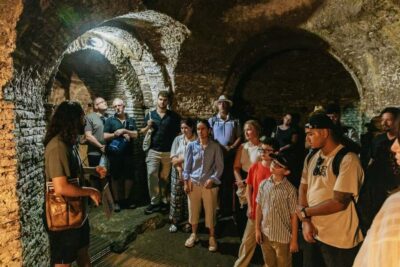
Capuchin Crypts and Catacombs Tour with Transfers
Read our review →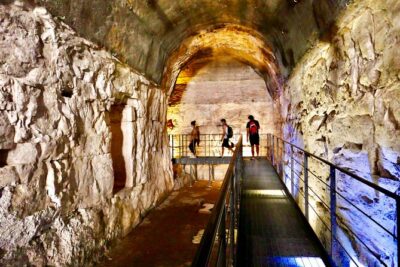
Expert Guided Tour of Colosseum Arena OR Underground, and Forum
Read our review →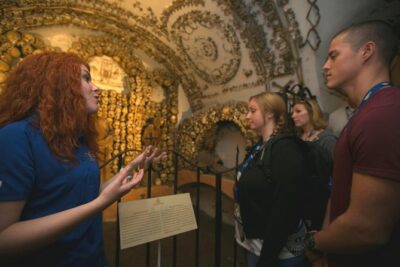
The Original Roman Crypts and Catacombs Tour with Transfers
Read our review →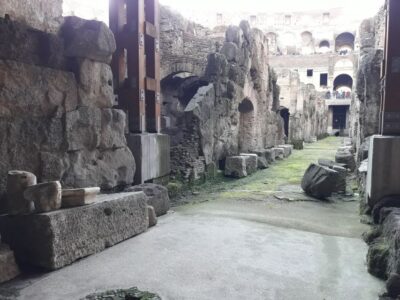
Colosseum Underground Small Group Guided Tour
Read our review →
St. Peter’s Basilica, Dome Climb, and Underground Tour
Read our review →
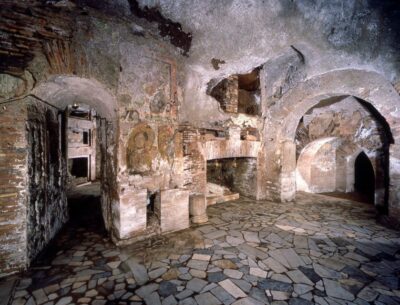
Catacombs of St. Callixtus Entry Ticket & Guided Tour
Read our review →Browse the lists this cave appears in