
Review · ROME CAVE TOURS
Rome underground hidden temples, ruins, and secret basilicas
Rome keeps its best stories below street level. This experience links Michelangelo’s Moses and St. Peter’s chains with the underground levels of San Clemente, giving you sacred art, gladiator ruins, and ancient pagan worship in one compact walk. I especially like the chance to see Rome’s past in layers, and the short distance between the Colosseum area and each stop keeps the outing easy to fit into a busy day.
I also like the choice between a private English guide and a self-guided audio app in five languages. The main drawback is physical: San Clemente requires stairs, uneven surfaces, and underground walking, so this is not suitable for wheelchair users or anyone who finds stairs difficult. At $31 per person, it is a fair buy if you want several unusual sights together, but the value depends on whether you prefer personal storytelling or a cheaper-feeling, independent audio visit.
Key points about Rome’s underground temples and ruins
- San Clemente’s three levels: Move from a 12th-century church to a 4th-century basilica, then down to a 1st-century Roman house and Mithraeum.
- Michelangelo’s Moses: See the famous sculpture inside San Pietro in Vincoli, along with the chains associated with St. Peter.
- Ludus Magnus ruins: Look at the remains of the gladiator training school near the Colosseum.
- Two tour styles: Choose a private guided walk in English or an audio-guided San Clemente visit in English, Italian, Spanish, French, or German.
- Short walking route: The sites are linked on foot, with no transport provided between stops.
- Practical limits: Churches require covered knees and shoulders, and underground areas are not wheelchair accessible.
Why this Rome tour is different
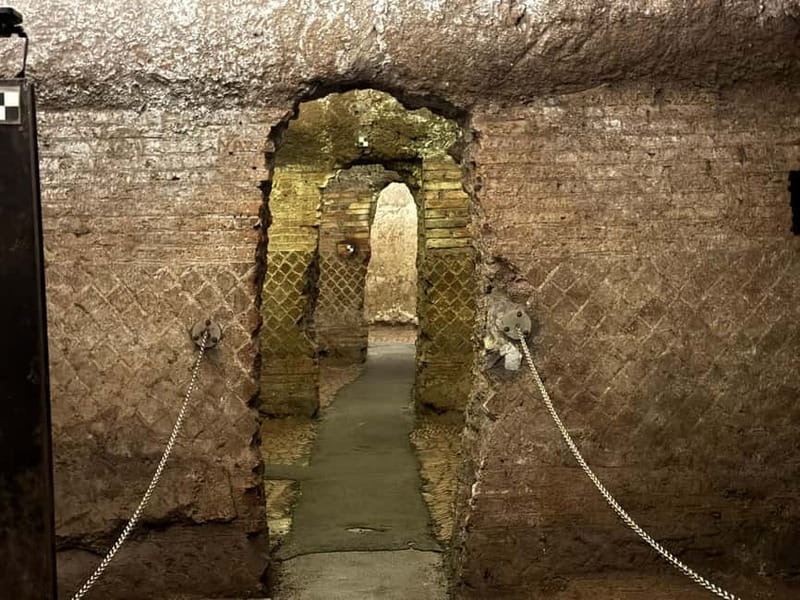
Rome can feel like a city built on top of itself. A church may sit over a Roman house, which may sit over an older place of worship. This experience makes that idea physical. You do not simply look at a ruin behind a fence. You go down through successive layers and see how one city kept building over another.
The route begins close to the Colosseum, but it does not repeat the usual imperial sightseeing circuit. Instead, it moves toward smaller religious and archaeological sites. That change of scale matters. You trade huge crowds and grand open spaces for dim corridors, worn stone, mosaics, and rooms that feel more personal.
The complete private route lasts about two and a half hours, while the audio-guided option is shorter, depending on the schedule and how long you spend at San Clemente. Either way, you should allow time for a calm walk between sites rather than treating this as a rapid checklist.
At $31 per person, the price is reasonable for the private option if all listed entrances are included and you value a guide who can connect the sites. The audio choice is better for someone who wants flexibility and already feels comfortable using a phone app at archaeological sites.
A few more cave trips around Rome worth a look
- Colosseum: Underground and Ancient Rome Tour
★ 4.7 · 12,691 reviews - Rome: Capuchin Crypts and Catacombs Tour with Transfers
★ 4.6 · 6,456 reviews - Expert Guided Tour of Colosseum Arena OR Underground, and Forum
★ 4.5 · 5,041 reviews
San Pietro in Vincoli and Michelangelo’s Moses
Your first major stop is the Church of San Pietro in Vincoli, also called St. Peter in Chains. The church is in an intimate piazza near Via Cavour, not far from the Colosseum, and it gives the tour an immediate sense of contrast. Rome’s major monuments are close, but the setting here is quieter and more focused.
Inside, you see the two sets of chains associated with St. Peter. Their importance is religious rather than architectural, and the display gives the church its name. Even if you are not visiting Rome mainly for church art, this is a memorable opening because the object is so direct and tangible.
The main visual event is Michelangelo’s Moses. The sculpture is famous for its power, scale, and finely worked details. It was created for the tomb of Pope Julius II, and the figure’s expression and physical presence can hold your attention even in a church filled with other details.
I would not rush this stop. Twenty minutes sounds short, but it can be enough for a focused visit if you know what you are looking at. A private guide can explain the sculpture and the chains without leaving you to sort through a busy information panel or phone screen.
Church rules apply here. Your knees and shoulders must be covered, for both men and women. The dress code is strictly enforced, so do not arrive in beachwear and hope for leniency.
The Ludus Magnus, where gladiators trained
The next stop is the Ludus Magnus, the ruins of an ancient gladiator training school. It is close to the Colosseum, which helps you picture the connection between the training ground and the arena.
The remains are not presented like a fully reconstructed stadium. You will see archaeological ruins and listen to an explanation of what happened here. The value comes from the setting and the story: gladiators trained, lived, and prepared for combat in the shadow of Rome’s great arena.
The listed guided visit lasts about 15 minutes. That makes this a brief stop, not a long archaeological examination. If you want every stone identified, you may find the visit too quick. For most people, though, the short pause works well because the route’s main focus is San Clemente.
This stop also gives the tour a useful change of subject. San Pietro in Vincoli centers on Christian relics and Renaissance art. The Ludus Magnus turns you toward Roman entertainment, athletic training, and the brutal machinery behind public spectacles.
There is no transportation between the stops. You walk through the streets around the Colosseum and toward San Clemente. Wear comfortable shoes, especially if you are visiting after a full day on Rome’s hard pavement.
San Clemente’s 12th-century church above ground
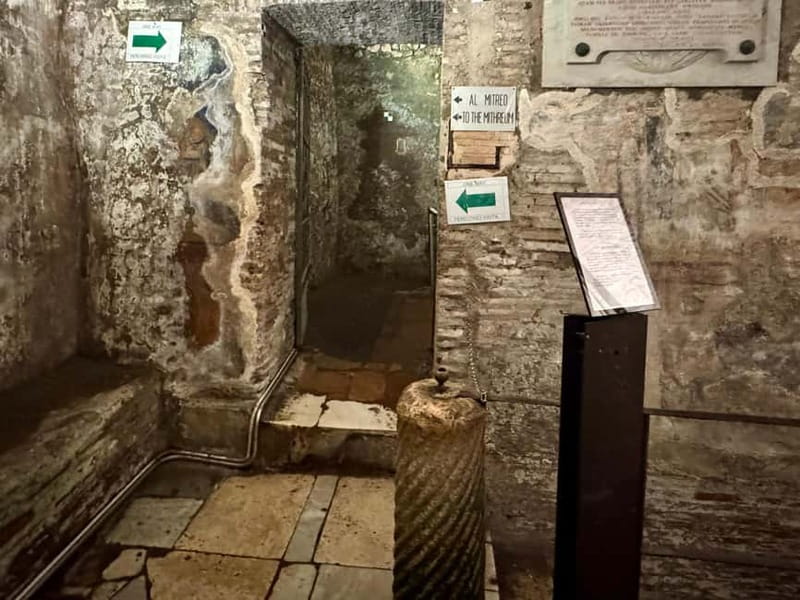
The Basilica of San Clemente is the heart of the experience. At street level, you enter a functioning church with a beautifully decorated interior and glittering mosaics. This upper basilica is the most familiar part of the visit, but it is only the beginning.
The church’s decoration rewards a slow look. The mosaics give you a sense of medieval Rome and its Christian traditions, while the structure above the lower levels shows how later builders used and reshaped earlier spaces.
The appeal here is not just beauty. San Clemente lets you see how Rome changed without erasing everything underneath. The church you enter today was built over an earlier basilica, which was itself built over older Roman structures.
Your guide can make this progression easier to understand. Without context, the site may feel like a series of dark rooms and disconnected walls. With a good explanation, the layers form a clear story about worship, construction, burial, and changing beliefs.
If you choose the audio version, you can move at your own pace. That is useful if you want extra time with the mosaics or prefer to pause while taking in the architecture. The app is available in English, Italian, Spanish, French, and German.
Same corner of the map, a different way in:
- The Original Roman Crypts and Catacombs Tour with Transfers
★ 4.5 · 4,896 reviews - Rome: Colosseum Underground Small Group Guided Tour
★ 4.7 · 4,844 reviews - Rome: St. Peter’s Basilica, Dome Climb, and Underground Tour
★ 4.8 · 3,404 reviews - Rome: Colosseum Underground, Arena & Forum Tour
★ 4.7 · 3,272 reviews
Down to the fourth-century basilica
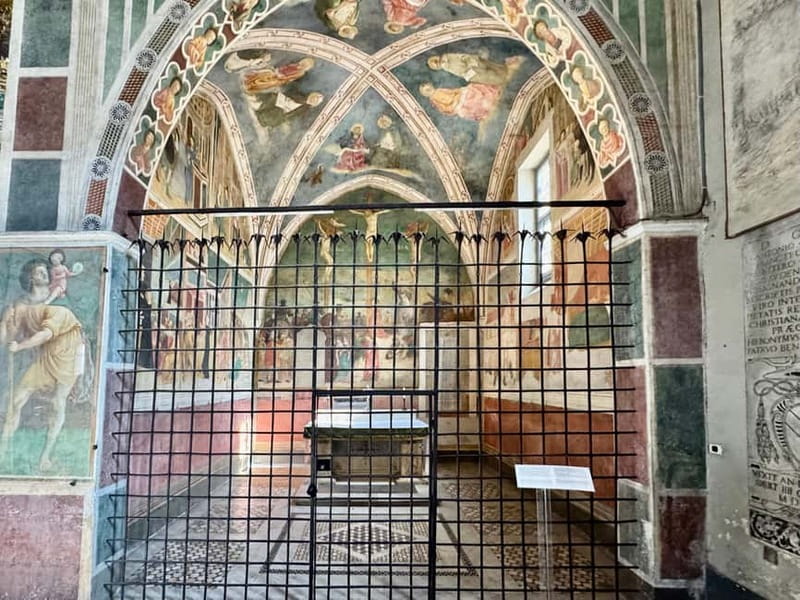
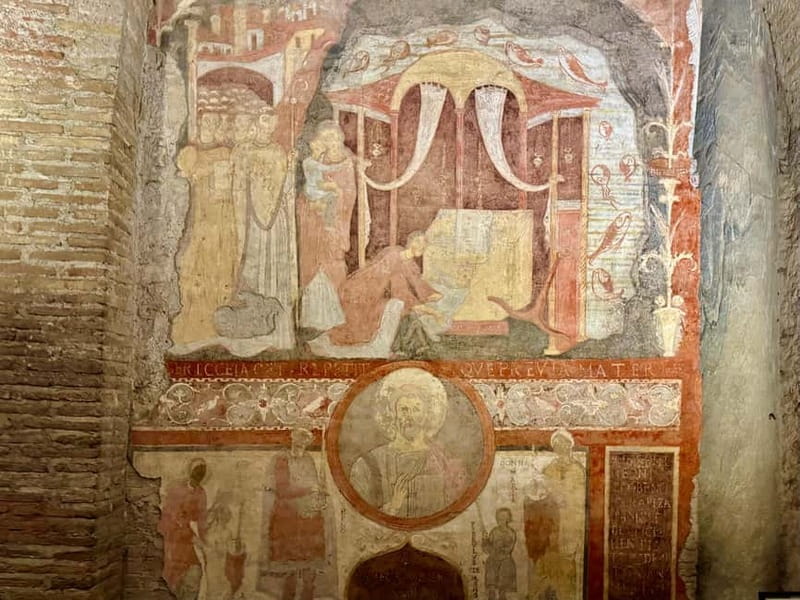
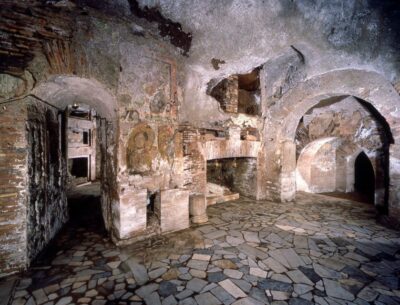
From the upper church, you descend to an earlier Christian basilica dating from the fourth century. This is where the experience begins to feel less like a standard church visit and more like an archaeological walk.
The lower basilica is more austere than the medieval church above it. Its condition and atmosphere help you understand how much time separates the two buildings. You are not simply visiting two rooms in one structure. You are moving between distinct periods of Roman history.
The temperature, lighting, and confined spaces can make the underground levels feel very different from the sunny streets outside. That contrast is part of the attraction, but it also explains why good footwear and sensible clothing matter.
Do not expect a polished museum route throughout. Underground archaeology can include uneven floors, low or narrow areas, and stairs. The supplied access information specifically rules out non-folding wheelchairs, walking frames, and electric wheelchairs, and the overall tour is not wheelchair accessible.
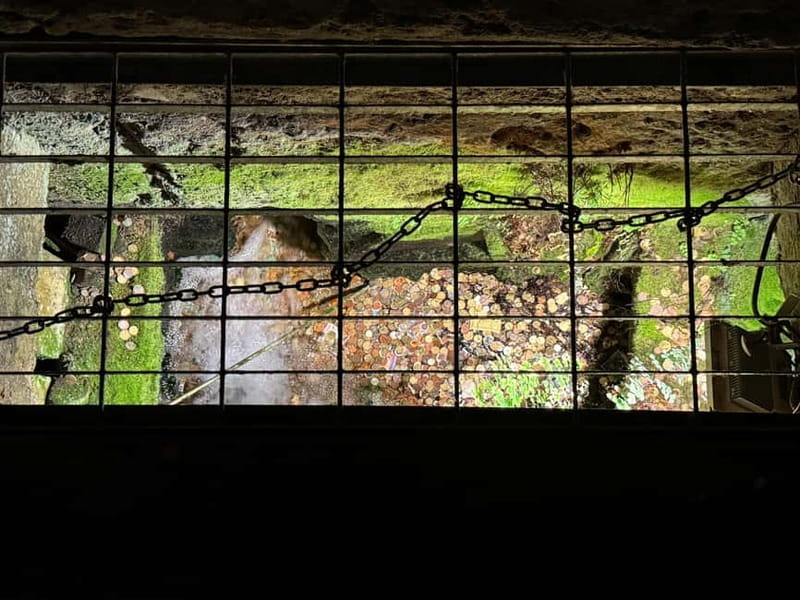
The Roman house and Mithraeum below
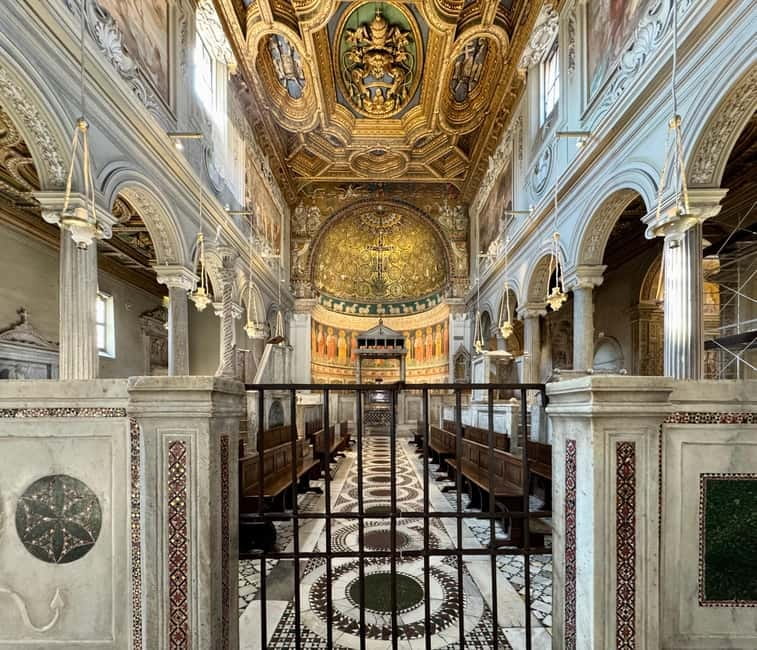
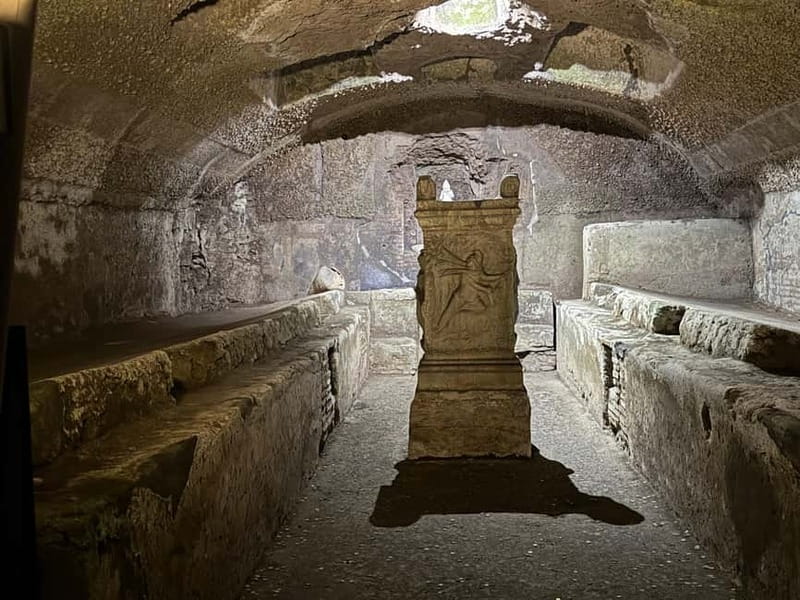
The deepest level takes you to a 1st-century Roman house and a Mithraeum. A Mithraeum was a temple used by followers of Mithras, a pagan cult that practiced secret rites during the Roman period.
This is the most unusual part of the visit. You are looking at a place of worship that predates the Christian buildings above it, then standing beneath churches that later replaced or covered earlier uses of the site. The physical descent mirrors the historical one.
The Roman house helps ground the story in ordinary urban life. It is not only about emperors and monumental buildings. Rome also consisted of private homes, shared streets, small religious groups, and buildings that changed function over time.
The Mithraeum adds a different religious thread. It reminds you that ancient Rome was not defined by one belief system. Various cults and traditions existed alongside one another, and some were practiced in private spaces rather than grand public temples.
This is also the point where a guide can add real value. A private guide can explain what you are seeing, how the lower rooms relate to the churches above, and why the Mithraeum matters. With the audio app, you gain freedom but must be comfortable managing your own attention in a dark archaeological setting.
Private guide or audio app?
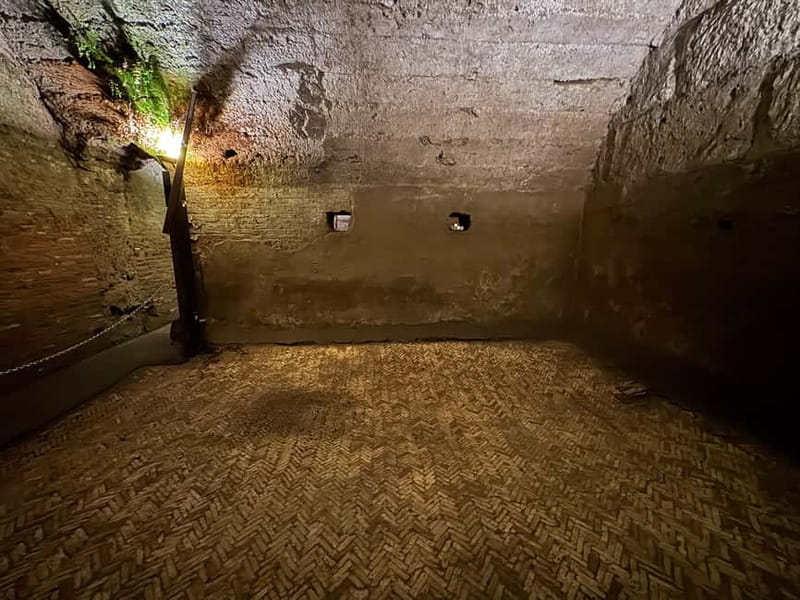
The private guided option is the stronger choice if you want a connected story. It includes San Pietro in Vincoli, the Ludus Magnus, and all three underground levels of San Clemente. An English-speaking private guide leads the walk, and live guiding may also be available in Spanish, Italian, and French according to the booking information.
A private group format is useful for questions and pacing. You can ask for more explanation at Moses, pause at the chains, or spend longer on the Mithraeum if those subjects interest you most. You are not tied to the rhythm of a large group.
The audio option focuses on the Basilica of San Clemente. It includes entry to the three underground levels and lets you explore independently. This makes sense if you have already seen San Pietro in Vincoli and the Ludus Magnus, or if you want a shorter visit built around the underground church complex.
Bring your own headphones. The app works best on a smartphone made in 2020 or later with the latest operating system. Older phones may have problems with compatibility or playback, which can spoil an otherwise good visit.
The phone audio format can work very well when you want to stop, rewind, or take your time. One published booking comment specifically praised the phone audio and described the underground visit as much larger than expected, with something different from Rome’s usual sights. That is a useful clue about the audio option’s main strength: independence without giving up basic explanation.
Timing, walking, and what to wear
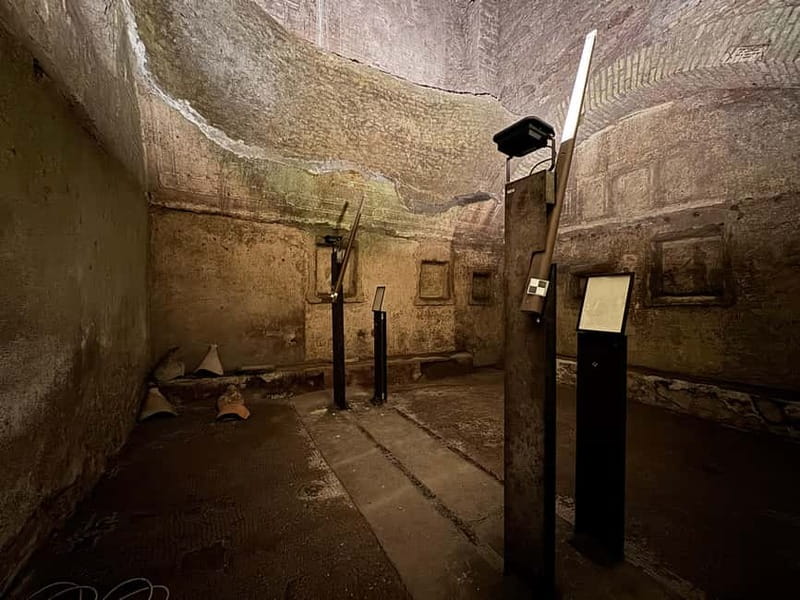
The advertised duration ranges from one to two and a half hours. The shorter end fits the audio-guided San Clemente visit, while the longer end is more likely for the full private route with all three sites.
The exact starting point depends on the option you book. Listed meeting points include Via Labicana, 96, and Piazza di San Pietro in Vincoli. Check your confirmation carefully so you do not wait at the wrong church or street.
All stops are within walking distance. No hotel pickup, drop-off, food, drinks, or transport between sites is included. This is not a problem for most visitors staying near the Colosseum, but it matters if you are planning this between timed tickets elsewhere.
Wear comfortable shoes. You will walk outside and use stairs underground. Dress in smart casual clothing with knees and shoulders covered. The church dress code applies to both men and women, and entry can be refused if you do not meet it.
The tour operates in all weather. Bring suitable clothing for rain or heat because some of the route is outdoors, even though the main archaeological portion is below ground.
Who will get the most from this experience?
I would recommend this to a first-time Rome visitor who wants more than the Colosseum’s main viewpoint. It brings together art, Christian history, Roman ruins, and a pagan temple without requiring a long ride across the city.
It also suits repeat visitors. If you have already seen the Forum and the major basilicas, San Clemente offers a more unusual look at how Rome was built and rebuilt.
Families with older children may enjoy the underground setting, especially the idea of moving backward through time. Very young children may find the dark rooms, stairs, and longer explanations less appealing. The tour data does not set a specific minimum age, so check the booking details if age restrictions matter to your group.
This is not a good fit if you need step-free access, dislike enclosed archaeological spaces, or want a relaxed surface-level church tour. It is also not the best choice if you have only a few minutes between major attractions, since the private route needs a proper block of time.
At $31, I see the best value in the full private experience if you want all three stops and a guide’s help connecting them. The audio visit is the practical pick for independent visitors who mainly want San Clemente and already have a newer smartphone.
Should you book Rome’s underground temples tour?
Book it if you want Rome to feel less like a list of famous monuments and more like a city built in layers. San Clemente is the deciding stop: its medieval church, earlier basilica, Roman house, and Mithraeum give you the clearest sense of history below your feet.
Choose the private option for context, questions, and the full route. Choose the audio option for flexibility, multiple languages, and a self-paced visit. Bring headphones, wear proper church clothing, and plan for stairs.
Skip it if mobility access is essential or if your interest ends with Rome’s open-air ruins. For everyone else, this is a compact and unusual way to see a quieter side of the Colosseum area.
FAQ
Where does the tour begin?
The starting point depends on the option booked. Listed meeting points include Via Labicana, 96, and Piazza di San Pietro in Vincoli.
How long does the experience take?
The stated duration is between one and two and a half hours. The exact length depends on the selected option and availability.
Is transportation provided between the sites?
No. The sites are within walking distance, and transportation between stops is not included.
What languages are available?
The private tour is offered with a live guide in English, with Spanish, Italian, and French also listed as available guide languages. The audio guide is available in English, Italian, Spanish, French, and German.
Are entrance tickets included?
The private option includes entrance tickets for San Pietro in Vincoli, the Ludus Magnus, and the three underground levels of San Clemente. The audio option includes entry to San Clemente and access to its three underground levels.
What should I bring for the audio tour?
Bring a smartphone made in 2020 or later with the latest operating system, plus your own headphones. Older devices may have app compatibility or playback problems.
Is the tour wheelchair accessible?
No. The underground areas include stairs and uneven surfaces, and the experience is not suitable for wheelchair users. Non-folding wheelchairs, walking frames, and electric wheelchairs are not allowed.
Just added around Rome
- St. Peter’s Basilica and Vatican Grottoes Tour★ 4.9 · 120 reviews
- Rome: St Peter’s Basilica Express Tour & Grottoes★ 4.3 · 126 reviews
- St. Peter’s Basilica Full Guided Tour with Vatican Grottoes★ 4.6 · 286 reviews
- Rome: Appian Way, Aqueducts, & Catacombs E-Bike Guided Tour★ 4.9 · 54 reviews
- Rome: Trevi Fountain Underground Small Group Tour★ 4.4 · 47 reviews
- Rome: Underground Trastevere Guided Walking Tour★ 4.8 · 87 reviews
- Rome: Tour of St. Clement’s Basilica Underground Temples★ 4.8 · 242 reviews
- Rome: Trevi Fountain District Underground Tour and Ice Cream★ 4.5 · 356 reviews
Rome Cave Tours, compared.
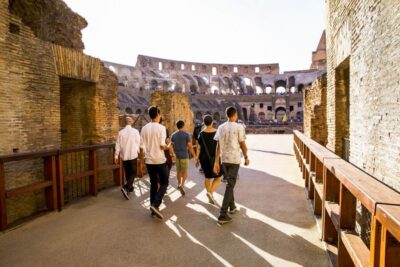
Colosseum: Underground and Ancient Rome Tour
Read our review →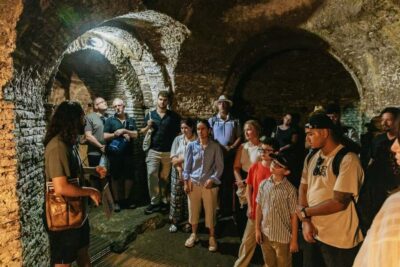
Capuchin Crypts and Catacombs Tour with Transfers
Read our review →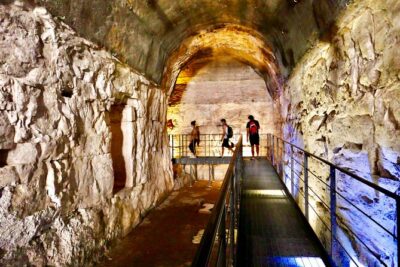
Expert Guided Tour of Colosseum Arena OR Underground, and Forum
Read our review →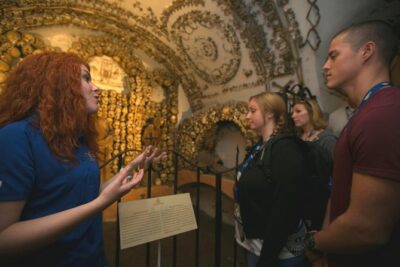
The Original Roman Crypts and Catacombs Tour with Transfers
Read our review →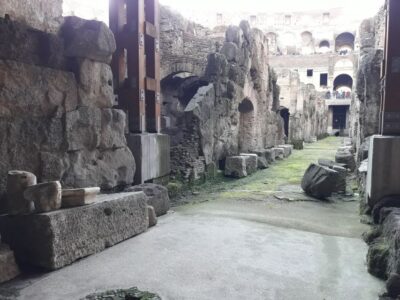
Colosseum Underground Small Group Guided Tour
Read our review →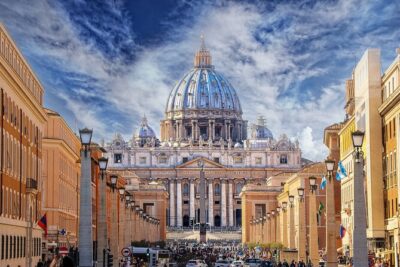
St. Peter’s Basilica, Dome Climb, and Underground Tour
Read our review →
Catacombs of St. Callixtus Entry Ticket & Guided Tour
Read our review →Browse the lists this cave appears in