Review · CATACOMBS & UNDERGROUND CITY TOURS
Rome: Appian Way, Aqueducts, and Catacombs Tour
Ancient Rome still has quiet corners. This half-day outing leaves the crowded center for the old Appian Way, vast aqueducts, and underground burial tunnels. I especially like the comfortable air-conditioned van and the late-day catacomb visit, when the setting feels calm and atmospheric. The main drawback is that the Appian Way can be rough, active, and less romantic than you might expect.
I also like the way this tour links three very different parts of Roman life: roads and empire, water and engineering, then burial and early Christianity. Guides such as Federico, Antonella, Silvia, and Chiara have been praised for turning dates and ruins into clear stories. Bring modest clothing, though, and expect plenty of time outdoors in the heat.
Key things to know before you book
- The catacombs are visited at closing time, giving you a quieter underground experience than a busy midday visit.
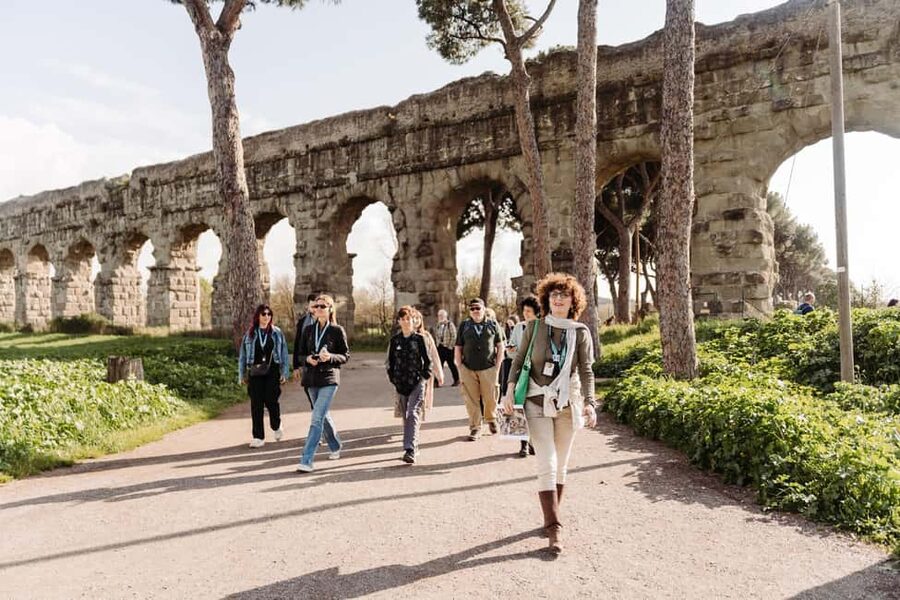
- The aqueduct park may be the tour’s visual highlight, with enormous arches rising through open countryside just outside Rome.
- The Appian Way is not a polished pedestrian street, and parts can be bumpy, active, and uneven underfoot.
- A private air-conditioned vehicle connects the distant sites, saving you from figuring out Rome’s suburban transport.
- The catacomb changes by day, with a visit to either San Sebastiano or Domitilla.
- At $64 for 195 minutes, the tour offers solid value if you want several outlying sights without renting a car or arranging separate entries.
Why this Rome tour is different
Rome’s famous center can feel like one grand queue after another. The Colosseum, Vatican Museums, and Trevi Fountain deserve their place, but they also demand patience, advance planning, and a tolerance for crowds.
This tour gives you a change of pace. You ride beyond the central monuments and spend time among old roads, open fields, giant water channels, and underground Christian burial places. The experience is less about checking off one famous building and more about seeing how Rome worked beyond its temples and forums.
The tour lasts 195 minutes, or just over three hours. That is long enough to reach several widely separated sites without turning the outing into a full-day commitment. The vehicle matters here. The Appian Way, Aqueduct Park, and catacombs are not arranged in a tidy walking circuit, so having transport between them is a real benefit.
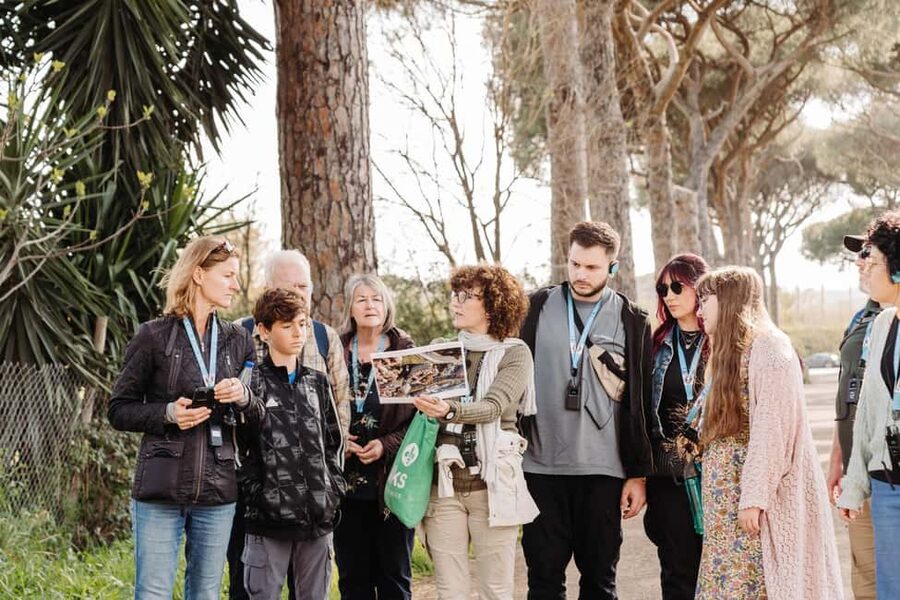
The tour can be private or arranged for a small group. One party described a group of 18 that still felt fairly intimate. Your exact group size may vary, but the format is designed to keep the experience more personal than a large sightseeing coach.
The overall rating is 4.7 from 942 bookings, and the strongest praise is aimed at the guides. Federico is repeatedly singled out for his humor, energy, and grasp of Roman history. Antonella also receives warm praise for making the tour lively and for adapting to very hot weather. These details matter because much of what you see is made of stones, walls, and partial ruins. A good guide gives those remains a human shape.
More Catacombs and Underground City Tours in Italy
- Rome: Capuchin Crypts and Catacombs Tour with Transfers
★ 4.6 · 6,456 reviews - The Original Roman Crypts and Catacombs Tour with Transfers
★ 4.5 · 4,896 reviews - Rome: Catacombs of St. Callixtus Entry Ticket & Guided Tour
★ 4.6 · 3,037 reviews
Meeting at Piramide
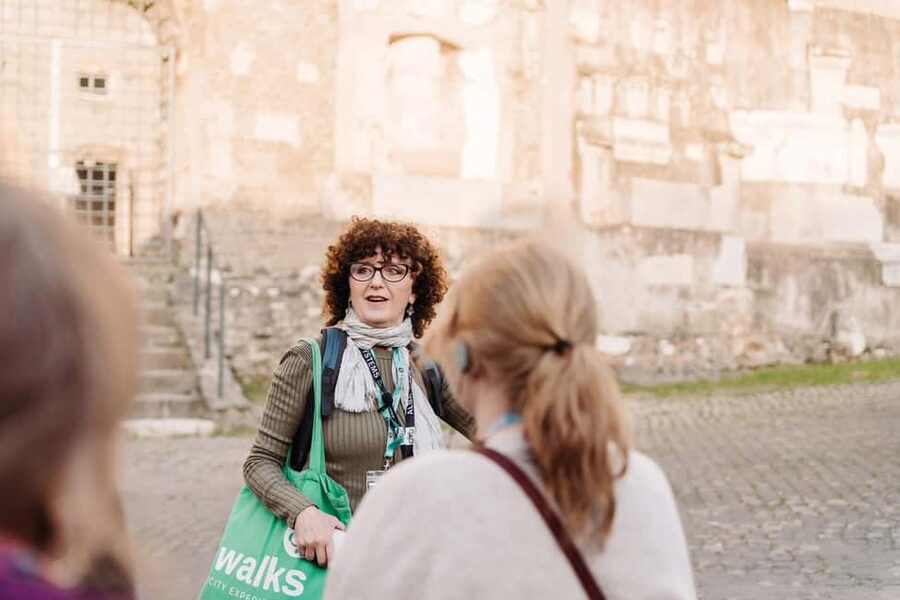
The tour begins in front of Piramide metro station, across from Piazzale Ostiense. Look for the guide holding a green Walks sign, and arrive 15 minutes early.
This meeting point is practical, but you need to be precise. Piramide is both a metro station and a recognizable Rome neighborhood, and at least one person was dropped about 10 minutes away after entering the wrong address into a taxi app. If you use a taxi, specify the Piramide metro station, not just Piramide or Piazzale Ostiense.
The location also provides a useful glimpse of Rome away from the postcard center. The nearby pyramid gives the area its name, and the surrounding transport connections make it a sensible starting point for an outing that heads toward the city’s southern edge.
Walking the ancient Appian Way
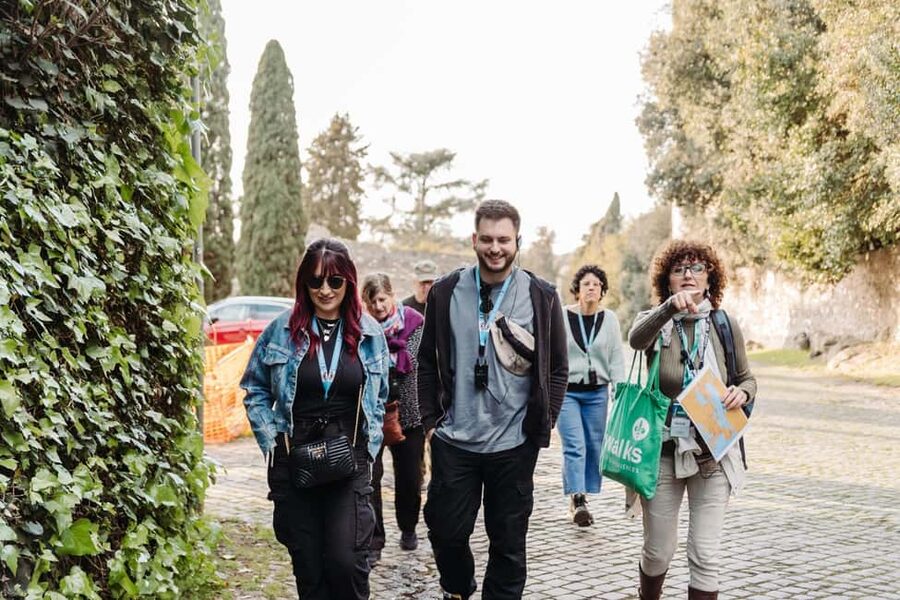
The first major stop is the Appian Way, one of Rome’s earliest roads. Ancient paving stones still mark the route, giving you a direct physical connection to the Roman world. Legions, merchants, and ordinary travelers once moved along this road as Rome expanded through Italy and beyond.
The visit includes a guided walk and a photo stop, lasting about 25 minutes. That is enough time to hear why the road mattered and to get a feel for its old surface, but it is not a long country walk.
Keep your expectations realistic. The Appian Way is not a perfectly preserved pedestrian lane far from modern life. One person found the active road surprising, while another warned about bumpy surfaces. You might encounter traffic, uneven paving, and a less secluded setting than promotional photographs suggest.
That does not make the stop uninteresting. In fact, the mix of old stones and modern movement helps show that this was a working transport route, not a monument built for tourists. You get a sense of how ancient infrastructure can remain part of a living city.
Wear firm, comfortable shoes. The walking is described as moderate rather than strenuous, but uneven ground can be tiring, especially after several days of sightseeing. The road is also exposed, so summer visitors should expect strong sun and bring water.
The Mausoleum of Cecilia Metella
The tour then pauses at the Mausoleum of Cecilia Metella, a large circular tomb dating from the first century BCE. Its scale is striking, particularly when you consider that it began as a private funerary monument.
Your guide explains the powerful family connected with the tomb and how the structure survived across the centuries. This is a useful stop because it shows that the Appian Way was lined not only with traffic, but also with tombs built by families who wanted to display status along one of Rome’s most important roads.
The visit lasts about 25 minutes. You will have time for photographs and a guided explanation, but this is not a long archaeological site visit. The value comes from the setting and the context. Instead of seeing the mausoleum as an isolated stone cylinder, you learn why wealthy Romans placed monuments along the road leading away from the city.
The stop also breaks up the outing nicely. After walking over old paving stones, you have a defined monument to focus on before moving on to the wider open spaces of the aqueduct park.
More Catacombs and Underground City Tours in Rome
- Rome: Guided Roman Catacombs Tour with Transfers
★ 4.6 · 1,830 reviews - Rome: Catacombs Guided Tour with Transfer
★ 4.2 · 1,808 reviews - Rome EBike Tour: Appian Way, Catacombs & Roman Aqueducts
★ 5.0 · 1,766 reviews - Rome: Catacombs and Capuchin Crypt Guided Tour with Transfer
★ 4.6 · 1,606 reviews
Aqueducts in the open countryside
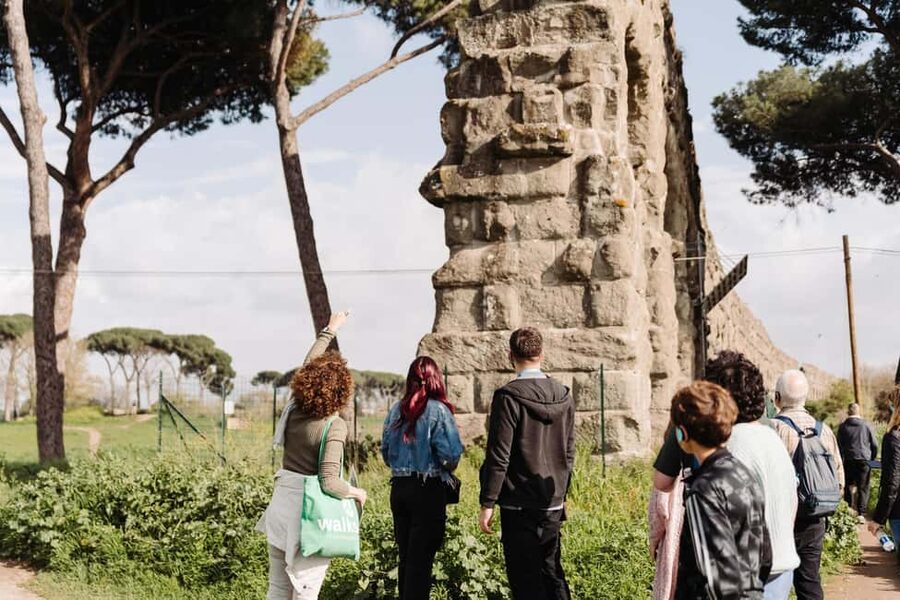
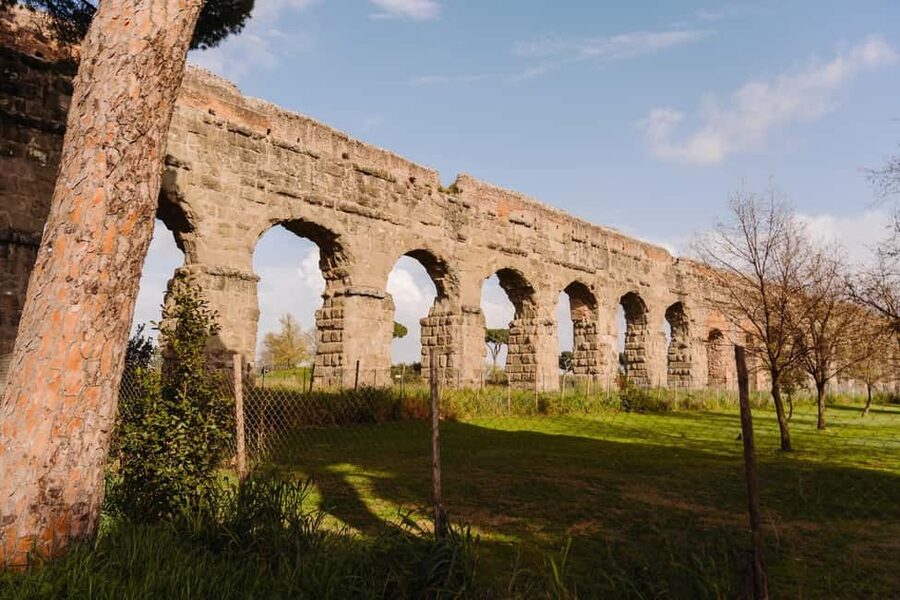
For many people, the aqueducts are the highlight. At Parco degli Acquedotti, the tour spends around 45 minutes beneath and beside the remains of Rome’s enormous water channels.
The scale is hard to grasp from photographs. Once you are below the arches, you can see how these structures carried water toward ancient Rome over long distances. The aqueducts reveal a practical side of Roman power. Temples and triumphal monuments show what Rome wanted people to admire, while aqueducts show what the city needed every day.
The setting is a welcome contrast to the historic center. Instead of tight streets and packed squares, you get open air, broad views, and enormous masonry cutting across the park. Several people have especially praised this part of the tour, and I understand why. The aqueducts provide the clearest visual impact of the day.
Allow yourself to look beyond the arches. The guide may also point out landmarks and explain how the water system supported city life. The best guides, including Antonella, Federico, and Silvia, have been praised for connecting engineering with the habits and needs of ancient Romans.
There is one practical catch: the park is outside, and shade may be limited. A July visit can be very hot. One guide made a point of keeping the group in shade during a 36-degree day, but you should still dress for the conditions. A hat, water, sun protection, and light clothing are sensible, while remembering that the catacomb requires covered shoulders and knees.
Some people wish they had more time at the aqueducts. The 45-minute visit gives you a worthwhile look, but if ancient engineering is your main interest, you may find yourself wanting to linger. The schedule has to keep moving because the catacomb entry is timed.
Entering San Sebastiano or Domitilla
The final main stop is the underground catacomb. Depending on the day, you visit the Catacombs of San Sebastiano or Domitilla. The company’s catacomb guide leads this portion, so you may have a different guide from the person who accompanied you above ground.
That change works well. A specialist can focus on the religious and archaeological details of the tunnels, while your main guide handles the broader story of the road and aqueducts. One person specifically liked the change of guide because it helped renew attention at this point in the tour.
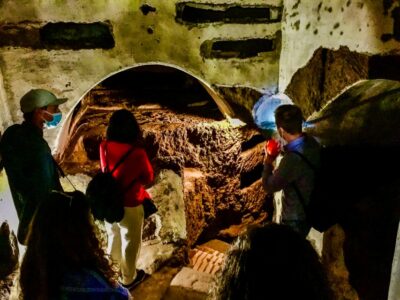
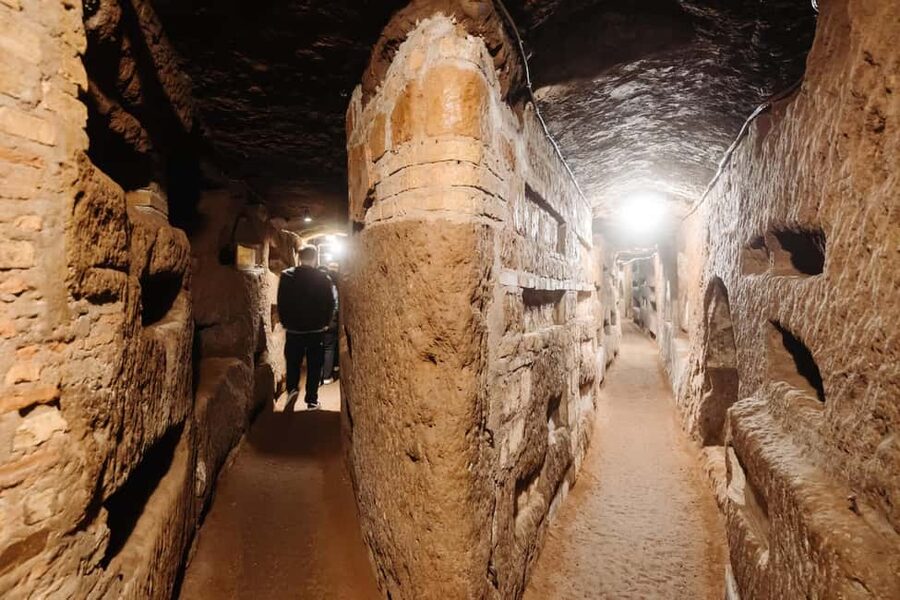
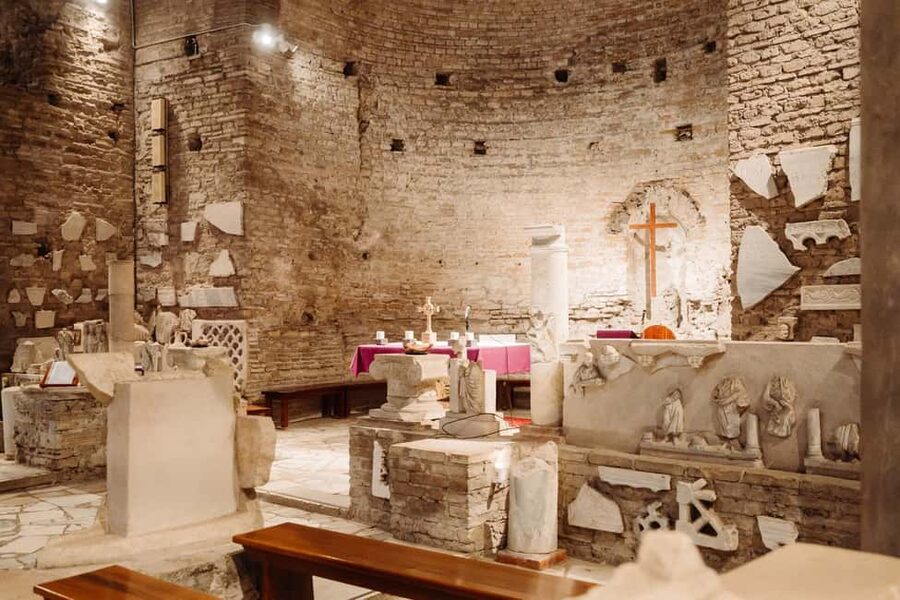
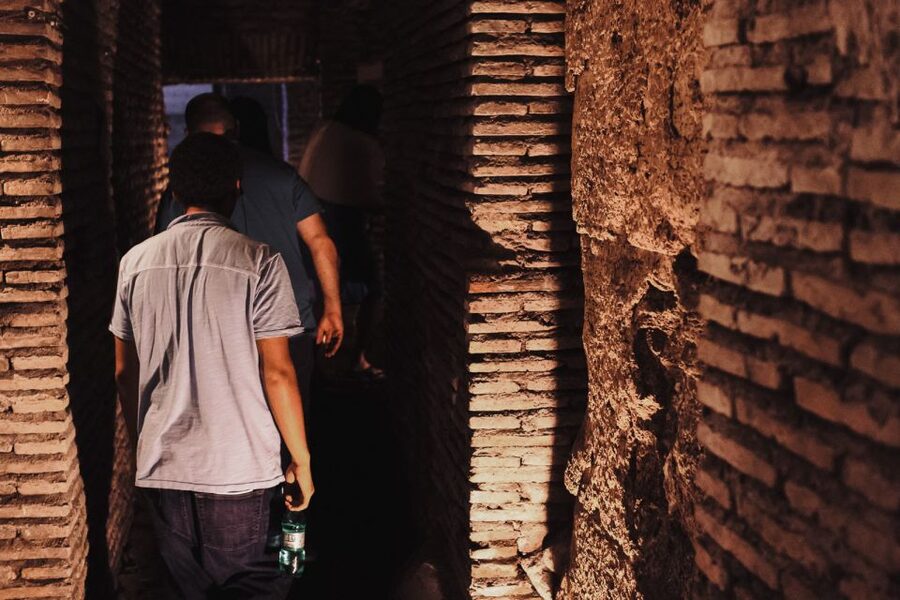
The visit lasts about 80 minutes, making it the longest stop. You move through narrow underground passages lined with burial spaces, early Christian sites, and ancient decoration. The cool air provides relief after time outside, especially in summer, but the tunnels can feel tight.
This is not the Paris Catacombs. Do not book it expecting rooms piled with visible bones. The interest here comes from the burial chambers, religious art, underground layout, and the story of early Christian communities in Rome. One previous visitor was glad to see the catacombs but wished they had researched this distinction first.
Photography is not allowed inside. That may disappoint you if you like to document every stop, but it also keeps the atmosphere quieter and more respectful. A gift shop may be closed when you finish, so if you want a book or printed reference, do not count on being able to buy one after the visit.
The closing-time access is the special feature. The catacombs are not guaranteed to be completely empty, but visiting as the last group of the day can reduce the usual interruptions. The underground setting feels more focused when you are not surrounded by a constant stream of people.
Because this is a religious site, everyone must cover shoulders and knees. Wear long pants and a long-sleeved shirt, or bring a scarf or other covering to put on before entry. Shorts, short skirts, sleeveless shirts, and uncovered shoulders are not accepted.
Transport, pace, and comfort
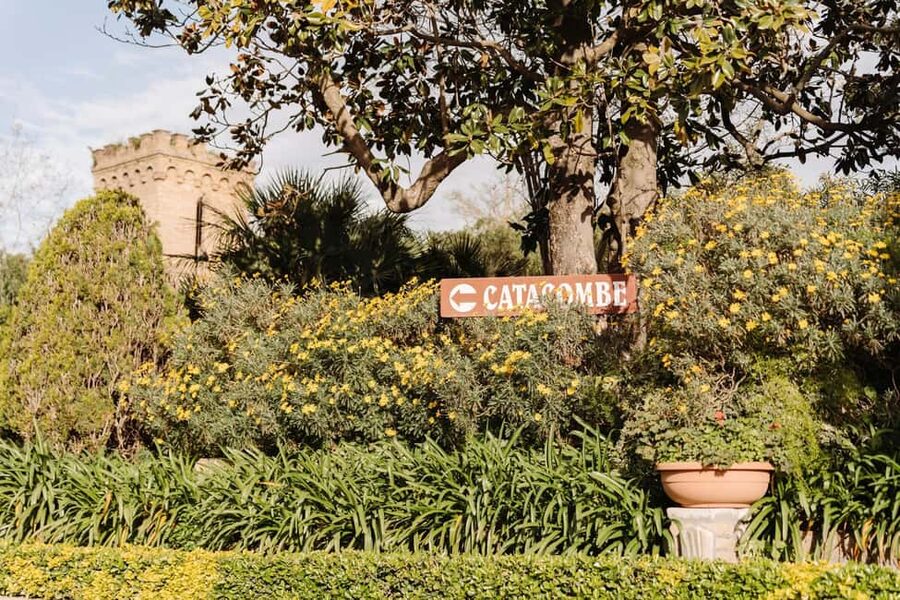
The private air-conditioned transport is one of the tour’s strongest practical features. The stops are spread out, and the roads around the Appian Way can be rough. A comfortable vehicle keeps the day from becoming a long march and gives you a place to cool down between outdoor visits.
The route includes about 20 minutes of driving before returning to Piramide, though actual traffic can affect the timing. Rome’s roads are not always predictable. One guide had to adjust the route around protests, and another person warned that the roads can be bumpy.
You should be able to walk at a moderate pace without difficulty. This is not suitable for wheelchair users, people with mobility impairments, or strollers. The uneven road, outdoor paths, and narrow catacomb passages make that limitation important, not just a minor booking note.
Claustrophobia is another serious consideration. The underground tunnels are tight, and the catacomb section lasts about 80 minutes. If enclosed spaces make you uncomfortable, the aqueducts and Appian Way alone may not justify booking a tour built around a catacomb visit.
Is $64 a good price?
At $64 per person, the cost is reasonable for a 195-minute guided outing that includes catacomb admission, a specialist catacomb guide, and private air-conditioned transport.
You are not paying only for entry. You are also paying to connect sites that would be awkward to combine independently. Public transport and taxis could take more planning, and a taxi-heavy day would quickly reduce the difference in price. The guide adds value too, especially at the Appian Way, where the remains need explanation to become meaningful.
The price is less compelling if you mainly want a long, unhurried walk along the road or an extended visit to the aqueducts. Both outdoor stops have fixed time slots, and the total schedule gives you a broad introduction rather than a slow archaeological study.
For a first visit to Rome, I see it as a strong choice after you have seen the central monuments. It gives you a different picture of the city without demanding an entire day or a rental car.
Who should book this tour?
I would recommend it to you if you:
- Want ancient Roman sites beyond the Colosseum and Forum
- Prefer a guided experience with transport between distant locations
- Enjoy engineering, roads, tombs, and early Christian history
- Like quieter settings and open-air visits
- Can walk on uneven surfaces at a moderate pace
- Are comfortable entering narrow underground passages
It may not suit you if you want a purely scenic countryside outing, dislike religious sites, need wheelchair access, or expect the Appian Way to be a silent road with no modern traffic.
Families with young children should also consider the pace and the restrictions. Strollers are not allowed, and the catacombs may be unsettling for children who dislike dark or confined spaces.
The best timing and what to wear
The late-day timing is a major reason to choose this particular outing. The outdoor stops come before the catacombs, so you may deal with heat first and then finish underground in cooler air. In summer, the open sections can be intense, but the final stop offers a welcome change.
Wear long pants and a long-sleeved shirt from the start if possible. That saves you from changing clothes before the catacomb visit. Choose sturdy walking shoes, carry water, and bring a scarf if you prefer a lighter top outdoors but need extra coverage later.
Do not bring a stroller, and do not plan on photographing inside the catacombs. Your phone or camera can still be useful outdoors, but the underground portion is strictly camera-free.
My verdict on the Appian Way, aqueducts, and catacombs tour
I would book this tour if you want to see a side of Rome that the central sightseeing circuit misses. The combination is unusually well judged: an old road for movement, a tomb for status, aqueducts for engineering, and catacombs for belief and burial.
The most dependable strengths are the transport, the guides, and the late catacomb entry. Federico, Antonella, Silvia, Chiara, and others have been praised for clear explanations, humor, warmth, and care in hot weather. Those qualities matter when the ruins are spread out and the subject can become technical.
Go in knowing that the Appian Way may be active and bumpy, the aqueduct stop may feel too short, and the catacombs are not a bone-filled maze. If those points fit your expectations, $64 buys an efficient and memorable three hours away from Rome’s busiest streets.
FAQ
Where does the tour meet?
It meets in front of the Piramide metro station, across from Piazzale Ostiense. Look for the guide holding a green Walks sign.
How early should I arrive?
You should arrive 15 minutes before the scheduled start time.
How long does the tour last?
The tour lasts 195 minutes, or approximately three hours and 15 minutes.
Which catacombs does the tour visit?
The tour visits either the Catacombs of San Sebastiano or the Catacombs of Domitilla, depending on the day.
Is transportation included?
Yes. Private, air-conditioned transport between the sites is included. Hotel pickup and drop-off are not included.
Can I take photographs inside the catacombs?
No. Photography inside the catacombs is not allowed.
What clothing should I wear?
You should wear long pants and a long-sleeved shirt. Shoulders and knees must be covered because the catacombs are religious sites.
Is the tour suitable for wheelchair users or people with mobility concerns?
No. The tour is not suitable for wheelchair users, people with mobility impairments, or strollers. People with claustrophobia may also want to choose another experience because the catacomb passages are narrow.
Just added around Rome
- Explore Christian Rome and the Underground of San Clemente★ 4.4 · 16 reviews
- Rome: Colosseum Underground and Arena Floor Tour★ 4.4 · 59 reviews
- Rome: Exclusive Colosseum Underground and Roman Forum Tour★ 4.8 · 569 reviews
- Catacombs of Saint Agnes Entry Ticket & Guided Tour★ 4.5 · 72 reviews
- From Rome: Capri Guided Day Trip with Blue Grotto★ 4.2 · 199 reviews
- Rome: Appian Way, Catacombs & Aqueducts by eBike + Transfer★ 4.9 · 421 reviews
- Private Guided Tour of Colosseum Underground OR Arena and Forum★ 5.0 · 111 reviews
- Private Tour of Catacombs and Ancient Appian Way (hotel pick up)★ 4.5 · 120 reviews
Catacombs & Underground City Tours, compared.
Catacombs of San Gennaro Entry Ticket & Guided Tour
Read our review →
Capuchin Crypts and Catacombs Tour with Transfers
Read our review →
The Original Roman Crypts and Catacombs Tour with Transfers
Read our review →
Catacombs of St. Callixtus Entry Ticket & Guided Tour
Read our review →

Full Day Cappadocia Tour( Red Tour + Underground City )
Read our review →