Review · CATACOMBS & UNDERGROUND CITY TOURS
Rome: Catacombs of Priscilla Entry Ticket & Guided Tour
Ancient Rome has secrets below street level. The Catacombs of Priscilla offer a quiet, unusual look at early Christian burial customs, underground galleries, and some of the oldest Christian paintings in Rome. I like the small groups of up to 10 people, which make it easier to hear the guide and see the artwork in narrow corridors. I also like the price: at $16, this is a reasonably priced way to add a serious historical experience to a Rome itinerary.
The main drawback is the short 45-minute duration. It gives you a clear introduction, but you will not see every part of this large catacomb. The site is also outside the main ancient center on Via Salaria, and the dark, confined setting is not suitable for people with mobility impairments. Still, for visitors who want something quieter and more unusual than the Colosseum or Trevi Fountain, this is a strong choice.
- Paintings from the early Christian era: See preserved artwork dating from roughly the third century, including famous images connected with the Virgin Mary and Christ.
- A small underground setting: Groups are limited to 10 participants, a useful advantage in tight passageways.
- A former sand quarry: The catacomb began as an abandoned arenarium before Christians adapted its galleries for burials.
- Important early Christian burials: The site is linked with martyrs, saints, and several popes.
- Guides who add real context: Guides such as Sister Lydia, Sister Lidia, Alexandra, and Clara have received especially strong praise for their explanations and warmth.
- A cool break from Rome’s heat: The underground temperature can be pleasant in summer, though you may want an extra layer.
Why the Catacombs of Priscilla Feel Different
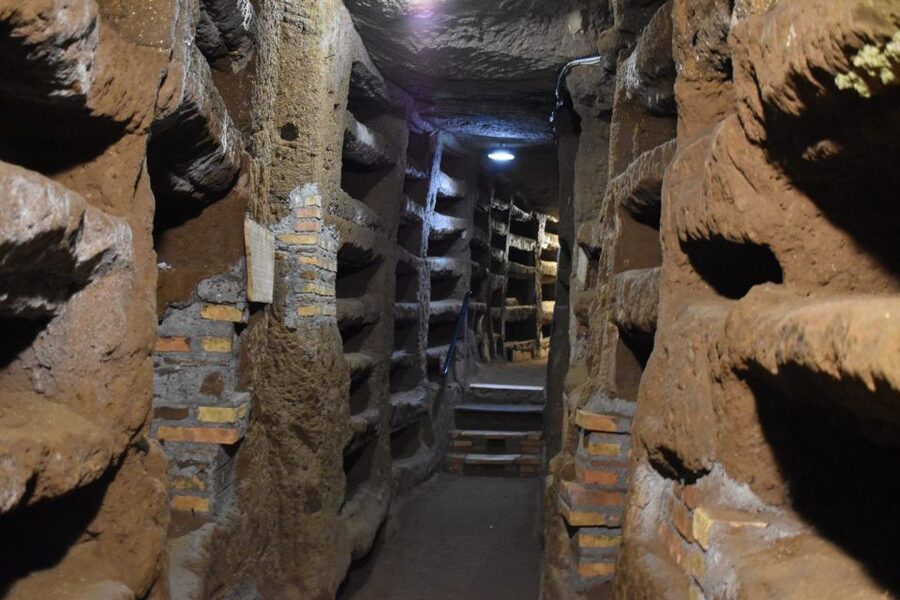
Rome offers grand monuments at every turn. The Catacombs of Priscilla work in the opposite way. Instead of towering columns and wide public spaces, you follow low, irregular corridors beneath the city, where the scale is intimate and the mood is quiet.
The catacomb occupies two floors and likely takes its name from Priscilla, a woman connected with the Acili senatorial family. Her name appears in an inscription found in the hypogeum of the Acili on the first floor. That detail gives the site an unusual beginning: it was not created from scratch as a Christian cemetery.
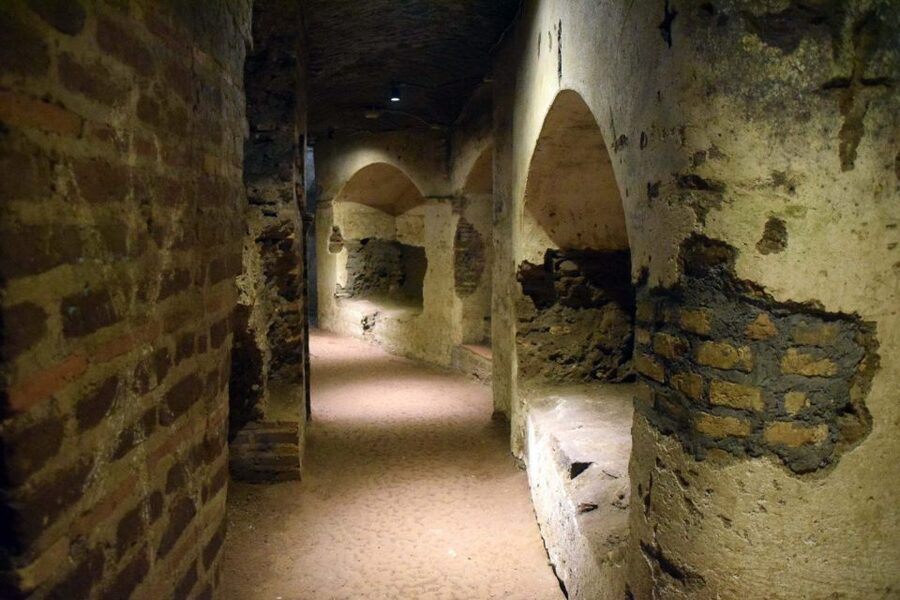
The area first served as an arenarium, likely a place where sand was extracted. After it was abandoned, Christians began using the existing galleries in the early third century. They adapted the rough underground space by cutting burial niches into the walls and building larger niche tombs.
That change tells you something important about early Christian life in Rome. The catacomb was not simply a maze of graves. It was also a place for burial, remembrance, prayer, and the expression of a growing religious community.
I find this more revealing than a polished monument because the setting shows how people used an existing space. The uneven corridors and simple wall niches help you picture a community working with the space available to them.
The 45-Minute Route Beneath Via Salaria
The visit begins at the catacomb entrance on Via Salaria. You should go directly to the ticket office and show your reservation at least 10 minutes before the scheduled start. There is no hotel pick-up, drop-off, or transport included, so you need to arrange your own way there.
Once inside, the guide leads the group through selected parts of the underground complex. The route includes galleries on the first floor, where hundreds of niches were cut into the walls. You may also see larger niche tombs built around the beginning of the third century.
Do not expect a huge underground city with every corridor open to the public. The visit follows a defined route, and the 45-minute schedule is designed as an introduction rather than a full archaeological exploration. One visitor found the time too brief, while another appreciated the limits because spending much longer underground could become tiring.
That balance is worth keeping in mind. If you want an efficient historical stop, 45 minutes works well. If you enjoy slow museum visits or want to study every wall painting closely, you may wish the tour lasted longer.
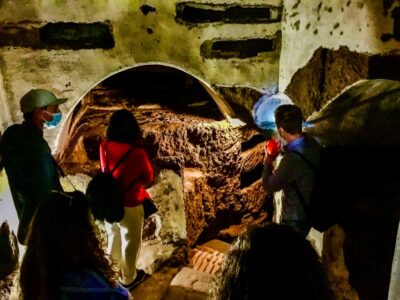
The corridors can feel tight, and the group may gather around particular paintings or burial spaces. The small maximum group size helps, though one account described the spaces as crowded at moments despite the limited number of people. Stay close to the guide and be ready to pause while others look.
More Catacombs and Underground City Tours in Italy
- Rome: Capuchin Crypts and Catacombs Tour with Transfers
★ 4.6 · 6,456 reviews - The Original Roman Crypts and Catacombs Tour with Transfers
★ 4.5 · 4,896 reviews - Rome: Catacombs of St. Callixtus Entry Ticket & Guided Tour
★ 4.6 · 3,037 reviews
Early Christian Art in a Low-Light Setting
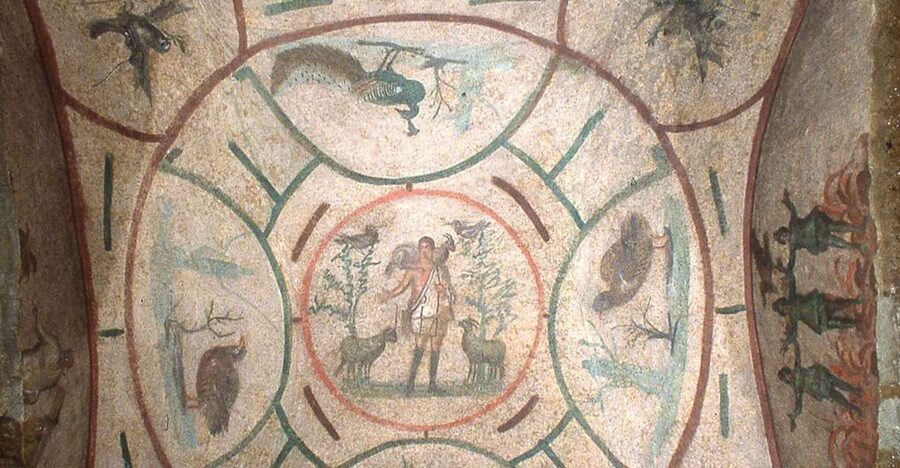
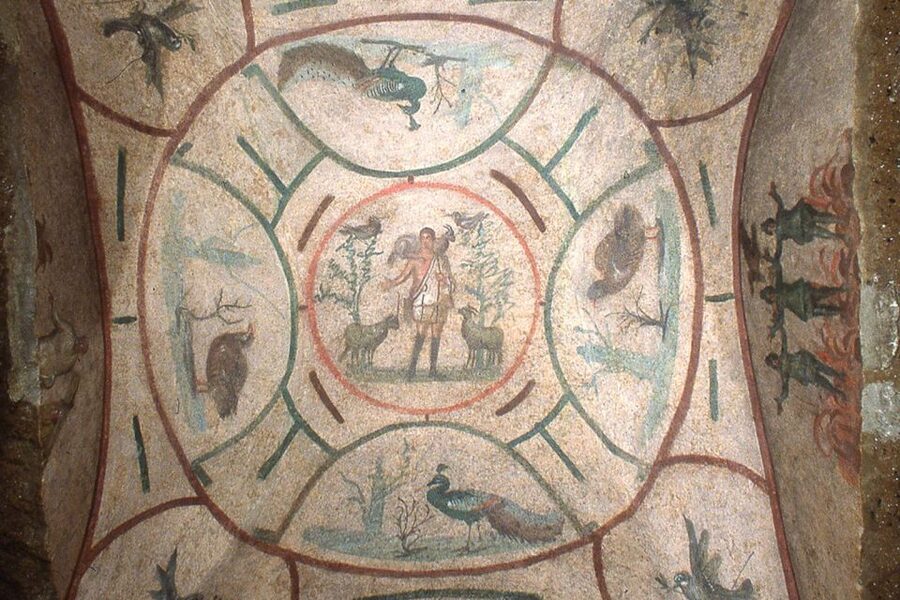
The art is the main reason many people choose Priscilla. Several paintings date from the third century, and the catacomb contains some of the oldest Christian art still known today.
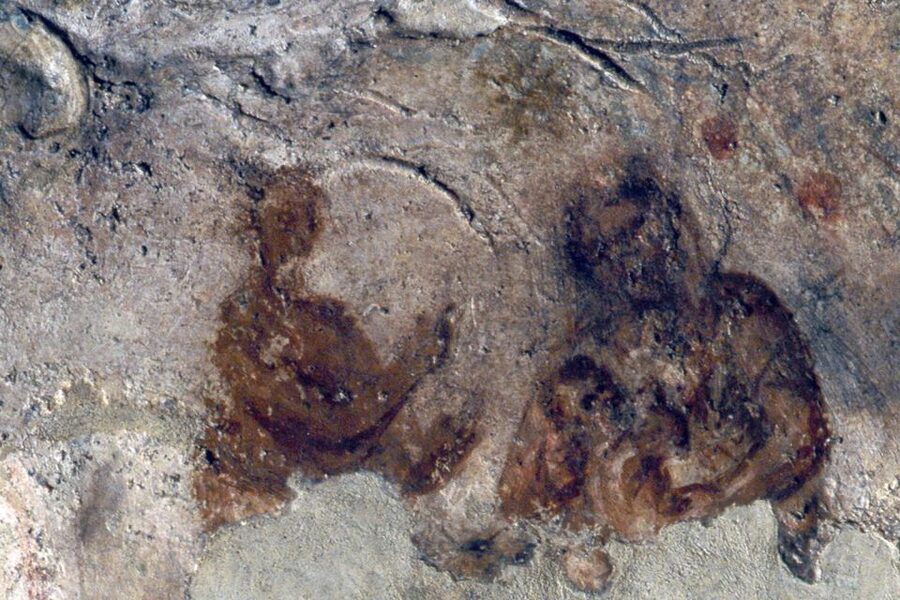
One of the most memorable subjects is an early image of the Virgin Mary and the infant Jesus. The exact claim that it is the first known image is presented by guides and strongly shapes the visit, but the practical point is clear: you are looking at artwork from the first centuries of Christianity, not later church decoration.
The underground setting makes the paintings feel especially direct. You are not viewing them in a bright gallery, separated from the original place by a modern frame and museum label. You are seeing them in the burial complex where early Christians placed their dead and remembered their beliefs.
Photography is not allowed inside. That can disappoint you, especially when the paintings are the highlight. The site offers postcard prints of the artwork, including inexpensive options, so you can take home a record without using your phone in the catacomb.
The lack of photography also helps preserve the quiet atmosphere. You are less likely to spend the visit looking at a screen, and the guide can keep the group moving through the narrow route.
Pay attention to how the guide explains the images. The best part of this visit is not simply seeing old paint on a wall. It is learning how symbols, burial customs, and religious ideas fit together. Guides with backgrounds in ancient Christian art have been particularly good at giving that context.
The Greek Chapel and the Acili Hypogeum
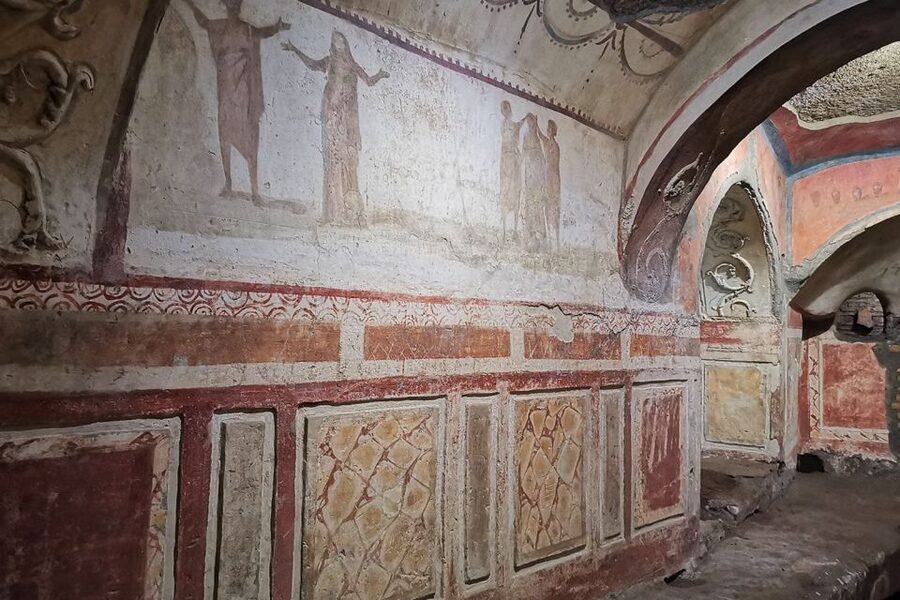
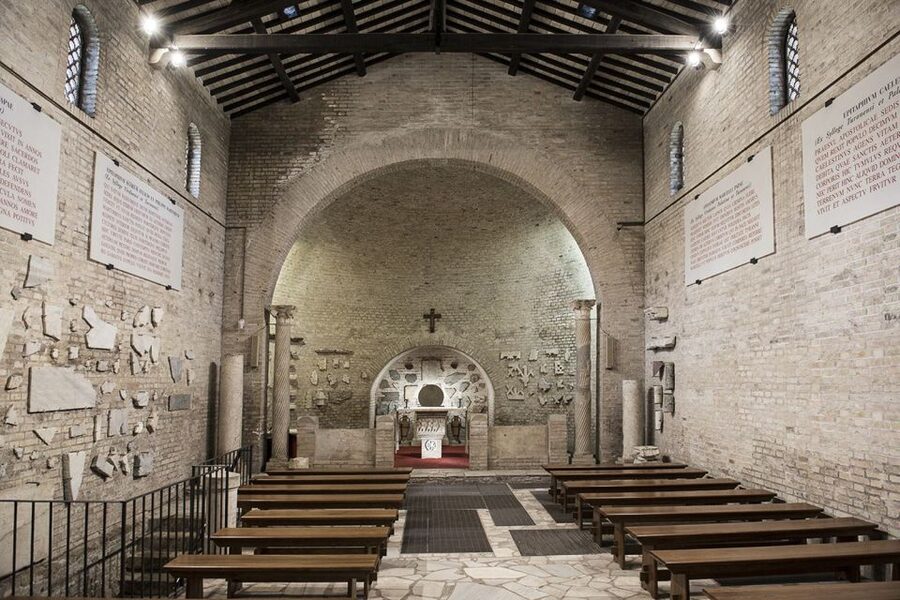
The catacomb includes an adjacent cryptoporticus with the Greek Chapel and a large underground room connected to an earlier noble family burial area. These spaces add another layer to the site because they show that the underground complex developed over time.
The hypogeum of the Acili began as a water cistern. Inscriptions connected with the Acili family were found there and are now exhibited. This is a useful reminder that the site combines several types of evidence: painted decoration, burial chambers, inscriptions, and the physical remains of earlier construction.
You may find this part less immediately dramatic than the paintings. There is no grand Roman hall or huge statue to create a quick visual punch. Its value comes from the story of reuse and change. A cistern became a burial space, existing galleries became a Christian cemetery, and several areas were eventually connected.
A good guide makes these changes easy to follow. Several guides have been praised for answering questions, using humor, and challenging small groups to think about what they are seeing. Clara, Alexandra, Sister Lydia, and Sister Lidia are names associated with especially warm and informative tours.
The language choices are Italian, English, and Spanish. If English is important to you, check the available starting time when you book. One assessment found the guide’s English less clear than ideal, but this appears to be an exception rather than the general experience.
Martyrs, Popes, and the People Buried Here
Priscilla is also important because of the people associated with it. Among the martyrs connected with the catacomb are Felice and Filippo, their mother Saint Felicita, and Felicita’s other sons: Alessandro, Marziale, Vitale, Silano, and Gennaro. They were probably martyred during the reign of Diocletian.
Several popes were also buried at Priscilla:
- Marcellino, who served from 296 to 304
- Marcello, 308 to 309
- Silvestro, 314 to 335
- Liberius, 352 to 366
- Siricius, 384 to 399
- Celestino, 422 to 432
- Vigilius, 537 to 555
You will not be walking through a fully intact cemetery with all these bodies still in place. The burial chambers are empty, and remains were moved. That fact is worth knowing before you arrive, since the experience is about the archaeological spaces, inscriptions, art, and historical setting rather than viewing human remains.
The association with martyrs and popes gives the tour a strong religious dimension. You do not need to be religious to appreciate the site, but you should expect the guide to discuss faith as well as archaeology. The most effective tours appear to explain both without treating one as separate from the other.
Near the basilica in Villa Ada, a museum displays hundreds of sarcophagus fragments found during excavations around the catacomb. The basilica itself was built by Pope Saint Silvestro in connection with the tomb of Felice and Filippo. The supplied tour details focus mainly on the catacomb visit, so do not assume the museum and basilica are part of the 45-minute guided route unless staff confirm it.
More Catacombs and Underground City Tours in Rome
- Rome: Guided Roman Catacombs Tour with Transfers
★ 4.6 · 1,830 reviews - Rome: Catacombs Guided Tour with Transfer
★ 4.2 · 1,808 reviews - Rome EBike Tour: Appian Way, Catacombs & Roman Aqueducts
★ 5.0 · 1,766 reviews - Rome: Catacombs and Capuchin Crypt Guided Tour with Transfer
★ 4.6 · 1,606 reviews
How the Guides Shape the Experience
The guide is central here. Without explanation, you would see dark passageways, wall niches, and fragments of old decoration. With a good guide, the same spaces become a story about Roman burial customs, early Christian communities, art, and memory.
The strongest praise has gone to guides who combine facts with a friendly manner. Sister Lydia and Sister Lidia have been singled out for kindness, humor, and clear explanations. Alexandra has been praised for her command of the subject, while Clara added extra time and patiently answered questions.
Some guides have also used questions to make the visit more active. That approach works well in a small group because you can stop and think rather than simply follow a speech. Families with teenagers have found the visit accessible and interesting, especially when the guide explains the paintings and burial practices in plain language.
The experience is not a self-guided wander. You follow the guide through the approved route, which matters in a site with many corridors and turns. The structure reduces the chance of getting lost and makes the limited time useful.
Still, guide quality can vary by language and departure. The tour is not a substitute for a specialist archaeological lecture, and some explanations may feel more religious than academic. For most visitors, that blend is part of the appeal. If you want only secular archaeology, check the tone before booking.
Price, Timing, and Practical Comfort
At $16 per person, the tour offers good value if you care about ancient art and the development of Christianity in Rome. Your ticket includes entrance and the guided visit, so you are paying for both access and interpretation.
The price is especially fair because the site is not one of Rome’s standard headline attractions. You are not paying a premium for a huge monument or a long museum circuit. Instead, you get a focused visit to a historic underground complex with a small group.
You need to cover your own transportation. The catacombs are on Via Salaria, away from the Colosseum and the Trevi Fountain area. Public buses can reach the area at low cost, but the exact route depends on where you are staying. Allow extra time for the journey and follow the advice to arrive at least 10 minutes before the tour.
Wear comfortable shoes. The route includes narrow underground passages, and the catacombs are not suitable for people with mobility impairments. Baby strollers are not allowed.
The underground setting can be welcome in Rome’s summer heat. At the same time, it is cool below ground, so a light layer is sensible. The location is dark, enclosed, and quiet. That makes it atmospheric, but visitors who dislike confined spaces may not enjoy it.
You can cancel up to 24 hours before the scheduled activity for a full refund. Starting times vary, so check availability before building the rest of your day around the visit.
Who Will Enjoy Priscilla Most?
I would recommend this tour to you if you like:
- Early Christian art and religious history
- Archaeology presented in a compact format
- Burial customs and the daily realities behind ancient monuments
- Small groups rather than large city tours
- Quiet sites that feel different from Rome’s major attractions
- A short indoor activity during hot weather
Families can do well here, especially with older children and teenagers who can listen carefully and handle a dark, narrow setting. The visit has enough unusual detail to hold attention, but younger children may find the burial subject or low-light corridors difficult.
It is also a good second or third Rome activity. After the Colosseum, Forum, Vatican, and Trevi Fountain, Priscilla changes the pace. You move from public power and imperial display to private burial and community belief.
I would hesitate to book it if you need step-free access, dislike enclosed spaces, or expect a large collection of visible tombs. It is also not ideal if your main goal is photography, since cameras are prohibited inside.
Should You Book the Catacombs of Priscilla?
Book this tour if you want a short, well-priced look at early Christian Rome and you value a guide who can explain what the walls and paintings mean. The small groups, strong guide feedback, and unusually old artwork make it more than a generic underground attraction.
Skip it if your Rome schedule is packed with major monuments and you do not want to spend time reaching Via Salaria. Also skip it if you need accessible routes or prefer open, brightly lit places.
For most history-minded visitors, I would book it after the main sights rather than instead of them. The Catacombs of Priscilla will not deliver the scale of the Colosseum. It offers something quieter: old paintings in their original setting, a former quarry adapted for burial, and a direct look at how early Christians remembered their dead.
FAQ
How long does the Catacombs of Priscilla tour last?
The scheduled guided tour lasts 45 minutes. Some visits may run a little longer depending on the guide and the group.
How much does the experience cost?
The listed price is $16 per person. It includes the entrance ticket and guided tour.
Where is the Catacombs of Priscilla?
The catacombs are located on Via Salaria in Lazio, outside Rome’s main ancient center.
Is transportation included?
No. Hotel pick-up, hotel drop-off, and transportation are not included. You must reach the catacomb on your own.
How early should I arrive?
Go directly to the catacomb ticket office and show your reservation at least 10 minutes before the scheduled tour.
Which languages are available?
The guided tour is offered in Italian, English, and Spanish.
How large is the group?
The tour is limited to a maximum of 10 participants.
Can I take photographs inside?
No. Photography is not allowed inside the catacombs. Postcard prints of the artwork may be available for purchase.
Is the tour suitable for people with mobility impairments?
No. The experience is not suitable for people with mobility impairments, and baby strollers are not allowed.
Just added around Rome
- Rome: St Peter’s Basilica Express Tour & Grottoes★ 4.3 · 126 reviews
- St. Peter’s Basilica Full Guided Tour with Vatican Grottoes★ 4.6 · 286 reviews
- St. Peter’s Basilica and Vatican Grottoes Tour★ 4.9 · 120 reviews
- Rome: Appian Way, Aqueducts, & Catacombs E-Bike Guided Tour★ 4.9 · 54 reviews
- Rome: Trevi Fountain Underground Small Group Tour★ 4.4 · 47 reviews
- Rome: Underground Trastevere Guided Walking Tour★ 4.8 · 87 reviews
- Rome: Tour of St. Clement’s Basilica Underground Temples★ 4.8 · 242 reviews
- Rome underground hidden temples, ruins, and secret basilicas★ 3.7 · 21 reviews
Catacombs & Underground City Tours, compared.
Catacombs of San Gennaro Entry Ticket & Guided Tour
Read our review →
Capuchin Crypts and Catacombs Tour with Transfers
Read our review →
The Original Roman Crypts and Catacombs Tour with Transfers
Read our review →
Catacombs of St. Callixtus Entry Ticket & Guided Tour
Read our review →

Full Day Cappadocia Tour( Red Tour + Underground City )
Read our review →