Review · CATACOMBS & UNDERGROUND CITY TOURS
Rome: Trastevere Underground Crypt and Jewish Ghetto tour
Ancient Rome hides below street level. This 150-minute walk links quiet Trastevere lanes with Santa Cecilia’s crypt, Tiber Island, and the Jewish Ghetto. I like the small group of no more than 12 and the way the route connects art, faith, disease, and community instead of treating Rome as a collection of famous monuments. I also like the personal storytelling, especially when Federica leads the walk.
The main consideration is pace. You cover several neighborhoods on foot, and the crypt and holy sites require appropriate clothing covering your shoulders and knees. At $65, this is not a cheap stroll, but the included crypt entry and access to places that are easy to miss make the price reasonable for visitors who want context, not just photographs.
Key points to know before booking

- Five meters below Santa Cecilia: Visit an underground crypt where ancient ruins lie beneath the modern church.
- A quiet side of Trastevere: Begin among narrow lanes and peaceful corners away from the district’s busiest restaurant streets.
- Bernini in a church setting: See a statue by the famous sculptor inside San Francesco a Ripa.
- A walk across Tiber Island: Learn how the island was used during old epidemics and why it mattered to Rome.
- The Jewish Ghetto finale: Finish in one of Rome’s oldest districts, with 300 years of hardship and community history.
- A genuinely small group: The guaranteed maximum of 12 makes it easier to hear stories and ask questions.
Why this route feels different from standard Rome walks
Rome can feel like one grand monument after another. This tour takes a quieter approach. You begin in Trastevere, but not with a checklist of the neighborhood’s most photographed corners. Instead, the route uses smaller churches, underground remains, an island in the Tiber, and the Jewish Ghetto to show how Rome has changed layer by layer.
I like that structure. The tour is not only about looking at old buildings. You learn why some places were built where they were, why ruins ended up below today’s streets, and how religious and civic life shaped the city.
The route also has a useful geographical flow. You start at Piazza di San Francesco d’Assisi, cross toward Tiber Island, and finish at Piazza Mattei in the Jewish Ghetto. You are not simply circling one attraction. You are walking through a sequence of neighborhoods that connect naturally.
The tone should suit you if you prefer stories and setting over a long list of dates. Federica has been praised for holding attention for the full two and a half hours, with clear explanations and engaging stories. That matters on a walking tour, since even an interesting place can lose its appeal if the guide turns the visit into a lecture.
More Catacombs and Underground City Tours in Italy
- Rome: Capuchin Crypts and Catacombs Tour with Transfers
★ 4.6 · 6,456 reviews - The Original Roman Crypts and Catacombs Tour with Transfers
★ 4.5 · 4,896 reviews - Rome: Catacombs of St. Callixtus Entry Ticket & Guided Tour
★ 4.6 · 3,037 reviews
Starting in Trastevere at San Francesco a Ripa
Meet by the church of San Francesco a Ripa in Piazza di San Francesco d’Assisi. This is a calm opening point for a tour that aims to get away from Rome’s loudest crowds.
Trastevere is famous for narrow lanes, old façades, and a relaxed neighborhood feel. The route focuses on quieter spots rather than rushing you through the district’s best-known streets. I like this choice because Trastevere is more enjoyable when you have time to look around. The charm is often in the small details: a side entrance, a church interior, or a lane that suddenly opens onto a square.
San Francesco a Ripa is also important because it contains a sculpture by Bernini. You are not seeing his work in a museum display with a label and a rope around it. You encounter it in a working church, where the setting is part of the experience.
That religious setting means you need to dress with care. Clothing should cover your shoulders and knees. This is not a difficult requirement, but it can catch people out during hot Roman weather, especially if they have planned a day in shorts and sleeveless tops.
Santa Cecilia and the five-meter descent
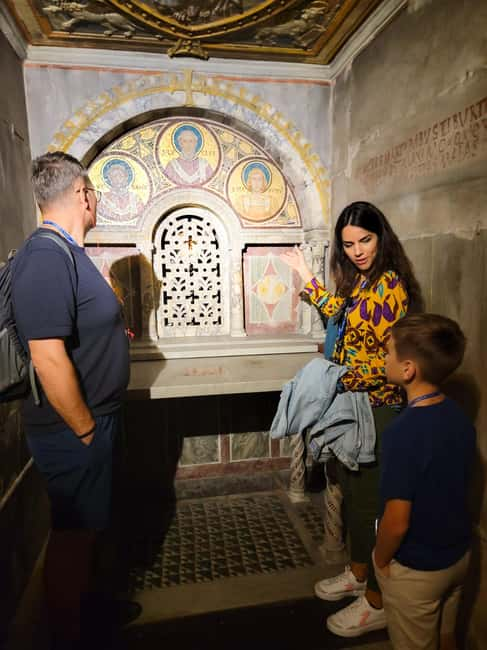
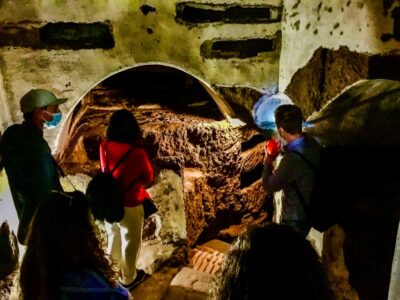
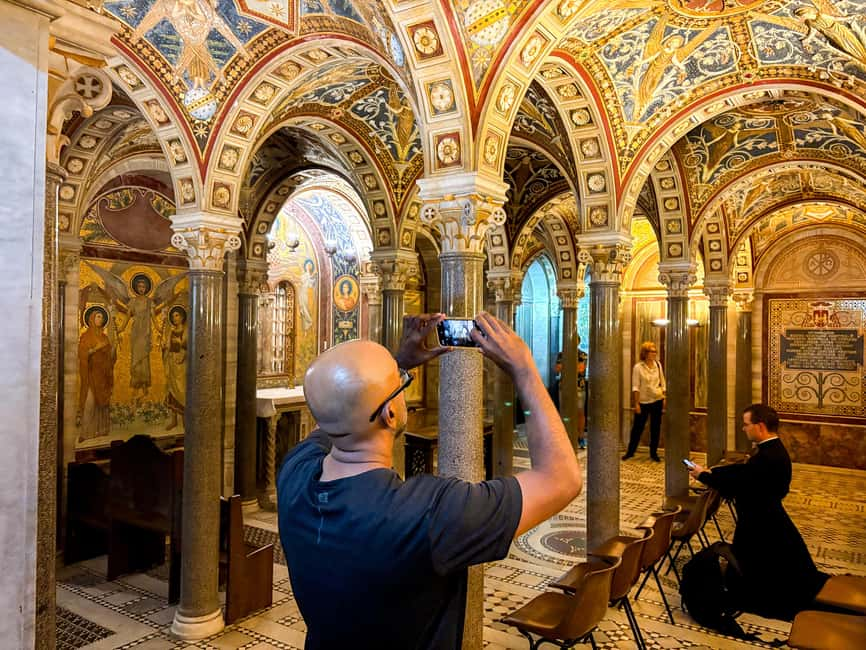
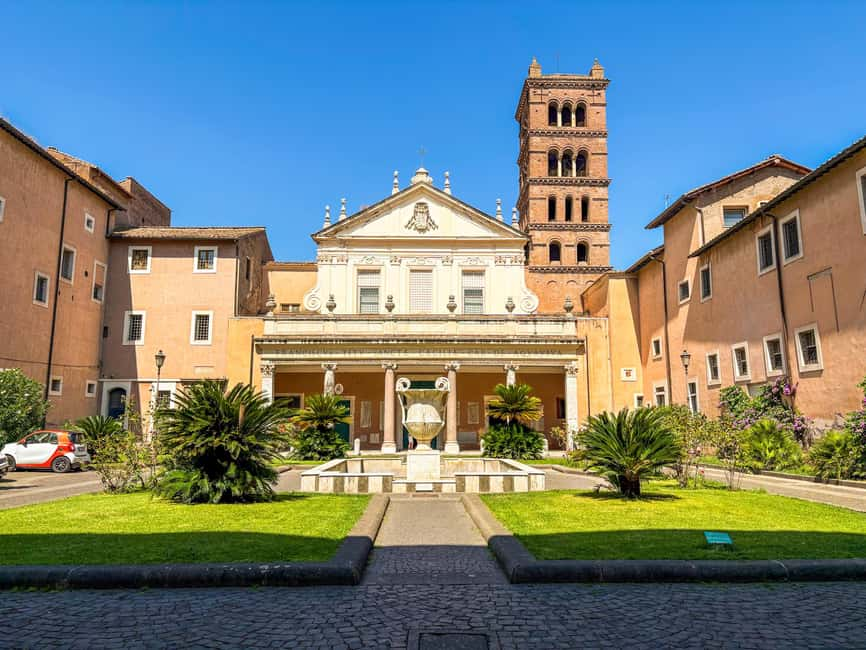
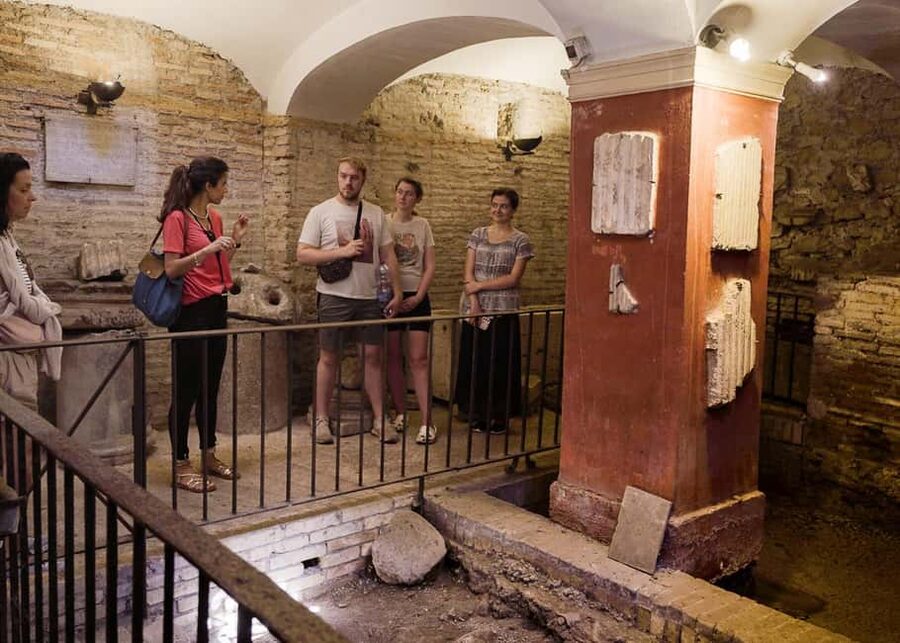
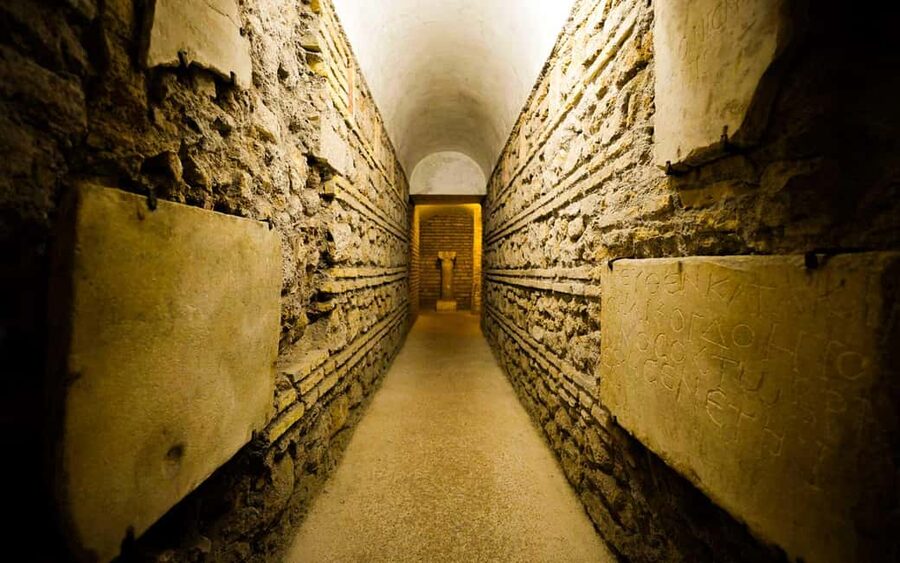
The visit to the Church of Santa Cecilia is the tour’s most distinctive feature. With special access from the nuns, you go down into the underground crypt, where ancient ruins sit about five meters below the present street level.
This is where the idea of Rome’s layers becomes real. You are not just told that the city was built and rebuilt over centuries. You see the physical result: modern streets above churches, churches above earlier structures, and ancient remains below them all.
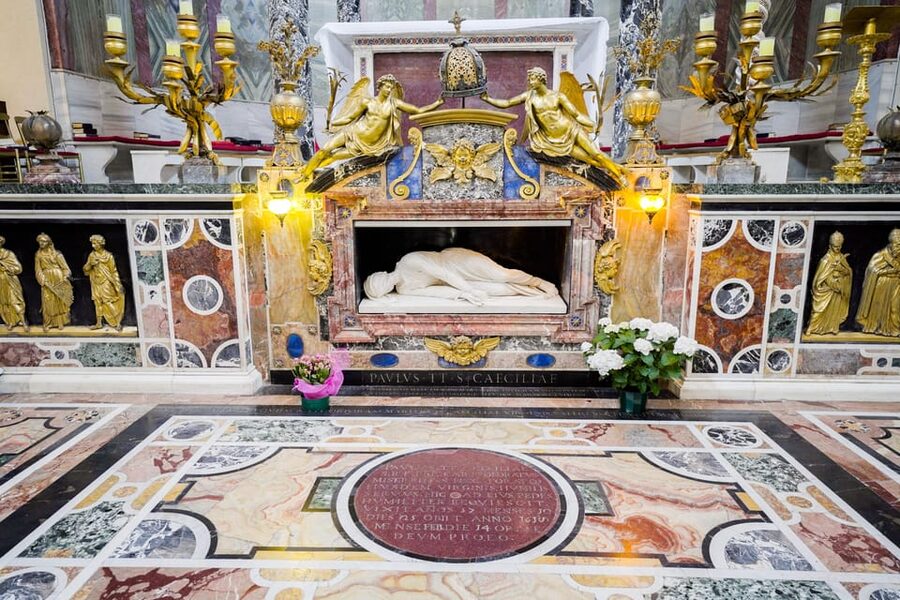
The tour also introduces the adventurous story of St. Cecilia. Her story gives the visit a human focus, while the crypt shows how the city’s physical past remains underfoot. I find that combination more memorable than hearing a disconnected account of ruins.
The crypt is included in the $65 price, which helps explain the cost. Admission alone is not the only value here. Your guide provides the background that allows the underground space to make sense, and the special access gives this part of the walk a more personal feel.
You should keep your expectations measured. This is a guided visit to an underground crypt, not a large archaeological complex with hours of independent exploration. The reward is the atmosphere, the story, and the chance to see a part of Rome that many visitors pass without noticing.
The real lesson of Rome’s underground layers
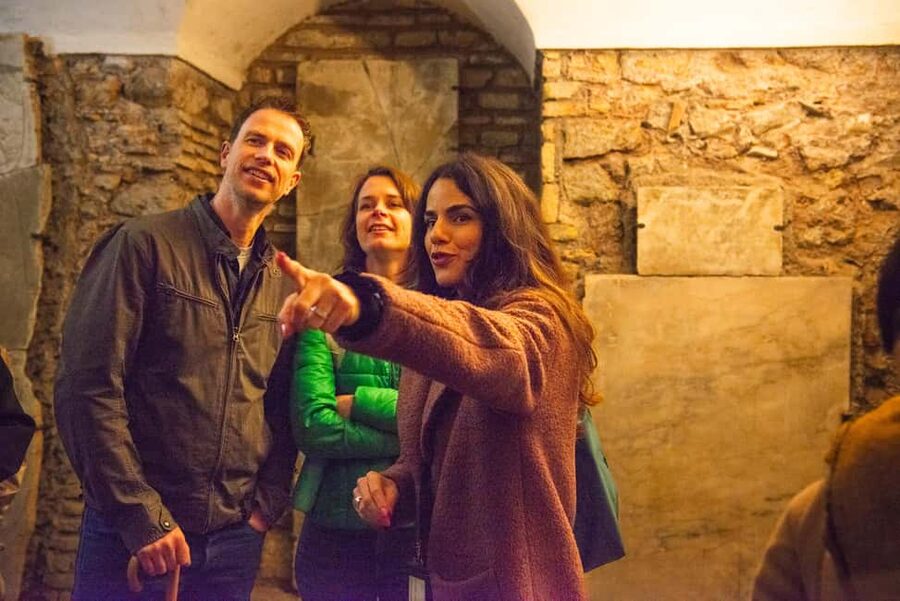
Rome has been occupied, rebuilt, repaired, and adapted for centuries. Streets rose, buildings changed purpose, and older structures were covered or built over. This tour uses Santa Cecilia to explain that process in a way that is easy to understand.
I like tours that give you a tool for reading the rest of a city. After seeing the crypt, you may notice raised doorways, steps leading below modern ground level, or ancient stone reused in later buildings. The experience helps you understand why Rome can feel older than its visible monuments suggest.
The underground stop also breaks up the walk. You begin outside among Trastevere’s lanes, move into church interiors, descend below the street, and later return to the open air by the river. That change of pace keeps the 150-minute outing from feeling like one long pavement march.
More Catacombs and Underground City Tours in Rome
- Rome: Guided Roman Catacombs Tour with Transfers
★ 4.6 · 1,830 reviews - Rome: Catacombs Guided Tour with Transfer
★ 4.2 · 1,808 reviews - Rome EBike Tour: Appian Way, Catacombs & Roman Aqueducts
★ 5.0 · 1,766 reviews - Rome: Catacombs and Capuchin Crypt Guided Tour with Transfer
★ 4.6 · 1,606 reviews
Tiber Island and Rome’s oldest bridge
From Santa Cecilia, the walk continues toward Tiber Island. The island has a practical, sometimes grim connection to Rome’s past. It was used to keep sick people away from the wider population during old epidemics.
That detail shows how geography shaped public health before modern medicine. An island offered separation, and the river created a natural boundary. The stop is valuable because it shifts the tour away from art and religion and toward the daily problems faced by an ancient city.
You then cross one of Rome’s oldest bridges. The tour connects the bridge with Julius Caesar and Cleopatra, adding a lively historical thread to the crossing. This is the sort of detail that makes a short walk feel connected to the larger story of Rome.
The bridge and island are also useful transition points. You move from Trastevere to the Jewish Ghetto, crossing not just water but a line between different parts of the historic center. The route keeps unfolding instead of repeating the same kind of sight.
The Jewish Ghetto and 300 years of community history
The tour ends in the Jewish Ghetto, with Piazza Mattei as the final point. This district is one of the oldest parts of Rome, and its story includes 300 years of hardship, restriction, and community strength.
The area deserves more than a quick photograph of a fountain or a restaurant stop. A good visit helps you understand how Jewish life in Rome developed under difficult conditions and how the community endured. The tour’s focus is on history and resilience rather than treating the neighborhood as just another picturesque quarter.
This is one of the strongest reasons to choose the experience. Many first-time visits to Rome concentrate on ancient ruins, Renaissance art, and the Vatican. Those are worthwhile, but the Jewish Ghetto adds another essential part of the city’s story.
Finishing at Piazza Mattei is practical. You end in a central historic area rather than returning to the starting point. The tour does not provide onward transportation, so you will need to continue on foot or make your own arrangements after the walk, but the central finish makes it useful for planning the rest of your day.
What the $65 price really buys you
At $65 per person, this is priced above a basic neighborhood stroll. The question is what you receive in return.
You get a live English-speaking guide, a guaranteed maximum of 12 people, and admission to the underground crypt. The smaller group is important. In a church or narrow street, a group of 30 can become a moving crowd. With 12 or fewer, you have a better chance of hearing the explanation and asking a question without losing the guide.
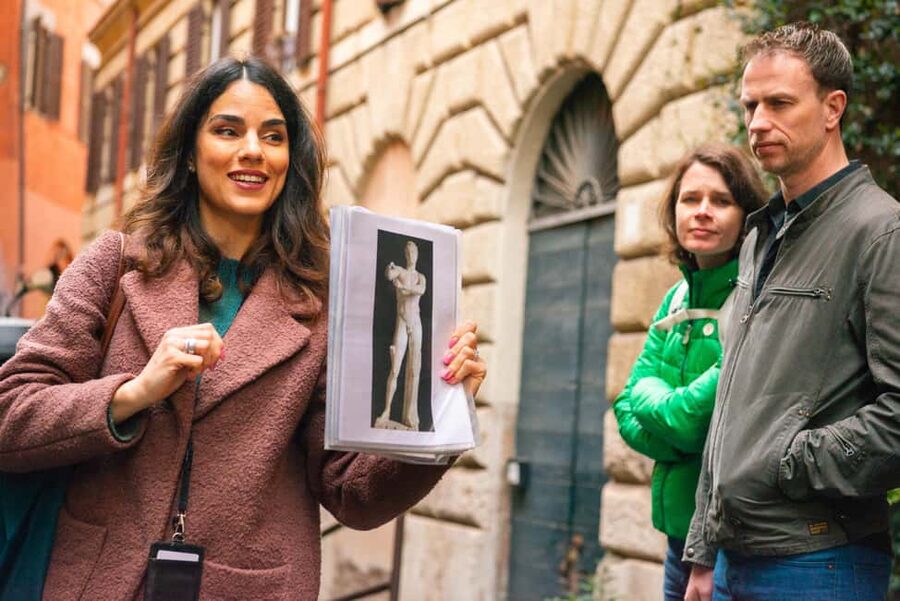
The guide is the other major part of the value. Federica receives especially strong praise for her storytelling, friendly manner, and ability to keep the group engaged for the entire two and a half hours. Her approach appears to focus on memorable stories and clear explanations rather than dry information.
I would consider the price fair if you value interpretation and access. It is less appealing if you mainly want free time for photography or prefer to explore at your own speed. The route has several stops, but the experience is built around the guide’s narration, so your enjoyment will depend partly on how much you like guided walking tours.
Free cancellation up to 24 hours before the start and the option to reserve now and pay later also reduce the risk of booking. You can keep plans flexible, which is useful in Rome when heat, crowds, or changing schedules affect the day.
Who will enjoy this walking tour most
This tour is a strong choice for first-time visitors who want to go beyond Rome’s headline sights. It gives you a useful introduction to Trastevere, the Tiber, and the Jewish Ghetto without requiring a full day.
It also suits returning visitors. If you have already seen the Colosseum, Trevi Fountain, or St. Peter’s Basilica, the underground crypt and quieter churches offer a different view of the city.
Families can join, and the stories may work well for older children who enjoy tales of saints, ancient ruins, bridges, and epidemics. The 150-minute length is manageable, but parents should consider the amount of walking and the need to dress children appropriately for the holy sites.
I would also recommend it to anyone interested in religious art or the way Rome’s past remains visible beneath modern life. The experience is less suitable if you want a museum-style tour with extensive time inside each location, or if stairs and walking are a serious concern. The supplied details do not describe accessibility arrangements, so ask before booking if you need specific assistance.
Practical advice for a smoother visit
Wear comfortable walking shoes. The route passes through several neighborhoods, and the experience is designed as a continuous walk rather than a series of vehicle transfers.
Dress for church visits from the start. Covering shoulders and knees is required, and it is easier to plan one suitable outfit than to improvise at the church entrance.
Allow the full two and a half hours. The crypt, church visits, river crossing, and Jewish Ghetto all need time for explanation. This is not a quick orientation walk that ends after an hour.
Arrive at San Francesco a Ripa with enough time to find the meeting point. The start is by the church in Piazza di San Francesco d’Assisi, not at the final stop in Piazza Mattei.
The tour is offered in English with a live guide. Direct phone or WhatsApp contact is available for questions about the experience, which is useful if you need to confirm meeting details before setting out.
Should you book the Trastevere crypt and Jewish Ghetto tour?
Book it if you want a small, story-driven walk through parts of Rome that are easy to overlook. The underground crypt, Bernini sculpture, Tiber Island, old bridge, and Jewish Ghetto create a varied afternoon or morning, and the route gives each stop a clear place in Rome’s wider story.
I would especially choose it for a first or second day in Rome, when you want to understand the city before exploring more on your own. The main drawbacks are the $65 price, the amount of walking, and the need to follow a set pace.
If Federica is leading your departure, you can expect a warm and engaging style based on the strongest feedback about her work. For a group that values local stories, smaller sites, and a look below the surface of Rome, this is a sound use of two and a half hours.
FAQ
How long does the tour last?
The tour lasts 150 minutes, or two and a half hours.
Where does the tour begin?
It begins by the Church of San Francesco a Ripa in Piazza di San Francesco d’Assisi.
Where does the tour finish?
The tour finishes at Piazza Mattei in Rome’s Jewish Ghetto.
Is entry to the underground crypt included?
Yes. The entry ticket to the underground crypt is included.
What language is the tour conducted in?
The tour is conducted in English with a live guide.
What should I wear?
You should wear clothing that covers your shoulders and knees because the tour includes visits to holy areas.
Just added around Rome
- St. Peter’s Basilica and Vatican Grottoes Tour★ 4.9 · 120 reviews
- Rome: St Peter’s Basilica Express Tour & Grottoes★ 4.3 · 126 reviews
- St. Peter’s Basilica Full Guided Tour with Vatican Grottoes★ 4.6 · 286 reviews
- Rome: Appian Way, Aqueducts, & Catacombs E-Bike Guided Tour★ 4.9 · 54 reviews
- Rome: Trevi Fountain Underground Small Group Tour★ 4.4 · 47 reviews
- Rome: Underground Trastevere Guided Walking Tour★ 4.8 · 87 reviews
- Rome: Tour of St. Clement’s Basilica Underground Temples★ 4.8 · 242 reviews
- Rome underground hidden temples, ruins, and secret basilicas★ 3.7 · 21 reviews
Catacombs & Underground City Tours, compared.
Catacombs of San Gennaro Entry Ticket & Guided Tour
Read our review →
Capuchin Crypts and Catacombs Tour with Transfers
Read our review →
The Original Roman Crypts and Catacombs Tour with Transfers
Read our review →
Catacombs of St. Callixtus Entry Ticket & Guided Tour
Read our review →

Full Day Cappadocia Tour( Red Tour + Underground City )
Read our review →