
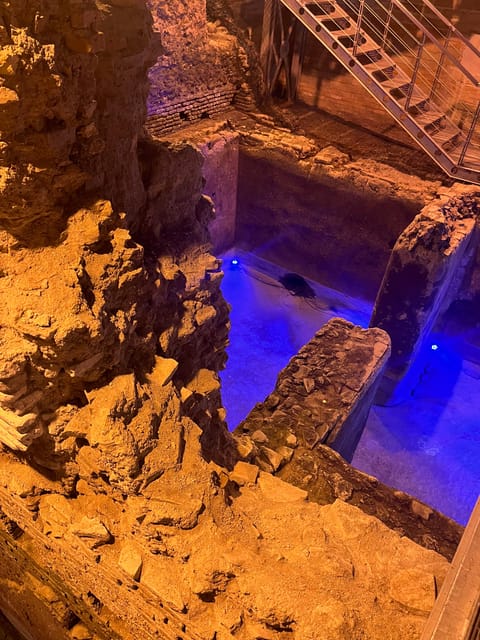
Review · ROME CAVE TOURS
Rome: Trevi Fountain District Underground Tour and Ice Cream
Rome’s best stories often sit below street level. This one pairs the Vicus Caprarius archaeological area with a short look at the Trevi Fountain, so you see both the famous monument and the older world beneath it. I especially like the close look at Imperial Age coins, amphorae, and water channels, plus the way guides such as Carla, Erica, Noemi, and Alessia bring the archaeology to life.
I also like the cool underground setting, especially on a hot Roman afternoon, and the gelato voucher is a pleasant finish rather than an afterthought. The main drawback is scale: the archaeological site is small, and the one-hour tour gives you only a brief introduction. The $52 price is reasonable if you want a focused guided visit, but it is not a bargain for anyone expecting a large excavation or a full Trevi Fountain tour.
Key points to know before booking

- Ancient water still shapes the story: You see how water from the Trevi area passes through old masonry and connects with the remains of a Roman residence.
- Vicus Caprarius is compact but packed with detail: Three sections of the antiquarian site contain coins, marble fragments, amphorae, and architectural remains.
- The guide makes the difference: Carla, Erica, Noemi, Alessia, and other English-speaking guides receive especially strong praise for clear explanations, humor, and patience with children.
- Trevi Fountain time is brief: Expect about five minutes of guided discussion at the fountain, not a long private viewing or a special route through the crowd.
- The underground rooms offer a cool break: The site can be a welcome escape from Rome’s summer heat.
- Gelato comes by voucher: You receive a voucher for Italian gelato at a historic shop near the fountain, and you may have some flexibility about when to use it.
Starting at Vicolo del Puttarello 25
The tour begins at Vicolo del Puttarello 25, close to the Trevi Fountain. Arrive at least 15 minutes early. The Trevi area can be hard to cross when crowded, and one group was delayed by the crowds before joining successfully with help from the operator.
This is not a hotel pickup tour. You make your own way to the meeting point, so allow extra time if you are coming from another part of central Rome. The meeting point is in a busy district, where a few minutes spent finding the entrance is far better than arriving breathless at the last moment.
The whole experience lasts about one hour. That short length is useful if you have a packed sightseeing day, but it also sets the right expectation. This is a concentrated introduction, not an all-day archaeology lesson.
More Dessert Tours around Rome:
- 4×4 ATV Experience, Water Cave, Chocolate and Coffee Tasting
★ 5.0 · 1,430 reviews - Tangier: Sunset, Tea, Sweets, Camel Ride, and Hercules Caves
★ 4.9 · 575 reviews - ATV Adventure w/ Chocolate, Coffee & Cave Swim in Punta Cana
★ 5.0 · 178 reviews
Entering the underground City of Water
The main part of the tour takes place at Vicus Caprarius, with about 40 minutes inside the archaeological area. The site reveals several layers of Rome beneath the modern streets. This is the sort of place that can look modest at first glance, yet become much more interesting once someone explains what you are seeing.
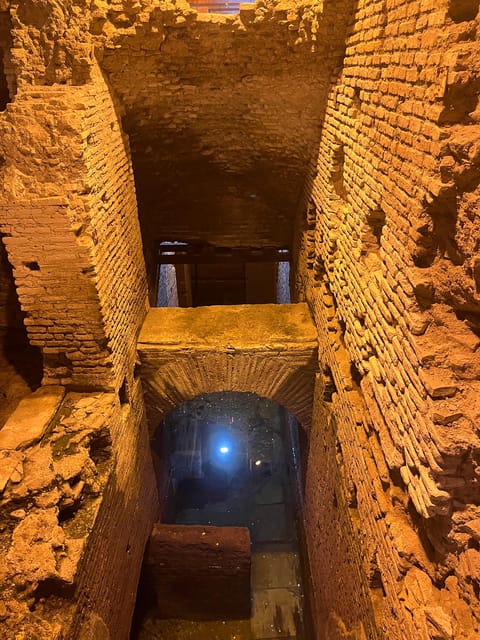
The district is linked to Rome’s old water network, including the Virgo aqueduct. Guides explain why this part of the city is sometimes called the City of Water. You learn how water reached the area, how it moved through masonry, and how the system supplied pools and pipes connected with the luxurious Domus residence.
That connection gives the visit a useful focus. Instead of looking at disconnected walls, you can follow a basic Roman chain: water enters the area, masonry directs it, and an upper-class residence benefits from the supply. The subject is ancient engineering, but the guide keeps bringing it back to daily Roman life.
The underground rooms are also a practical change from the open plaza above. Several people have found the cooler air especially welcome during hot weather. Comfortable shoes are important, since you are walking through an archaeological site rather than a polished modern museum.
The Domus residence and Roman water engineering
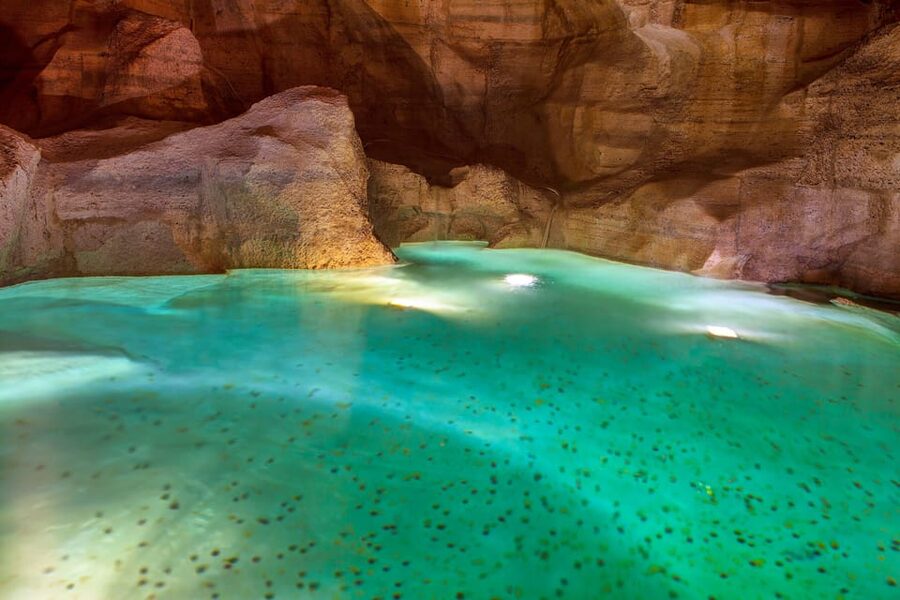
One of the most interesting parts is the Domus residence. The remains suggest a substantial home with decorative finishes and access to water. The guide helps you picture how status in Imperial Rome could be expressed through architecture, marble, and private water features.
The water story is the real thread tying the site together. Water from the Trevi area filters through ancient masonry and continues toward pipes and pools associated with the Domus. You are not simply looking at an old house. You are seeing how Roman construction adapted to the flow of water beneath the city.
This is where the tour works best for anyone who likes Roman engineering. The ruins are not enormous, and you will not walk through a complete palace. Still, the guide’s explanation gives meaning to details that would be easy to miss on your own.
The archaeological area is divided into three sections. Each contains different traces of the past, and the guide moves you through them while explaining how the finds fit together. The compact layout means you can stay close to the guide, although crowded sessions may feel tight.
Coins, amphorae, and colorful marble
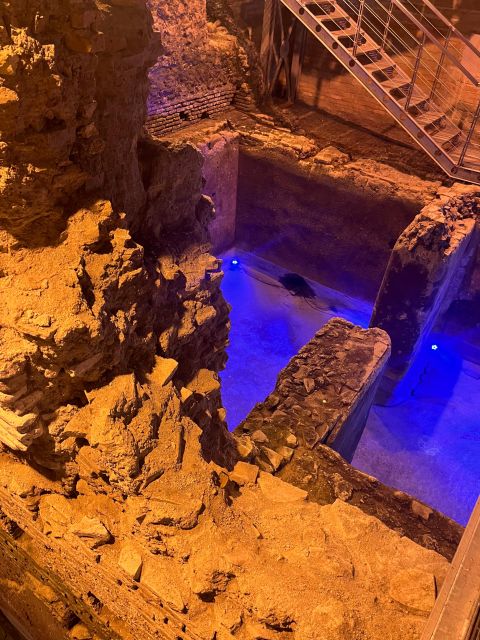
The objects found during excavation add life to the stonework. You can see ancient coins and amphorae dating from the Imperial Age, along with precious polychrome marble coverings. These details help shift the site from a purely structural visit to one about people, trade, wealth, and taste.
A particularly notable find is the head of Alessandro Helios. The site also produced a treasure of about 800 coins. That number gives you a sense of how much ordinary activity can remain buried beneath a famous modern city.
The Spatheia is another unusual object. It is an African amphora used to transport oil, linking this small Roman site with wider movement of goods across the ancient world. You do not need a specialist background to follow the explanation, and the guides generally make the artifacts accessible rather than turning the visit into a technical lecture.
The guide is the key here. Carla is praised for clear and welcoming explanations, while Erica is often singled out for her command of Roman culture and the site itself. Noemi is described as both funny and well informed, and Alessia receives praise for making the material easy to follow. Names and personalities vary by departure, of course, but the repeated pattern is clear: the experience depends heavily on who leads your group.
A few more cave trips around Rome worth a look
- Colosseum: Underground and Ancient Rome Tour
★ 4.7 · 12,691 reviews - Rome: Capuchin Crypts and Catacombs Tour with Transfers
★ 4.6 · 6,456 reviews - Expert Guided Tour of Colosseum Arena OR Underground, and Forum
★ 4.5 · 5,041 reviews - The Original Roman Crypts and Catacombs Tour with Transfers
★ 4.5 · 4,896 reviews
A short Trevi Fountain visit
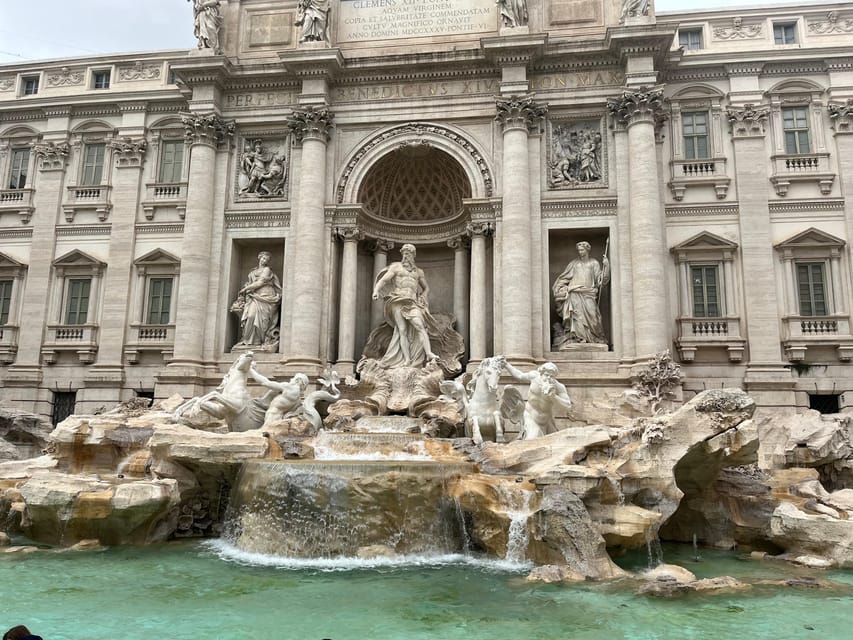
After the underground portion, the tour moves to the Trevi Fountain. The guided discussion here lasts about five minutes, so it is best understood as a compact orientation rather than a full fountain visit.
The fountain is Rome’s largest Baroque fountain and one of the city’s most crowded sights. You make a wish, hear an explanation of the exterior, and get some advice about seeing and photographing it. A few guides have stayed a little longer to help with photos or suggest nearby places, but that extra attention should be viewed as a bonus, not a guaranteed part of the schedule.
The fountain portion may feel brief if you booked mainly for Trevi. One useful point is that the tour’s real subject is the underground archaeology and water system. The fountain provides the visible connection above ground.
Access can also depend on crowd conditions. The experience does not promise a private area or a skip-the-line entrance to the fountain. The listed site entry is reserved for Vicus Caprarius, while skip-the-line access is not included. If you want an unobstructed fountain visit, plan separate time around this tour.
Gelato near the fountain
The final treat is Italian gelato at a historic shop near Trevi Fountain. In practice, you receive a voucher rather than being escorted through a formal tasting. That arrangement has a useful advantage: you can decide when to use it, and the voucher may remain valid beyond the immediate end of the tour.
The gelato has been a real highlight for many people, with especially warm praise for its quality. It gives the tour a simple, enjoyable finish and lets you linger in the Trevi district after the guide’s formal work is done.
Keep in mind that the gelato stop is not a long food tour. You receive Italian gelato, not a full meal or a lesson in gelato production. Still, at the end of a history-focused visit, a cold dessert is a smart choice.
The guides make a small site worthwhile
The strongest part of this experience is the live English-speaking guide. The archaeological site is small, so a self-guided visit could leave you staring at walls and trying to guess what mattered. A good guide supplies the dates, connections, and stories that turn those remains into a readable picture of Rome.
Several guides are praised for more than factual information. They use humor, answer questions, give time for photos, and adjust their pace for children. One guide kept an active child engaged, while another was especially patient with families. Headsets have also been used, which helps when the group is in a confined area and the guide does not need to raise her voice.
The tone appears to be friendly rather than stiff. That matters in a short tour. You have little time for a slow introduction, so a guide who explains clearly and keeps the group moving adds real value.
At the same time, your experience will depend on the individual guide and the size of the group. One person found the site crowded even though the visit remained worthwhile. If you dislike enclosed spaces or busy tours, this is worth considering before you book.
Is $52 a fair price?
At $52 per person, this is not Rome’s cheapest one-hour activity. The price includes assistance, reserved entry to Vicus Caprarius, the guided archaeological visit, the Trevi Fountain portion, and Italian gelato.
I would judge the value by your interests. If you want a quick, guided look at Roman water systems and artifacts, the price is defensible. You are paying for interpretation as much as for admission. The guide explains the aqueduct, the Domus, the artifacts, and the layers beneath the modern street. That context is hard to get from a casual walk past the fountain.
If your main goal is simply to see Trevi Fountain and eat gelato, I would not choose this tour at $52. The fountain is only a short part of the schedule, and the underground rooms are modest in size. The better match is someone who wants a less obvious side of Rome and values an expert explanation.
The cancellation terms make planning less risky: you can cancel up to 24 hours before the start for a full refund, and reserve now while paying later. Those terms are useful, but they do not change the basic price calculation.
Who should take this tour?
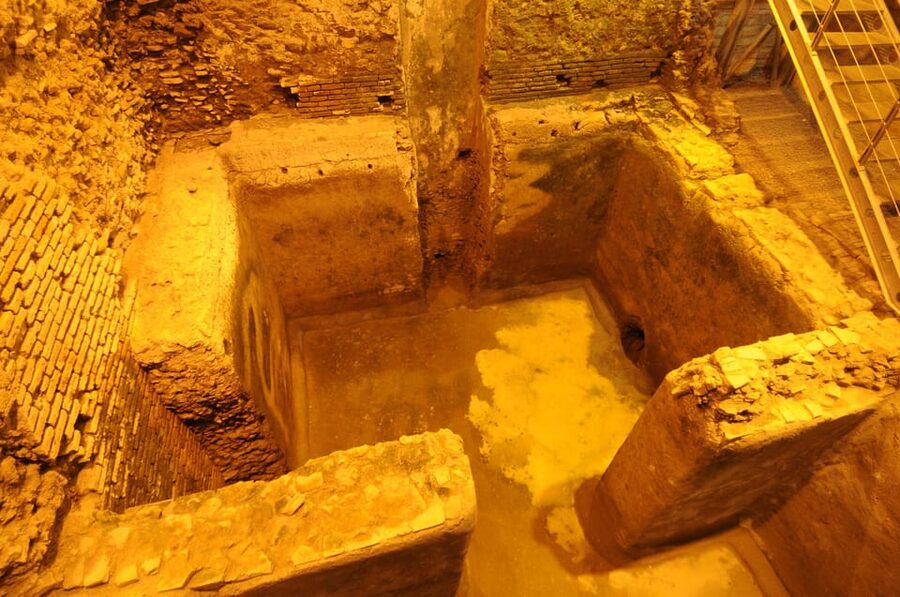
I would recommend it to first-time visitors who want more than the usual Rome highlights, especially if Roman engineering, aqueducts, archaeology, or ancient domestic life interest you. It also suits repeat visitors. Several people who had already been to Rome found the underground site a fresh surprise.
Families can do well here when children are comfortable walking through an archaeological setting. The guides have shown patience with children, and headsets can make listening easier. Still, the material is history-focused, and the site is not designed as a children’s attraction.
The tour is less suitable for anyone with mobility impairments or wheelchair users. Comfortable shoes are specifically advised. You should also avoid booking it if you want a long, detailed tour of the fountain itself, a large excavation, or a private crowd-free photo opportunity.
Practical tips for getting more from the hour
Arrive early, especially if you are walking through the Trevi crowds. Keep your meeting point details ready and allow more than the map’s shortest estimate.
Wear comfortable shoes. The underground visit is the heart of the experience, and you will get more from it if you are comfortable standing and walking through the site.
Bring questions about Roman water systems, the Domus, or the artifacts. Guides such as Erica, Carla, Noemi, and Alessia have been praised for answering questions, and the short format works better when you take part.
Use the fountain advice. The guided stop is brief, so listen for photo suggestions and then decide if you want to stay in the plaza afterward.
Treat the gelato voucher as flexible rather than an immediate appointment. The voucher arrangement may allow you to collect your gelato later, which is handy if the fountain area is too crowded right after the tour.
Should you book the Trevi underground tour?
Book this experience if you want to connect the famous fountain with the Roman water system below it. The best moments come from the aqueduct story, the Domus residence, the 800 coins, the African oil amphora, and the guide’s ability to explain why a small site matters.
Skip it if you want a grand excavation, extensive fountain access, or a low-cost way to see Trevi. For the right person, the $52 fee buys a focused lesson, a cooler hour underground, reserved archaeological entry, and a well-timed gelato. It is a specialist stop, but a rewarding one for anyone who wants Rome to be more than monuments and postcards.
FAQ
Where does the tour begin?
The meeting point is at Vicolo del Puttarello 25 in the Trevi district.
How long does the experience last?
The stated duration is one hour. The guided visit to Vicus Caprarius lasts about 40 minutes, followed by a short Trevi Fountain discussion and the gelato arrangement.
What language is the tour in?
The live guided tour is in English.
Is the Vicus Caprarius entrance included?
Yes. Reserved entry to Vicus Caprarius and the guided tour are included.
Is skip-the-line access included?
No. Skip-the-line entry is not included in the activity details.
Is Trevi Fountain access included?
A Trevi Fountain access ticket is listed as included, but the guided fountain portion is brief and takes place amid the public crowds.
What artifacts can I see?
The site includes ancient coins and amphorae, polychrome marble coverings, the head of Alessandro Helios, a collection of about 800 coins, and a Spatheia amphora used to transport oil.
Is gelato included?
Yes. Italian gelato is included through a voucher for a historic gelato shop near the Trevi Fountain.
What should I bring?
Wear comfortable shoes. You should also arrive at least 15 minutes before your selected start time.
Is the tour suitable for wheelchair users?
No. The activity is not suitable for wheelchair users or people with mobility impairments.
Just added around Rome
- St. Peter’s Basilica and Vatican Grottoes Tour★ 4.9 · 120 reviews
- Rome: St Peter’s Basilica Express Tour & Grottoes★ 4.3 · 126 reviews
- St. Peter’s Basilica Full Guided Tour with Vatican Grottoes★ 4.6 · 286 reviews
- Rome: Appian Way, Aqueducts, & Catacombs E-Bike Guided Tour★ 4.9 · 54 reviews
- Rome: Trevi Fountain Underground Small Group Tour★ 4.4 · 47 reviews
- Rome: Underground Trastevere Guided Walking Tour★ 4.8 · 87 reviews
- Rome: Tour of St. Clement’s Basilica Underground Temples★ 4.8 · 242 reviews
- Rome underground hidden temples, ruins, and secret basilicas★ 3.7 · 21 reviews
Rome Cave Tours, compared.
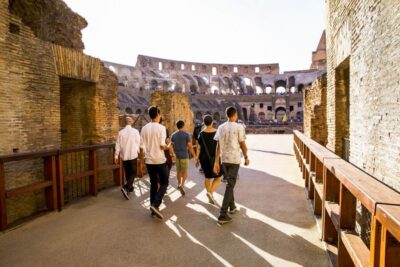
Colosseum: Underground and Ancient Rome Tour
Read our review →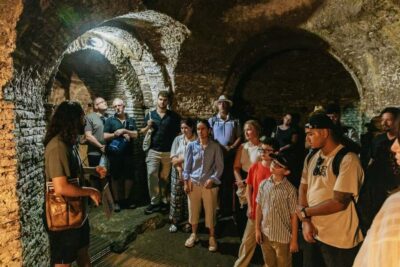
Capuchin Crypts and Catacombs Tour with Transfers
Read our review →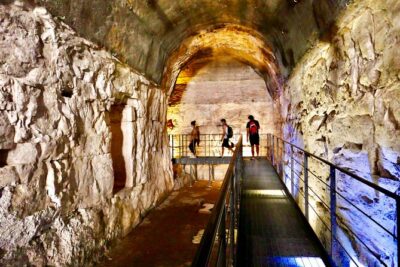
Expert Guided Tour of Colosseum Arena OR Underground, and Forum
Read our review →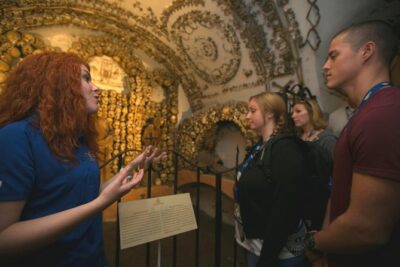
The Original Roman Crypts and Catacombs Tour with Transfers
Read our review →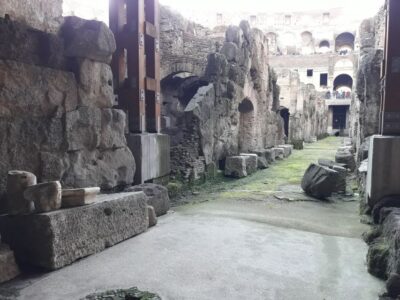
Colosseum Underground Small Group Guided Tour
Read our review →
St. Peter’s Basilica, Dome Climb, and Underground Tour
Read our review →
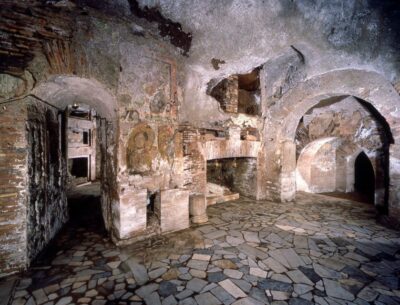
Catacombs of St. Callixtus Entry Ticket & Guided Tour
Read our review →Browse the lists this cave appears in