
Review · ROME CAVE TOURS
Rome: Tour of St. Clement’s Basilica Underground Temples
Rome keeps its best stories underground. Beneath Basilica di San Clemente, you’ll move through a 12th-century church, a 4th-century Christian basilica, an ancient Roman house, and one of the city’s best-preserved Mithraic temples. I especially like the layered archaeology and the chance to see an underground river, while the guides bring the site to life with clear explanations. The main drawback is practical: the low, enclosed spaces are not suitable for wheelchair users or anyone uneasy in tight quarters.
I also like the golden apse mosaic before the descent, because it gives you a beautiful starting point before the tour turns darker and more atmospheric. If you choose the longer version, Santo Stefano Rotondo adds stark martyrdom frescoes and a 15-minute walk between churches. The experience costs $70 per person, so it makes the most sense for visitors who enjoy art, archaeology, and early Christian history more than a quick photo stop.
Key points to know before booking
- Four eras in one underground visit: See the medieval basilica, early Christian church, Roman structures, and pagan temple in one carefully explained sequence.
- A rare Mithraic temple: The underground sanctuary offers a close look at a Roman cult whose rites were kept within a small male religious community.
- An underground river: Water still moves below the ancient structures, adding a striking sound and atmosphere to the lowest level.
- Guide quality matters: Guides including Francesca, Lorenzo, Paul, Anestis, and Tara have been praised for strong historical explanations, humor, and thoughtful answers.
- Santo Stefano Rotondo is optional: Add 45 minutes for its circular design and graphic scenes of martyrdom, but confirm that the extension is available.
- Come dressed for a church visit: Shorts, short skirts, sleeveless shirts, food, drinks, photography, and video recording are not allowed inside.
Why San Clemente is one of Rome’s best history lessons
Many Roman sights show you one famous period. San Clemente lets you walk downward through several of them.
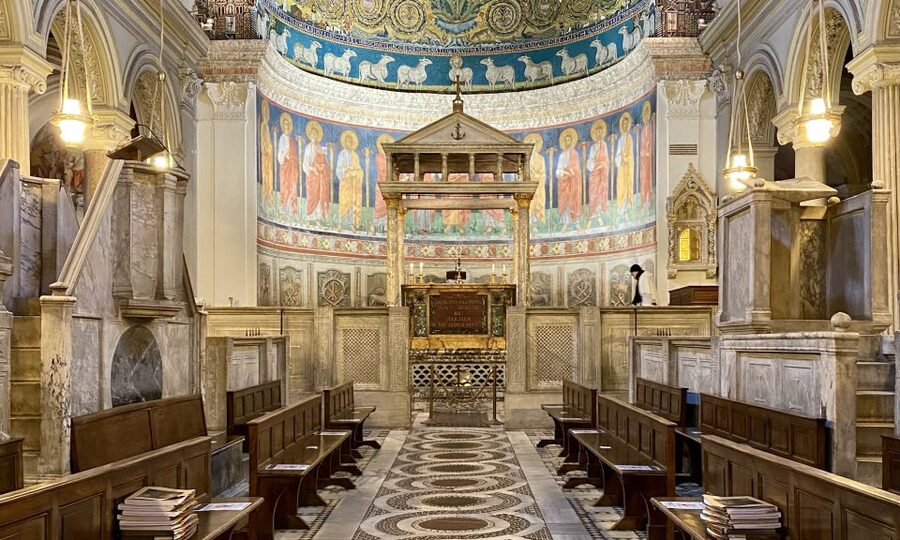
The present basilica dates from the 12th century and still works as a functioning church. Under its floor are earlier buildings, including a 4th-century Christian basilica and Roman structures linked to the ancient neighborhood. At the lowest level, you reach a Mithraic temple and the sound of flowing water.
I like this arrangement because the past is not presented as a list of dates. You physically descend from one period to another. Each staircase makes the changes easier to understand. Rome begins to feel less like a collection of separate monuments and more like a city built repeatedly on its own foundations.
A guide is particularly useful here. Without one, you could admire the walls and frescoes but miss why one structure was built over another, how Christianity developed in Rome, and why Mithraism mattered before Christianity became dominant. Several guides have been praised for making complicated material easy to follow, with Paul receiving special praise for his background as an archaeologist and professor.
The basic visit lasts about one hour. That is enough time for a focused look at the basilica and underground levels without turning the experience into an all-day commitment.
A few more cave trips around Rome worth a look
- Colosseum: Underground and Ancient Rome Tour
★ 4.7 · 12,691 reviews - Rome: Capuchin Crypts and Catacombs Tour with Transfers
★ 4.6 · 6,456 reviews - Expert Guided Tour of Colosseum Arena OR Underground, and Forum
★ 4.5 · 5,041 reviews
Beginning above ground with the golden apse
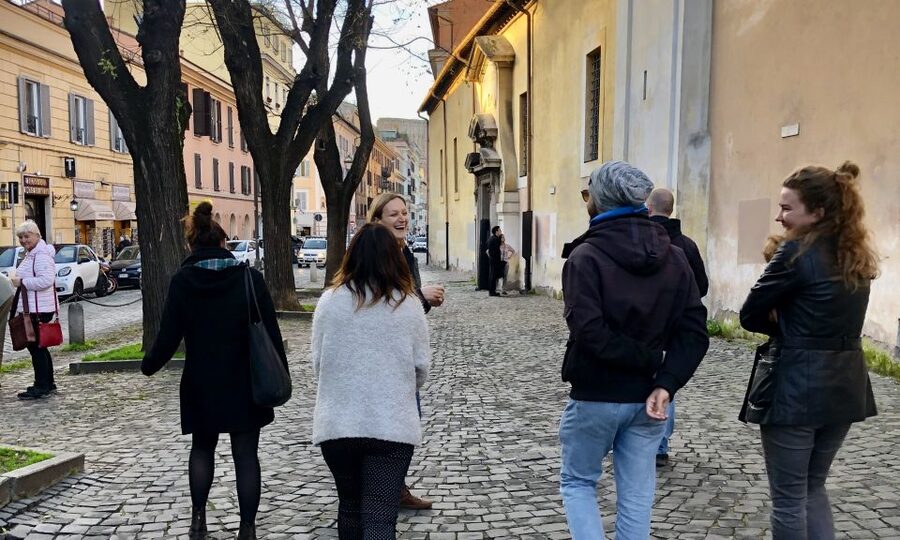
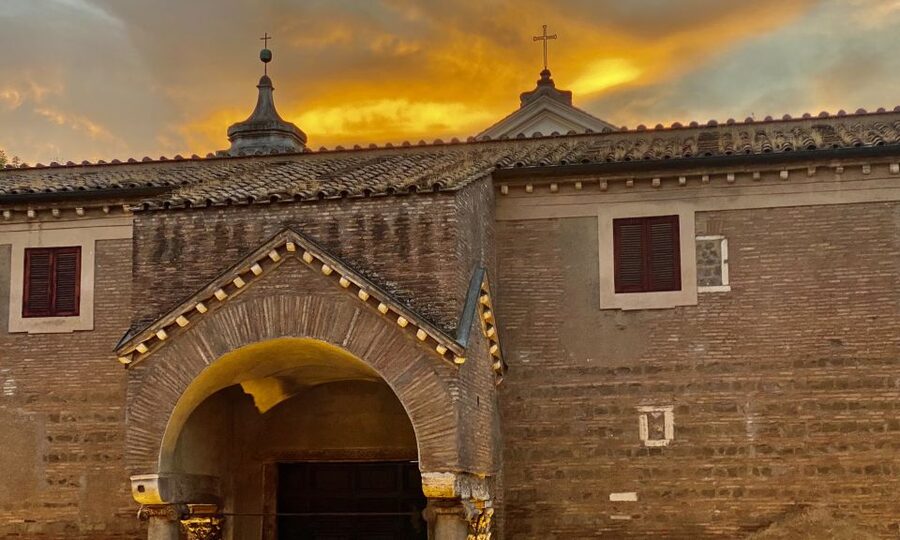
Your visit starts at Piazza di San Clemente, beside the basilica. Take a moment to look at the church above ground before following the guide below.
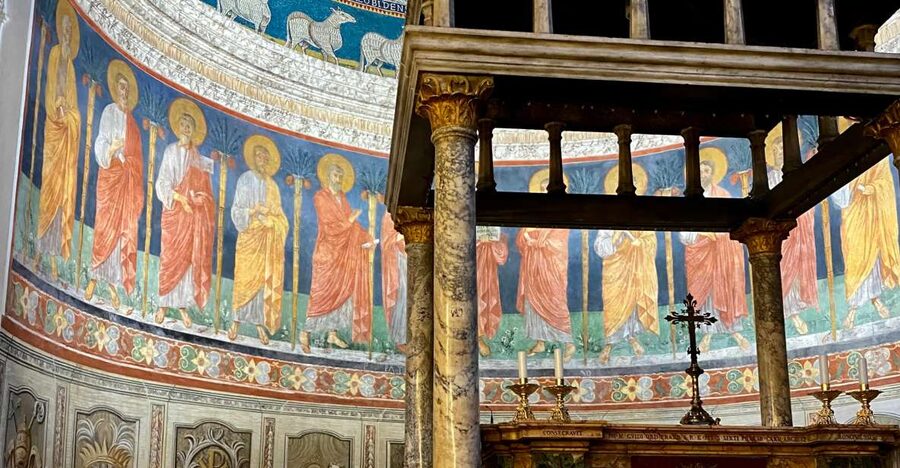
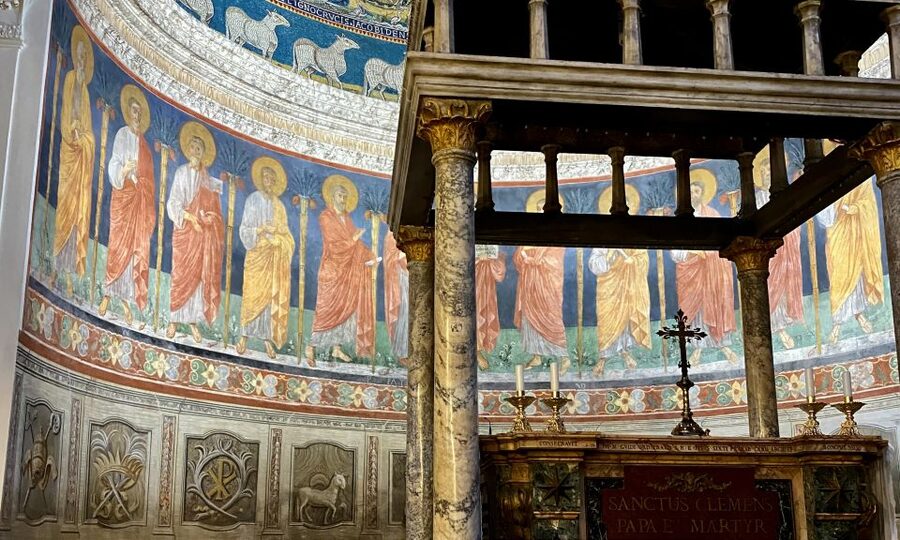
The apse mosaic is the first major sight. Gold catches the light, and the decoration contains Christian symbols that reward a slower explanation. Your guide can point out the meaning behind the imagery and explain how the mosaic connects the church to the spiritual traditions of medieval Rome.
This introduction matters because the underground remains can feel like an archaeological site, while the upper church is still a place of worship. Seeing both sides gives the tour a better balance. You begin with art and religious symbolism, then move into stone, brick, fresco, and water.
Church rules are important here. Wear comfortable shoes and dress with shoulders and legs covered. Shorts, short skirts, and sleeveless shirts are not permitted. Photography and video recording are also forbidden inside, so plan to experience the decoration without relying on your phone.
Descending to the 4th-century Christian basilica
The first descent takes you about 14 meters below the modern church. The air and light change as you move into the earlier levels, and the experience becomes more enclosed.
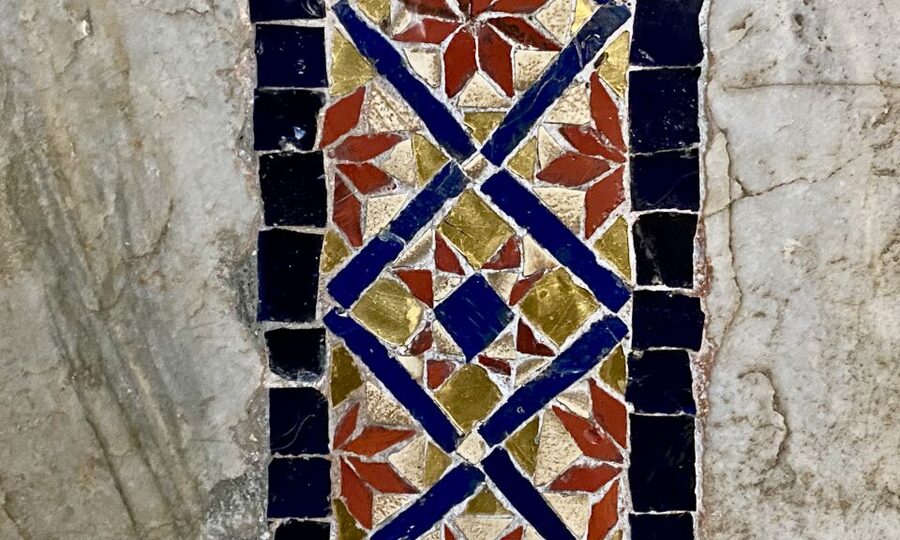
Here you see the 4th-century basilica, built over the home associated with St. Clement, traditionally regarded as the third pope of Rome. The site preserves early Christian frescoes connected with saints, martyrs, and stories of persecution.
This section is valuable because it shows Christianity before it became the dominant public faith of the Roman world. The frescoes are not simply decorative. They reflect a community remembering suffering, honoring its dead, and shaping its religious identity.
The guide’s storytelling makes a real difference. You’ll hear how early Christians faced pressure and persecution, while also learning how the building changed over time. The strongest guides do not simply recite dates. They answer questions, explain uncertainty where appropriate, and connect the artwork to the people who once gathered here.
The underground church is also where you notice the limits of the site. Passageways can feel narrow, and the lighting is subdued. If enclosed spaces make you uncomfortable, you should think carefully before booking. The tour is not suitable for wheelchair users because of the stairs and architectural barriers below the basilica.
The Mithraic temple and the sound of water
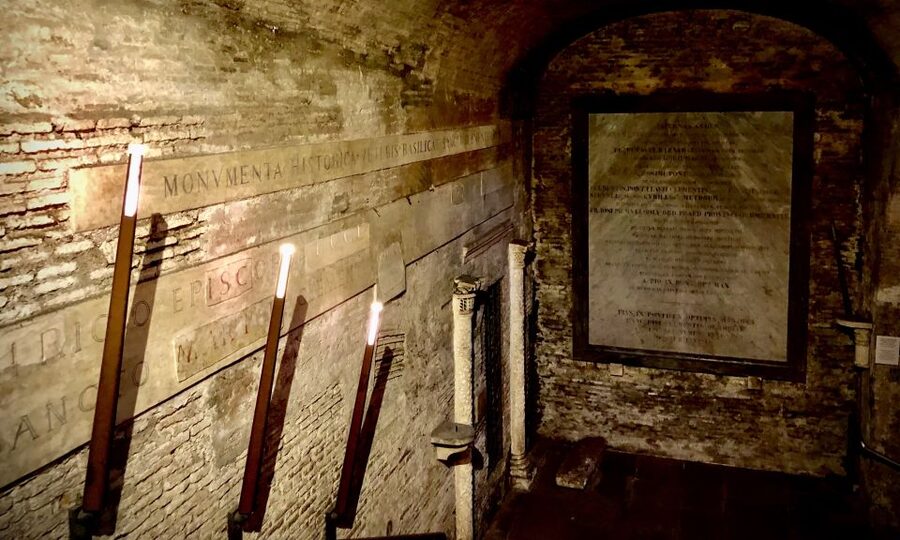
The lowest part of the visit is the Mithraic temple, one of the best-preserved examples in Rome.
Mithraism was a pagan cult practiced in the Roman world before Christianity rose to prominence. Its ceremonies were private, and the small temple gives you a sense of how different religious life could be from the large public temples usually associated with ancient Rome.
Your guide explains the cult’s beliefs, rituals, and place within Roman society. This is one of the strongest reasons to take the tour instead of walking through San Clemente on your own. The stones alone cannot tell you how the room functioned or why its location matters.
The space has an eerie quality, helped by the underground river running nearby. You may hear the water before you fully notice it, which adds a physical detail to a story that could otherwise feel remote. It also reminds you that these buildings were shaped by ordinary forces as well as religious ones. Water, walls, street levels, and later construction all affected what survived.
I would not describe the temple as a large or grand monument. Its appeal is the opposite. It is intimate, enclosed, and unusually close to the original setting of an ancient cult. Visitors who prefer enormous ruins may find it modest, but anyone interested in Roman religion will likely find this portion the most memorable.
Same corner of the map, a different way in:
- The Original Roman Crypts and Catacombs Tour with Transfers
★ 4.5 · 4,896 reviews - Rome: Colosseum Underground Small Group Guided Tour
★ 4.7 · 4,844 reviews - Rome: St. Peter’s Basilica, Dome Climb, and Underground Tour
★ 4.8 · 3,404 reviews - Rome: Colosseum Underground, Arena & Forum Tour
★ 4.7 · 3,272 reviews
Santo Stefano Rotondo adds a darker second chapter
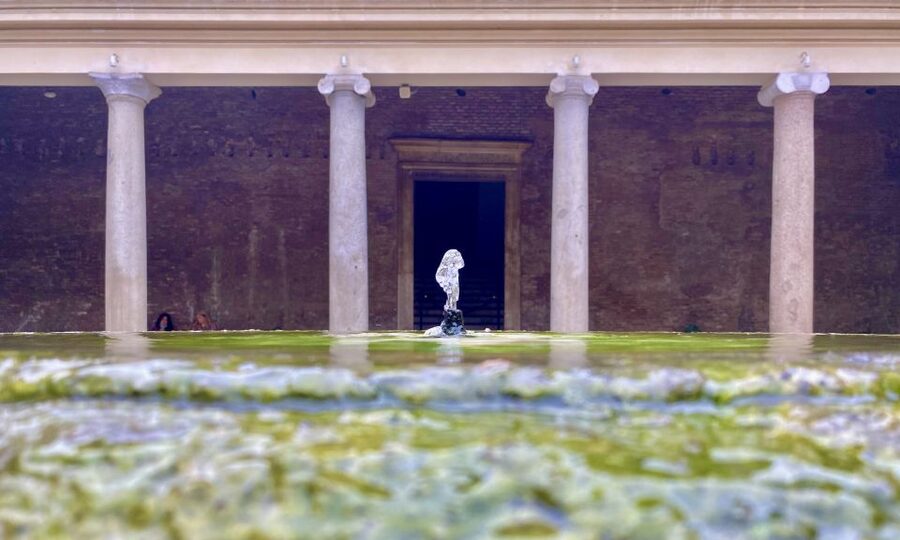
The extended option adds about 45 minutes at nearby Santo Stefano Rotondo. The two churches are connected by a 15-minute walk, so you should wear shoes that are comfortable on city streets.
Santo Stefano Rotondo is known for its circular architecture and its graphic frescoes showing the martyrdom of early Christians. These images are more severe than the decoration at San Clemente. They present violence directly, and the subject matter may not be suitable for young children.
The church works well as a follow-up because San Clemente introduces early Christian belief and persecution, while Santo Stefano Rotondo confronts you with the physical suffering associated with martyr stories. The effect is powerful, but it is not light sightseeing. If you prefer religious art that is gentler or more decorative, the added visit may feel heavy.
The extension is not always available. Special events and liturgical celebrations can affect access, and the order may change. You might begin at Santo Stefano Rotondo and finish at San Clemente, rather than following the usual sequence. If the extension is unavailable, the itinerary is adjusted and the overall planned duration remains unchanged.
What the guides add to the experience
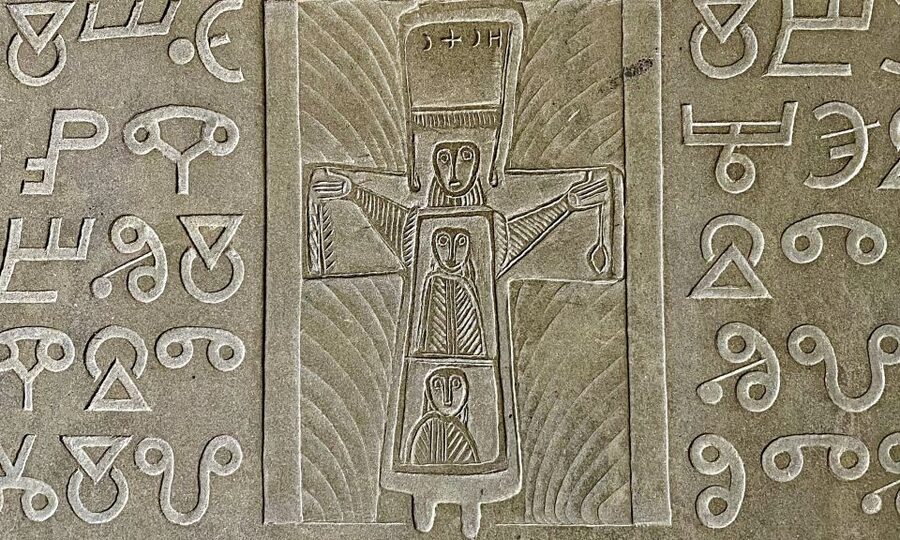
The guide is the most important part of this tour. The site has enough layers and symbols to confuse you if the explanations are rushed or too general.
Francesca has been praised for enthusiasm, humor, and a clear sense of how to make the basilica memorable. Lorenzo has been singled out for excellent English, warmth, and strong explanations of ancient Roman history. Paul has received especially high praise for his academic background and ability to answer detailed questions without making the visit feel like a lecture.
Other guides named by visitors include Tara, Anestis, Daniel, Tom, Sam, and Mario. The consistent theme is strong preparation and an engaging style. That matters because this is a place where small details carry much of the meaning.
Headsets are provided, which helps when the group is standing in a stone room or moving between levels. A private group is also available if you want more time for questions or a pace suited to your party. Group size can vary, and some bookings have been very small, even just two people, though you should not assume every departure will be private.
The tour is offered in English, Italian, Spanish, French, German, and Portuguese. Choose the language that lets you follow historical explanations comfortably. A fast or unfamiliar language can make the sequence of buildings harder to track.
Is $70 a fair price?
At $70 per person, this is not a bargain basement Rome activity. The value depends on how much you want from the site.
You are paying for entrance to San Clemente, a live guide, headsets, and the interpretation that connects the buildings. If you choose the Santo Stefano Rotondo extension, that guided visit is included only when you select that option during booking. Food, drinks, transport, and hotel pickup are not included.
For a history-focused visitor, the price is reasonable because San Clemente is difficult to appreciate fully without context. You get an hour of concentrated guiding in a place where the central attraction is not one famous object but the relationship between several buried structures.
The value is weaker if you want a quick church visit or have limited interest in archaeology. The underground rooms are not vast, and the tour asks you to listen closely. You should book it for the explanation as much as for the physical setting.
The high 4.8 rating from 242 reviews fits the experience’s strongest qualities: excellent guides, unusual subject matter, and a sense of discovery without the crowds associated with Rome’s biggest monuments. Still, the rating should not hide the practical limits. This is not accessible by wheelchair, not ideal for claustrophobic visitors, and not suitable for people who want unrestricted photography.
Timing, clothing, and practical advice
Allow one hour for San Clemente alone. With Santo Stefano Rotondo, plan for roughly 1 hour and 45 minutes, plus the walk between churches.
Start with comfortable shoes. You will use stairs and walk for 15 minutes if you take the extended option. Bring a light layer if you dislike cooler underground spaces, though no specific temperature is provided.
Do not bring food or drinks into the churches. Pets, weapons, sharp objects, alcohol, and drugs are prohibited. Photography and video recording are not allowed inside, so check your phone before entering and keep it away during the visit.
The meeting point can vary by the option you book. Check your confirmation carefully, especially if you choose the extended visit, since the order of the churches can change.
The tour can be canceled because of weather or events on the liturgical calendar. You can cancel up to 24 hours before the start for a full refund, and a reserve-now, pay-later option is available. Those policies help if your Rome schedule is still shifting.
Who should book this Rome underground tour?
I would recommend San Clemente to you if you enjoy ancient religion, early Christianity, archaeology, or art with a serious edge. It is also a good choice after visiting grander churches, since the smaller scale offers a different view of Rome.
Families should consider the children’s ages before adding Santo Stefano Rotondo. The martyrdom frescoes are graphic, and younger children may find them upsetting. Older children with an interest in Roman history may appreciate the underground river and the feeling of moving through buried streets.
You should skip this experience if you use a wheelchair or strongly dislike enclosed spaces. You might also prefer another Rome activity if you want a relaxed church visit with plenty of time for photography.
Should you book San Clemente?
Book it if you want Rome to explain itself rather than simply show you famous buildings. The combination of the golden mosaic, early Christian frescoes, Mithraic temple, and underground river gives you a rare look at how the city changed across centuries.
Choose the one-hour visit if your schedule is tight. Add Santo Stefano Rotondo if you want more early Christian art and can handle disturbing martyrdom scenes. Above all, value the guide. This is one of those Roman sites where a strong explanation turns a dark staircase and old walls into a memorable lesson.
FAQ
How long does the San Clemente tour last?
The guided visit to Basilica di San Clemente lasts about one hour. The optional Santo Stefano Rotondo visit adds 45 minutes, with a 15-minute walk between the churches.
How far underground does the tour go?
The tour descends about 14 meters below Basilica di San Clemente.
What can I see underground?
You can see a 4th-century Christian basilica, early Christian frescoes, Roman structures, a Mithraic temple, and an underground river.
Is Santo Stefano Rotondo included?
It is included only if you select the extended option during purchase. The extension may occasionally be unavailable because of special events or liturgical celebrations.
What languages are available?
The live tour is available in English, Italian, Spanish, French, German, and Portuguese.
Is the tour accessible to wheelchair users?
No. The architectural structures and underground areas at Basilica di San Clemente make the tour unsuitable for wheelchair users.
Is the underground section suitable for people with claustrophobia?
The tour may not be suitable because it includes enclosed underground spaces.
Can I take photographs inside?
No. Photography and video recording are not allowed inside the churches.
Can I cancel the booking?
Yes. You can cancel up to 24 hours in advance for a full refund. A reserve-now, pay-later option is also available.
Just added around Rome
- St. Peter’s Basilica and Vatican Grottoes Tour★ 4.9 · 120 reviews
- Rome: St Peter’s Basilica Express Tour & Grottoes★ 4.3 · 126 reviews
- St. Peter’s Basilica Full Guided Tour with Vatican Grottoes★ 4.6 · 286 reviews
- Rome: Appian Way, Aqueducts, & Catacombs E-Bike Guided Tour★ 4.9 · 54 reviews
- Rome: Trevi Fountain Underground Small Group Tour★ 4.4 · 47 reviews
- Rome: Underground Trastevere Guided Walking Tour★ 4.8 · 87 reviews
- Rome underground hidden temples, ruins, and secret basilicas★ 3.7 · 21 reviews
- Rome: Trevi Fountain District Underground Tour and Ice Cream★ 4.5 · 356 reviews
Rome Cave Tours, compared.
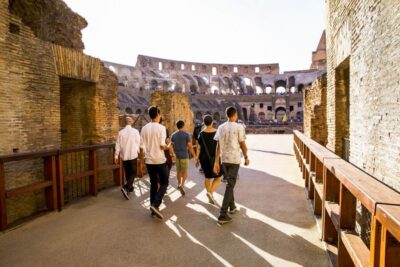
Colosseum: Underground and Ancient Rome Tour
Read our review →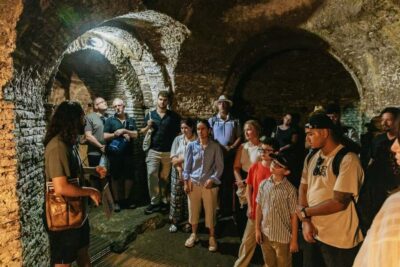
Capuchin Crypts and Catacombs Tour with Transfers
Read our review →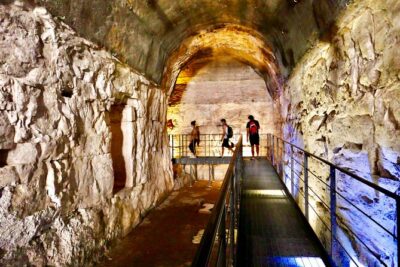
Expert Guided Tour of Colosseum Arena OR Underground, and Forum
Read our review →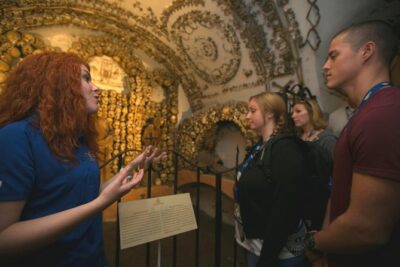
The Original Roman Crypts and Catacombs Tour with Transfers
Read our review →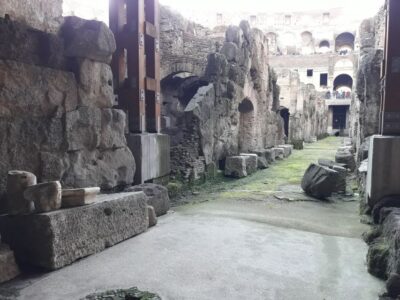
Colosseum Underground Small Group Guided Tour
Read our review →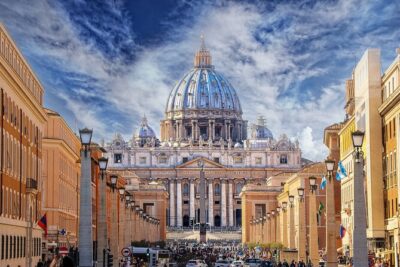
St. Peter’s Basilica, Dome Climb, and Underground Tour
Read our review →
Catacombs of St. Callixtus Entry Ticket & Guided Tour
Read our review →Browse the lists this cave appears in