Review · CATACOMBS & UNDERGROUND CITY TOURS
Rome: Catacombs of St. Callixtus Entry Ticket & Guided Tour
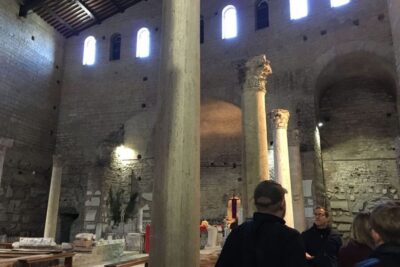
Rome keeps its quiet stories underground. The Catacombs of St. Callixtus offer a rare look at the burial customs and faith of early Christian communities, far from the crowds around the Colosseum. I especially like the Crypt of the Popes and the chance to see ancient wall paintings in their original setting. The price, about $16 per person, is also fair for a guided visit, though the tour is short and the catacombs sit outside central Rome.
This is a serious historical site, not a spooky walk through rooms filled with bones. You see burial chambers, corridors, inscriptions, and frescoes, while your guide explains the martyrs, popes, and families connected with the cemetery. The main drawbacks are the 30-minute length, the cool underground temperature, and the fact that photography is not allowed.
Key points before you book
- Nine popes are buried in the Crypt of the Popes, along with three bishops.
- The tour lasts about 30 minutes, although some groups finish a little later.
- The catacombs are outside central Rome, near the Appian Way, so plan extra time for the bus journey.
- No bones are displayed on this route, which matters if you expect a macabre attraction.
- English, Italian, French, and German tours are available, with a live guide.
- The underground rooms are cool and can feel tight, so this is not suitable for people with claustrophobia or mobility problems.
Why the Catacombs of St. Callixtus matter
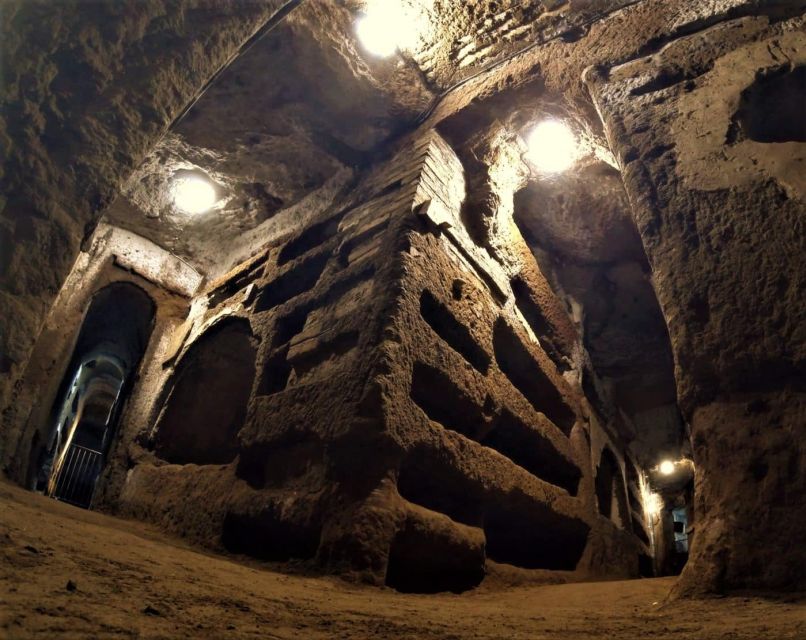
The Catacombs of St. Callixtus were the oldest official cemetery of Rome’s Christian community. They grew into one of the city’s largest underground burial sites, used for centuries by Christians who wanted to bury their dead according to their own customs.
The complex is associated with St. Callixtus, who helped organize the cemetery before becoming pope. The site eventually held the remains of an estimated half a million Christians. You will not see every part of that vast network on this visit, but even the short public route gives you a useful sense of its scale.
I find the setting especially valuable because it places early Christianity in everyday Roman life. This was not only a place for famous church leaders. The underground galleries held the remains of ordinary members of the community, alongside martyrs, bishops, and popes.
The catacombs also show how much early Christian burial practices depended on community support. The tour explains how families and fellow believers arranged burial and memorials at a time when Christian groups were still developing their public identity in Rome.
More Catacombs and Underground City Tours in Italy
- Rome: Capuchin Crypts and Catacombs Tour with Transfers
★ 4.6 · 6,456 reviews - The Original Roman Crypts and Catacombs Tour with Transfers
★ 4.5 · 4,896 reviews - Rome: Guided Roman Catacombs Tour with Transfers
★ 4.6 · 1,830 reviews
Getting to the entrance near the Appian Way
The Catacombs of St. Callixtus are not beside a major city-center landmark. You need to treat the journey as part of the outing, not as a quick side trip from the Trevi Fountain.
From Termini Station, take Metro A toward Anagnina to San Giovanni. From there, take bus 218 toward Ardeatina and get off at Fosse Ardeatine. The catacomb entrance should be in front of you.
Another option is Metro B toward Laurentina. You can get off at Colosseo or Circo Massimo, walk to the Terme Caracalla or Porta Capena bus stop, and take bus 118 toward Appia or Villa Dei Quintili. Get off at Catacombe di San Callisto.
Give yourself more time than a map estimate suggests. Bus waits can add 20 minutes, and the area is less familiar than central Rome. A taxi or ride-hailing service can save time, though getting a taxi back may be less simple than finding one in the historic center.
At the catacomb grounds, go directly to the ticket office. Show your voucher at least 10 minutes before the scheduled tour and exchange it for the entry ticket if required. Pay attention to the exact office location. The meeting point can be confusing, and the ticket counter may be roughly 100 meters from the point shown on some directions.
What happens during the 30-minute visit
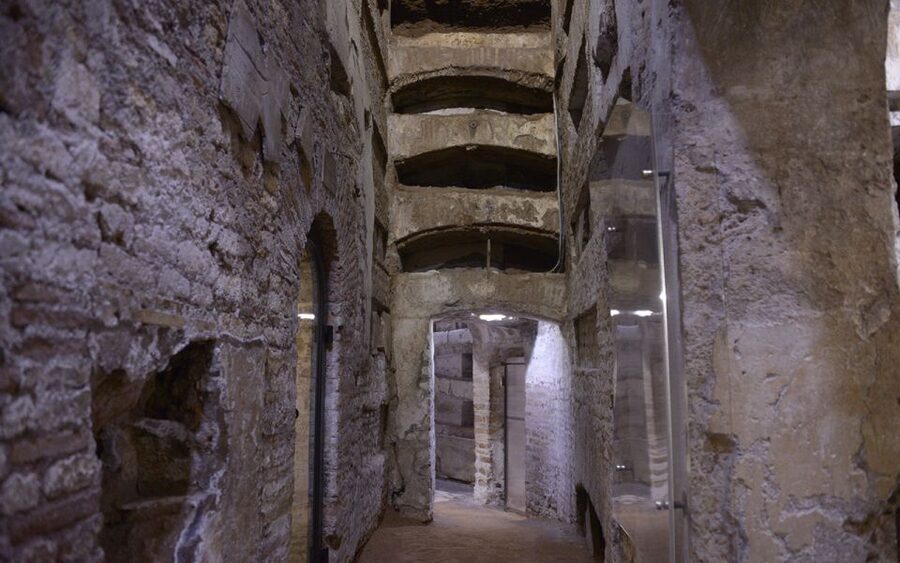
The visit is fully guided. You join your group at the entrance and remain with it throughout the route. This keeps the group together in narrow underground passages, but it also means you cannot wander off to inspect side corridors at your own pace.
Thirty minutes sounds brief, and it is. Still, the time is packed with explanation. Several groups have found that their tour lasted a little longer than scheduled, especially when the guide allowed questions at the end.
The quality of the guide makes a big difference here. Recent guides have included Francesca, an archaeologist, Sam, Arishba, Comfort, and several priests, including a freshly ordained priest and Father Peter. The strongest guides explain clearly, keep the pace moving, and make room for questions without turning the visit into a lecture.
English, Italian, French, and German tours are offered. If you are booking in English, expect the guide to combine facts about the site with stories about the people buried there. Some guides use humor, while others take a more solemn approach. Both styles can work, as long as the history remains clear and respectful.
The Crypt of the Popes
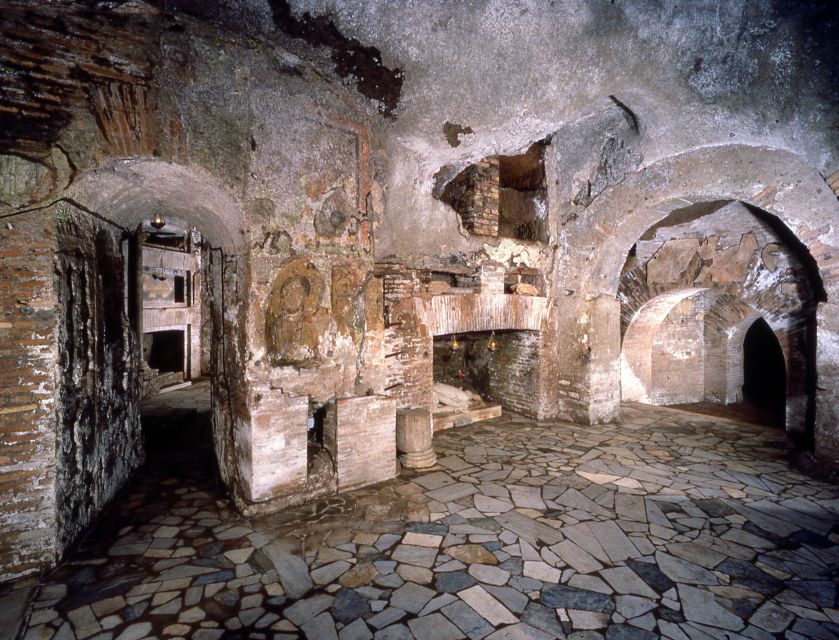
The Crypt of the Popes is the central stop on the route. Nine popes and three bishops were laid to rest here, making this one of the most important rooms in the cemetery.
The room is not grand in the way a Roman basilica is grand. Its power comes from its function and age. You are looking at a burial space used by the early Christian leadership of Rome, in an underground setting that feels plain, close, and human.
Your guide helps explain the inscriptions and the role of the popes in the early church. This context matters because the room can otherwise look like a simple chamber with worn markings. With the story in place, the space becomes a record of how the Christian community remembered its leaders.
Do not expect elaborate tombs or displays. The appeal is the location itself, along with the survival of the chamber and its inscriptions.
More Catacombs and Underground City Tours in Rome
- Rome: Catacombs Guided Tour with Transfer
★ 4.2 · 1,808 reviews - Rome EBike Tour: Appian Way, Catacombs & Roman Aqueducts
★ 5.0 · 1,766 reviews - Rome: Catacombs and Capuchin Crypt Guided Tour with Transfer
★ 4.6 · 1,606 reviews - Rome: Appian Way & Aqueducts E-Bike Tour (Catacombs & Food)
★ 4.9 · 1,498 reviews
The Crypt of St. Cecilia
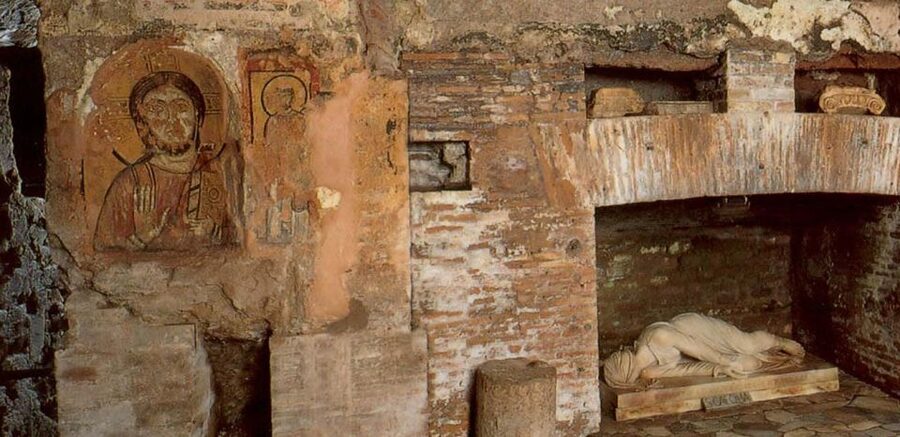
Next comes the adjoining room connected with St. Cecilia, a Roman matron remembered for helping ensure that martyrs received proper burials.
The story gives the visit a personal side. The catacombs were not simply a system for storing bodies. People such as Cecilia helped care for the dead and preserve the memory of those who had suffered for their faith.
The room also adds variety to the tour. After the institutional importance of the popes, you hear about an individual whose role was tied to charity, burial, and the care of a persecuted community.
As with the rest of the visit, you should expect to see burial spaces and historic decoration rather than human remains. Several people have arrived expecting skeletons and found that the tour focuses on the chambers, the art, and the story of the cemetery.
Ancient frescoes and Area I
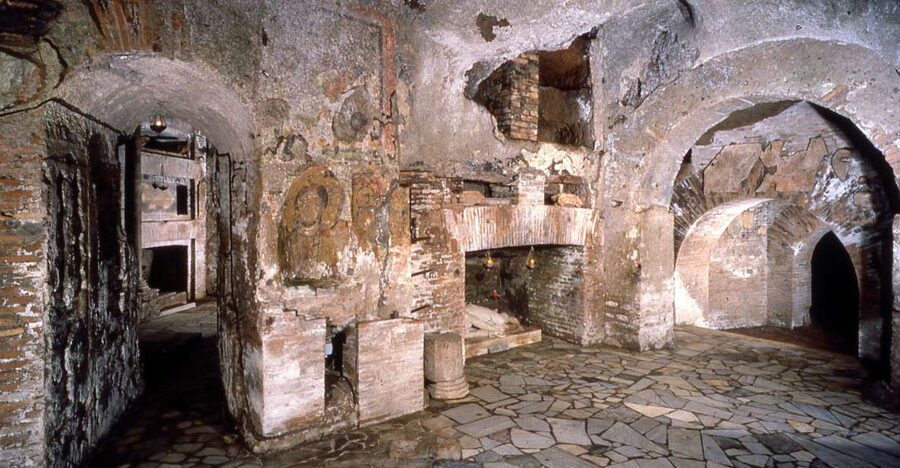
The route includes some of the oldest frescoes found in Rome’s catacombs. These paintings are not bright, polished museum pieces. They are fragile traces on underground walls, and their survival gives you a direct link to the beliefs and symbols of early Christians.
Area I contains the cubicles of the sacraments. These small burial rooms are important because they show how the catacombs were organized. Instead of one large underground hall, the cemetery developed through galleries, chambers, and family or community burial spaces.
Lighting can be subdued, especially in corners and around steps. That helps preserve the atmosphere, but it can make footing harder for older visitors. Wear shoes with good grip and take your time on uneven sections.
Photography is forbidden inside. This is disappointing if you like to document every stop, but it also keeps the visit focused. You need to look carefully while you are there, since you cannot rely on photographs later.
The atmosphere underground
The catacombs are cool, with one visitor describing the underground temperature as about 15 degrees Celsius. In summer, that is a welcome break from Rome’s heat. In cooler weather, bring a light jacket or sweater.
The passages can feel enclosed. You are underground, walking through narrow spaces with limited room to move around other people. Anyone with claustrophobia should think twice before booking.
This is also not a suitable outing for people with mobility impairments. Baby carriages are not allowed, and the route includes steps and confined areas. The site may be especially challenging for anyone who needs a smooth, fully accessible path.
The surrounding grounds are peaceful and well maintained. That gives the visit a calmer rhythm than a packed city-center attraction. You can take a moment outside before or after the tour, but food and drinks are not included, so plan refreshments separately.
Is $16 good value?
At about $16, this is one of the more affordable guided historical visits in Rome. The ticket includes entry and a live guide, and the guide is essential because much of the meaning comes from the explanation.
The visit is not good value if you measure attractions by time alone. Thirty minutes is short, and you spend additional time getting to the site. If you are staying in central Rome and have only one free afternoon, the transport may make this feel less convenient than the price suggests.
I still think the cost is fair for three reasons. You receive access to a protected underground site, the route includes several major rooms, and the guide supplies context you would not get by simply looking at a map or reading a sign.
The value improves if you combine it with other Appian Way sights. The catacombs should not be treated as a stand-alone stop squeezed between the Pantheon and Spanish Steps. Set aside a larger block of time and make the trip worthwhile.
What makes the guides effective
The most praised part of this visit is the guiding. The best guides speak clearly, answer questions, and make sure nobody is left behind in the passages.
Francesca has been especially memorable as an archaeologist who could connect the physical remains with the history of the site. Sam has been praised for making the subject lively, while Comfort and Arishba brought a friendly, informative style. Father Peter and another newly ordained priest offered a more direct connection to the religious side of the catacombs.
Guide style can vary. You might get a serious historical presentation, a lively talk with jokes, or a more devotional explanation. The common thread is that the guide gives the rooms meaning.
If your group includes teenagers who are not normally interested in ancient history, the fast pace helps. The visit has enough visual detail and human stories to keep it from becoming a dry lecture. Families with older children and teens are likely to get more from it than families with toddlers.
Practical advice for a smoother visit
- Arrive at the ticket office at least 10 minutes before your scheduled time.
- Bring your voucher and be ready to exchange it for the official entry ticket.
- Check the ticket office carefully, since the precise meeting location can be confusing.
- Allow extra time for buses and for finding the entrance.
- Wear comfortable shoes and clothing.
- Bring a light layer, even in hot weather.
- Do not bring a baby carriage.
- Expect to remain with the group for the whole tour.
- Leave your camera and phone in your pocket inside, since photography is not allowed.
- Do not book this visit if enclosed underground spaces cause serious anxiety.
Free cancellation is available up to 24 hours before the scheduled visit, and you can reserve while postponing payment. Those options help if your Rome schedule is still changing.
Who should book this catacomb tour?
I would book this tour if you want a quieter, less familiar side of Rome and you enjoy places where the guide supplies much of the story. It is especially good for people interested in early Christianity, archaeology, Roman burial customs, or historic sites that feel more personal than monumental.
I would also recommend it to families with older children and teens, provided everyone can manage steps and enclosed passages. The cool underground setting is a pleasant change in summer, and the short route is easier to fit into a busy day than a large museum.
I would skip it if you want to see skeletons, take photographs, or explore independently. I would also think carefully before booking if your Rome schedule is tight, since the journey to and from the Appian Way can take longer than the actual tour.
Should you book the Catacombs of St. Callixtus?
Yes, if you accept that this is a short, guided history visit rather than a theatrical underground attraction. For around $16, you get access to the Crypt of the Popes, the Crypt of St. Cecilia, ancient frescoes, and a clear introduction to Rome’s early Christian communities.
The main decision is not the price. It is whether you are willing to spend extra time reaching a site outside the center for a 30-minute tour. If you are, the catacombs offer a quiet and memorable change from Rome’s famous monuments. Book it, arrive early, bring a sweater, and expect burial chambers rather than bones.
FAQ
How long does the Catacombs of St. Callixtus tour last?
The scheduled duration is 30 minutes. Some tours may run a little longer, especially if the guide answers questions at the end.
What is included in the ticket?
The ticket includes entry to the Catacombs of St. Callixtus and a guided tour.
Which languages are available?
Live guided tours are available in English, Italian, French, and German.
Can I take photographs inside the catacombs?
No. Photography is not allowed inside the catacombs.
Will I see skeletons or bones?
The tour focuses on burial chambers, inscriptions, frescoes, and the history of the site. Human skeletons are not displayed on this route.
How do I reach the meeting point?
From Termini, take Metro A toward Anagnina to San Giovanni, then bus 218 toward Ardeatina to Fosse Ardeatine. You can also take Metro B to Colosseo or Circo Massimo, then bus 118 toward Appia or Villa Dei Quintili to Catacombe di San Callisto.
Is the tour suitable for people with mobility impairments or claustrophobia?
No. The experience is not suitable for people with mobility impairments or claustrophobia. Baby carriages are also not allowed.
Just added around Rome
- Explore Christian Rome and the Underground of San Clemente★ 4.4 · 16 reviews
- Rome: Colosseum Underground and Arena Floor Tour★ 4.4 · 59 reviews
- Rome: Exclusive Colosseum Underground and Roman Forum Tour★ 4.8 · 569 reviews
- Catacombs of Saint Agnes Entry Ticket & Guided Tour★ 4.5 · 72 reviews
- From Rome: Capri Guided Day Trip with Blue Grotto★ 4.2 · 199 reviews
- Rome: Appian Way, Catacombs & Aqueducts by eBike + Transfer★ 4.9 · 421 reviews
- Private Guided Tour of Colosseum Underground OR Arena and Forum★ 5.0 · 111 reviews
- Private Tour of Catacombs and Ancient Appian Way (hotel pick up)★ 4.5 · 120 reviews
Catacombs & Underground City Tours, compared.
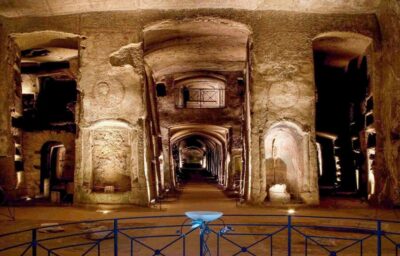
Catacombs of San Gennaro Entry Ticket & Guided Tour
Read our review →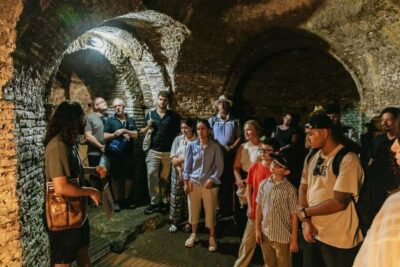
Capuchin Crypts and Catacombs Tour with Transfers
Read our review →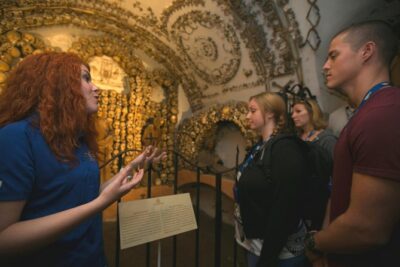
The Original Roman Crypts and Catacombs Tour with Transfers
Read our review →

Full Day Cappadocia Tour( Red Tour + Underground City )
Read our review →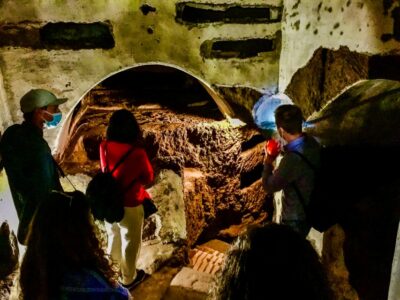

Rome EBike Tour: Appian Way, Catacombs & Roman Aqueducts
Read our review →