
Review · ROME CAVE TOURS
Rome: San Clemente Underground and Basilica Guided Tour
Rome keeps its past under your feet. San Clemente makes that literal, with a 12th-century church above a 4th-century basilica, Roman homes, an ancient Mithraic temple, and an underground stream below it all. This 1.5-hour walking tour offers a clear way to understand those layers without getting lost in dates and architectural terms.
I especially like the gold mosaics in the upper basilica and the chance to reach the Mithraic temple below. Guides such as Luca, Gina, Eddy, and Ricardo have been praised for making complicated history easy to follow, often with humor and vivid stories. The main drawback is practical: you must manage stairs, and the lower rooms can be crowded or difficult to hear when several groups arrive together.
At $70 per person, this is not Rome’s cheapest church visit. Still, the entrance fee and a live English guide are included, and the explanation adds real value here. San Clemente is one of those places where walking through alone gives you the setting, but a good guide helps you understand what you are seeing.
Key points to know before you go
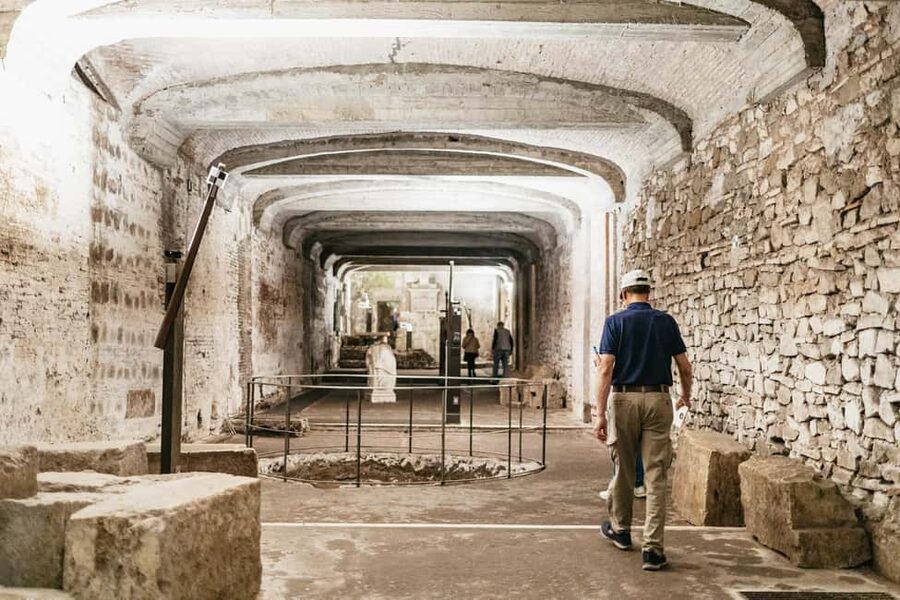
- Three underground levels: You move from the 12th-century basilica to a 4th-century church and then down to Roman structures and a Mithraic sanctuary.
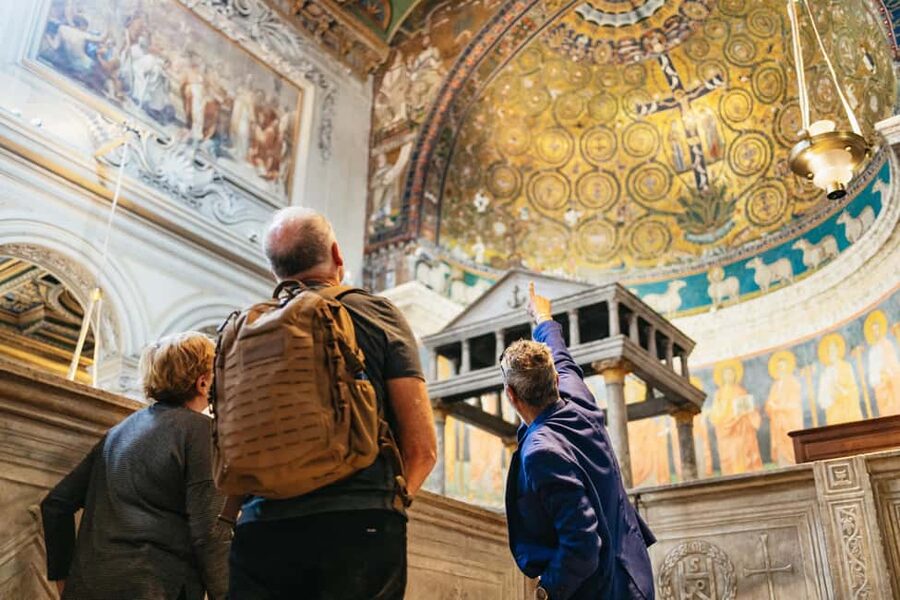
- The gold mosaics are worth your time: Look up in the upper church for the sparkling medieval decoration before heading downstairs.
- The water below helped reveal the site: An underground spring caused problems that led to the discovery of the buried levels in 1860.
- A small group makes a difference: The narrow archaeological rooms are easier to manage when your guide can answer questions and adjust the pace.
- Expect stairs and uneven ground: This tour is not suitable for wheelchair users or people who cannot climb and descend independently.
- Photography is not allowed inside: Leave cameras and large bags behind, and dress with shoulders and knees covered.
Why San Clemente explains Rome so well
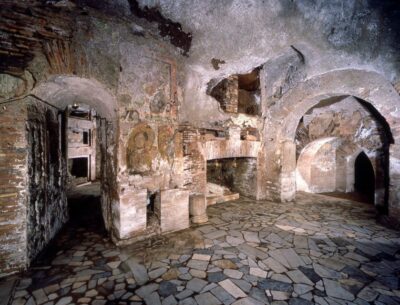
Rome can feel like a city built in layers, but San Clemente lets you walk through those layers in one building. You begin in the present-day church, descend into the late Roman period, and continue toward the first century.
That physical change gives the tour its power. Instead of hearing that Rome was rebuilt over many centuries, you can see walls, floors, doorways, and rooms stacked one below another. The effect is practical and memorable. You do not need to picture the city changing. You are standing inside the evidence.
The site was uncovered after an underground spring caused flooding and other problems. In 1860, an Irish Dominican priest and archaeologist investigated and found that the basilica sat above older structures. Excavation gradually revealed the levels below.
This story adds an unusual human touch. The water was not simply a nuisance. It helped point researchers toward a forgotten section of Rome. At the lowest level, you can see the underground spring connected with the discovery.
More Guided Tours around Rome:
- Expert Guided Tour of Colosseum Arena OR Underground, and Forum
★ 4.5 · 5,041 reviews - Rome: Colosseum Underground Small Group Guided Tour
★ 4.7 · 4,844 reviews - Rome: Catacombs of St. Callixtus Entry Ticket & Guided Tour
★ 4.6 · 3,037 reviews
Meeting near Via di San Giovanni in Laterano
The meeting point is at the corner near Via di San Giovanni in Laterano, 126, close to San Clemente Basilica. It is outdoors, not inside a booking office, so arrive with enough time to find the guide and group.
The nearest metro stop is Colosseo on Line B. From there, you will need to walk to the basilica. The meeting instructions can feel less obvious than they should, so check the exact location before setting out. One practical detail is especially important: the meeting point is near the church, not necessarily at a staffed storefront.
Wear shoes that handle stairs and uneven surfaces. You should also bring a light layer. The underground rooms may feel cooler than the street, especially after a warm day in Rome.
The tour lasts about 90 minutes. The first hour is guided, followed by roughly 30 minutes connected with the basilica and photo stop. The exact movement can vary with other groups and conditions inside the site, but the experience remains focused on San Clemente rather than adding several distant stops.
The 12th-century basilica and its gold mosaics
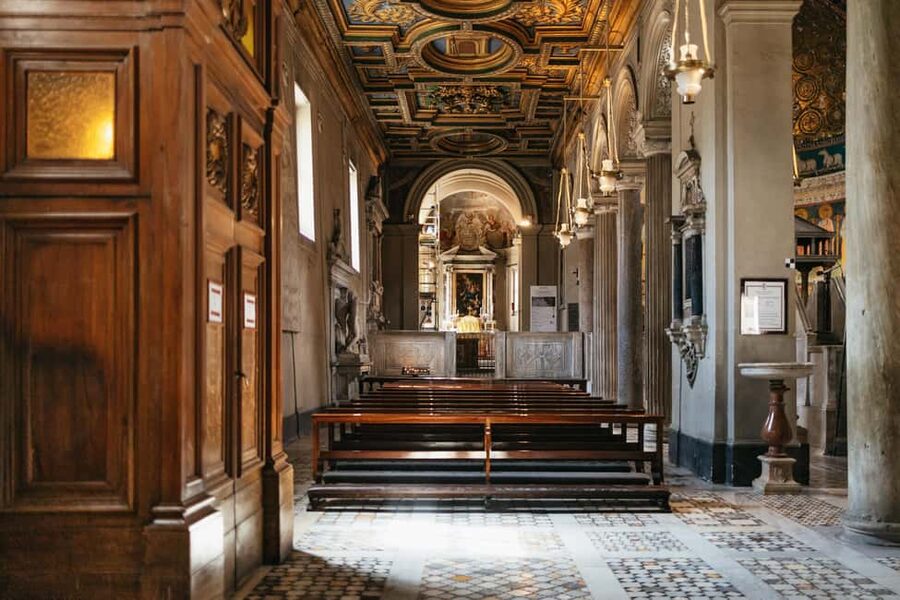
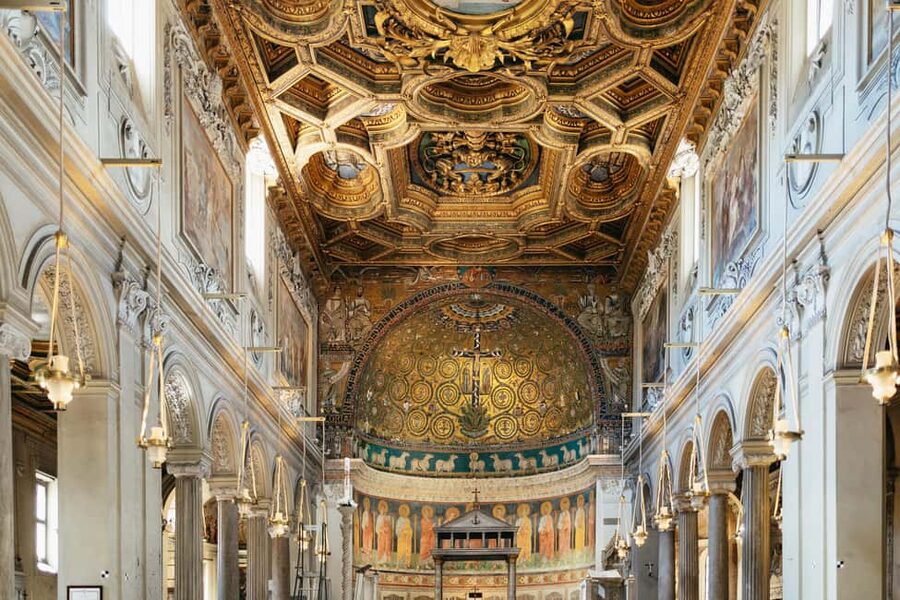
Your visit begins in the upper Basilica of San Clemente, the church built in the 12th century. This is not just a waiting area before the underground part. Give it proper attention.
The gold mosaics are the main visual reward. Their bright surfaces contrast with the darker, rougher masonry below, and they show how Christian art could fill a church with color and symbolic detail. A guide can point out parts of the decoration and explain how the medieval church relates to the older building beneath it.
This opening also gives you a useful orientation. You are standing in an active church that was constructed over earlier places of worship and domestic life. Once you descend, the upper basilica becomes the first layer in a much larger story.
Dress respectfully. Shoulders and knees must be covered inside the church. This is easy to handle with a scarf, cardigan, or light overshirt if you are visiting during hot weather.
Descending into the 4th-century basilica
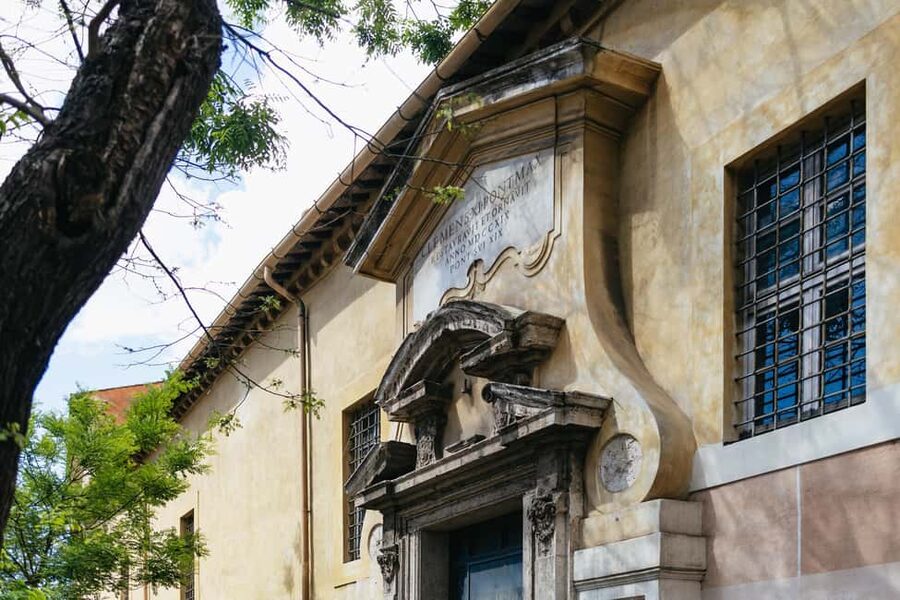
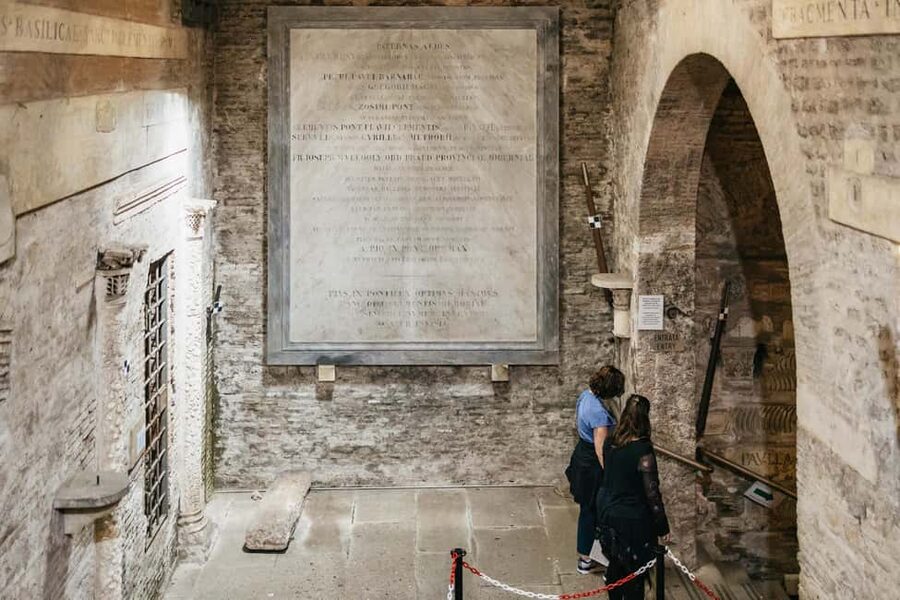
The first underground level takes you to the remains of a 4th-century basilica. It was eventually forgotten after the 12th-century church was built above it.
This is the point where the tour shifts from beautiful decoration to physical archaeology. You can see how an older church was abandoned, filled, and covered by a later building. The walls and surviving features help you understand that ancient structures were not always preserved as monuments. They could become foundations, storage areas, or simply disappear from view.
I find this level especially useful for understanding how Rome changed after the Roman imperial period. A later community did not erase the earlier site entirely. It built over it, leaving pieces behind for much later generations to find.
The guide’s role matters here. The ruins can look like a collection of walls if you do not know their purpose. The strongest guides use the floor plan, surviving masonry, and stories of excavation to help you read the space. Luca was repeatedly praised for explaining difficult periods in clear language, while Gina was noted for making art, architecture, and drainage systems easy to understand.
A few more cave trips around Rome worth a look
- Colosseum: Underground and Ancient Rome Tour
★ 4.7 · 12,691 reviews - Rome: Capuchin Crypts and Catacombs Tour with Transfers
★ 4.6 · 6,456 reviews - The Original Roman Crypts and Catacombs Tour with Transfers
★ 4.5 · 4,896 reviews - Rome: St. Peter’s Basilica, Dome Climb, and Underground Tour
★ 4.8 · 3,404 reviews
The Mithraic temple at the lowest level
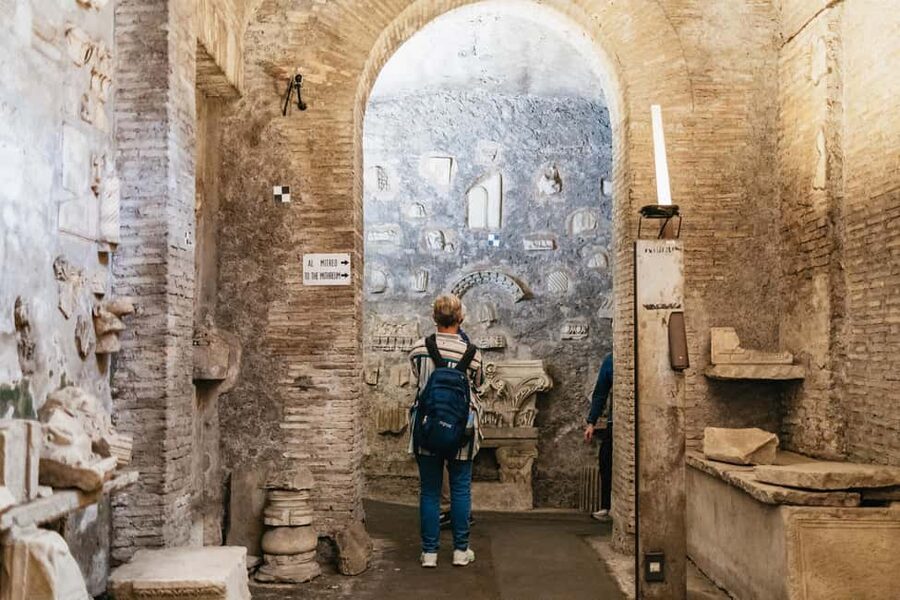
The ancient Mithraic temple is the dramatic centerpiece. Mithraism was a pagan religion practiced in the Roman world, and San Clemente preserves a small sanctuary with an altar.
You descend farther to reach it, passing through the remains of ancient Roman homes and other structures. The rooms are more enclosed and atmospheric than the basilica above. The altar gives the space a clear focus, even if you know little about the religion before arriving.
This is also where the tour can help you notice details elsewhere in Rome. One visitor said the explanation made it easier to recognize references to Mithras at other sites around the city. That is a good reason to schedule San Clemente early in your trip if ancient Roman religion interests you.
The temple is not a huge monument. Its appeal comes from the setting and the survival of a place used for private religious practice. You are not just looking at a grand public ruin. You are seeing a smaller room connected with a particular belief system and community.
The lower level may feel tight when several groups are present. Stay close enough to hear, and do not expect to wander freely or return to every feature after the guide moves on.
Roman homes, water, and the work of excavation
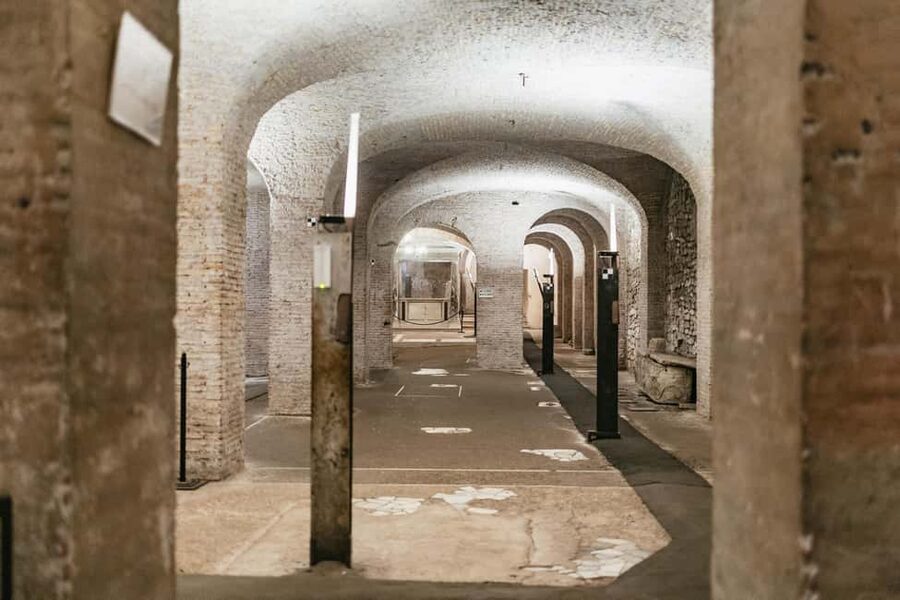
At the lowest levels, you can see remains of ancient Roman homes and the underground spring that contributed to the site’s discovery. The water gives the archaeology a practical dimension. This was not a perfectly dry museum case. Preserving and exposing the lower rooms required difficult work.
The story of excavation is one of San Clemente’s best teaching points. The layers were not found all at once through a neat planned project. A problem with flooding helped reveal what lay underneath. From there, researchers worked through the accumulated material and structures.
Your guide may point out drainage, wall construction, and the relationship between one building and the next. Those details help explain why some rooms remain intact while other parts survive only as fragments.
This portion also requires patience. The deepest level is not as bright or open as the basilica. If you have trouble with confined spaces, stairs, or changing floor surfaces, this is the part to consider carefully.
What the guides add to the experience
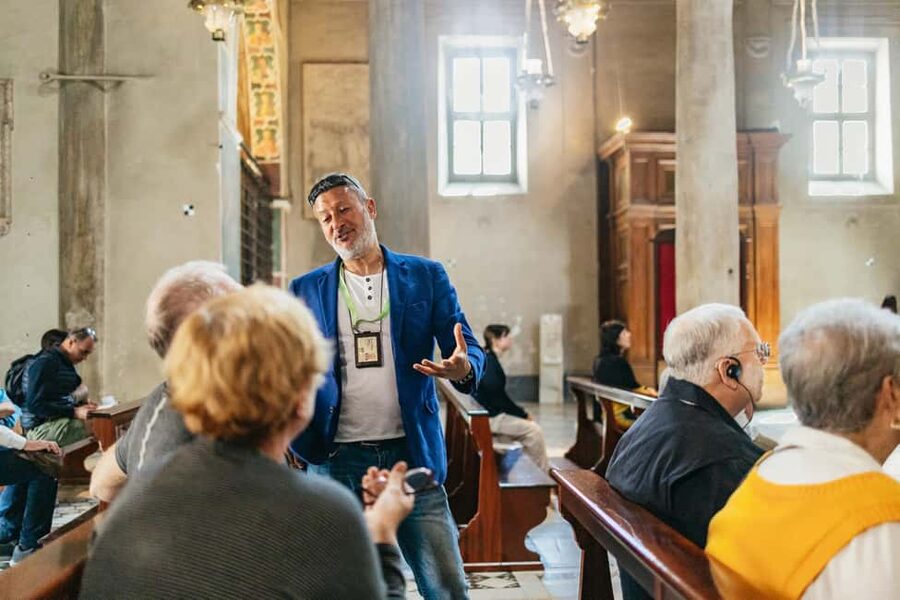
The quality of the guiding is one of the strongest reasons to book this visit rather than simply enter San Clemente on your own. The site contains too many periods and technical details to absorb quickly without help.
The best guide style here is conversational rather than lecture-heavy. Luca was praised for being friendly, clear, and willing to stay after the tour to answer questions. Gina received similar praise for turning difficult historical and artistic material into stories that were easy to understand. Eddy was described as both entertaining and well informed, while Ricardo was remembered for his enthusiasm and strong command of the site.
You may be led by another guide, but the pattern to look for is clear: a guide who connects the church, excavation, art, pagan temple, and Roman homes into one story. A small group helps because you can ask questions and keep track of the explanation in narrow rooms.
There is one warning. Two people had trouble hearing when radios or headsets were not supplied, and multiple groups sometimes made the underground levels harder to navigate. If you cannot hear, tell the guide quickly rather than waiting until the group has moved on.
Is $70 a fair price?
At $70, the tour costs more than a simple self-guided church visit. The value depends on how much help you want interpreting the site.
For a first visit to Rome, I think the price can be justified. You receive admission, a 90-minute experience, and an English-speaking guide who can connect nearly 2,000 years of change. San Clemente is not the kind of place where every surviving wall explains itself.
The value is strongest for visitors who enjoy archaeology, architecture, medieval art, or the way ordinary Roman buildings changed over time. It is less compelling if you want a fast photo stop or dislike enclosed spaces and stairs.
The tour also works well as a practical introduction to Rome’s layered past. Afterward, older walls and reused buildings across the city may make more sense. You are paying not only to enter a church, but to gain a framework for reading Rome.
Free cancellation up to 24 hours before the start and the option to reserve now and pay later make planning easier. Those policies do not change the price, but they reduce the risk of fitting the visit into a busy Rome schedule.
Who should book this tour?
I would recommend it to adults, older children, and anyone who wants more than the standard ancient Rome circuit. It is especially good for people who like to understand how a place developed rather than simply collect famous sights.
It suits you if you can climb stairs without assistance, walk on uneven surfaces, and remain attentive in narrow underground rooms. Comfortable shoes are essential, not decorative advice.
The tour is not suitable for wheelchair users or people with mobility impairments. Photography and video recording are not allowed inside, and cameras, luggage, and large bags are prohibited. Plan to enjoy the site with your eyes and leave bulky belongings elsewhere.
I would schedule it early in a Rome visit if possible. The explanation of the Mithraic temple and the city’s layers can sharpen your understanding of later visits to ancient sites.
Should you book San Clemente?
Yes, if you want a focused tour with real historical depth and do not mind stairs. The combination of gold mosaics, a buried 4th-century church, Roman homes, an underground spring, and a Mithraic altar is unusual even in Rome.
Book it with realistic expectations. This is not a grand open-air monument, and the deepest rooms may be crowded or hard to hear. You cannot take photographs inside, and the physical route demands some effort.
For most visitors who can manage those limits, San Clemente is a smart use of 90 minutes. The site gives you a clear, physical lesson in how Rome was built, forgotten, and built over again. A strong guide makes that lesson far easier to remember.
FAQ
How long does the San Clemente tour last?
The experience lasts 1.5 hours. The guided portion is listed as one hour, followed by about 30 minutes for the basilica and photo stop.
What is included in the price?
The $70 price includes entrance to San Clemente Basilica and a live English-speaking guide.
Where do I meet the guide?
Meet near San Clemente Basilica at the corner by Via di San Giovanni in Laterano, 126. The meeting point is outdoors, not inside an office.
Which metro stop is closest?
The nearest metro stop is Colosseo on Line B.
Can I take photographs inside?
No. Cameras and video recording are not allowed inside, and photography is prohibited within the church and archaeological areas.
Is the tour suitable for wheelchair users?
No. The tour is not suitable for wheelchair users or people with mobility impairments because you must climb and descend stairs independently.
What should I wear?
Wear comfortable shoes for stairs and uneven surfaces. Bring layers because the underground areas may be cooler than outside, and make sure your shoulders and knees are covered inside the church.
Can I cancel the booking?
Yes. You can cancel up to 24 hours in advance for a full refund. You can also reserve now and pay later.
Just added around Rome
- St. Peter’s Basilica and Vatican Grottoes Tour★ 4.9 · 120 reviews
- Rome: St Peter’s Basilica Express Tour & Grottoes★ 4.3 · 126 reviews
- St. Peter’s Basilica Full Guided Tour with Vatican Grottoes★ 4.6 · 286 reviews
- Rome: Appian Way, Aqueducts, & Catacombs E-Bike Guided Tour★ 4.9 · 54 reviews
- Rome: Trevi Fountain Underground Small Group Tour★ 4.4 · 47 reviews
- Rome: Underground Trastevere Guided Walking Tour★ 4.8 · 87 reviews
- Rome: Tour of St. Clement’s Basilica Underground Temples★ 4.8 · 242 reviews
- Rome underground hidden temples, ruins, and secret basilicas★ 3.7 · 21 reviews
Rome Cave Tours, compared.
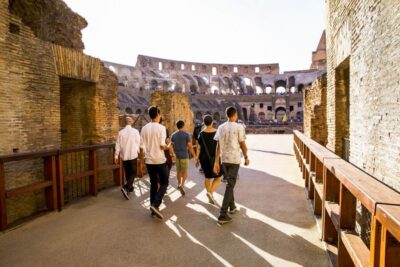
Colosseum: Underground and Ancient Rome Tour
Read our review →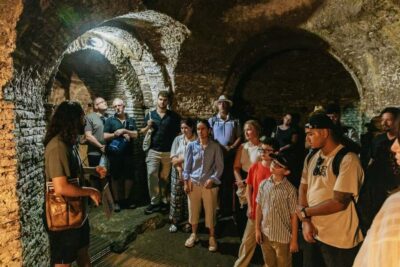
Capuchin Crypts and Catacombs Tour with Transfers
Read our review →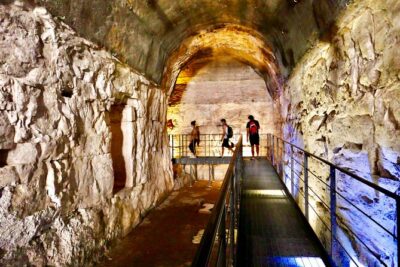
Expert Guided Tour of Colosseum Arena OR Underground, and Forum
Read our review →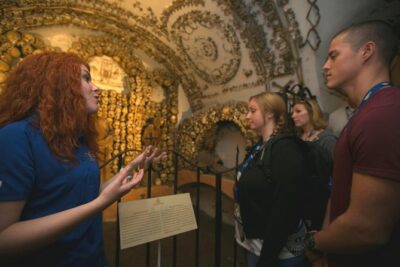
The Original Roman Crypts and Catacombs Tour with Transfers
Read our review →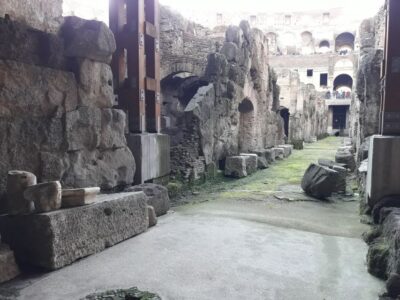
Colosseum Underground Small Group Guided Tour
Read our review →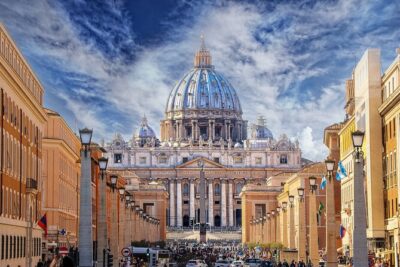
St. Peter’s Basilica, Dome Climb, and Underground Tour
Read our review →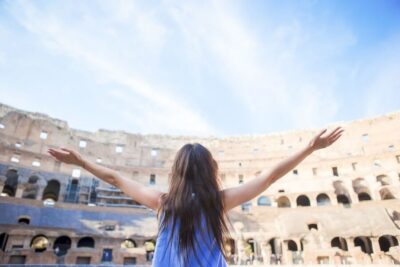
Catacombs of St. Callixtus Entry Ticket & Guided Tour
Read our review →Browse the lists this cave appears in