

Review · ROME CAVE TOURS
Rome: Trevi Fountain and Underground Guided Tour
Rome has layers, and this tour makes them visible. The 40-minute visit pairs the Trevi Fountain with the underground Vicus Caprarius site, where you can see a working 2,000-year-old aqueduct nine meters below street level. I like the clear storytelling and the chance to move beyond the usual fountain photograph. The main drawback is value: at $41 per person, some people may find the tour short for the price.
I also like the way the guides bring order to a crowded corner of Rome. Mario, Francesca, Vito, Anestis, and other guides have been praised for humor, patience, and strong explanations. Just know that the underground site is not a secret chamber directly beneath the fountain basin, and the €2 restricted basin area is not included.
Key things to know before booking
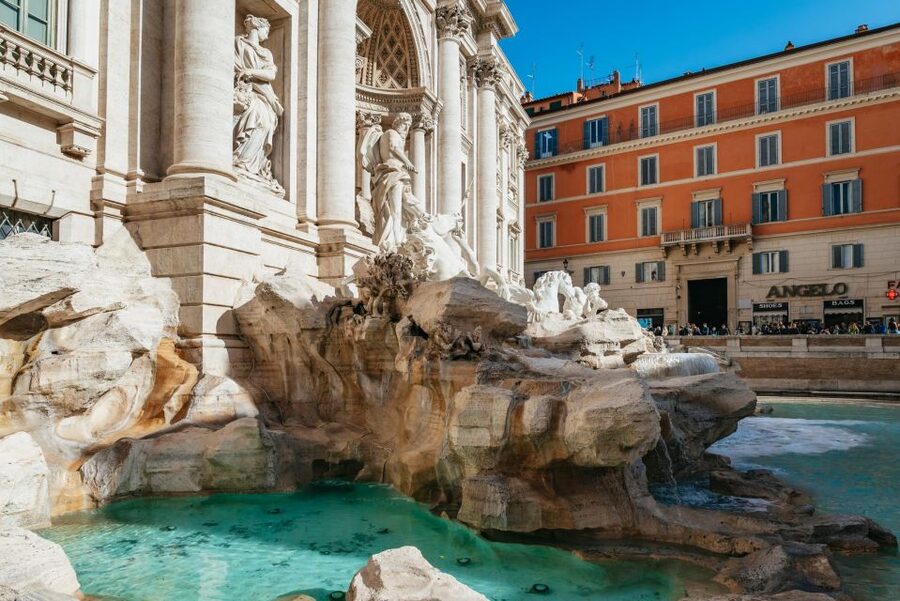
- The underground site is Vicus Caprarius: You visit Roman remains near the fountain, not the interior of the Trevi Fountain itself.
- A working ancient aqueduct is the star below ground: The water system is about 2,000 years old and still supplies the fountain above.
- The tour lasts 40 minutes: Expect roughly 20 minutes at the fountain and 20 minutes at the archaeological site.
- The guide matters here: The best part is the explanation, especially in a crowded area where signs alone would not tell the full story.
- The fountain basin costs extra: The tour includes a public piazza viewing point, while restricted basin access costs €2.
- Bring practical basics: Headphones and a reusable water bottle are recommended, and the site is not suitable for wheelchair users.
Starting at the Trevi Fountain’s crowded edge

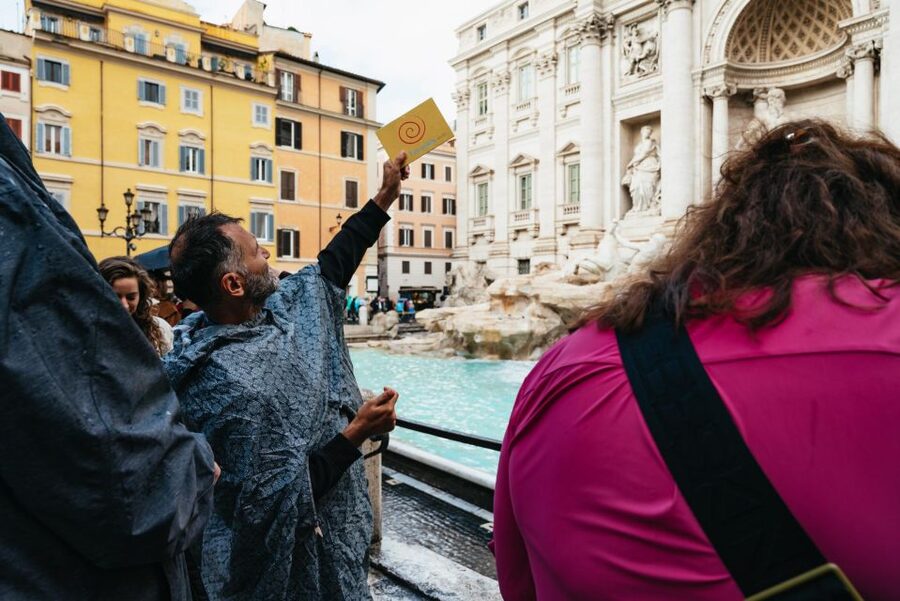
The meeting point is in front of the Santi Vincenzo e Anastasio a Fontana di Trevi Church, on the left corner of Piazza di Trevi. Look for a yellow label marked TOURIKS. This detail matters because the square can be packed, and one person specifically had trouble spotting the guide among the crowd.
Give yourself extra time to reach the church. The tour operator may call or text if you are running late, but arriving early is still the safer plan. Once you find the guide, you receive headsets so you can hear the explanation without standing shoulder to shoulder with the group.
The opening section focuses on the Trevi Fountain itself. You remain at the public piazza level, with a good view of the fountain’s theatrical stonework, sea imagery, and mythological figures. The guide explains how the fountain developed over the centuries and points out details that are easy to miss when the square is full of people taking photographs.
This is not simply a stop for a quick coin toss and a picture. The guide uses the fountain to explain Rome’s water supply, changing urban design, and the way ancient infrastructure continued to shape the modern city. I find that useful because the fountain can seem like a grand decorative backdrop unless someone connects it to the water system behind it.
The guide will not take you into the restricted basin area as part of the standard tour. That access costs €2 separately. You still get an excellent view from the piazza, but you should plan your expectations carefully. If standing close to the water is important to you, ask about the extra fee and access conditions before the tour begins.
More Guided Tours around Rome:
- Expert Guided Tour of Colosseum Arena OR Underground, and Forum
★ 4.5 · 5,041 reviews - Rome: Colosseum Underground Small Group Guided Tour
★ 4.7 · 4,844 reviews - Rome: Catacombs of St. Callixtus Entry Ticket & Guided Tour
★ 4.6 · 3,037 reviews
What you actually see nine meters underground
After the fountain introduction, the group heads to Vicus Caprarius. This archaeological site sits below the modern streets and reveals layers of Rome that are easy to miss from above.
The descent is about nine meters. Below ground, you see remains connected with an ancient Roman residential area, including part of an imperial Domus. You also see the accumulated layers created as Rome was rebuilt and altered over many centuries. The effect is striking: the modern street above suddenly feels like only the latest surface in a very old city.
The most memorable feature is the ancient aqueduct. It is about 2,000 years old, fully functioning, and still supplies water to the Trevi Fountain. For me, this is the strongest reason to book the tour. The fountain is famous because of its sculpture and drama, but the aqueduct explains why water arrives at this location in the first place.
The underground visit is not a long museum stop. The guide leads you through the excavation, explains what you are seeing, and connects the remains to the fountain above. In about 20 minutes, you get a compact look at Roman engineering, domestic life, and the layers beneath today’s streets.
Some people expect to walk underneath the fountain itself. That is not what happens. Vicus Caprarius is a nearby archaeological site, and the aqueduct relates to the fountain’s water supply, but this is not a passage below the fountain basin. That distinction is important, especially because the wording of the experience can give a different impression.
Why the guide makes a short tour worthwhile
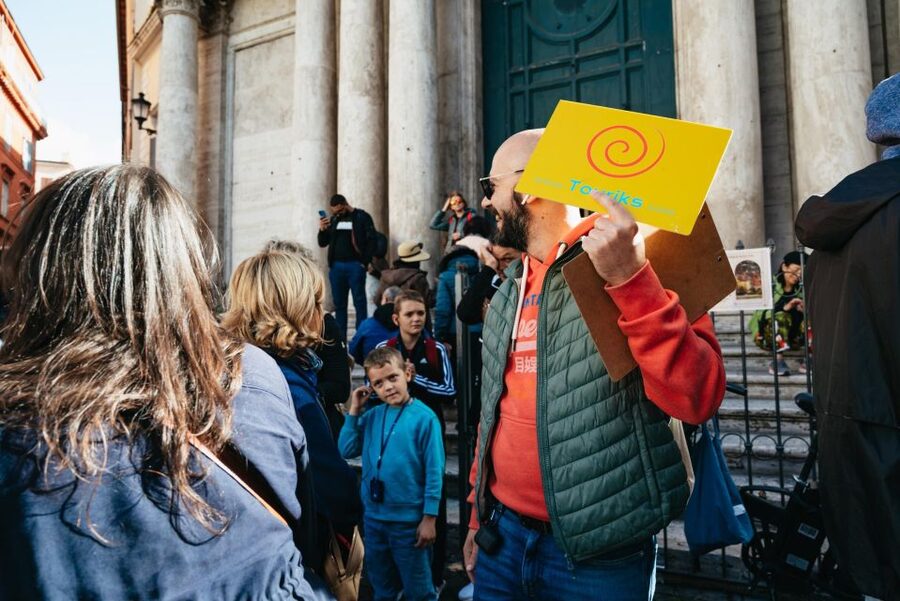
The underground site is interesting on its own, but the guide gives it meaning. Without context, ancient walls, channels, and fragments can blur together. With a good explanation, you can understand how a residential building, water infrastructure, and later street levels fit into Rome’s long story.
The strongest praise has gone to guides who explain difficult ideas in simple language. Mario has been described as funny, patient, and full of useful information. Francesca has been praised for her enthusiasm and ability to keep the visit lively. Other guides, including Vito and Anestis, have also earned compliments for answering questions and helping people feel comfortable.
That personal approach is especially helpful for families. One guide adjusted explanations for two young children, giving them short pieces of information while offering more detail to the adults. That suggests the tour can work well for mixed-age groups, provided everyone is comfortable with the quick pace and underground setting.
The headsets are another small but important benefit. Piazza di Trevi is noisy, and a guide speaking without audio equipment could easily lose half the group. The devices have been described as clear and comfortable, though you should bring your own headphones as requested.
A few practical differences between guides are possible. Accents may occasionally make an explanation harder to follow, but the guides generally make an effort to repeat or clarify information. If you have hearing concerns or a strong preference for a particular language, check the available language before booking.
A brisk 40 minutes, with little wasted time
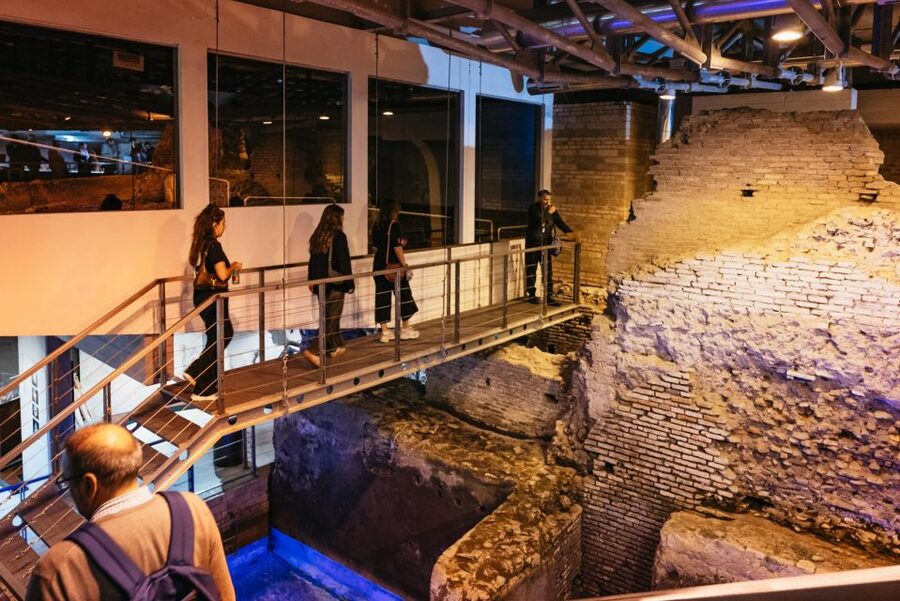
The schedule is split into two equal sections:
- About 20 minutes at Trevi Fountain
- About 20 minutes at Vicus Caprarius
- Return to the meeting point at Via del Lavatore 49
This makes the tour easy to fit into a busy day in central Rome. You can pair it with nearby sightseeing, lunch, or a longer walk through the historic center. The short length also makes it a reasonable option when you want more than a photograph but do not want to spend half a day in a museum.
The tradeoff is that the tour moves quickly. You get an overview rather than an extended archaeological lesson. If you enjoy detailed excavation visits, you may wish the underground portion lasted longer. If you want a focused introduction, the 40-minute format is efficient.
The experience is also useful during hot weather because part of it takes place below ground. Several people appreciated the cooler underground setting, especially after standing in the sun and crowds around the fountain. The water bottle recommendation is sensible, though food and drinks are not included.
Because the tour covers two separate locations, wear comfortable shoes. The route is short, but the underground area includes a descent and uneven archaeological surfaces may be present. Wheelchair users should not book this tour, as it is specifically marked unsuitable for wheelchair access.
A few more cave trips around Rome worth a look
- Colosseum: Underground and Ancient Rome Tour
★ 4.7 · 12,691 reviews - Rome: Capuchin Crypts and Catacombs Tour with Transfers
★ 4.6 · 6,456 reviews - The Original Roman Crypts and Catacombs Tour with Transfers
★ 4.5 · 4,896 reviews - Rome: St. Peter’s Basilica, Dome Climb, and Underground Tour
★ 4.8 · 3,404 reviews
Is $41 a fair price?

The price is $41 per person, including the guide, underground entrance fees, and headsets. Hotel pickup, food, drinks, and the €2 restricted fountain basin access are not included.
That is a fairly high cost for 40 minutes. Several people felt the experience was brief for the money, even while praising the guide. You can visit the fountain’s public viewing area without paying for a tour, and the underground archaeological site may offer a lower-cost audio option when visited independently.
The tour earns its price when you value interpretation, a planned visit, and the chance to understand what you are looking at. The aqueduct and Roman layers are easy to overlook if you only walk past the entrance. A good guide also saves you from trying to piece together the site with limited time and scattered information.
The value is weaker if you mainly want to see the fountain basin or expected a large underground complex directly below the monument. In that case, the extra €2 access fee and the short tour length may leave you feeling you paid a lot for a compact visit.
I would think of the $41 as a fee for explanation rather than admission alone. If you enjoy Roman engineering and want a guide to make the stones readable, it can be worthwhile. If you are happy with a quick photograph and a low-cost audio guide, you may prefer to explore independently.
Who will enjoy this Trevi Fountain tour?
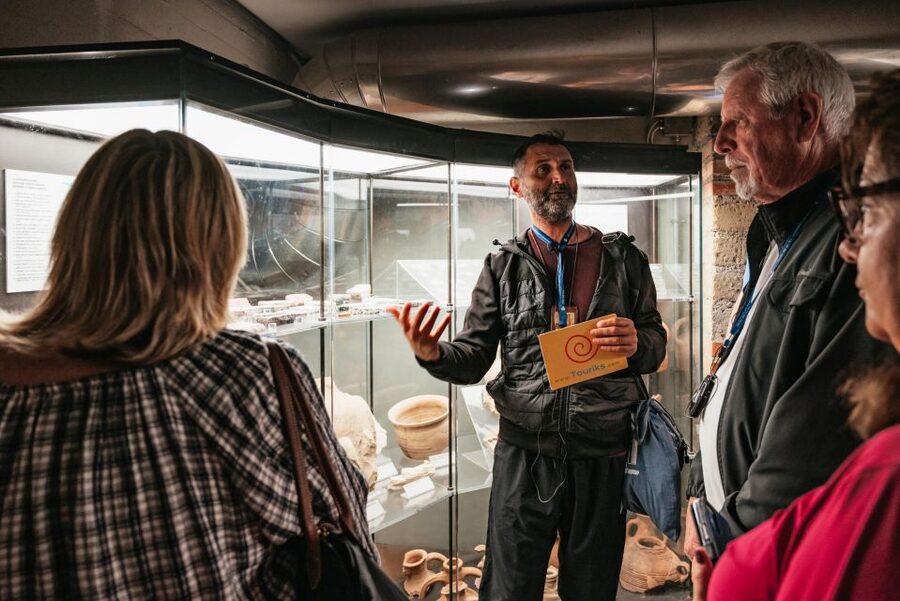
I would recommend this experience to first-time Rome visitors who want context without committing to a long walking tour. It gives you a useful introduction to the fountain, ancient water systems, and the layers beneath the city.
It also suits families. The tour is short enough for children, and several guides have shown patience with questions. The underground location can offer a break from the heat, though parents should be prepared for a quick, information-heavy visit rather than an activity designed only for children.
History fans and engineers may find the aqueduct especially rewarding. Seeing a functioning ancient water channel makes Roman infrastructure feel concrete, not abstract. You are not just hearing that Rome had advanced water systems. You are looking at one that still performs its original role.
This is less suitable for anyone seeking a slow photography session. The square is crowded, the public basin area is not included, and the group must keep to its schedule. It is also a poor fit for wheelchair users because of the underground access.
Private groups are available if you want more control over the pace or a more personal guide interaction. For a standard visit, expect a shared walking tour with headsets and a fast change from the fountain piazza to the excavation site.
Useful planning details before you go
The tour is offered in English, French, Spanish, Portuguese, German, and Italian. Check the starting time and language when you reserve, since the schedule varies by availability.
Bring a reusable water bottle and headphones. The provided headsets help you hear the guide, while your own headphones may be useful if requested by the operator. Keep your meeting-point details easy to access, since the church entrance can be hard to identify in the crowd.
The tour can be canceled because of weather. If that happens, you are offered another date or a full refund. You can also cancel up to 24 hours before the start for a full refund, and the reserve-now, pay-later option gives you some flexibility while you finalize your Rome plans.
I would avoid placing this tour immediately before a timed attraction on the other side of town. The advertised duration is 40 minutes, but crowded streets and finding the meeting point require sensible breathing room. Since the tour finishes back at Via del Lavatore 49, you can continue exploring the Trevi area afterward.
Should you book it?

Book this tour if you want the Trevi Fountain to mean more than a famous photograph. The combination of mythological sculpture, an imperial Domus, layered Roman streets, and a working ancient aqueduct gives the visit real substance.
Skip it if you expect to enter the fountain itself, need wheelchair access, or are focused mainly on keeping costs low. At $41, it is not a bargain admission ticket. Its value depends on the guide, and the strongest guides, including Mario and Francesca, turn a short visit into a memorable lesson.
For most first-time visitors with an interest in Roman engineering, I think the underground section is the deciding factor. Just book it with clear expectations: you will visit an archaeological site near Trevi Fountain, not a secret tunnel under the basin.
FAQ

How long does the Trevi Fountain and Underground Guided Tour last?
The tour lasts 40 minutes. The planned visit includes about 20 minutes at Trevi Fountain and 20 minutes at the Vicus Caprarius archaeological site.
What is included in the price?
The price includes a live guide, entrance to the underground excavations, and headsets to hear the guide.
Does the tour go directly underneath the Trevi Fountain?
No. The underground portion takes place at Vicus Caprarius, a nearby archaeological site. It includes an ancient aqueduct that still supplies water to the fountain, but it is not a passage inside or directly beneath the fountain basin.
Is access to the Trevi Fountain basin included?
No. Access to the restricted basin area costs €2 separately. The guide provides an excellent viewing point from the public piazza level.
Where is the meeting point?
Meet in front of the Santi Vincenzo e Anastasio a Fontana di Trevi Church, on the left corner of Piazza di Trevi. Look for a yellow label marked TOURIKS.
Which languages are available?
The tour is available in English, French, Spanish, Portuguese, German, and Italian.
Is the tour suitable for wheelchair users?
No. The tour is marked as unsuitable for wheelchair users because of the underground archaeological visit.
Can I cancel the tour if my plans change?
Yes. You can cancel up to 24 hours in advance for a full refund. If weather causes the tour to be canceled, you are offered an alternative date or a full refund.
Just added around Rome
- Explore Christian Rome and the Underground of San Clemente★ 4.4 · 16 reviews
- Rome: Colosseum Underground and Arena Floor Tour★ 4.4 · 59 reviews
- Rome: Exclusive Colosseum Underground and Roman Forum Tour★ 4.8 · 569 reviews
- Catacombs of Saint Agnes Entry Ticket & Guided Tour★ 4.5 · 72 reviews
- From Rome: Capri Guided Day Trip with Blue Grotto★ 4.2 · 199 reviews
- Rome: Appian Way, Catacombs & Aqueducts by eBike + Transfer★ 4.9 · 421 reviews
- Private Guided Tour of Colosseum Underground OR Arena and Forum★ 5.0 · 111 reviews
- Private Tour of Catacombs and Ancient Appian Way (hotel pick up)★ 4.5 · 120 reviews
Rome Cave Tours, compared.
Colosseum: Underground and Ancient Rome Tour
Read our review →
Capuchin Crypts and Catacombs Tour with Transfers
Read our review →
Expert Guided Tour of Colosseum Arena OR Underground, and Forum
Read our review →
The Original Roman Crypts and Catacombs Tour with Transfers
Read our review →
Colosseum Underground Small Group Guided Tour
Read our review →
St. Peter’s Basilica, Dome Climb, and Underground Tour
Read our review →
Catacombs of St. Callixtus Entry Ticket & Guided Tour
Read our review →Browse the lists this cave appears in