
Review · AUDIO TOURS
Rome: Navona Square Underground Ticket with Audio Guide
Beneath Navona, Rome changes. This $18 visit takes you five meters below Piazza Navona to the Stadium of Domitian, the first and only masonry stadium built in Ancient Rome. I like the clear audio guide and the smart mix of ruins, old photographs, video, and 3D reconstructions. I also like how the site explains Roman sports, not just Roman buildings. The main drawback is its size: most people finish in about 45 minutes to an hour, and the underground area is smaller than many expect.
You’ll see ancient travertine blocks, brickwork, and marble columns while learning how up to 30,000 spectators were arranged around the arena. The self-guided format lets you move at your own pace, but the numbered stops can be confusing, and the audio does not always line up perfectly with the displays. Still, this is a good-value stop for anyone who has already visited Rome’s major monuments or wants a quieter historical break in the city center.
Key points before you book
- Five meters below Piazza Navona: Descend beneath one of Rome’s busiest squares to see the remains of the Stadium of Domitian.
- Ancient sports take center stage: The displays explain how Romans watched athletic contests and how spectators were divided around the arena.
- A compact visit: Allow roughly 45 minutes to one hour if you listen to the audio stops and study the exhibits.
- Audio guide in seven languages: Choose Spanish, English, French, German, Italian, Russian, or Portuguese.
- Modern displays help fill the gaps: Unpublished photographs, video, and 3D images show what the stadium may have looked like.
- Optional drinks afterward: Select an aperitif with one cocktail and snacks, or a wine tasting with two wines and a traditional appetizer board.
What lies beneath Piazza Navona
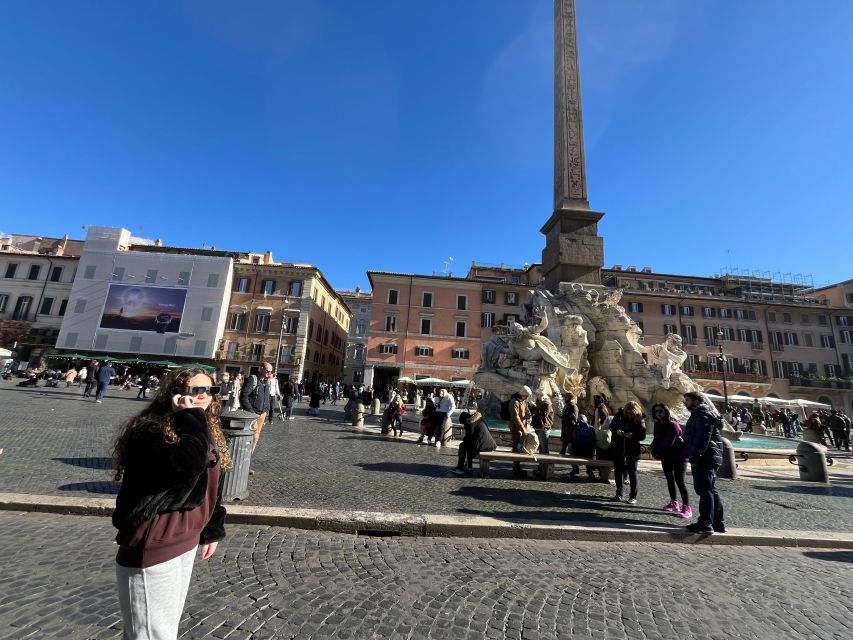
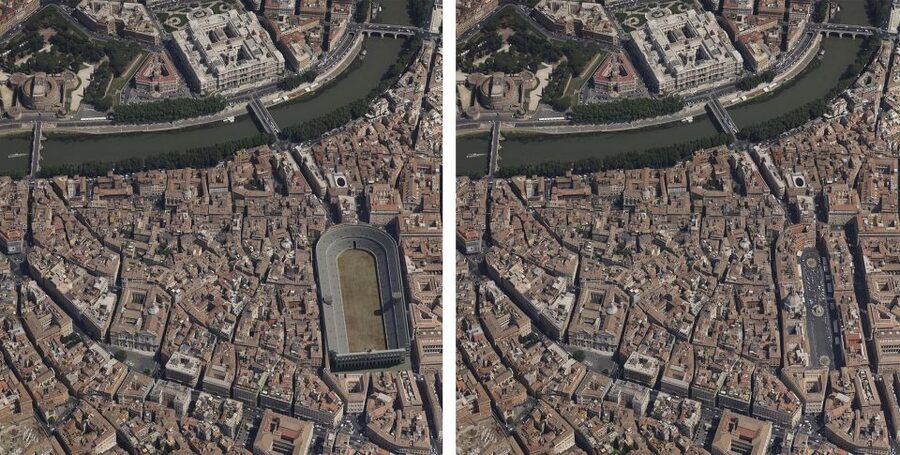
Piazza Navona is one of Rome’s most famous public spaces, with fountains, Baroque façades, cafés, artists, and a steady stream of people. Underneath it sits a much older story: the remains of the Stadium of Domitian, built during the Roman imperial period for public spectacles and athletic events.
The site is about five meters below today’s street level. That change in height matters. You are not simply looking at a few stones in a museum case. You walk through surviving sections of the former stadium and see how the modern piazza developed above it.
The stadium was built from masonry and could hold up to 30,000 spectators. The visit explains how those spectators were organized around the arena and how Roman sports fit into public life. This gives the ruins a human purpose. You are not left wondering why a wall or column mattered.
I find this setting especially useful for understanding Rome’s layers. The piazza above is lively and polished. Below, the remains are quieter and more physical. The contrast is the point.
More Self-Guided Tours around Rome:
- Rome: Guided Catacombs Tour & Capuchin Crypt (Audio Guide)
★ 4.3 · 191 reviews - Nerja: Caves of Nerja Entry Ticket with Audio Guide
★ 4.6 · 1,616 reviews - Paris: Catacombs Entry & Seine River Cruise with Audio Guide
★ 4.4 · 1,150 reviews
Finding the entrance at Piazza Navona 25
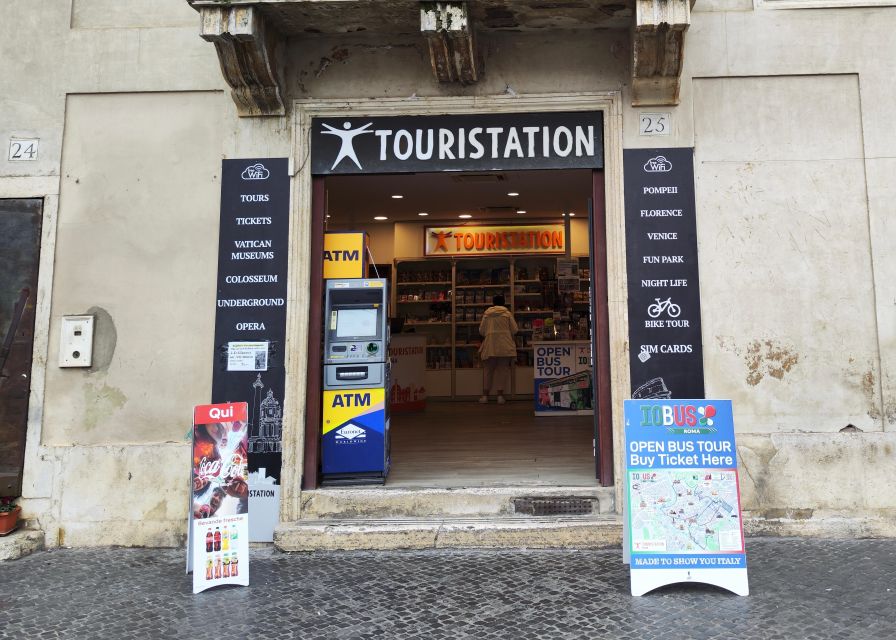
The meeting point is the tourist point in front of the main fountain at Piazza Navona, 25. It is in a central location, so you can fit the visit between other sights in the historic center. No transportation is included, and you make your own way to the square.
Bring your voucher and allow a little extra time to get oriented. The entry process has occasionally involved redeeming a phone voucher at a tourist point or ticket office before returning to the entrance with a printed ticket. The staff are described as helpful, but the extra step can be confusing if you arrive at the last minute.
My practical advice is simple: find the tourist point first, then ask exactly where you should redeem the voucher before heading underground. Do not assume the first doorway you see is the final entrance.
Once inside, the route is easy enough to follow, but the numbering deserves attention. The numbered stations do not always feel perfectly ordered, and the audio may refer to an image or section that is not directly in front of you. Pause, check the number, and give yourself time to match the narration with the display.
Walking through the Stadium of Domitian

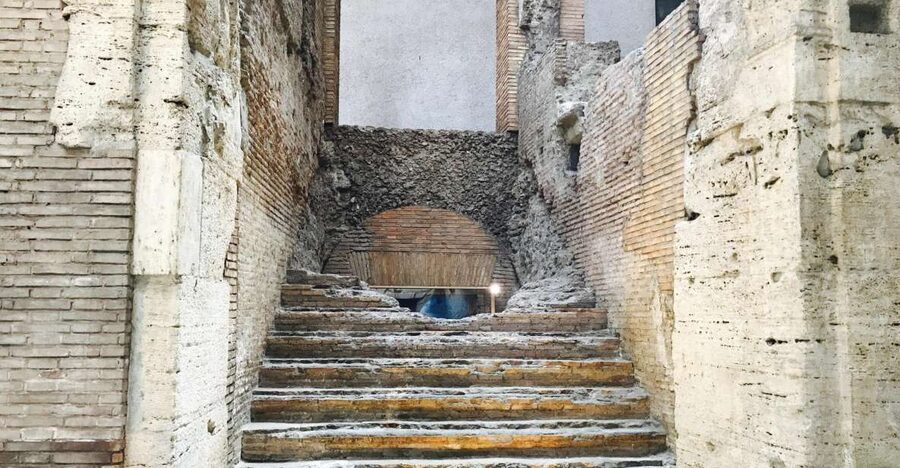
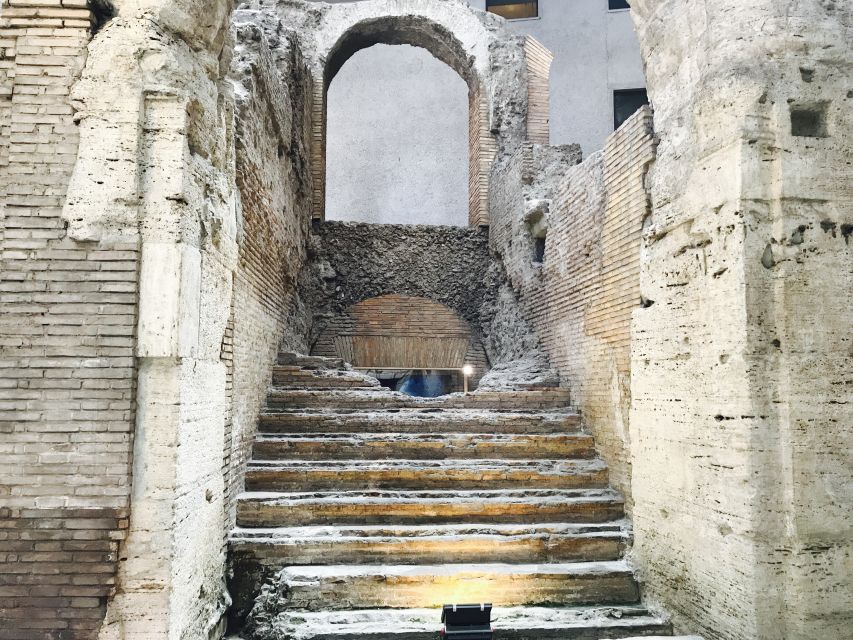
The main attraction is the physical remains of the stadium. You see portions of the structure, including travertine blocks, brickwork, and marble columns associated with the main entrances. These details show the building methods used in Ancient Rome and help you picture the scale of the original complex.
Do not expect a complete stadium or a vast open archaeological park. Much of the building has disappeared, and the preserved area is compact. One of the common surprises is that you can see some of the remains from street level, so the underground ticket does not reveal an entirely sealed-off world.
That said, going below the piazza adds useful detail. From above, an ancient wall is easy to overlook. Down below, you can study the masonry at close range and connect it with the historical material in the exhibition.
The route is short enough that you do not need a full morning. Most people can see the site in around 45 minutes, while a slower visit with every audio item and display takes closer to an hour. That makes it easy to pair with nearby sights such as the Pantheon, the Trevi Fountain, or the rest of Piazza Navona.
How the audio guide works
The audio guide is included and available in Spanish, English, French, German, Italian, Russian, and Portuguese. It is the main way you learn about the ruins, so I would not treat it as an optional extra.
The narration covers the stadium’s construction, its entrances, the use of travertine and brick, and the way crowds were arranged. It also explains the development of Piazza Navona into the square you see today. The focus on Roman sports is a welcome change from the usual stories about emperors, temples, and battles.
The audio is generally clear and informative, but the presentation has a few weak points. Some numbered areas can feel mixed up. At times, the sound does not line up perfectly with the images, and a few sections may be difficult to follow if you are trying to listen while also locating a particular panel.
I would use the guide in short sections rather than rushing from one number to the next. Look at the display first, locate its number, then start the matching audio. If you simply press play and walk, you may miss the connection between the narration and the archaeology.
Families may find the format manageable. A child-specific guide is available, and one five-year-old visitor especially enjoyed using the audio pen and map. The small site also makes it easier to keep track of a young child, though a stroller may not be practical. The attraction is listed as wheelchair accessible.
More Audio Tours around Rome:
- Paris: Catacombs, Audio Guide, and River Cruise Option
★ 4.6 · 966 reviews - Palma: Caves of Genova Ticket & Digital Audio Guide
★ 3.9 · 820 reviews - Margaret River: Self-Guided Audio Tour of Mammoth Cave
★ 4.7 · 48 reviews - Self-Guided Boston’s Beacon Hill Underground Railroad Audio Tour Walking Tour
★ 4.5 · 29 reviews
The photographs, video, and 3D reconstructions
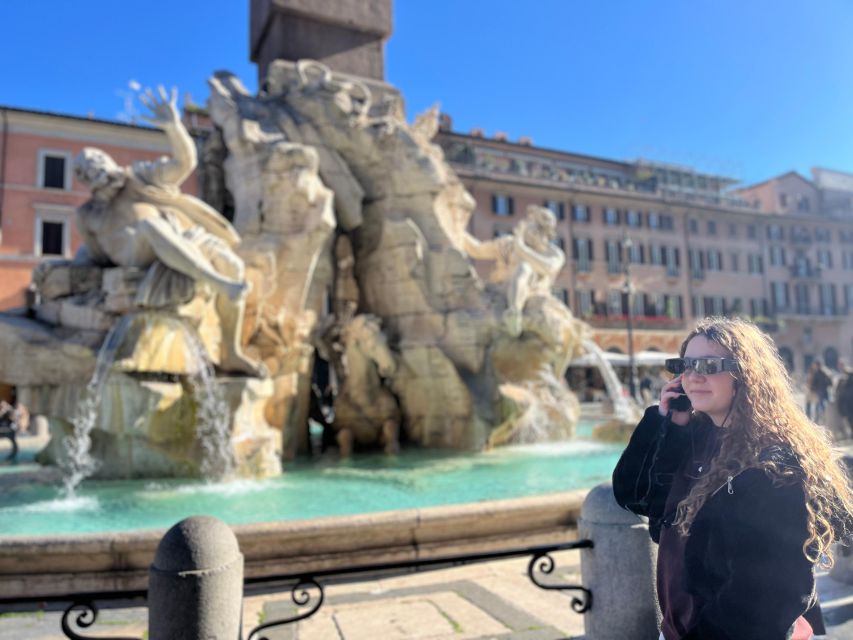
The ruins alone would make for a brief visit. The modern presentation gives the site more weight.
Unpublished photographs and information panels explain the stadium’s past and the later development of the piazza. A video show and 3D renderings help you picture the original building, which is essential because only parts of the structure survive.
The 3D material is particularly useful for first-time visitors. Ancient ruins can be hard to read when you see only foundations and fragments. A reconstruction helps you understand where the entrances were, how the arena related to the seating, and why the building required such a large footprint.
The visual displays also make the visit more approachable for anyone who does not spend every holiday studying Roman archaeology. You can follow the story without needing specialist knowledge.
Still, the exhibition layout is not perfect. Some areas can feel sparse, and the displays do not always create a smooth path from one subject to the next. Think of this as a small archaeological exhibition with a walk through the remains, not a large museum with room after room of objects.
What the visit feels like in practice
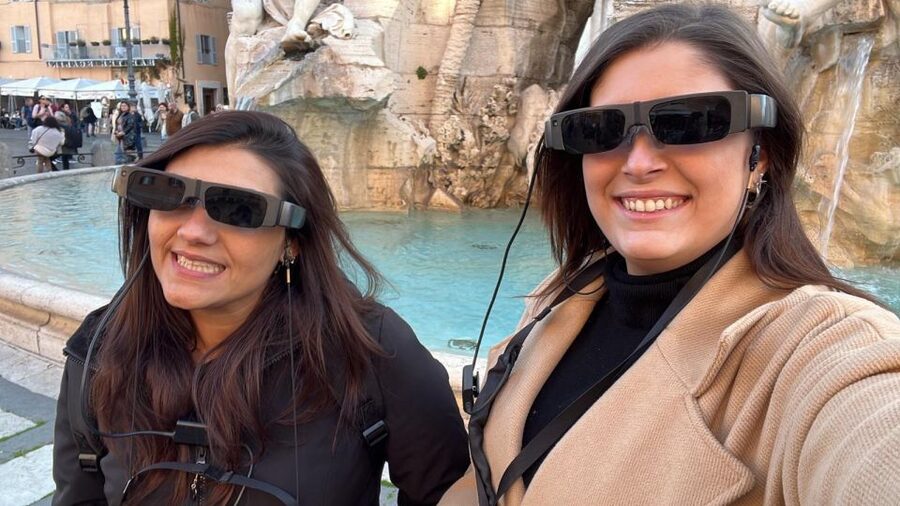
The underground setting is not completely cut off from modern Rome. In some sections, street-level openings mean you may hear traffic and city noise above. If you expect a silent, sealed archaeological chamber, that may weaken the atmosphere.
I see it differently. The sound reminds you that the present-day piazza is built directly over the ancient stadium. You are looking at Roman remains while modern Rome continues overhead. Still, those hoping for total quiet should visit at a less busy time if possible.
The site is clean and has toilets and a gift shop. That is useful when you are planning a full day on foot through central Rome. The gift shop also adds a little time to the visit, though it is not a major part of the experience.
The atmosphere can vary. The compact layout may feel pleasantly calm when visitor numbers are low, but it can also feel empty because the exhibition is small. The site is at its best when you approach it as a focused historical stop rather than a grand headline attraction.
Is $18 good value?
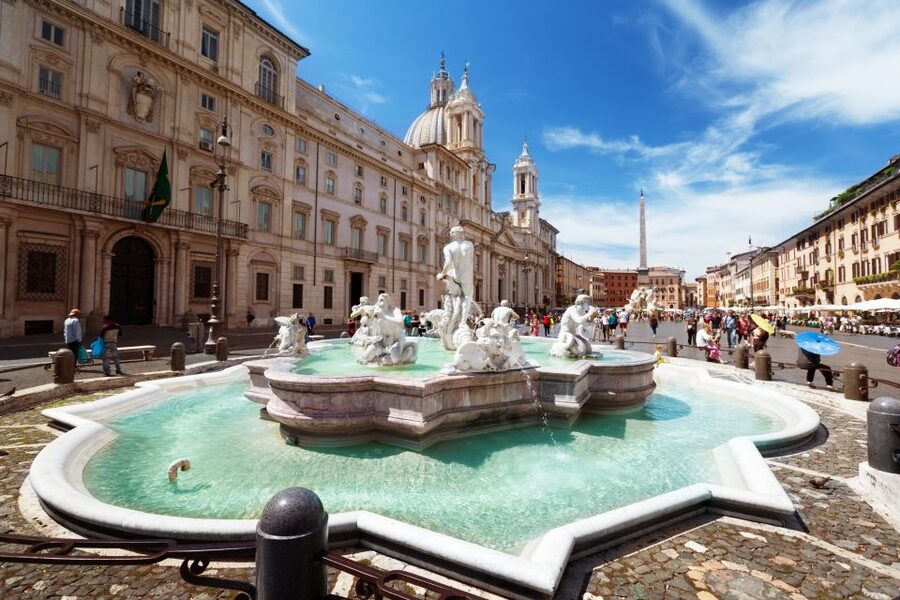
At $18 per person, the ticket is fairly priced if you value context and a self-guided visit. You receive entry to the archaeological site and the audio guide, plus access to the photographs, video, panels, and 3D displays.
The value depends on your Rome itinerary. If this is your first visit and you have limited time, the Colosseum, Roman Forum, Pantheon, and Vatican Museums may deserve priority. Those sites offer more scale and more to see for a longer stretch of the day.
If you have already visited the major monuments, this is a sensible addition. You get a different view of Roman public life, focused on sports and spectators rather than military power or imperial residences. The central location also means you do not need to make a separate trip across the city.
The ticket works best for people who enjoy short, focused visits. It is less suitable if you expect a large excavation, a complete stadium, or a guided walk led by an archaeologist.
Adding the aperitif or wine tasting
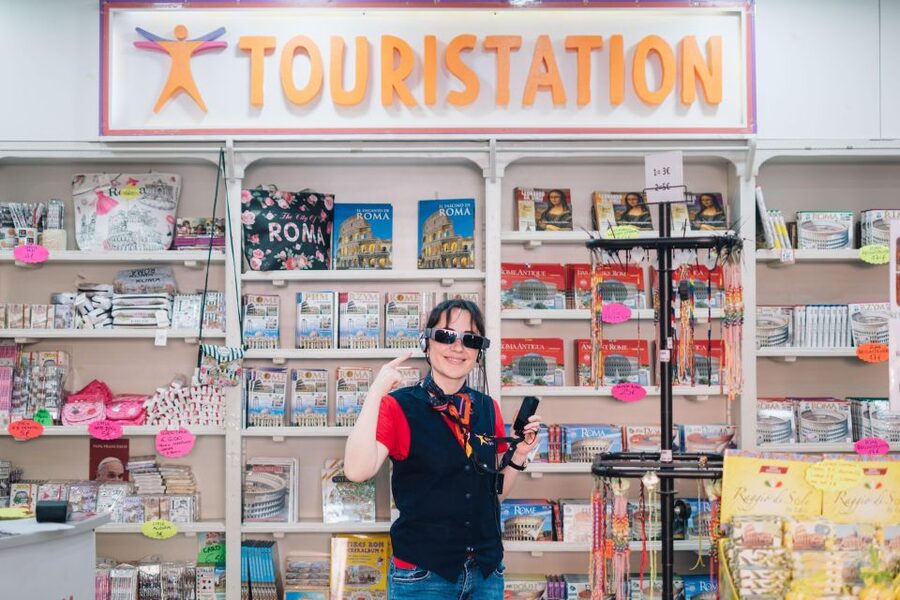
You can select an option that includes an aperitif at a viewpoint in the heart of Rome. That package includes one cocktail and snacks, and staff reserve your table at the meeting point.
A separate wine tasting option includes two wines paired with a traditional appetizer board. The supplied information does not give the exact venue name or the added price, so check those details when selecting your option.
These add-ons can make sense if you already plan to stop for a drink after visiting Piazza Navona. They are less important if your main goal is the archaeological site. I would choose the aperitif for a relaxed pause in your sightseeing day, not as a reason to buy the underground ticket.
Who will enjoy this most?
I would recommend the Stadium of Domitian to:
- History fans who want more than Rome’s best-known monuments.
- Repeat visitors who have already seen the Colosseum and Roman Forum.
- Families looking for a short indoor activity with a child-friendly audio option.
- Independent sightseers who prefer setting their own pace.
- Visitors staying near central Rome who want a stop that fits easily between major attractions.
- People curious about Roman sports and the daily life of large public crowds.
I would be more cautious if you have only one day in Rome, dislike audio guides, or want a large archaeological site. The visit is interesting, but it is not extensive.
Useful booking and timing advice
The activity is valid for one day, with starting times based on availability. The booking allows cancellation up to 24 hours in advance for a full refund, and you can reserve now and pay later.
You do not need transportation, and there is no live guided tour included. Plan to arrive early enough to redeem the voucher and deal with any ticket-office instructions without pressure.
Because the site is compact, it works well before or after time in Piazza Navona. Allow about an hour for the visit, then add time if you choose the cocktail or wine option. Wear shoes suitable for walking on an archaeological surface, and do not rely on a stroller being convenient even though the attraction is listed as wheelchair accessible.
Should you book the Stadium of Domitian?
Book it if you want a compact, informative look at the ancient building beneath Piazza Navona. The combination of surviving masonry, clear historical panels, video, and 3D reconstructions makes the site more rewarding than the ruins alone. The audio guide is essential, and the Roman sports angle gives you a fresh subject beyond the usual emperor stories.
Skip it if your Rome schedule is packed with first-priority monuments or if you expect a huge underground complex. At $18, it is not a bad-value ticket, but its worth depends on enjoying a focused 45 to 60 minute stop.
For repeat visits, families, and anyone who has walked across Piazza Navona without knowing what lay below, I would book it. Pair it with a stroll around the square, and consider the aperitif if you want to turn the visit into an easy afternoon break.
FAQ
Where is the meeting point?
Redeem your voucher at the tourist point in front of the main fountain at Piazza Navona, 25.
How far underground is the Stadium of Domitian?
The archaeological remains are located about five meters below street level.
How long does the visit take?
The visit generally takes about 45 minutes to one hour, depending on how many audio items and displays you study.
Is a live guide included?
No. The ticket includes an audio guide, but not a live guided tour.
Which languages are available for the audio guide?
The audio guide is available in Spanish, English, French, German, Italian, Russian, and Portuguese.
Is transportation included?
No. You make your own way to Piazza Navona, and transportation is not included.
Is the site wheelchair accessible?
Yes. The activity information lists the site as wheelchair accessible.
Can I add a drink or wine tasting?
Yes. Selected options include an aperitif with one cocktail and snacks. A wine tasting option includes two wines paired with a traditional appetizer board.
Just added around Rome
- St. Peter’s Basilica and Vatican Grottoes Tour★ 4.9 · 120 reviews
- Rome: St Peter’s Basilica Express Tour & Grottoes★ 4.3 · 126 reviews
- St. Peter’s Basilica Full Guided Tour with Vatican Grottoes★ 4.6 · 286 reviews
- Rome: Appian Way, Aqueducts, & Catacombs E-Bike Guided Tour★ 4.9 · 54 reviews
- Rome: Trevi Fountain Underground Small Group Tour★ 4.4 · 47 reviews
- Rome: Underground Trastevere Guided Walking Tour★ 4.8 · 87 reviews
- Rome: Tour of St. Clement’s Basilica Underground Temples★ 4.8 · 242 reviews
- Rome underground hidden temples, ruins, and secret basilicas★ 3.7 · 21 reviews
Audio Tours, compared.
Nerja: Caves of Nerja Entry Ticket with Audio Guide
Read our review →
Catacombs Entry & Seine River Cruise with Audio Guide
Read our review →
Catacombs, Audio Guide, and River Cruise Option
Read our review →
Guided Catacombs Tour & Capuchin Crypt (Audio Guide)
Read our review →
Self-Guided Boston’s Beacon Hill Underground Railroad Audio Tour Walking Tour
Read our review →
Marseille: Cosquer Cave Ticket & Panier District Audio Tour
Read our review →Browse the lists this cave appears in