
Review · E-BIKES
Rome E-Bike Highlights Tour & Tasting in Secret Cave
Rome rewards a little extra mobility. This four-hour outing combines easy e-bike sightseeing with a memorable food stop inside Monte Testaccio’s archaeological cave, giving you a fast look at major landmarks without spending the day on foot. I especially like the amount of ground you cover, from the Tiber and Castel Sant’Angelo to Piazza di Spagna and Piazza del Popolo, and I like the unusual tasting of Lazio products in a space carved into an ancient Roman trade site. The main caution is that you need real cycling experience, and the tasting is a generous sampler rather than a full lunch.
The tour also benefits from strong local personalities. Guides such as Giorgio, Alessio, and Alberto have been praised for their warmth, storytelling, food knowledge, and willingness to tailor the balance between sightseeing and eating. One practical point deserves attention: the advertised food selection is extensive, but one participant received fewer separate tasting items than expected, so ask your guide what will be served that day.
Key points to know before booking
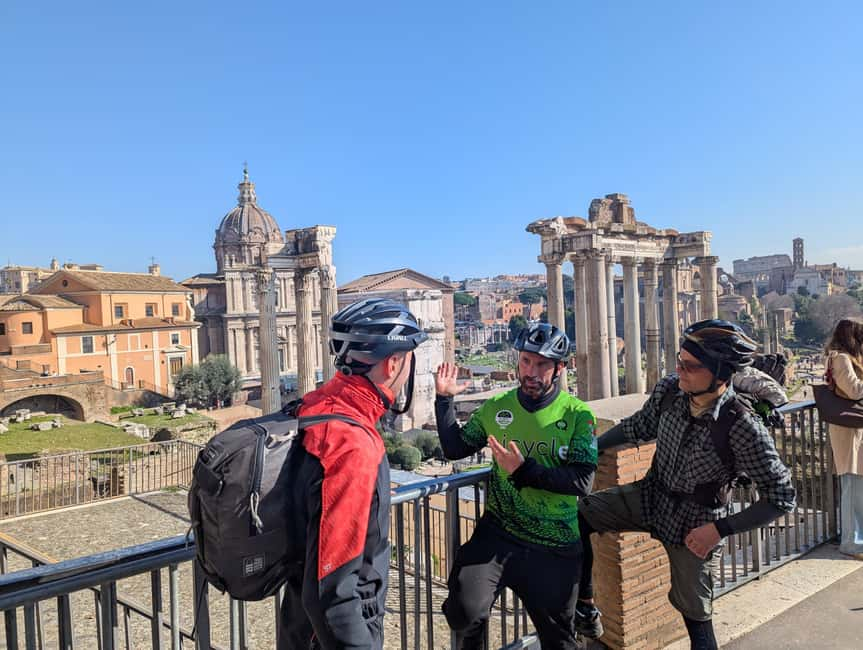
- The four-hour route covers a lot: You ride along the Tiber, through central squares, past major monuments, and into Testaccio.
- The cave tasting is the unusual centerpiece: Cheese ages inside the Monte Testaccio site, an artificial hill made from ancient Roman pottery fragments.
- E-bikes cut down the effort: Pedal assistance helps you reach distant neighborhoods faster, but you still need to control a bicycle confidently.
- Small groups matter in Rome: The normal maximum is eight people per guide, with private options available.
- The food is a tasting, not a meal: Expect shared samples of four cheeses, four cured meats, wine, and pizza scrocchiarella, subject to the day’s serving plan.
- The route is mostly urban and exposed: Much of it uses the Tiber bike path, but light traffic can still appear.
Why an e-bike makes sense in Rome
Rome is best understood by moving between its neighborhoods, not by staying in one monument district. The trouble is that the city is spread out, roads can be busy, and a full day of walking can leave you too tired to appreciate the details.
The pedal-assist bicycles solve much of that problem. You still pedal, but the motor takes the sting out of distance and modest inclines. That lets you connect places that would otherwise require several separate walks or public transport rides.
I like this format for a first or second day in Rome. You get a broad orientation: the river, imperial-era sites, historic squares, shopping streets, and the Testaccio food district. It will not replace an in-depth visit to the Colosseum, Roman Forum, Vatican Museums, or Pantheon, since no museum or monument entrance is included. Instead, it gives you useful context and a sense of how the center fits together.
The route is designed for sightseeing rather than speed. You stop for explanations and photographs, then ride on. The guide leads in English, Italian, Spanish, or French, and the maximum of eight people per guide keeps the experience more personal than a large bus tour.
More Cycling Tours around Rome:
- Rome EBike Tour: Appian Way, Catacombs & Roman Aqueducts
★ 5.0 · 1,766 reviews - Rome: Appian Way & Aqueducts E-Bike Tour (Catacombs & Food)
★ 4.9 · 1,498 reviews - Rome: Appian Way, Catacombs, & Roman Aqueducts E-bike Tour
★ 4.9 · 1,421 reviews
From the Tiber to Castel Sant’Angelo
The meeting point is on Lungotevere delle Armi, with the exact starting arrangement depending on the option you book. Allow a little time at the beginning for the guide to adjust the bicycle, provide a helmet, and check your riding ability.
That safety check is not just a formality. You must be able to ride comfortably, steer, brake, and manage a bicycle in an urban setting. The guide has the right to refuse participation if you appear unable to ride safely because of ability or health concerns, with no refund. If you have not ridden for years, this is not the place to rediscover the skill.
The early ride follows the Tiber for roughly ten minutes. The river path offers a calmer opening than starting immediately in central traffic, and it helps you get used to the e-bike’s response. You then reach Castel Sant’Angelo, the massive cylindrical fortress near the Vatican area.
The castle began as a Roman mausoleum and later served as a fortress and papal refuge. You do not enter on this tour, but the exterior makes a strong first stop. Its heavy stone form and river setting show how Rome’s buildings changed purpose over time.
Tiber Island, Piazza Venezia, and the Jewish Ghetto
The ride continues to Tiber Island, a small, distinctive island in the river with a long connection to healing and medicine. It is a compact stop, but its location gives you a useful view of Rome as a city shaped by the Tiber.
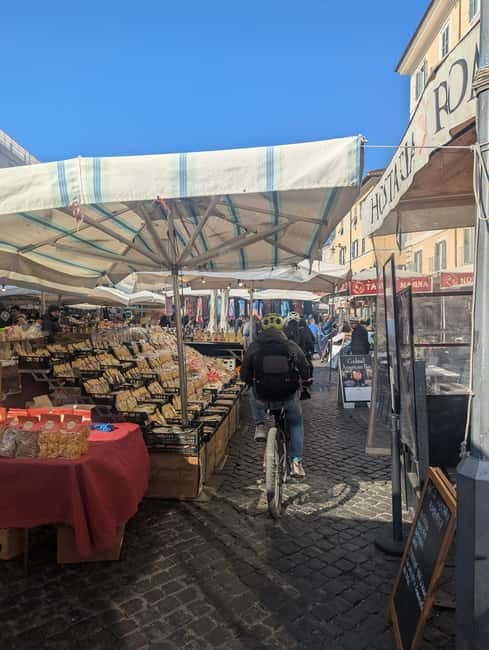
From there, the route heads toward Piazza Venezia. The wide square is dominated by the Vittoriano, the large white monument dedicated to Victor Emmanuel II. It is hard to miss, and the contrast between the monument’s bright stone and the older streets around it makes this one of Rome’s most visually striking city spaces.
The next section leads through Rome’s Jewish Ghetto. This is one of the route’s stronger neighborhood visits because it adds social and cultural depth to the grand monument checklist. Narrow streets, old façades, and a long Jewish presence give the area a more intimate character than the monumental center.
The guide’s role matters here. A bicycle tour can easily become a blur of names and dates, but a local guide can explain why the neighborhood feels different and point out details you might pass without noticing. Giorgio has earned especially warm praise for his enthusiasm and personal connection to Rome, while Alessio has been noted for taking photographs and adjusting the pace to suit the group.
Campo de’ Fiori and the ride to Monte Testaccio
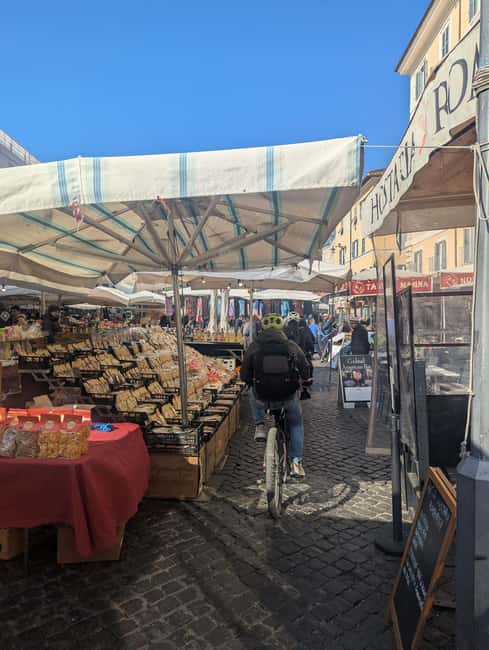
Campo de’ Fiori is another lively central stop. Its open square is associated with markets by day and restaurants and cafés later on. The square also has a darker past, marked by the statue of Giordano Bruno at its center.
You have around twenty minutes of riding time between several stops, so the experience moves at a brisk sightseeing pace. That is a strength if you want to cover ground, but it also means you should not expect long, detailed visits at every location. This is a sampler of Rome rather than a slow study of each square.
The route then heads to Monte Testaccio. The name can sound like a natural hill, but Monte Testaccio is largely made from fragments of ancient Roman oil jars. In imperial Rome, enormous quantities of olive oil arrived at the nearby commercial river port, and the discarded pottery gradually formed the hill.
That history explains why the tasting location feels more meaningful than a standard restaurant stop. You are not simply eating regional food in a fashionable neighborhood. You are eating in a place tied to Rome’s old supply system and commercial life.
More E-Bike Rides around Rome:
- Appian Way, Catacombs and Aqueducts Park Tour with Top E-Bike
★ 5.0 · 735 reviews - Rome: Appian Way E-Bike Tour Catacombs, Aqueducts & Picnic
★ 4.6 · 727 reviews - Rome: Appian Way & Catacomb Sunset E-bike Tour with Aperitif
★ 4.5 · 682 reviews - Rome: Appian Way, Catacombs & Aqueducts by eBike + Transfer
★ 4.9 · 421 reviews
The archaeological cave tasting
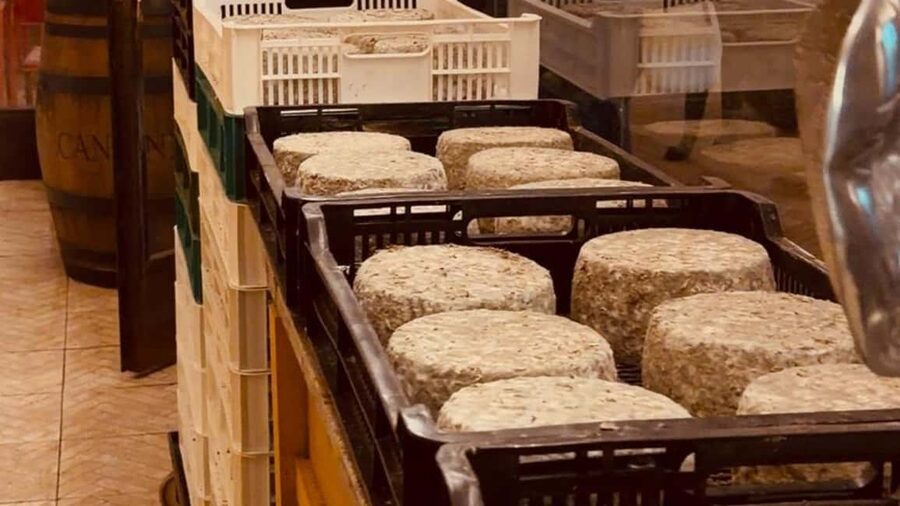
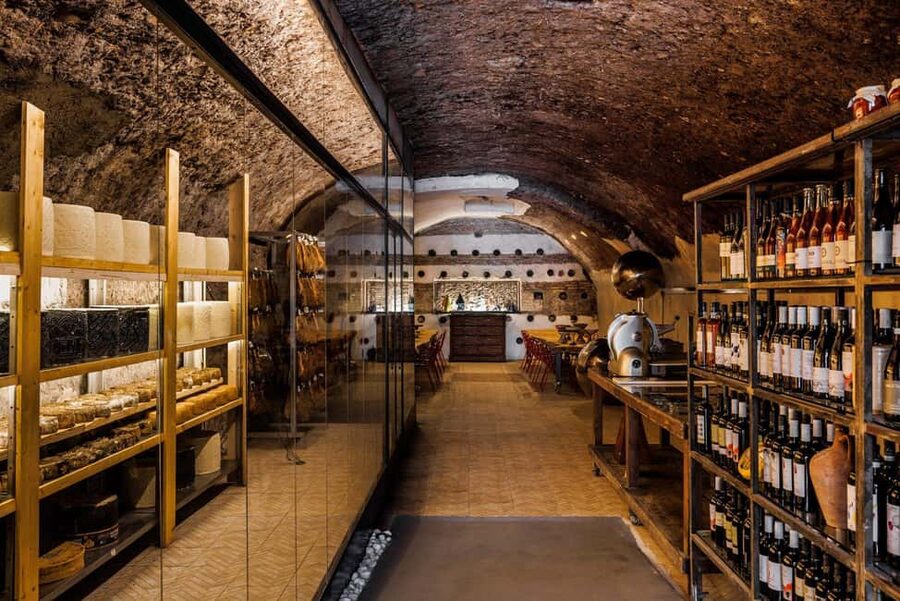
The food stop takes place in what is described as Europe’s first Urban Aging Cave, built into the layers of Monte Testaccio. The cave is used to age cheeses, and the enclosed setting gives the tasting its strongest sense of place.
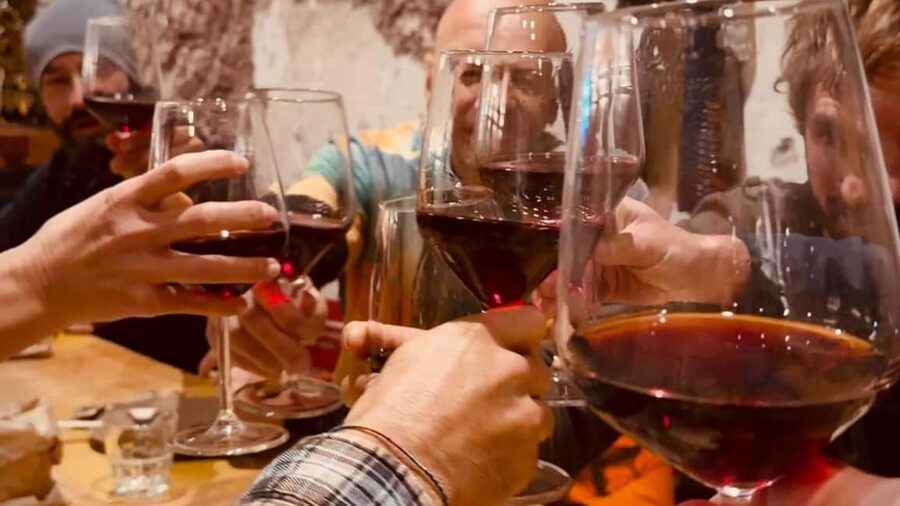
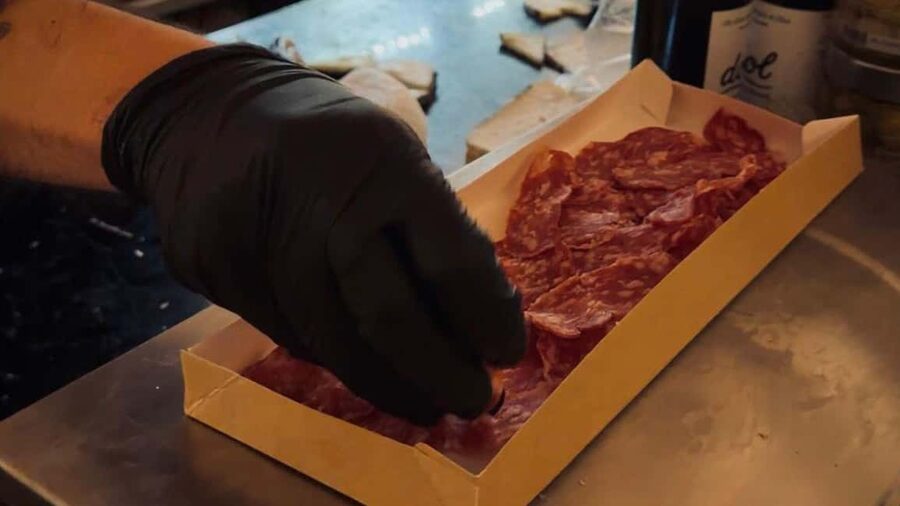
The planned selection includes four cheeses aged inside the cave, four types of salumi, a glass of local wine, and pizza scrocchiarella. The pizza is crisp and thin, useful for pairing with the cheeses and cured meats. The wine adds a Lazio connection without turning the stop into a formal wine class.
The most important expectation to set is portion size. This is a shared tasting, not a complete meal. You should arrive ready to sample several products, but do not count on it replacing lunch for the day.
There is also some variation in how the food is presented. The stated offering lists four cheese varieties and four cured meats, yet one participant received three separate tastings, with the final serving being more substantial. If the exact number of samples matters to you, ask at the start what is available that day.
For me, the setting is the real prize. Rome has plenty of places to order cheese, salumi, wine, and pizza. Far fewer let you taste cheese aged inside an ancient archaeological site. The cave gives the food a clear connection to the city beneath your feet.
Circus Maximus and the imperial scale
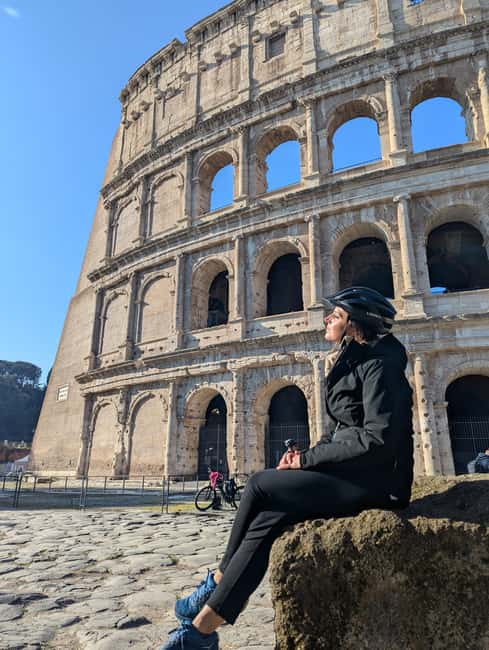
After the tasting, the e-bike route returns to major ancient Rome. Circus Maximus is the likely point where you feel the city’s imperial scale most clearly. The enormous open area once held chariot races and public spectacles.
You stop for photographs and a guide explanation rather than entering a restored arena. That distinction matters. Circus Maximus is now a broad archaeological space, so the guide’s description helps you picture the grandstands, track, and crowds that once filled it.
This section also gives your legs a break from the denser streets. After food and wine, the open space can feel welcome, though you should still ride carefully. The wine included in the tasting is limited, but anyone who feels unsteady should tell the guide before getting back on the bicycle.
Piazza Navona, Piazza di Spagna, and Piazza del Popolo
Piazza Navona brings you back into Rome’s Baroque center. Its long oval shape follows the outline of an ancient stadium, while fountains and church façades make it one of the city’s most memorable public spaces.
The tour does not include entrance fees, so your visit is about the square, views, and explanation. You will have time to take in the setting, but not necessarily enough for a leisurely café stop or a detailed look at every fountain.
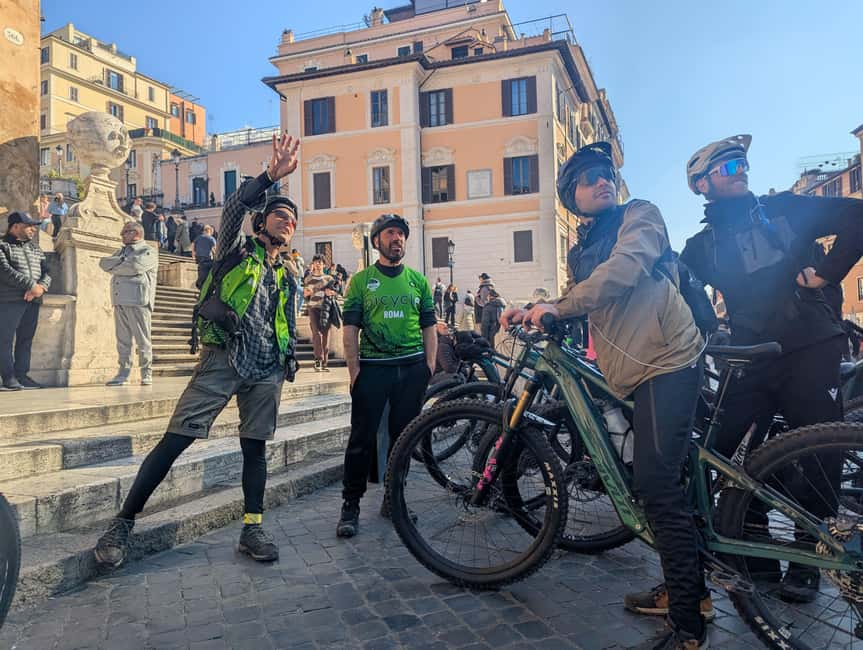
Next comes Piazza di Spagna and the Spanish Steps. This is one of Rome’s most crowded pedestrian areas, so the guide may need to lead you carefully and manage where the bicycles can be used. The steps themselves are for walking, not cycling, and the square can be difficult to navigate when busy.
The final major stop is Piazza del Popolo. Its broad layout, twin churches, central obelisk, and connection to Villa Borghese make it a fitting end to the sightseeing circuit. You finish with a sense of Rome’s grand public spaces, from the riverfront to the city gates.
The route then returns to the original area on Lungotevere delle Armi, unless your selected option lists a different drop-off arrangement.
What guides add to the ride
A good guide is especially important on a bicycle tour because the stops are short. You need clear instructions, safe route choices, and stories that work while standing beside a bike.
The strongest guide feedback centers on personality. Giorgio has been praised as warm, passionate, and deeply proud of Rome. Alessio has been described as funny, energetic, and generous with photographs, while Alberto has been appreciated for connecting street food with Roman food traditions.
Those details tell you what kind of tour this is. It is not a recorded audio route or a simple bicycle rental. The guide shapes the day, explains what you are seeing, and can sometimes adjust the balance between food and sightseeing. One couple arriving early in their Rome stay chose fewer food stops in order to see more of the city, and found that choice worthwhile.
Still, guide quality can vary from one departure to another. The language options are broad, but you should confirm your preferred language and meeting point when booking.
Price, group size, and practical value
At $80 per person, the price is reasonable if you value convenience and variety. The fee covers the e-bike, helmet, lock, guide, and cave tasting. You are paying for equipment, route planning, local interpretation, and the chance to connect several distant areas in four hours.
The value is weaker if your priority is a large meal or a deep archaeological tour. You will not enter museums or major monuments, and the food is sampled rather than served as a full lunch. You may want to add a separate meal afterward, especially if you have a large appetite.
Private and small-group choices are available. The standard cap is eight people per guide, although the operator may keep a booking group together with one or two extra participants. A minimum of four people is required for a group departure. If that number is not met, you are offered an alternative or a full refund.
The tour includes accident insurance only as an optional extra, priced at €5 per person. That is worth considering if your own travel insurance does not cover cycling activities.
Wear comfortable clothes and shoes, and bring a passport or ID card. Infants up to 20 kilograms can ride free in a child seat. Children under 139 centimeters must use a tag-along extension, and the minimum age to operate an e-bike is 12. The experience is not suitable for people who cannot ride, wheelchair users, pregnant women, or vegans.
Cancellation is flexible up to 24 hours before departure for a full refund, and you can reserve now and pay later.
Should you book the Rome e-bike and cave tasting?
Book this if you want a broad, active introduction to Rome and like the idea of combining monuments with local food. It suits couples, families with confident young riders, and first-time visitors who want to understand the city’s layout quickly.
The best reasons to choose it are the amount of ground covered, the small-group guide service, and the Monte Testaccio cave. The food stop gives the tour an identity that a standard highlights ride lacks.
Skip it if you want a slow museum day, a full restaurant meal, or a completely traffic-free cycling experience. Some light vehicle traffic is unavoidable, and the guide may refuse anyone who cannot ride safely.
For most capable cyclists, this is a smart four-hour introduction to Rome. You get the river, ancient sites, grand squares, neighborhood streets, and a distinctive Lazio tasting, all without wearing out your feet before dinner.
FAQ
How long does the Rome e-bike tour last?
The experience lasts four hours, including the guided ride, sightseeing stops, and cave tasting.
What food and drink are included?
The planned tasting includes four local cheeses, four types of cured meats, a glass of regional wine, and pizza scrocchiarella. It is a shared tasting, not a full meal.
Where does the tour start?
The main meeting location is Lungotevere delle Armi, 44. The exact starting point may vary according to the option you book.
Does the tour enter Rome’s monuments?
No. The experience includes exterior sightseeing and guide explanations, but entrance fees to museums and monuments are not included.
Can children join the tour?
Infants up to 20 kilograms can ride free in a child seat. Children under 139 centimeters must use a tag-along extension, and riders must be at least 12 years old to operate an e-bike.
Do I need cycling experience?
Yes. A minimum level of riding experience is required, and the guide performs a pre-departure riding check.
What languages are available?
Live guides are available in English, Italian, Spanish, and French.
What happens if the minimum group size is not reached?
At least four participants are required for a group tour. If that number is not met, an alternative arrangement or a full refund is offered.
More Food and Drink Tours around Rome
- Early morning Chichen Itza Tour: Cenote and Tequila Tasting
★ 5.0 · 6,657 reviews - Cancun ATV Jungle Adventure, Ziplines, Cenote and Tequila Tasting
★ 4.5 · 4,873 reviews - Hidden Brewery Caverns Tour in Cincinnati with Beer Tasting
★ 5.0 · 1,758 reviews - Small-Group 3 Hidden Cenotes Adventure with Tequila Tasting
★ 5.0 · 1,530 reviews
Just added around Rome
- Rome: St Peter’s Basilica Express Tour & Grottoes★ 4.3 · 126 reviews
- St. Peter’s Basilica Full Guided Tour with Vatican Grottoes★ 4.6 · 286 reviews
- St. Peter’s Basilica and Vatican Grottoes Tour★ 4.9 · 120 reviews
- Rome: Appian Way, Aqueducts, & Catacombs E-Bike Guided Tour★ 4.9 · 54 reviews
- Rome: Trevi Fountain Underground Small Group Tour★ 4.4 · 47 reviews
- Rome: Underground Trastevere Guided Walking Tour★ 4.8 · 87 reviews
- Rome: Tour of St. Clement’s Basilica Underground Temples★ 4.8 · 242 reviews
- Rome underground hidden temples, ruins, and secret basilicas★ 3.7 · 21 reviews
E-Bikes, compared.

Rome EBike Tour: Appian Way, Catacombs & Roman Aqueducts
Read our review →
Appian Way & Aqueducts E-Bike Tour (Catacombs & Food)
Read our review →
Appian Way, Catacombs, & Roman Aqueducts E-bike Tour
Read our review →
Appian Way, Catacombs and Aqueducts Park Tour with Top E-Bike
Read our review →
Appian Way E-Bike Tour Catacombs, Aqueducts & Picnic
Read our review →
Appian Way & Catacomb Sunset E-bike Tour with Aperitif
Read our review →
Appian Way, Catacombs & Aqueducts by eBike + Transfer
Read our review →
Appian Way, Catacombs & Roman Aqueducts Top EBike Tour
Read our review →Browse the lists this cave appears in